

AMD Ends FSR4 Branding as FSR Redstone Introduces Machine Learning Graphics Features
AMD consolidates FSR technologies under Redstone, introducing machine learning upscaling, frame generation, and ray tracing features.
Hardware by Okazaki on Feb 05, 2026
AMD has officially ended the FSR4 branding. The technology no longer exists as a standalone name. It has now been folded into a broader platform called FSR Redstone. Under this new structure, the former FSR4 upscaler is now labeled FSR Upscaling to indicate that it is the machine learning-based version. Alongside it, FSR Redstone introduces additional machine-learning-driven features, such as frame generation, ray regeneration, and radiance caching, though not all are available yet.
At launch, all machine learning-based features under FSR Redstone are exclusive to RDNA4 GPUs. There is no indication from AMD that these features will be released on RDNA1, RDNA2, RDNA3, or RDNA3.5 hardware, including APUs. This is the case despite earlier leaks showing a machine learning upscaler running on older architectures. As of now, AMD has made no commitment to expanding support beyond RDNA4.
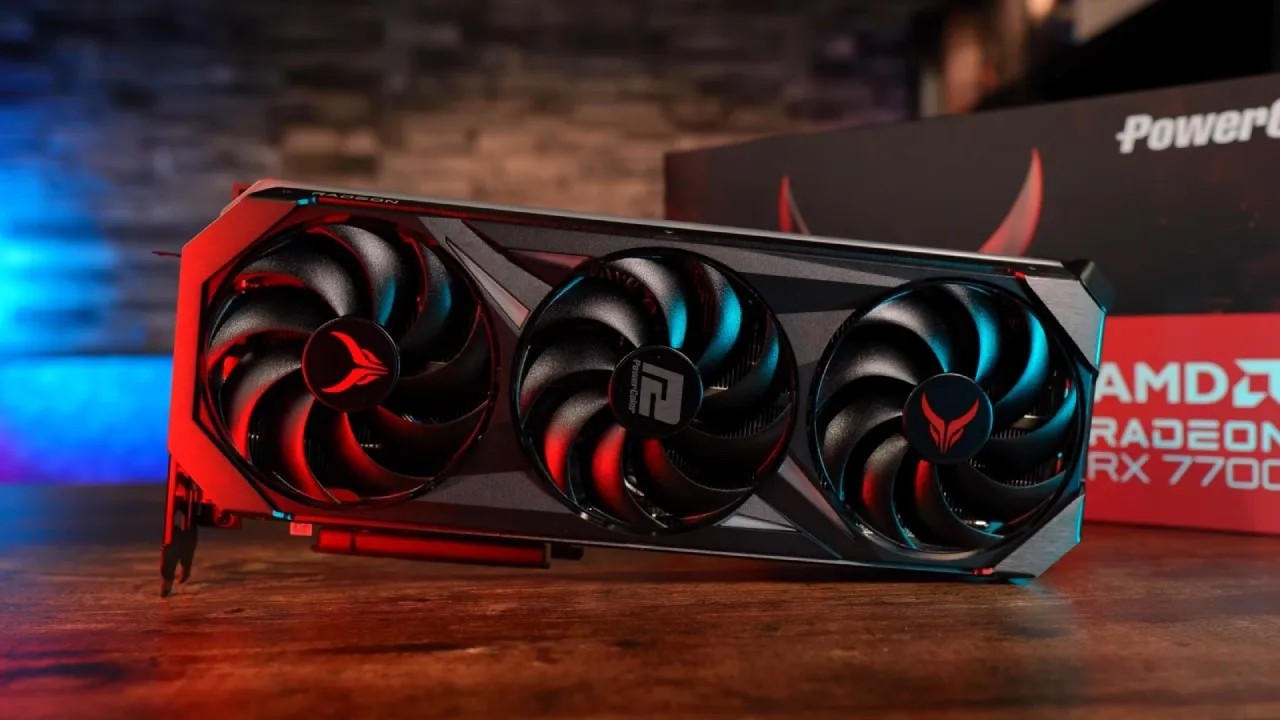
FSR Upscaling ML and Analytical Variants
FSR Upscaling is not a new or better upscaler than FSR4. It's the same technology under a different name, and only RDNA4 has it. The versions of FSR that don't use machine learning have been renamed FSR Upscaling to make them stand out from the answer that uses machine learning. These versions are FSR1, FSR2, FSR3, and FSR3.1.
These analytical upscalers continue to work across a wide range of RDNA GPUs. The renaming is purely for clarity and does not change functionality or image quality in older versions.
Frame Generation Under FSR Redstone
AMD has also split frame generation into two categories. The older approach is now called FSR Frame Generation. It remains available on all RDNA GPUs that previously supported it. The newly introduced FSR Frame Generation is part of FSR Redstone and is exclusive to RDNA4.
The machine learning-based frame generation can only be enabled in games that already support FSR 3.1.4 or later. It works through a driver-level override that replaces the analytical version inside supported titles. This is not the same as AFMF driver-based frame generation and only applies to games with native FSR frame generation integration.
Because of this requirement, the list of supported games is smaller than the list for FSR Upscaling ML. AMD has stated that more than 30games are expected to support FSR Frame Generation ML by the end of the year.
Ray Regeneration and Radiance Caching Status
FSR Ray Regeneration is another component of FSR Redstone. It is a machine-learning-based denoiser designed for ray and path-tracing workloads. Instead of tracing rays for every pixel, the system reconstructs a cleaner image from fewer rays using a neural network.
At the moment, ray regeneration is only available in Call of Duty Black Ops7 and only in multiplayer and zombies modes. The game uses ray-traced reflections rather than ray-traced global illumination, which limits the scope of testing. Based on existing testing, ray regeneration produces sharper reflections than the default analytical denoisers. Still, it does not yet match the quality of Nvidia's ray reconstruction in similar scenarios.
FSR Radiance Caching is the least mature feature in the Redstone lineup. It is a real-time neural network-based radiance cache designed to reduce ray tracing cost and improve performance. As of the current release, it is not available in any shipped games. Developers can preview it through the FSR Redstone SDK, and AMD has suggested that games using this feature may arrive in 2026.
Current Game Support and Driver Overrides
FSR Upscaling ML is now usable in a wide range of games, primarily via a driver-level override. Any title that supports at least FSR3.1 can use the machine learning upscaler via the driver, even if it is not integrated directly into the game menu. Native support is still limited, but the override option has significantly expanded the usable library.
FSR Frame Generation ML relies on a stricter requirement of FSR3.1.4, which explains the smaller compatibility list. Upscaling is generally preferred over frame generation because it improves performance without introducing additional latency. In contrast, frame generation introduces latency and image artifacts.
Image Quality Evaluation of Frame Generation ML
Making tests of the FSR Frame Generation. When things are moving quickly, ML has fewer artifacts that can be seen than the analytical form. Both versions look the same in scenes that move more slowly because frame generation is easier when there isn't much motion between frames. When the camera or characters move quickly, the differences stand out more.
The machine-learning-based version has less trailing, less ghosting, and more stable edges in stress tests where frame creation is used to jump from 30 fps to 60 fps.
Performance Comparison
Performance testing using built-in benchmarks shows that FSR Frame Generation ML produces nearly the same number of generated frames as the analytical version. In some cases, the machine learning-based version performs slightly better, although the difference is minimal.
For example, running a native 4K Ultra workload at around 62 fps, analytical frame generation increases output to roughly 107 fps. At the same time, the machine learning-based version reaches about 110 fps. The results suggest that image quality improves without a meaningful performance penalty.
Final Thoughts
FSR Redstone is AMD's move toward graphics features that are driven by machine learning. ML-based frame generation makes images more stable while keeping performance levels the same as the analysis version.
Ray regeneration shows promise but remains limited by game support and the absence of global illumination use cases. Radiance caching is still theoretical for end users until it appears in shipping games.
The main drawback is hardware exclusivity. RDNA1, RDNA2, RDNA3, and RDNA3.5 users do not gain access to any of the new machine learning features, despite earlier signs that limited support might have been possible. RDNA4's stronger focus on machine learning acceleration appears to be the deciding factor.
Overall, FSR Redstone delivers usable improvements and moves AMD closer to feature parity with competing solutions. Still, broader hardware and game support will determine how impactful it becomes over time.
Also, check our other AMD articles below:
- AMD Ryzen 9 9950X3D Review: Setting The Standard For 2025 Gaming CPU
- AMD Ryzen 7 9800X3D Review: 3D V-Cache Goes God Mode with Stunning Gaming Performance
- AMD RX 9070 Performance Review: Thermals, Clocks, and Real-World FPS
- AMD Ryzen 5 7600 Review: Best Budget Gaming CPU of 2025?
- AMD Radeon RX 7800 XT Review: RDNA 3 Power For Midrange Gaming
- Sapphire NITRO+ AMD Radeon RX 9070 XT Review: The Ultimate 4K Gaming GPU
- AMD Ryzen 7 7800X3D: Delivers Gaming Performance Far Beyond Expectations
- AMD Ryzen 9 7900X Review: Powering the AM5 Era with DDR5 & PCIe 5.0
- Intel Core i9‑14900K vs. AMD Ryzen 7 7800X3D: Power Profiles & Gaming Benchmarks
Editor, NoobFeed
Latest Articles
No Data.