
Jurassic World Evolution 3 Guide | How To Improve Swimming Dinosaurs
A practical, idea-packed guide to make Deep Water feel smarter, riskier, and more fun in your park.
Game Guide by Jubair Baky on Feb 14, 2026
Jurassic World Evolution 3 includes swimming dinosaurs, but the current setup can feel a bit limited. You can still enjoy watching a few species move through Deep Water, yet there is room to make the feature deeper than “a few dinosaurs can swim.”
With the right design choices, Deep Water can become a real habitat tool, a danger zone, and a discovery system you learn through building.
Why Deep Water Feels Like a Good Start, Not the Finish
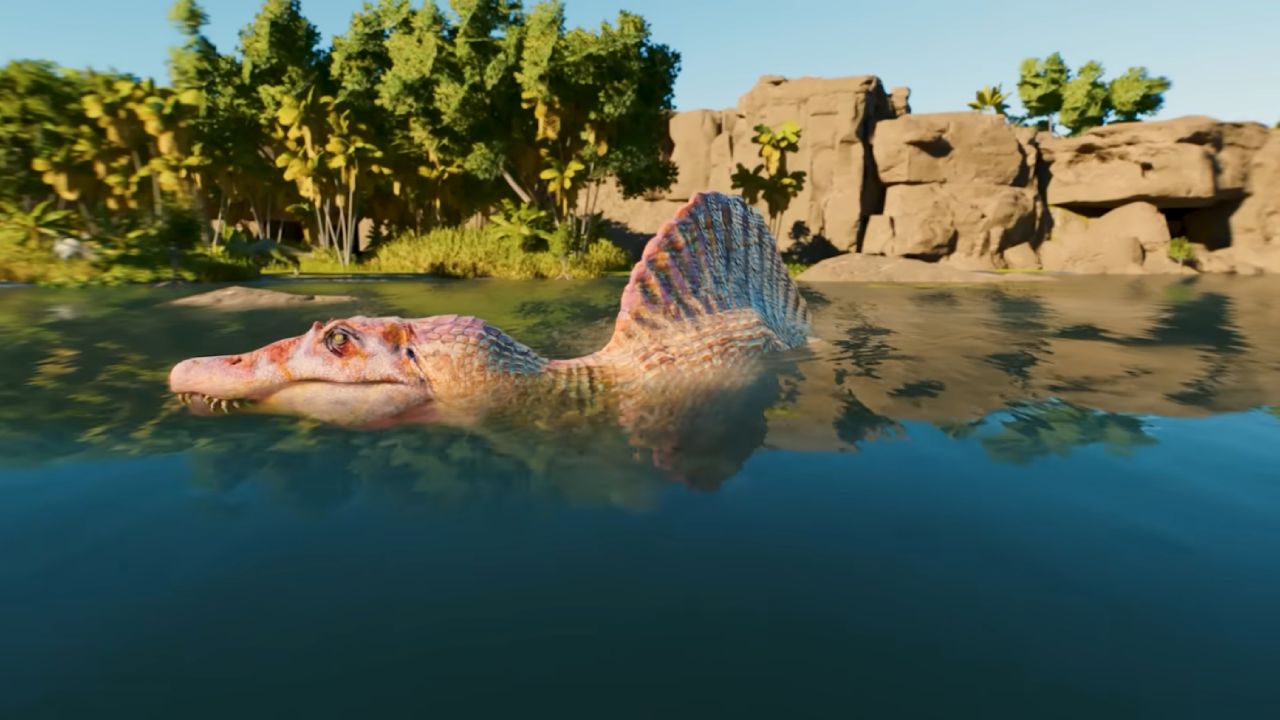
Only a handful of species are shown swimming so far, and that naturally makes you want more variety. Seeing Spinosaurus and its babies swimming is exciting. Watching adult Sauropods wade and wait in deep areas is also a great touch.
Still, you may feel something is missing, like a swimming Tyrannosaurus Rex or at least one new species that makes Deep Water feel unsafe.
At the same time, Deep Water works well as a natural habitat barrier in sandbox builds. That barrier function seems like the priority, even more than adding tons of swimmers right away.
That trade-off makes sense because once many dinosaurs can swim, it becomes harder to use water as a clean boundary for enclosures.
The Confirmed Swimmers So Far
You currently have five swimming species in the feature set. Three have been officially named: Spinosaurus, Baryonyx, and Dimetrodon. A fourth, Pyroaptor, has been glimpsed swimming in the background. The fifth is described as a returning species that has not yet been shown, and one likely candidate is Suchomimus.
This matters because it frames Deep Water as a system that can expand over time, especially if future updates or DLC lean into semi-aquatic gameplay.
Make Swimming a Discovery System With Clear Categories
Instead of treating swimming as a simple yes-or-no checkbox, you can make it more interesting by splitting swimming behavior into four categories. This also makes park building more playful because you do not instantly know what every species can do. You learn by experimenting, watching, and sometimes failing.
Category 1: True Semi-Aquatics That Need Deep Water
These animals should have Deep Water as a real habitat requirement. If their enclosure lacks it, comfort should drop. They should also spend a lot of time in water, either swimming or floating.
This category includes species such as Spinosaurus, Baryonyx, Suchomimus, and Dimetrodon. It can also include water-leaning animals such as Deinonychus (as a “tadpole raptor” concept) and large crocodilians like Deinosuchus and Sarcosuchus. In this design, the big crocs should stay close to water and avoid wandering deep inland.
Category 2: Casual Swimmers That Cross Water By Choice
These dinosaurs do not live in the water, but they should be willing to cross rivers and lakes during normal roaming. They benefit from having Deep Water in their enclosure, yet they can still reach high comfort without it.
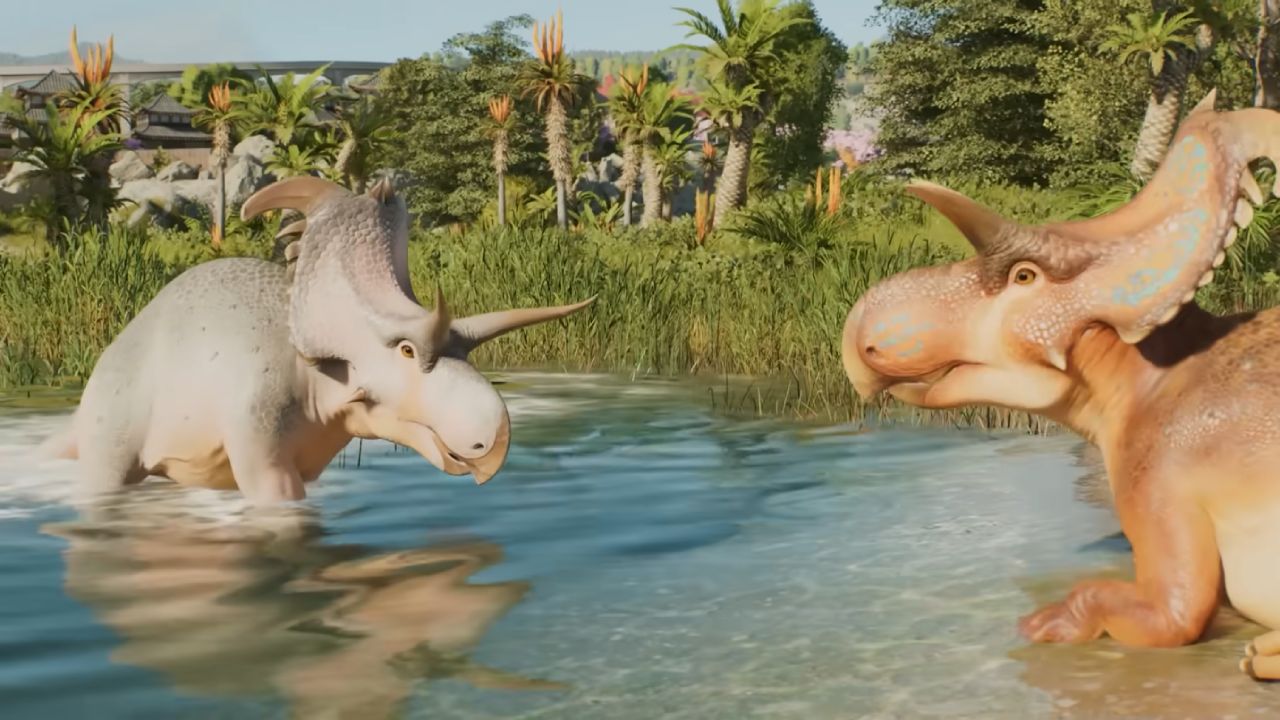
This category can include Pyroaptor, Spinoraptor, Spinoseratops, Parasaurolophus, and Ouranosaurus. Hybrids fit especially well here, because they can inherit “water-friendly” behavior from their base genomes.
Category 3: Swimmers That Do It Only When Motivated
This is the biggest category. These dinosaurs can swim, but they do not enjoy it. Swimming is not a hobby for them. It is a tool.
They only enter Deep Water if there is a reason, like food, a nest, or a path to escape. This category can include Tyrannosaurus Rex, Coelophysis, Troodon, Guanlong, Corythosaurus, Muttaburrasaurus, Edmontosaurus, Maiasaura, Dryosaurus, and Conc.
Category 4: Desperation Swimmers That Almost Never Try
These are your small dinosaurs that avoid deep areas unless they are forced. They swim only when starving and trying to reach food on the other side.
This category can include small species such as Microceratus, Protoceratops, and Compsognathus, as well as other small-bodied dinosaurs that should logically fear open water.
In this setup, Deep Water serves as a strong containment tool for small dinosaurs as long as food remains available. If you let food run out, you create escape pressure, and that becomes a management decision you control.
Add Genome Research That Changes Water Behavior
With genomes that can be studied, you can take the method even further once you have the categories. This turns Deep Water into a real playground tool, not just an animation tool.
With a Hydrophobic Genome, any dinosaur that can swim from any of the four categories should be able to be copied. It's unlocked through study, and at hatch, it gives you one of two traits.
One feature is a mild fear of water. The dinosaur acts like a Category 4 animal because it is mildly afraid of water. Since it only moves when it has to, you can keep it in water as long as you feed it.
The second trait is a strong fear of water. The dinosaur is so afraid of water that it won't swim at all, even if it means going hungry.
This turns into a strong planning tool. A normal Tyrannosaurus Rex could swim across Deep Water to get away, which means that water by itself can't hold it. But if you clone a Tyrannosaurus Rex that is very afraid of water, it will once again be a safe barrier.
You can also make the incubation choice meaningful. When the egg is ready, you can see whether mild or extreme hydrophobia will manifest and then choose which egg to incubate.
Breeding Risk: Hydrophobic Parents Can Produce Swimming Offspring
To keep this from being too easy, breeding should introduce risk. Two hydrophobic dinosaurs can have offspring that do not inherit the trait. That means you must stay alert if your park allows breeding.
If a baby Tyrannosaurus Rex grows into an adult that can swim, you face a choice. You either change the habitat before it matures, or you remove or sell the dinosaur. This turns water containment into an ongoing management system instead of a one-time enclosure trick.
The Swimming Genome for Non-Swimmers
You can also add a Swimming Genome that gives swimming ability to some species that do not have it naturally. This should not work on everything. Some eggs should fail in incubation. Some should hatch without the trait even after you pay for the gene. That trial-and-error element keeps discovery alive.
To keep animation demands reasonable, the swimming genome can reuse existing swim animations by group. For example, it can apply cleanly to:
The Tyrannosaurus species uses a shared swim animation, Ceratopsians use a shared swim animation, and Raptors use a shared swim animation.
Meanwhile, Pyroaptor can keep a unique swimming animation, and a crocodilian-style swimmer like Deinonychus (if treated that way) can move more like a Spinosaurus in the water.
Let Lagoon Animals Enter Deep Water With a Freshwater Genome
A third research option can connect Deep Water to lagoon gameplay: a Freshwater Genome for lagoon animals. If a lagoon animal is incubated with this genome, it becomes compatible with Deep Water, which is freshwater rather than the saltwater lagoons.
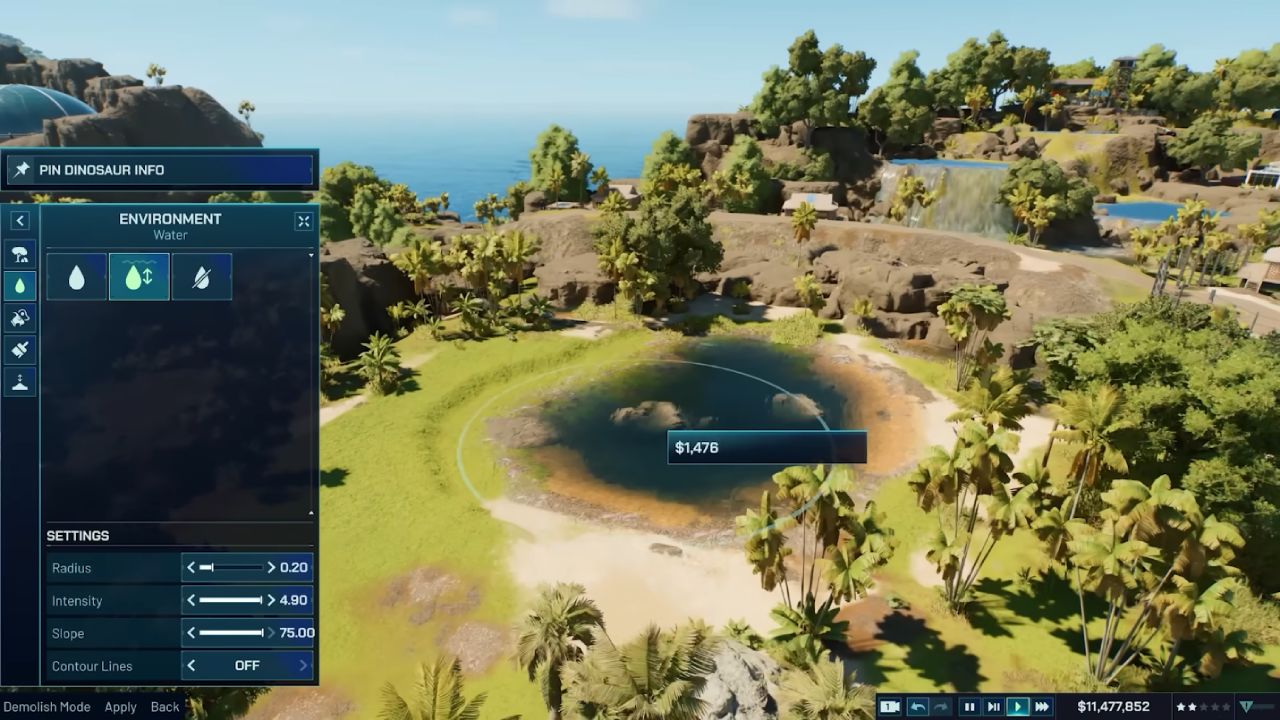
A key limitation still applies. If deep water has no real depth volume and animals only swim on the surface, lagoon animals should follow the same rule. If they dive, you cannot track them underwater. They simply disappear below the surface and return later.
That limitation gives you a reason to still build lagoons. Lagoons remain the best way to properly view and manage marine animals, even if you can “cheat” some into freshwater spaces.
Breeding Limits Keep Lagoons Relevant
Even with the freshwater genome, most lagoon animals should not be satisfied enough to breed in Deep Water. You can treat this as a comfort cap that stops them from reaching full breeding requirements.
Only a few should be able to breed in freshwater, such as Nothosaurus and Archelon, with egg-laying behavior that includes coming onto land.
Make Deep Water Feed More Than One Creature Type
If Deep Water can act as a food source for Spinosaurus, it can also support surface-feeding behavior for flying reptiles. You can add an animation of Pterosaurs skimming the water, dragging their beaks along the surface, snapping up a fish, and flying off. This makes water features feel alive even when no dinosaur is swimming through them.
Also, check out our other guides:
- Jurassic World Evolution 3 Guide | How to Use the New Island Generator
- Jurassic World Evolution 3 Guide | How to Adjust Slopes and Create Waterfalls
- Jurassic World Evolution 3 Guide | All Attractions
- Jurassic World Evolution 3 Guide | How to Set Up Attractions on Enclosures
- Jurassic World Evolution 3 Guide | Best Attractions of the Game
- Jurassic World Evolution 3 Guide | How to Build Structures Piece by Piece
- Jurassic World Evolution 3 Guide | How to Build Circles in Jurassic World Evolution 3
- Jurassic World Evolution 3 Guide | How to Set Up Expeditions
Editor, NoobFeed
Latest Articles
No Data.