
Nintendo Switch 2 DLSS vs. Xbox Series S FSR 4 Performance
AMD FSR4 and Nvidia DLSS bring machine learning upscaling to budget consoles, but their image reconstruction approaches deliver different results.
Hardware by Shinji Okazaki on Nov 02, 2026
Upscaling technology has become an important part of modern gaming, letting budget consoles deliver higher-resolution visuals without extra GPU power. Machine learning reconstruction now helps games achieve 1440p and 4K output while rendering at lower native resolutions.
Two consoles take different approaches to this technology: Microsoft's Xbox Series S uses AMD's FSR4 upscaling, while the Nintendo Switch 2 relies on Nvidia's DLSS technology and dedicated tensor cores. Both systems depend on upscaling to maintain image quality, particularly when demanding games drop to 720p or lower internal resolutions. However, their hardware approaches and reconstruction results differ.
Why Upscaling Technology Matters in Modern Gaming
Before comparing the two consoles, we need to understand why upscaling technology has become important. In the past, upscaling relied on basic spatial techniques, such as cubic stretching. These methods took a 720p frame and enlarged the pixels to fit a higher-resolution display. The result often looked soft and blurry, with details becoming smeared.
Modern temporal machine learning reconstruction works differently. Instead of looking at a single frame, modern upscalers use previous frames, motion vectors, and depth buffers. They train deep learning neural networks on millions of high-resolution image pairs. The AI then reconstructs missing pixels in real time, letting games produce sharp 1440p or 4K output while the GPU renders at just 720p or 1080p.
When Microsoft released the Xbox Series S, the console relied on traditional spatial and early temporal upscalers, including FSR2 and FSR3. Fine details such as chain-link fences, foliage, and moving water often suffered from ghosting, flickering, and temporal instability.
With AMD moving FSR into machine learning territory through FSR4, the Series S gets a new lease on life. However, we also need to consider the hardware behind the technology.
The Series S features an RDNA2-based architecture with INT8 and INT4 math hardware capabilities. While it lacks the dedicated NPU hardware found in newer graphics cards, FSR4 utilizes lightweight machine learning models optimized for this hardware. FSR4 reduces edge shimmering, retains fine details on thin geometry such as power lines, and cleans up subnative motion blur artifacts.
These improvements help maintain image stability when games render below their target output resolution.
However, there is a catch. Running machine learning models consumes part of the available frame-time budget. On a budget GPU with limited memory bandwidth, FSR4 takes a percentage of the GPU's processing power just to run the upscaler. Now let's look at Nvidia and the Nintendo Switch 2. Unlike AMD's cross-architecture approach, Nvidia has built DLSS around hardware acceleration, specifically tensor cores.
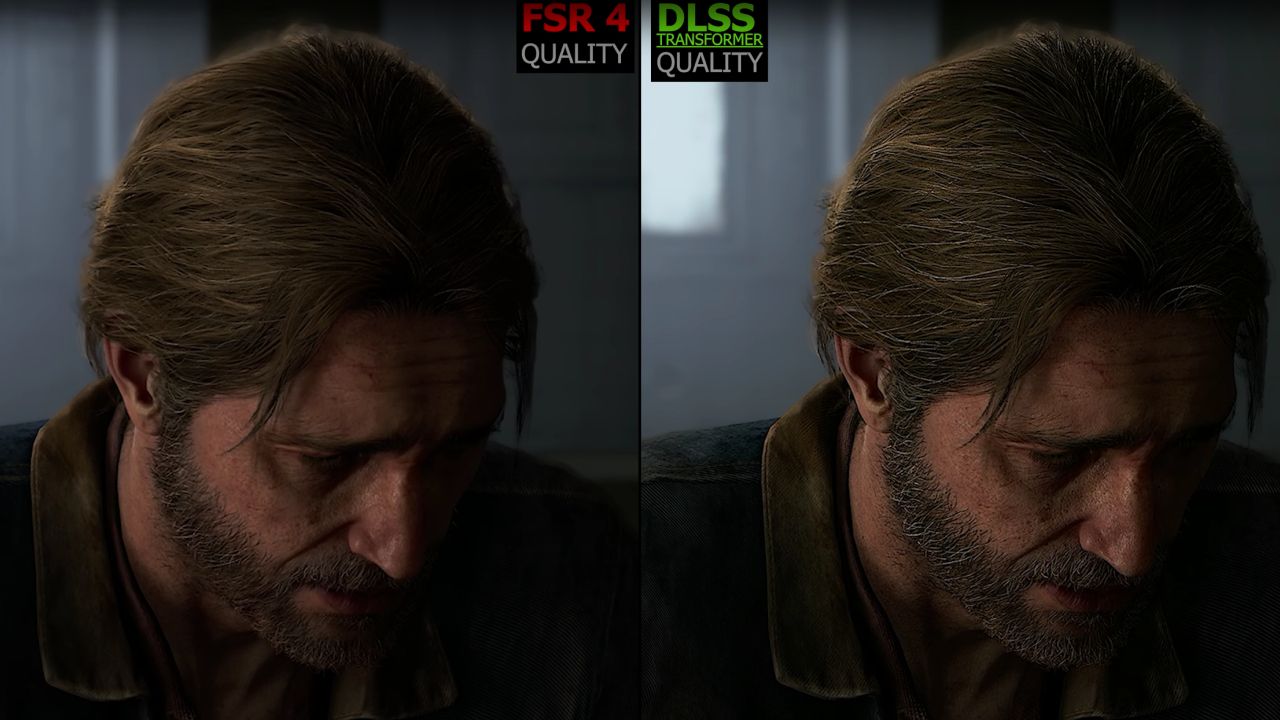
The custom Tegra processor inside the Switch 2 houses dedicated silicon designed to calculate AI tensor operations. This changes how the console handles upscaling because the tensor cores handle the AI calculations instead of relying entirely on the main shader cores.
In practice, this provides dedicated hardware efficiency. Because tensor cores handle the AI math, the main shader cores lose less performance running the upscaler.
Switch 2 games can render at internal resolutions as low as 540p or 720p in demanding AAA handheld titles while producing a 1080p image on the portable display or a 4K image when docked. Nvidia's temporal stability also remains a key part of DLSS.
It handles fine subpixel details, thin lines, and fast motion without breaking apart into visual noise. This helps maintain image quality when games operate at low internal resolutions.
Editor, NoobFeed
Gaming Hardware Updates
No Data.