
Crimson Desert Releasing Soon, and the Closer It Gets, the More Questions Start to Matter
Crimson Desert has gone gold, Pearl Abyss is betting big on optimization, and the latest trailer finally clarifies what kind of experience you're actually getting.
News by Mahi Araf on Feb 10, 2026
With just over a month to go before launch, Crimson Desert is entering the stage where expectations either lock into place or quietly unravel. The development team is now fully focused on performance. At this stage, nothing fundamental is changing anymore. What you see now is very close to what you are going to play.
According to a recent IGN interview, Pearl Abyss has shifted entirely into optimization mode. Will Powers, director of public relations at Pearl Abyss America, explained that after going gold, the studio’s top priority is smooth performance across platforms ahead of its March 19 launch.

In short, the vision is locked, and Pearl Abyss is tightening all aspects around it.
That sounds reassuring on the surface, but it also highlights the central concern about Crimson Desert: performance. The challenge is whether the game can deliver stable and smooth gameplay, given its massive open world, dense environments, large-scale battles, and heavy visual effects.
You can feel just by looking at it that this is not a lightweight experience. So when the conversation turns toward optimization, especially this close to launch, you naturally start wondering how well all of this is going to hold up.
Powers confirmed that Crimson Desert will include enhancements for PS5 Pro and that players will have the option to toggle certain visual effects, including particle effects. However, he also noted that those same particle effects play an important role in combat, communicating information to the player during fights.
Turning them off may help performance, but doing so could also reduce clarity and impact during combat encounters. It is not exactly the kind of trade-off you want to be thinking about before launch.
The technical conversation becomes more ambitious when Pearl Abyss begins discussing the engine itself.
Crimson Desert runs on a proprietary engine built specifically for the game. According to Powers, this engine can deliver a native 4K 60 frames-per-second experience with ray tracing, without relying on upscaling technologies like DLSS or FSR.
The studio’s reasoning for building its own engine is well... reasonable. According to the developers, off-the-shelf engines could not fully support the scale and visual density they wanted. Things like rendering thousands of objects within draw distance, maintaining world detail, and preserving visual consistency at scale were all part of the motivation. A custom engine gives them more control over the vision they want to follow.
Proprietary engines can deliver impressive results when everything works well, but they also bring risks. Optimization and long-term support become more complex when technology is unique to one studio. Pearl Abyss is confident in what it has built, but the real test will be when the game runs on various hardware.
While performance remains the biggest question mark, the latest trailer finally gives you a clearer picture of what Crimson Desert actually plays like. At its core, the game is shaping up to be a combat-driven open-world experience with a heavy emphasis on player expression. The open world itself appears fairly familiar.
You are exploring large regions, collecting artifacts, taking down bosses, and clearing out enemy camps and fortresses. If you have played any checklist-style open-world game before, especially those inspired by Ubisoft’s design philosophy, you'll have no problems acclimatizing to Crimson Desert.
What separates Crimson Desert from feeling generic is the combat system layered on top of that structure.
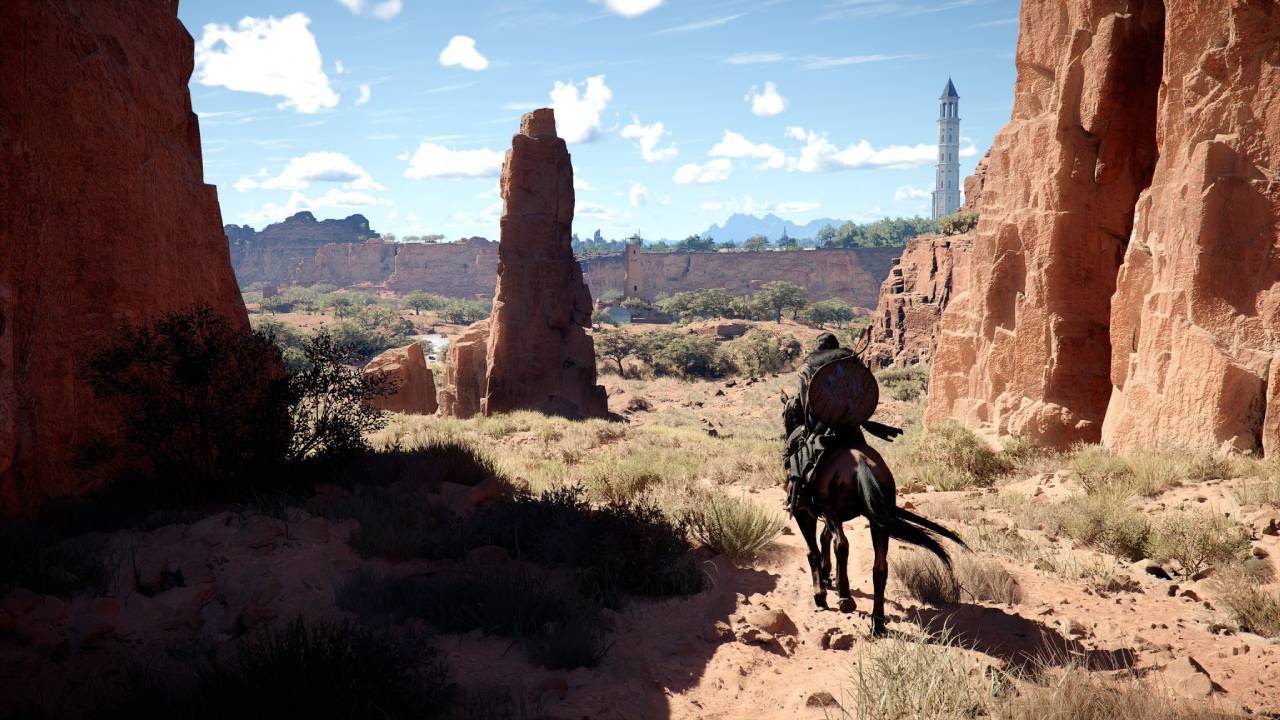
The trailer highlights how much freedom you are given in fights. Chain attacks, grapples, environmental interactions, and momentum-based movement are all front and center. Combat in Crimson Desert focuses on movement, positioning, and stringing actions together in creative ways, not just standing still and trading hits.
That said, the trailer introduces another key concern: regular enemies may lack aggression and challenge, leaving the risk that combat could feel one-sided. In this context, bosses are positioned as essential to test the depth of the combat system and keep players fully engaged.
The bosses shown so far are certainly memorable. Massive creatures dominate the screen, including huge beasts, unsettling spider-like enemies, and enormous serpentine threats that move across the environment itself.
These encounters evoke comparisons to games built around spectacle and scale, like Shadow of the Colossus and the Dragon's Dogma series. Those games succeed because their bosses are not just damage sponges but mechanical puzzles that force you to think differently about movement, positioning, and timing.
If Crimson Desert can deliver that same level of design, the combat sandbox has the potential to stay engaging over a long playtime. If it cannot, there is a risk that the system becomes flashy but shallow, offering plenty of tools without meaningful reasons to use them.
One of the most striking aspects of the trailer is how casually it introduces major features.
Mounted combat is shown briefly, including riding into battle on large animals. Then, almost without comment, the game reveals fully controllable mechs. Mechs in a fantasy setting are a bold choice, but they are presented as just another tool in your arsenal. The trailer does not pause to explain or justify its presence, suggesting how much content is packed into the experience.
Magic also plays a bigger role than initially expected. Elements can be applied to physical attacks, allowing you to give strikes with effects like fire. This opens the door to elemental interactions, enemy weaknesses, and more strategic decision-making in combat. The game also features a wide range of weapons, including traditional melee arms, firearms, and specialized tools tied to specific abilities.
The physicality of Crimson Desert is what really sets it apart. Enemies respond to the environment in real, impactful ways. Grabs can turn into throws, slams, and crashes with the environment.
You can also hit enemies into walls, send them flying, or link actions together in ways that feel like they were purposeful instead of just being canned. You can also use defensive moves like dodging, sliding, countering, and slow motion.
Progression and RPG mechanics, however, appear intentionally streamlined.
Character growth is tied largely to artifacts found in the open world. These artifacts are used to upgrade core attributes like stamina, which directly affects how long you can sprint, glide, or chain physical actions together.
Progression also focuses on learning skills through watching and fighting. When your enemies do certain things, your character can learn similar moves. This makes the system feel more like ability-learning mechanics than traditional skill trees. Weapons also have special abilities, some of which are linked to bosses. Once you unlock them, you can use them in regular fights.
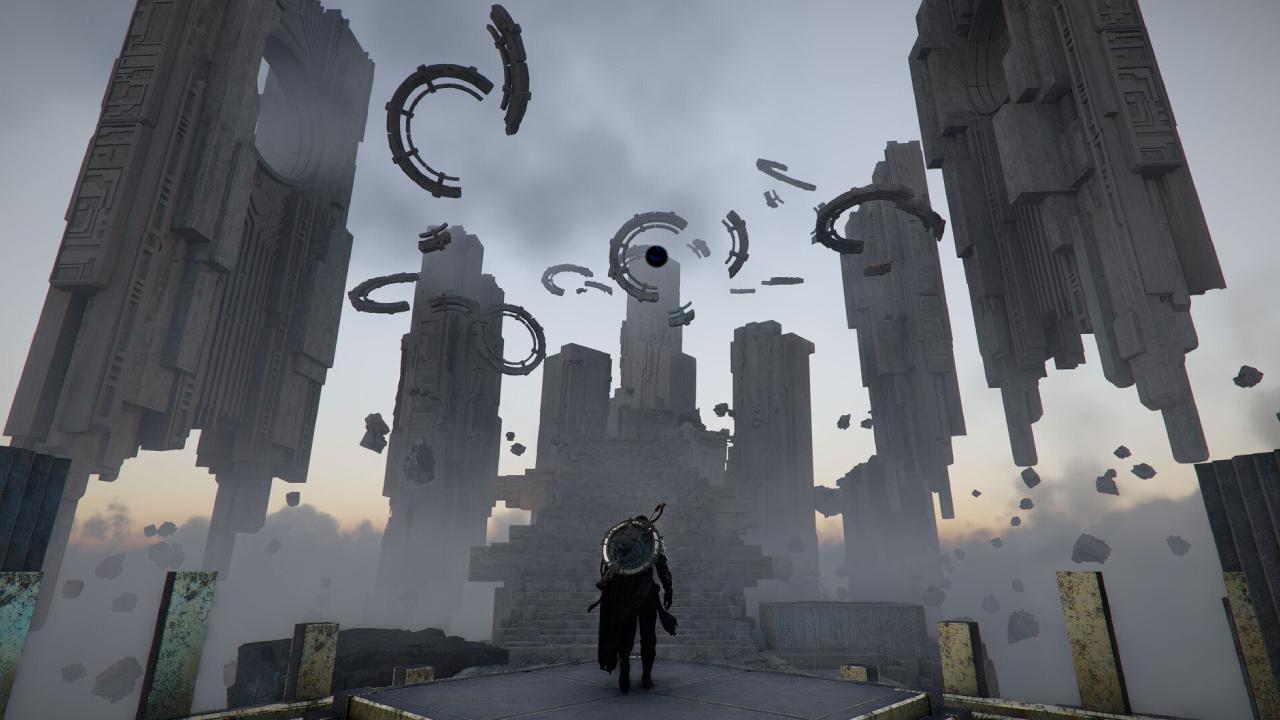
Gear customization exists but follows familiar territory. Weapons can be upgraded with stats like attack speed and critical chance, and special effects can be slotted using materials gathered from mining or hunting. Bosses drop unique weapons, quests reward gear, and hidden locations offer additional loot.
When you step back and look at the full picture, Crimson Desert becomes easier to define.
This is an open-world game built first and foremost around a combat sandbox. Exploration and progression support that sandbox rather than compete with it. If the combat remains engaging over dozens of hours and is supported by challenging enemies and bosses, Pearl Abyss may have a GOTY candidate in Crimson Desert on their hands. But that is only if everything goes as planned.
But all of that depends on one final factor: how well it runs. The ambition is clear. The systems are there. The question now is whether optimization can keep up with the scale. As launch approaches, that detail matters more than anything else.
Senior Editor, NoobFeed
Related News
No Data.