
Nintendo Switch 2 Patch Brings Docked VRR and Faster Boost Toggles
Nintendo Switch 2 gets two major hardware improvements in a surprisingly quiet firmware update, giving you smoother docked gameplay and faster access to boosted handheld performance.
News by Adeela Tas on Sep 11, 2026
Nintendo has always had an unusual approach to system updates. Some firmware releases barely do anything beyond improving stability, while others quietly introduce features that can genuinely change how you use the hardware. The latest Nintendo Switch 2 update falls into the second category, bringing two important improvements without much fanfare.
For Nintendo Switch 2 owners, both additions matter. The first is an easier way to access Handheld Boost Mode, which was already introduced for backward-compatible games. The bigger addition, though, is docked VRR support, a feature that can make fluctuating frame rates feel considerably smoother when you are playing on a television.
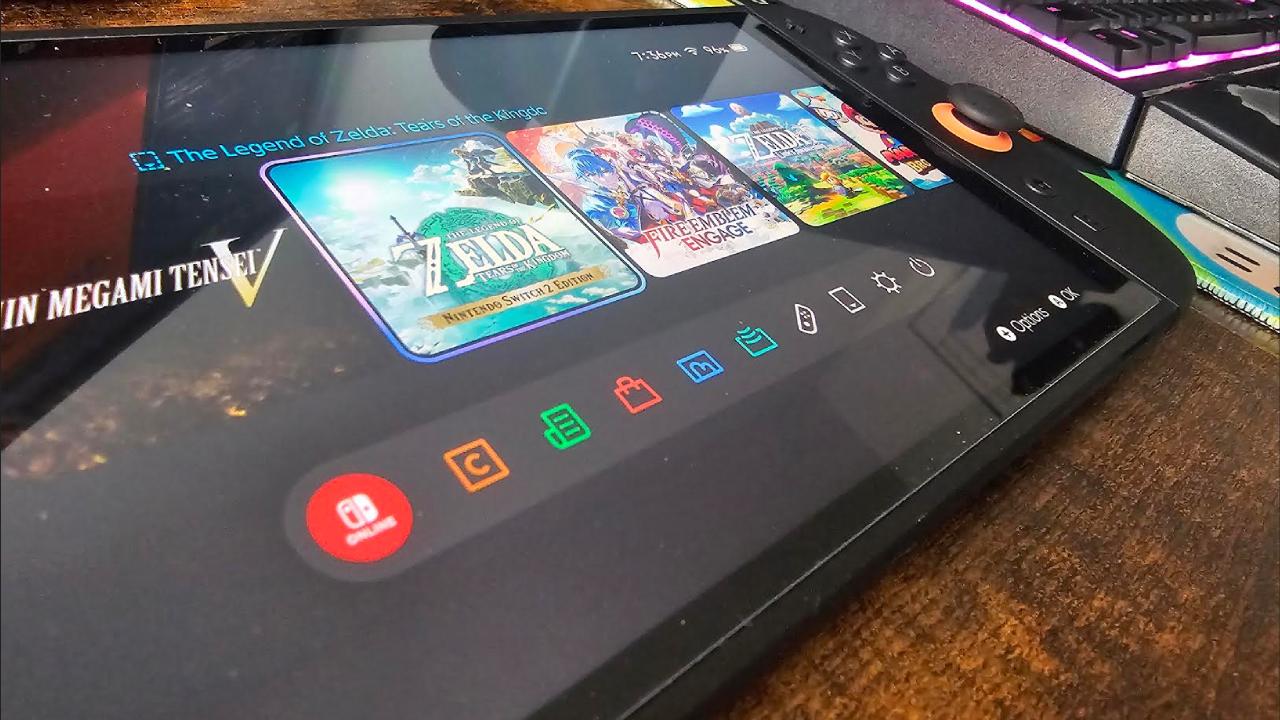
Handheld Boost Mode has already helped Nintendo Switch games run on the newer hardware.
Previously, if a game could reach 1080p while docked but dropped to 720p in handheld play, the feature could let you keep that higher output while playing on the go. It was a surprisingly meaningful upgrade, especially because Nintendo barely promoted it.
Now, Handheld Boost Mode is easier to reach. Instead of digging through several settings menus, you can hold the Home button and access it through the Quick Menu. That might sound like a small change, but it makes sense once you consider the feature's biggest drawback: using it can consume more battery.
If you are playing away from a charger, you may not want boosted performance running constantly. You might only need it for a particular game or section, then decide to switch it off to preserve battery life. Having the option immediately available means you can decide without interrupting your session or searching through system settings.
The update also improves GameChat, already one of the console's more capable communication features. Voice communication can stay clear even when you are sitting some distance from the television, but managing a GameChat room previously had an annoying limitation.
When you created a room, you initially had to invite everyone you expected to join.
If someone came online later, adding them wasn't as straightforward as it should have been. In some situations, you had to close the existing room and create another one simply to bring that person into the conversation. The new system software makes that process more flexible. People can now join an ongoing call, and you can also start a new call without sending all invitations at once.
It is a straightforward quality-of-life improvement, but it removes unnecessary friction from something that is supposed to make playing with other people easier. The update also includes additional Mii-related changes. They're unlikely to be the reason most people install the firmware, but they add another small layer to the system.
Miis were once a much bigger part of Nintendo's identity, particularly during the Wii era and games such as Wii Sports, so these additions will still be useful to players who continue to use them. The biggest change is VRR, or Variable Refresh Rate, finally working while the Nintendo Switch 2 is docked.
This matters because VRR has been available in handheld mode, even though many expected the console to support it while connected to a television eventually. You can notice the difference most clearly when a game struggles to maintain a consistent frame rate.
On a display without VRR, a sudden drop can feel more obvious because the screen refreshes independently of the game's changing output.
With VRR, the display can adjust its refresh timing to match better what the console is actually producing. That is one reason frame-rate dips can feel less distracting in handheld play. The screen can sync with the fluctuating output, so a game doesn't necessarily feel as uneven even when its frame rate is moving around.
Bringing that capability to docked play should make a noticeable difference in Nintendo Switch 2 games that occasionally drop frames. However, a few requirements still apply. To use docked VRR, you need a television that supports a 120Hz refresh rate and HDMI 2.1. That means owners of older 60Hz televisions can't take advantage of the feature, even though their console supports it.
Your television isn't the only piece of the puzzle. Individual games need to support VRR while docked, and that requires developers to add the functionality through software updates. Right now, support is extremely limited, with Nintendo Switch 2 Welcome Tour as the only example that can take advantage of the feature.
That creates an obvious transition period for the existing library. A game does not automatically become VRR-compatible just because the console's operating system now supports the technology. Developers will need to return to their games and add the necessary support, and there is no guarantee that every title will receive a patch.
That also means games arriving over the coming months may not all support docked VRR immediately.
Developers have to decide whether adding the feature is worthwhile for each project, particularly if they have already completed most of their post-launch plans. Still, having the option at the system level gives them another tool to improve performance.
When supported properly, VRR can help reduce the visual disruption caused by frame-rate fluctuations. It doesn't magically increase a game's frame rate, so a game that drops frames will still drop frames. What changes is how those fluctuations are presented on your screen, potentially reducing tearing and making movement feel smoother.
That could become especially useful for third-party games on Nintendo Switch 2. The system has already shown that it can handle demanding software surprisingly well, including games that would have seemed unlikely on Nintendo's previous hardware.
WWE 2K26 is a good example. If you are playing it on Nintendo Switch 2, the experience can feel much closer to what you would expect from a more powerful console such as an XBOX Series X. Resident Evil Requiem is another case where the hardware has impressed, particularly when you play it in handheld mode and see how well the game runs and looks.
With docked VRR now part of the system, those kinds of games have another opportunity to feel better on a television, giving Nintendo Switch 2 another way to handle demanding software. The real impact will depend on how many developers patch their existing releases, but the underlying hardware feature gives them more room to work with.
What makes the update particularly interesting is Nintendo's approach to announcing it.
A company might normally make a major presentation out of two hardware-related additions like these, especially when one of them affects display performance. Instead, the features arrived quietly through a firmware update, leaving players to discover what changed.
That has happened before with Handheld Boost Mode, which appeared without the kind of major promotional push you might expect for a feature that can improve the resolution of older games in portable play. Now the same pattern has continued with docked VRR.
For you as a player, the result still matters, no matter how loudly Nintendo talks about it. Quick Settings makes performance adjustments easier, GameChat is less cumbersome, Mii functionality gets more attention, and docked VRR opens the door to smoother gameplay when compatible games run below their target frame rate. The bigger takeaway is what these changes could mean for the future of Nintendo Switch 2.
Getting two meaningful hardware features within the system's first year suggests Nintendo is willing to continue improving the experience after launch instead of treating the console's original feature set as fixed. Docked VRR still needs more developers on board before it really shows what it can do, but Handheld Boost Mode is something players can benefit from right away.
Together, they're a good example of Nintendo quietly making real improvements without turning every firmware update into a big announcement. Right now, the tech is only as good as the games and screens that support it, but the groundwork is there. As more developers build in compatibility and more players pick up displays that can actually use it, this update could end up being one of the most meaningful upgrades the Switch 2 has gotten since launch.
Editor, NoobFeed
Related News
No Data.