
BLACKWOOD Review
PC
BLACKWOOD turns a DVD store owner into a nighttime contract killer, creating an unusual double life that balances quiet business management with deadly work.
Reviewed by Maisie Scott on Sep 19, 2026
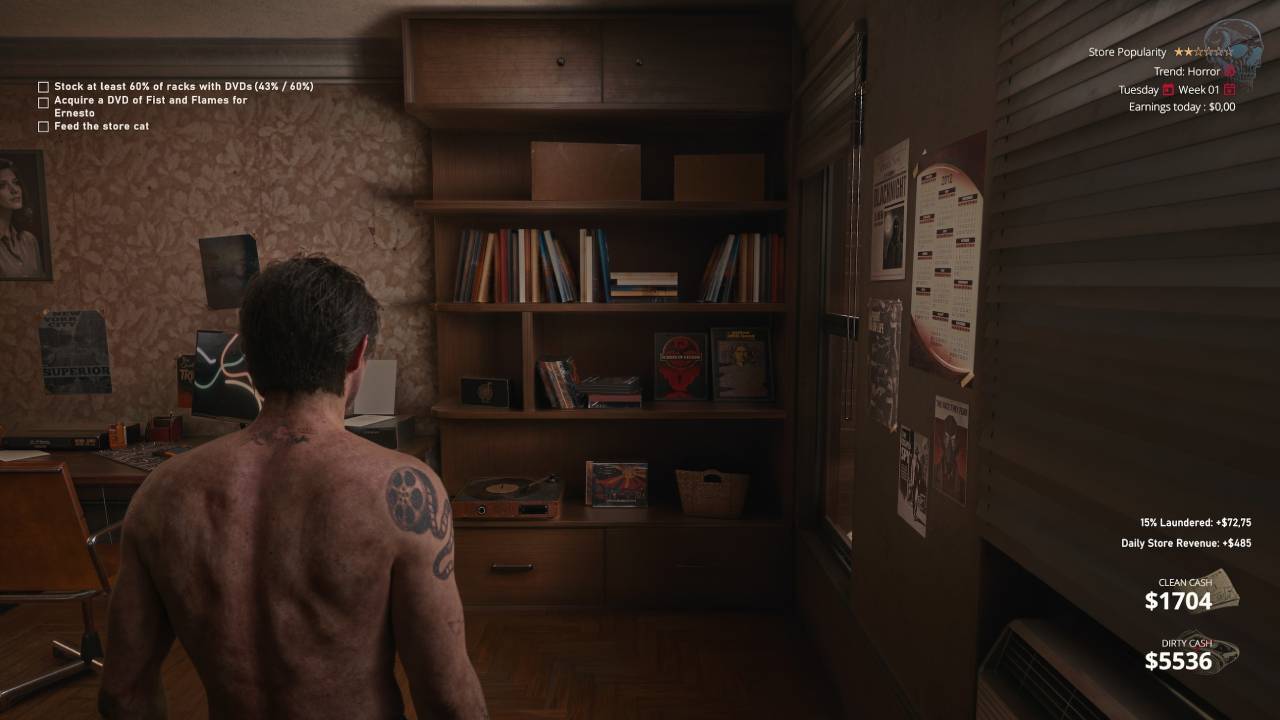
BLACKWOOD's approach is based on financial efficiency and daily routine. The game includes two different kinds of money. Clean cash is used to earn money. Anton earns clean cash by running the DVD store and uses it to support his legitimate income and pay his bills, while he earns dirty cash from his work. You can also funnel dirty money into the store's legitimate income, allowing Anton to maintain a legitimate image.
This is one of the cleverest ideas, since the concept of living a double life doesn't only apply to the storyline; the game's progression systems link the two personalities. The money earned from yry. The game's progression supports both identities: one gives Anton criminal ties to maintain his normal life, and the other gives him the cover he needs to keep up his ordinary existence.
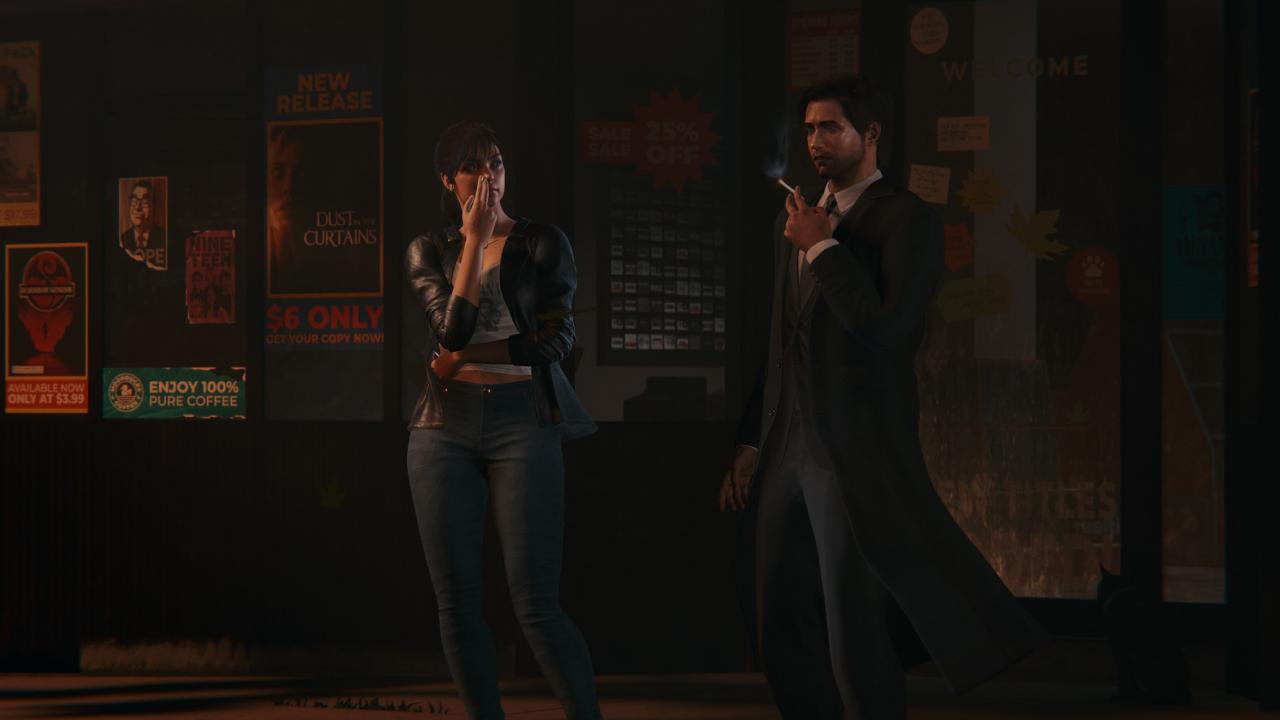
A routine forms: peaceful daytime activities give meaning to the violent missions at night.
Each contract isn't merely another task to complete; it's part of Anton's effort to lead a normal life while also working as a killer. That contrast is BLACKWOOD's strongest feature. The game doesn't merely aim to recreate the John Wick fantasy and then stop. Although it features cinematic shooting, rolls, slides, customizable executions, and other action-focused mechanics, the more interesting part is what happens before and after those encounters.
A striking contrast exists between running a DVD store and carrying out an assassination. At one time, Anton handles customers and deals with shelves full of films; later, he uses weapons and carries out takedowns. These two activities are as different as possible, and that contrast gives BLACKWOOD its distinctive character.
Setting the story in 2012 also makes the idea feel more unique; it gives Anton a realistic front for his normal life while placing the game in an era when physical media was still a familiar part of everyday entertainment. This DVD rental shop isn't merely an arbitrary business added for variety, since it becomes part of Anton's identity. The deeper you go into BLACKWOOD, the harder it becomes to ignore the problems tied to these ideas.
The biggest problem is the game's technical reliability: a bug that erases progression can send you back to the opening sequence, forcing you to lose hours of play, money spent, upgrades acquired, and all other achievements. It is bad enough to have to replay content you've already completed, but it is even worse to be forced to watch cutscenes you've already seen and can't skip.
The harm this causes is more severe than a normal gameplay bug.
Although a difficult mission might be frustrating, finishing it should still give you a sense of progress. If you lose because of a mistake, it may push you to improve and try again. However, losing hours of work because the game doesn't save your progress creates a wholly different kind of frustration. It is hard to have faith in the progression system.
The problem is particularly harmful in BLACKWOOD since progression is meant to link together Anton's two identities. Money from contracts can be used to upgrade his weapons and equipment, while the store must remain financially stable. However, when that progress suddenly vanishes, the connection between these two systems loses some of its purpose. Nighttime operations don't fully resolve the issue either.
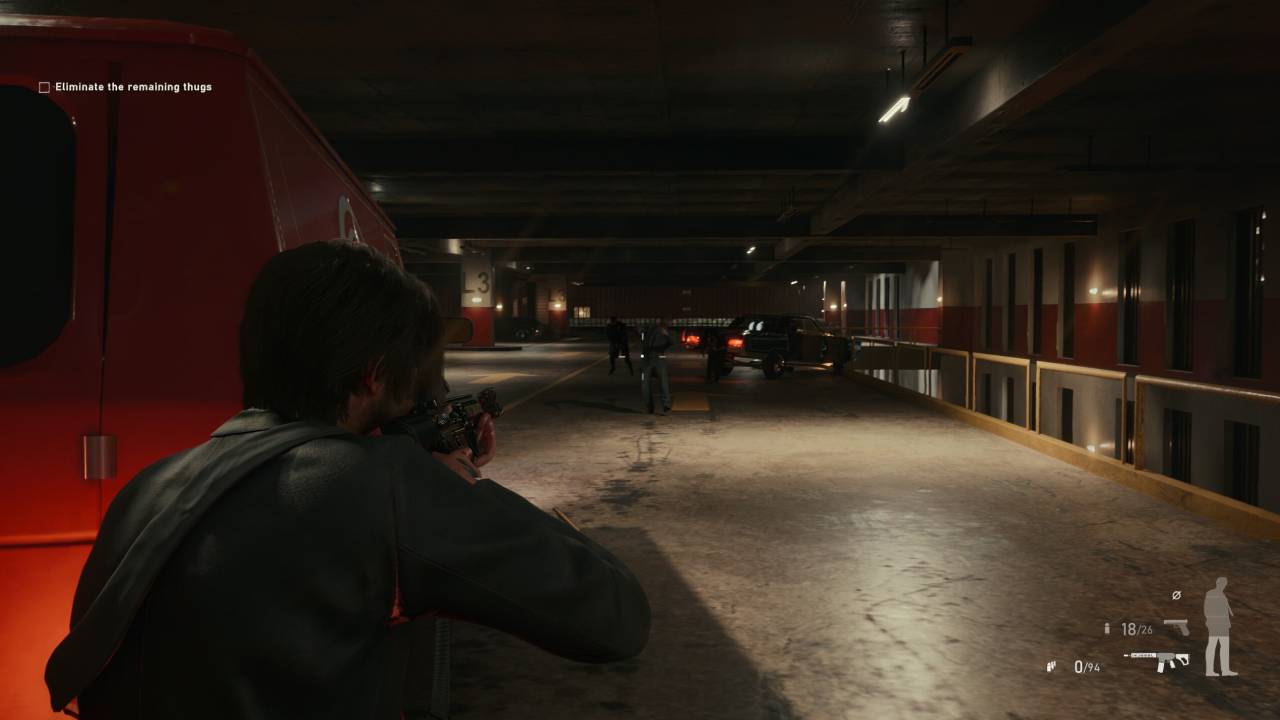
The combat in BLACKWOOD is clearly built around cinematic action, since Anton can use firearms, move through encounters with rolls and slides, pull off contextual takedowns, and customize his attacks. The main aim is to make you feel like a competent professional who can handle dangerous situations stylishly. Yet the shooting can't consistently deliver that fantasy.
The game relies heavily on auto-aim, which reduces the pleasure of manually aiming; moreover, the cover system feels clumsy rather than precise, so some situations feel less tactical than they should. Movement gives rise to further difficulties. The transition from sprinting to walking may seem awkward, and hipfire can cause odd recoil and spread. Moreover, the enemy AI is a weakness, as enemies sometimes act unpredictably or fail to react naturally to what's happening around them.
These problems are especially obvious since the way BLACKWOOD presents the material gives the impression of a more controlled experience.
Anton is meant to be a professional killer, so his movements and attacks should feel deliberate and accurate; if the movement, aiming, enemy behavior, or cover mechanics don't respond as expected, the fantasy starts to fall apart. The melee system also has similar problems. Anton can fight enemies at close quarters by punching and parrying, giving the game an alternative to firearms.
The basic concept works well with the filmic style, in particular when contextual takedowns are incorporated. But the system becomes frustrating if several enemies surround Anton. Simple melee combat isn't inherently a problem; a small combat system can be satisfying as long as the timing feels responsive and the animations clearly convey the attacks.
The problem is that the limited mechanics don't always seem reliable enough for long-lasting encounters. One of the more interesting aspects is contextual takedowns, since they let the environment become part of Anton's fighting style; rather than each encounter being a simple exchange of bullets, these executions give the action a more choreographed feel.
For those moments to land, the surrounding mechanics have to work properly. The vehicle sections shift the tone, though they also have control issues. The handling can feel excessively sensitive and unforgiving, turning what should be an exciting cinematic interlude into yet another source of annoyance. The problems in the daytime store areas are entirely different.
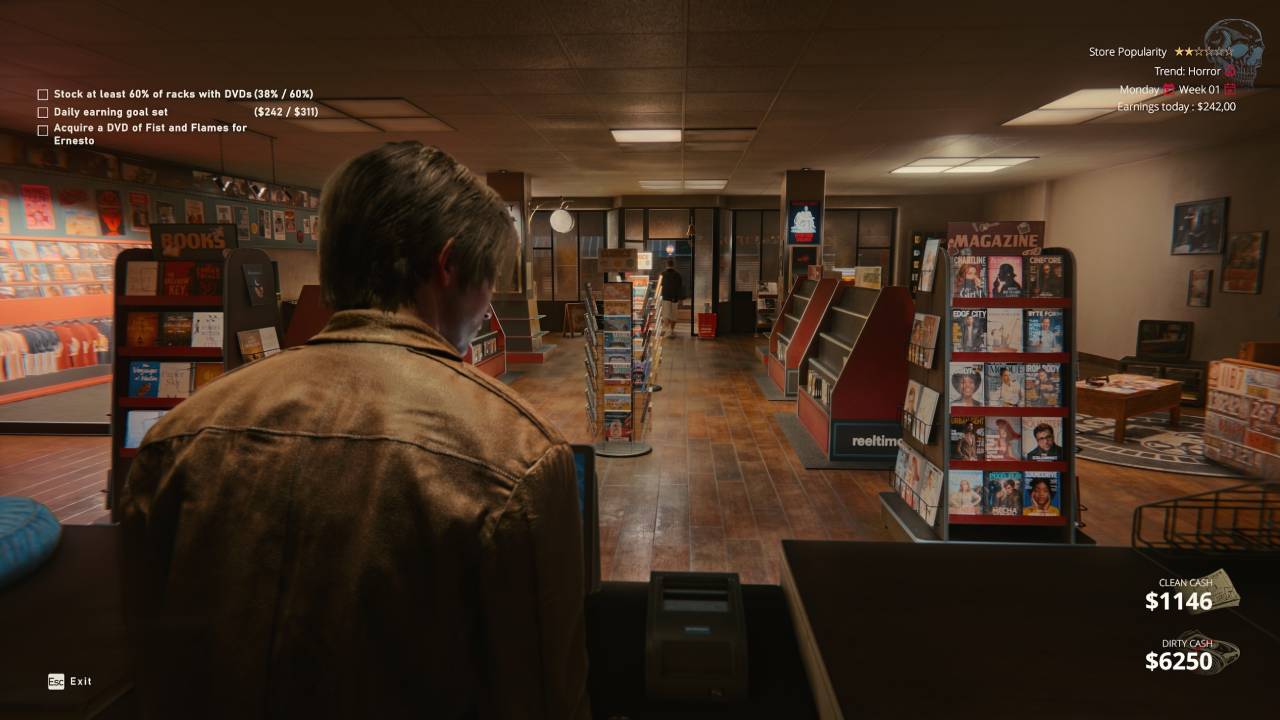
The DVD store should form the other half of the game's identity since, unlike the action missions, these sections are slower and place a greater emphasis on management.
The concept is strong since the store provides some context for Anton's criminal lifestyle. Without this feature, the game would be just another third-person action game centered on a hitman. Instead, the contracts tie into something more personal and ordinary. The real management mechanics rarely have enough depth to support that role.
Completing a day in the game can take a considerable amount of real-world time, which can make the routine more frustrating than satisfying because of impatient customers and stock issues. The store may also feel passive, since an NPC can handle much of its operations. These issues show the same design problem. The store hasn't found the right balance between being meaningful and enjoyable.
When it takes too long to manage without providing enough interesting decisions, the store starts to feel like a chore. In that case, if you can assign most of its duties to an NPC, the system stops mattering. The perfect form of BLACKWOOD should allow the store to play a significant role in Anton's development without turning it into mere routine.
It could create a more substantial management system by involving him in stock control, attending to customers, improving the business, earning clear cash, and then balancing that income against the money he makes from criminal activities. A dual economy already forms the basis for this. Clean money keeps the legitimate part of Anton's life going, while dirty money pays for weapons and upgrades.
The fact that dirty money can also be transferred into the store's income reinforces the idea that Anton uses his criminal activities to maintain his cover.
Although that relationship is clever, the shop never quite seems deep enough to make the system as engaging as it might be. It is one of BLACKWOOD's biggest missed opportunities, since the game's best concept isn't actually the shooting. It's the double life. The game is technical, and the visual presentation also makes it harder to maintain its atmosphere.
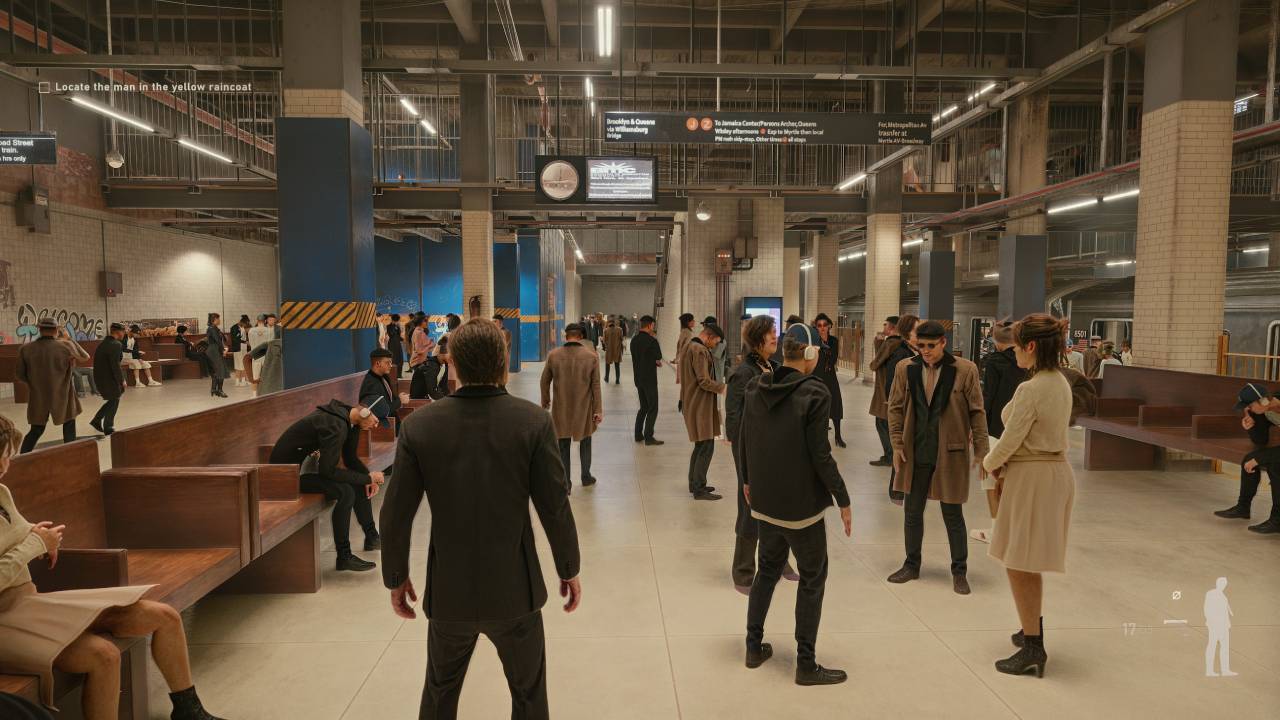
Character models are often reused, which can make the world feel like it has fewer unique characters. In addition, some cutscenes are lower quality than the character models used in gameplay, creating an inconsistent visual appearance. Invisible walls are also a problem. Although they can help control mission direction, their frequent use can make environments feel more confined than they are.
Not every one of these problems needs to be serious. The problem is that BLACKWOOD has many of them at once. When you put reused models, inconsistent cutscenes, invisible walls, awkward movement, weak enemy AI, and combined progression together, it's clear the game needed more polishing before release. The sound and voice presentation do not eliminate these weaknesses.
The most striking issue is how Anton speaks, since it lacks the personality needed to make him more engaging. This matters more than it might at first, since Anton's personality is at the heart of the whole idea. He has to come across as both a regular shopkeeper and a professional killer; the difference between these two identities should be evident not just in how the game is played, but also in how he performs and speaks.
More powerful voice acting might have made Anton more memorable and helped link the two aspects of his personality; as it stands, the delivery makes him seem less distinct than the concept warrants.
The story is also incomplete. Act One is currently available in BLACKWOOD as part of a three-act narrative intended for staged release, and the first section includes four main missions. The other acts are planned for future release. The episodic format only works if each chapter is substantial enough to read on its own, but BLACKWOOD's first act has another flaw: progression issues can break the story's flow.
As a result, the incomplete building becomes more obvious. It is by no means wrong to tell a longer story over several acts; the issue is that the available part must deliver a satisfying experience while also making the prospect of future chapters worth looking forward to. BLACKWOOD opens the story with an intriguing main character and an odd situation.
Still, because the narrative is incomplete, it is hard to assess the full extent of Anton's character development or the outcome of his dual life. The initial price is also worth discussing. The game launched at about £20 and currently offers only the first act of the intended story. It might not be unreasonable to pay for an incomplete narrative since more content is clearly coming.
However, it's harder to judge the value when the available content is also suffering from technical issues. If a game is already plagued by bugs and has incomplete content, failing to include the paid bonuses can make the launch experience even more frustrating. Yet BLACKWOOD has a distinct identity, something many higher-budget games struggle to create.
It's almost immediately clear why someone would be attracted to it.
It is an uncommon arrangement for a DVD store owner to be secretly employed as a contract killer. The two currencies underline this idea, and the day-and-night system gives the game a natural flow. The peaceful store sits beside the violent contracts, and the money from one killing can keep the other going. That is a truly clever foundation.
The issue is that many of the associated systems aren't well developed. Combat needs more accuracy, the enemy AI should behave more consistently, movement should feel smoother, melee interactions should be more responsive, and vehicle controls need improvement. The store also needs stronger management features so it feels like an important part of the experience, not a tedious task you can mostly set aside.
Most importantly, progress needs to be reliable. A game can still be enjoyable even if its graphics are imperfect or its mechanics are simple, as long as its main gameplay loop is fun. However, those flaws become much harder to ignore if a bug can cost you hours of progress. That is especially unfortunate, since BLACKWOOD's central loop has real potential.
Picture an alternative in which the store actually has importance. Throughout the day you carefully manage its finances, decide on the stock, take steps to improve the business, and slowly build a believable, genuine existence for Anton. At night, you take on ever more dangerous contracts, earn dirty money, upgrade your equipment, and decide how much to channel into the legitimate business.
At that moment, the two sides of the game are no longer separate activities.
Each contract matters because it helps maintain Anton's false identity. Since every decision made in stores serves to protect the life he is trying to save, each one matters. The quiet, routine lifestyle gives substance to the violence, and in turn the violence imparts a more sinister purpose upon the ordinary routine. The BLACKWOOD is what its premise suggests.
The game can't always reach that version. The dual-life format, the contextual takedowns, and the odd mix of genres have real appeal, even with technical flaws. Although the systems still need improvement, some of the game's concepts do work.
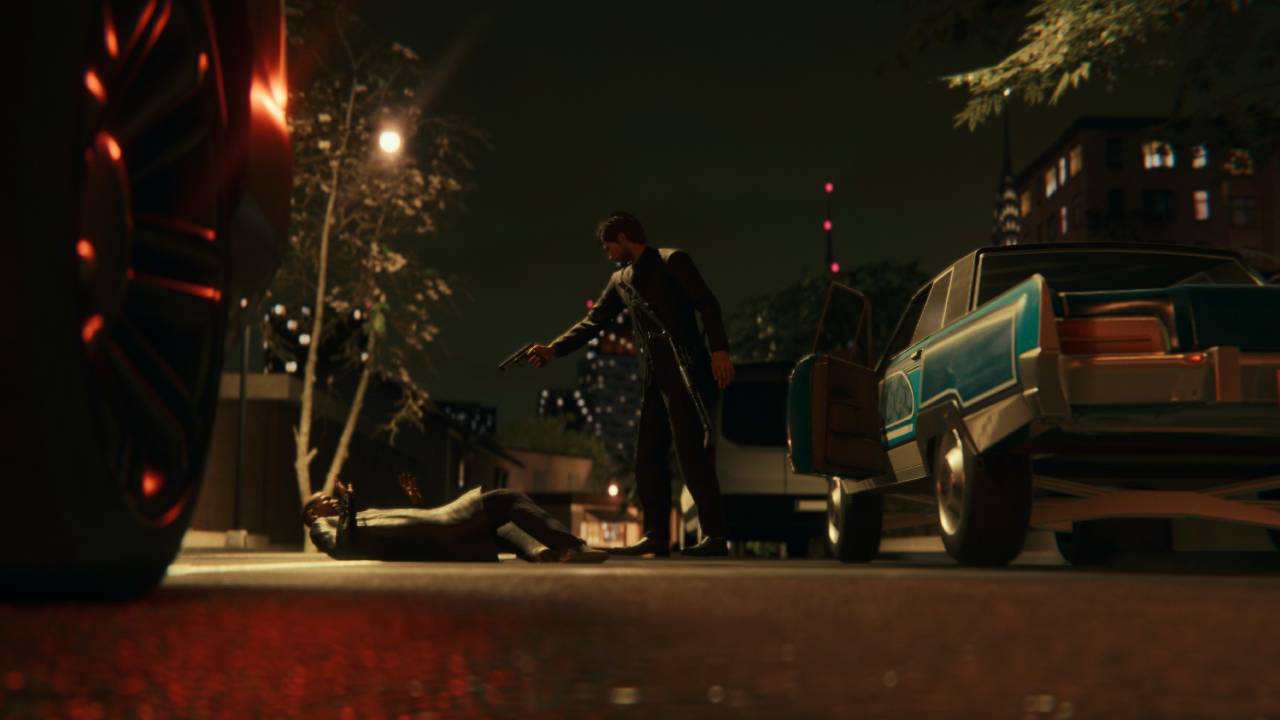
BLACKWOOD isn't interesting simply because it is an assassin game. It's interesting because it makes you care about what happens after the shooting stops. Anton isn't just a hitman who takes one job after another; he runs a shop, pays bills, meets customers, and protects a real identity. His criminal activities tie into that normal life.
If future updates fix the bugs that break the game's progression, improve the combat, refine the enemy AI, strengthen the store-management mechanics, smooth out the visual presentation, and deliver the remaining story sections more consistently, BLACKWOOD could end up much closer to the experience its premise promises.
The result is an ambitious game with an excellent elevator pitch that doesn't consistently deliver on it. BLACKWOOD has a compelling experience buried inside. The double-life structure works as a concept, and the dual economy gives that concept real mechanical potential. But until the technical problems and weaker systems are addressed, the potential remains more impressive than the finished experience.
Editor, NoobFeed
Verdict
BLACKWOOD's double-life concept and dual economy give it a unique identity, but inconsistent combat, shallow store management, technical problems, and an unfinished story keep its ambitious premise from reaching its full potential.
62
Related News
No Data.