
CAPTAIN TSUBASA 2: WORLD FIGHTERS Review
PlayStation 5
Captain Tsubasa 2: World Fighters turns anime football into a faster, deeper battle of reactions, stamina, super moves, and spectacular comebacks, but a few rough edges prevent it from reaching its full potential.
Reviewed by Tahmid Mahi on Aug 28, 2026
Captain Tsubasa has always been difficult to separate from the culture surrounding it. The manga has been running for decades, while its animated adaptations helped turn Tsubasa Ozora and his rivals into recognizable figures across Europe, South America, the Middle East, and other regions where football is more than just a sport.
The sequel arrives six years after Captain Tsubasa: Rise of New Champions, once again developed by Tamsoft and published by Bandai Namco. The previous game was already committed to an arcade interpretation of football, but it sometimes felt caught between an accessible sports game and a fan-focused adaptation.
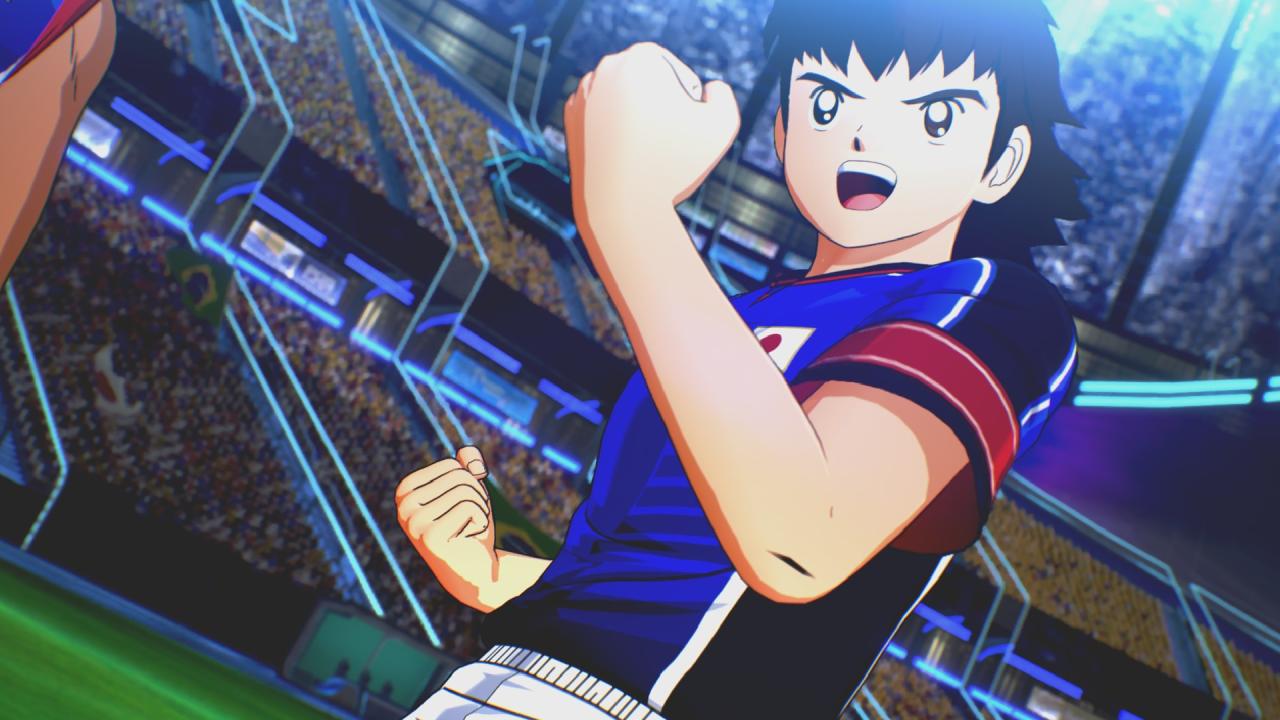
That makes the sequel easier to understand when you first pick it up.
You are not expected to learn complicated formations, realistic ball physics, or a long list of football rules before you can enjoy yourself. The focus is on passing, positioning, stamina, special techniques, and knowing when to attack or defend. At the same time, Captain Tsubasa 2: World Fighters still retains some of its strategic elements.
The result is a game that feels more confident about what it wants to be than its predecessor. World Fighters is an arcade action game built around Captain Tsubasa's exaggerated version of football, and its best moments come from embracing that idea rather than fighting it.
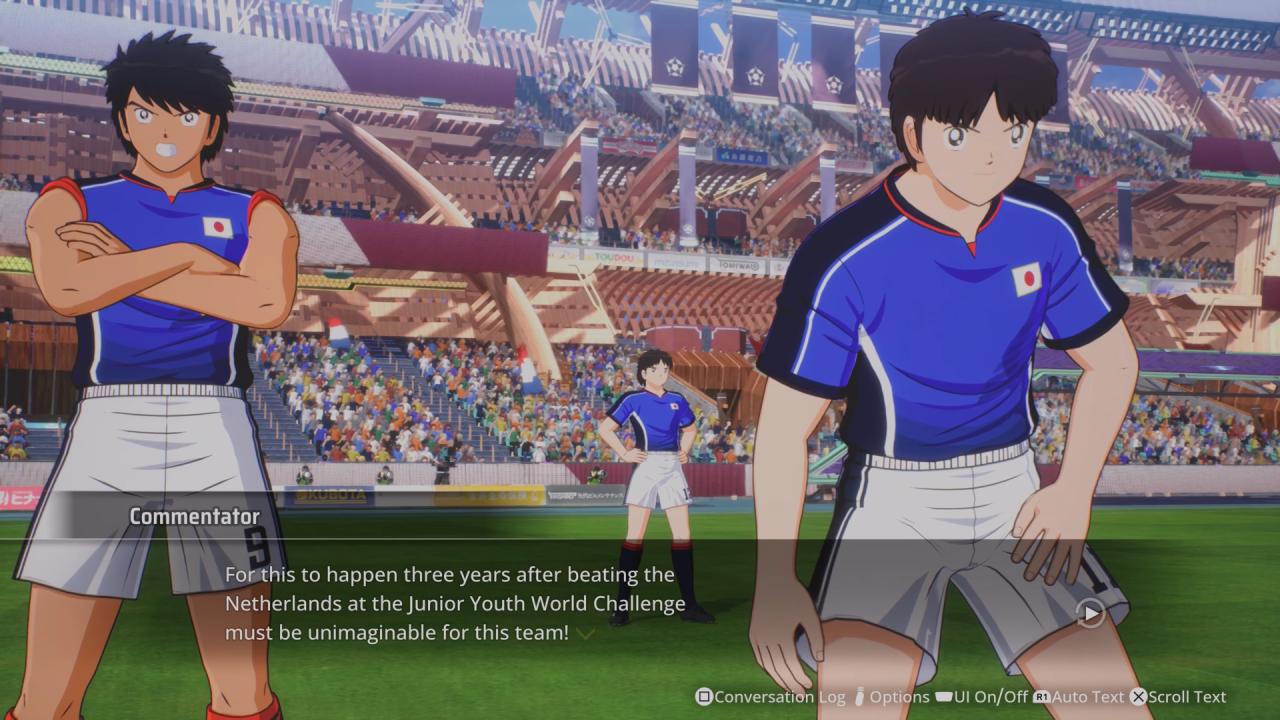
The story takes you into the World Youth arc, an important part of the original manga that had not previously received the same level of adaptation in an anime game. Tsubasa and his teammates represent Japan as they face increasingly difficult opponents on the road toward the World Youth Championship.
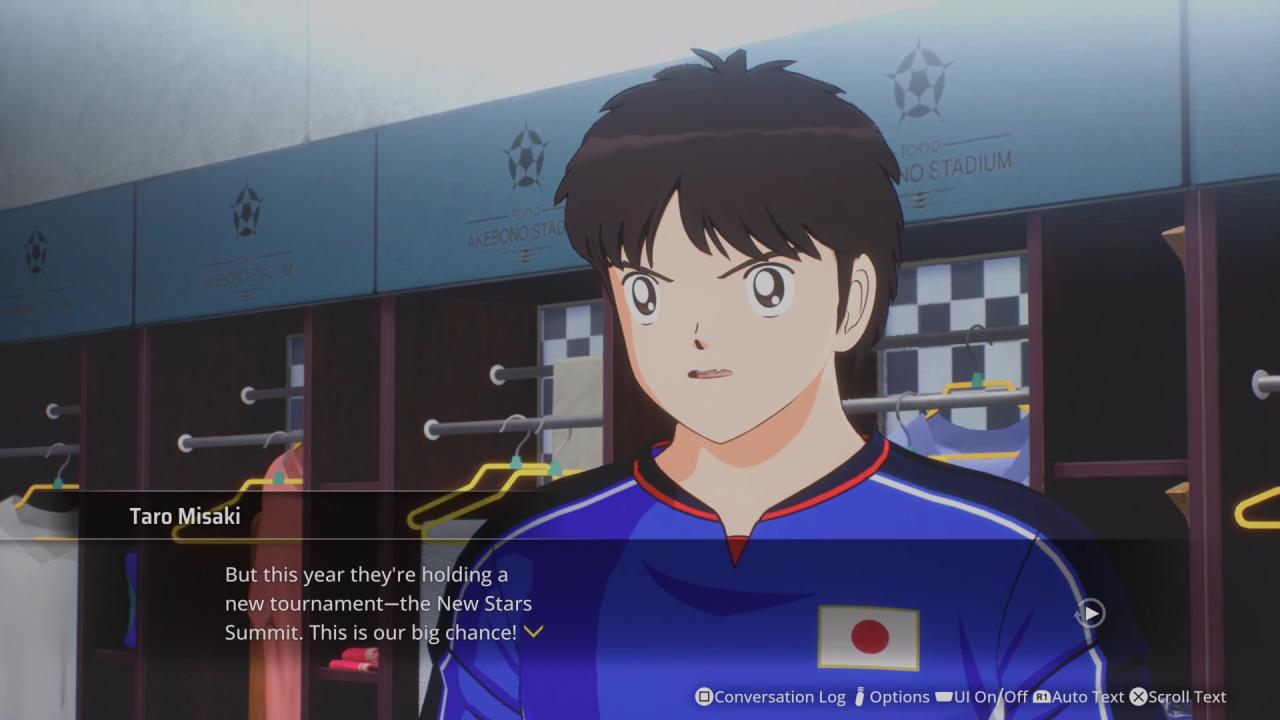
You also get the opportunity to create your own player through the New Stars Route. Your character joins the Japanese national team and becomes part of Tsubasa's journey, allowing you to experience the story from a more personal perspective.
This works particularly well for longtime fans because Captain Tsubasa 2: World Fighters understands that the relationships between players are just as important as the matches themselves. The story regularly brings in rivalries, friendships, personal motivations, and dramatic moments between opponents.
Captain Tsubasa 2: World Fighters also does a good job of incorporating original material while still preserving the atmosphere of the source. You can encounter stories that expand on familiar characters while still feeling connected to the world created by Takahashi.
That approach can occasionally interfere with the rhythm of a match, though.
When you are in the middle of a tense attack, and Captain Tsubasa 2: World Fighters suddenly switches to a character interaction or special sequence, the momentum can disappear for a moment. Thankfully, you can disable in-match narrative inserts, which makes this less of an issue if you want to keep your matches moving.
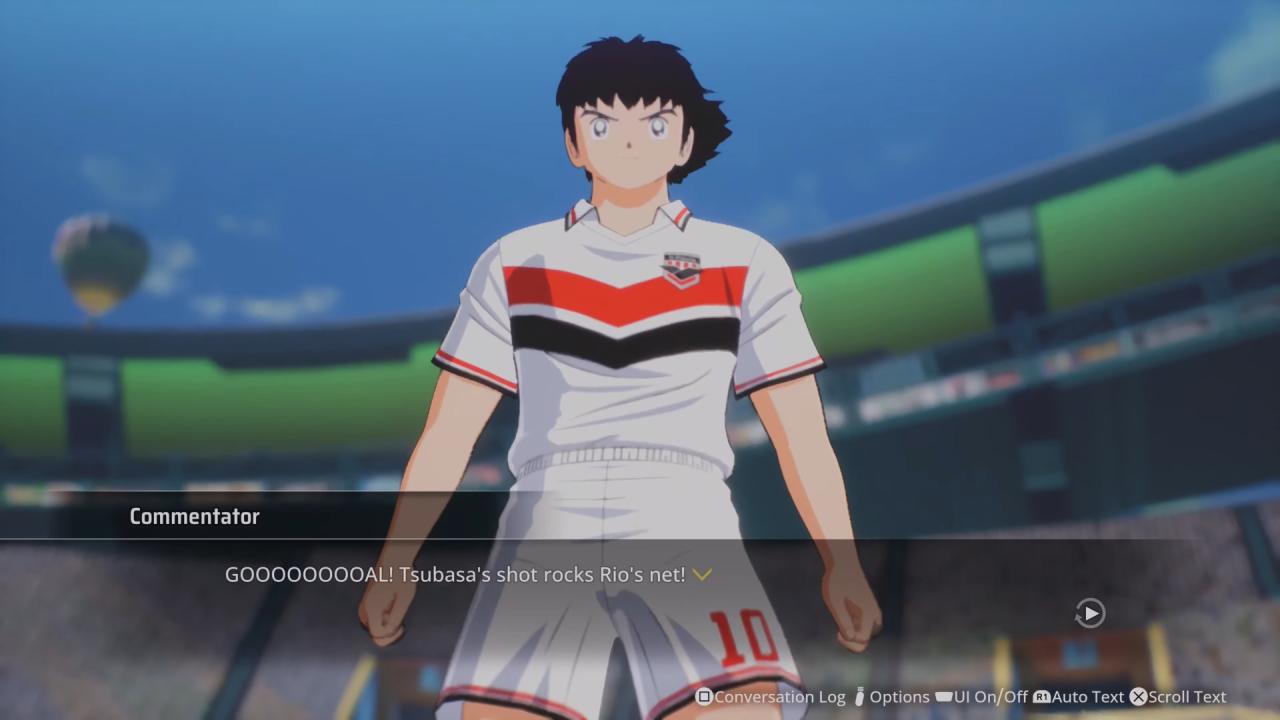
The bigger problem is that the story content can sometimes feel more substantial than what you are actually doing with it. Some unlocked sequences are additional scenes, recaps, or bonding moments rather than playable matches.
That could have added variety to the campaign and given you more reasons to experiment with the roster. Instead, your custom character remains tied closely to the existing story structure. The idea of creating your own footballer is appealing, but World Fighters doesn't fully deliver on the fantasy of building a football career from the ground up.
Once you step onto the field, however, Captain Tsubasa 2: World Fighters becomes much more confident. World Fighters doesn't try to behave like EA Sports FC or another traditional soccer simulation. It is much closer to an arcade fighting game that happens to use football as its foundation.
The basic controls are easy to understand. You move your player around the pitch, pass the ball, sprint, dribble, tackle, and shoot. Passing is quick and straightforward, while shooting requires more timing and attention. The controls have been simplified compared with the previous game, and the ball generally stays close to your player's feet rather than bouncing unpredictably around the field.
That change makes the game immediately accessible. You can start playing without spending hours trying to understand how the ball will react in every situation. The tutorial also introduces the major mechanics gradually, allowing you to learn the rhythm of a match before throwing more complicated systems at you.
Stamina becomes one of the most important resources once you start playing seriously.
Sprinting and dribbling drain it quickly, so holding the dash button constantly isn't effective. You have to decide when to accelerate, when to conserve energy, and when to make a defensive move. If you time your actions correctly, you can also avoid tackles while using less stamina, creating a system that feels somewhat like a parry mechanic in a fighting game.
This is where World Fighters shows more depth than its simple controls initially suggest. You are not just running toward the goal and pressing a button. You watch the opponent, look for an opening, manage your resources, and decide whether to risk an aggressive play.
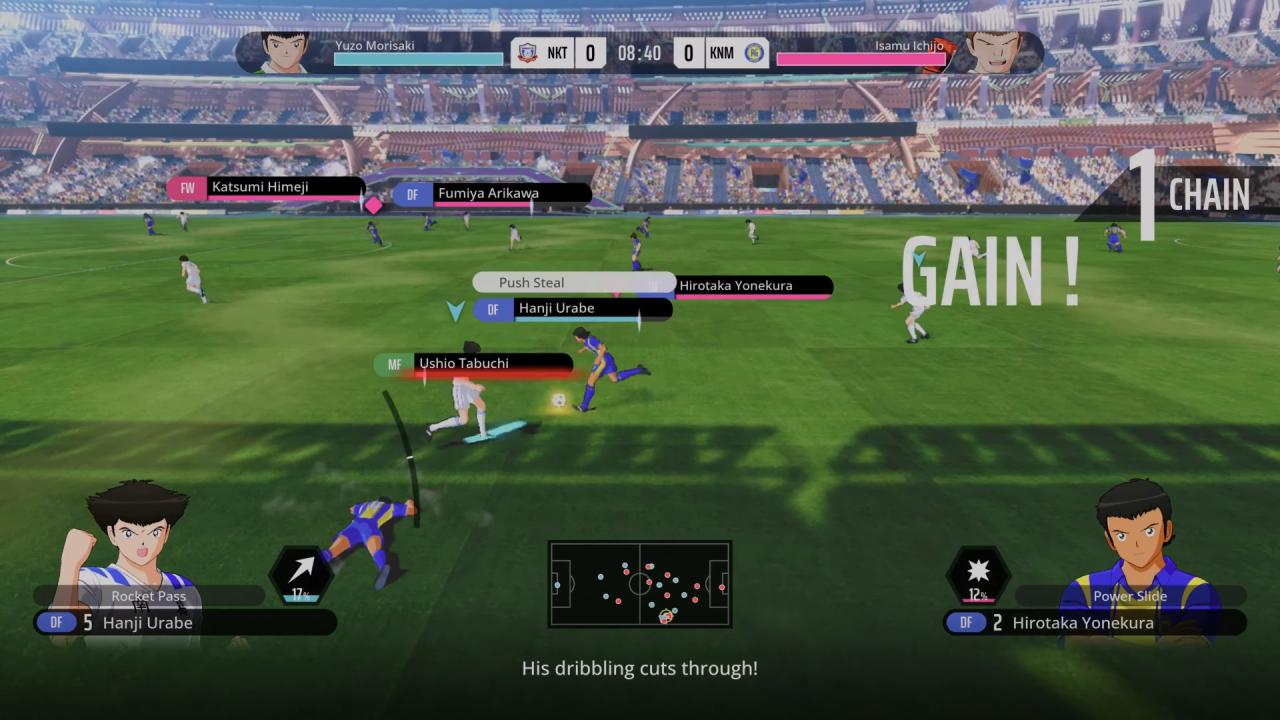
The chain system adds another layer to the game. Successful dribbles and attacking combinations build your chain level, which increases the power of your offensive actions. The key point is that losing possession can give your opponent that accumulated advantage. That creates a reason to protect the ball rather than simply rushing forward every time you gain possession.
Matches also become more hectic as they progress. The second half often feels more intense because players have built up their resources and gained access to stronger abilities. A match that seems under control can quickly change after a special tackle, pass, block, or shot.
That unpredictability is one of World Fighters' strongest features. You can build an attack around several teammates, pass into position, trigger a follow-up opportunity, and then finish the sequence with a special shot. Defensive players can respond with their abilities, meaning the opposing team is not simply waiting for you to score.
The expanded super-action system is one of the most significant changes from Rise of New Champions. Instead of limiting special techniques mostly to shots, World Fighters allows you to use them while passing, dribbling, tackling, and blocking as well.
The system works because special moves aren't completely free.
You need to fill your super meter before using certain abilities, which prevents you from constantly throwing out your strongest techniques. That means you have to pay attention to the situation and choose when the opportunity is worth spending your resources.
Super passes can help you break through defensive pressure, super dribbles can help you escape challenges, and super tackles can stop attacks that would otherwise create dangerous opportunities. Even blocking becomes more involved because defensive abilities can directly affect how an opponent's attack develops.
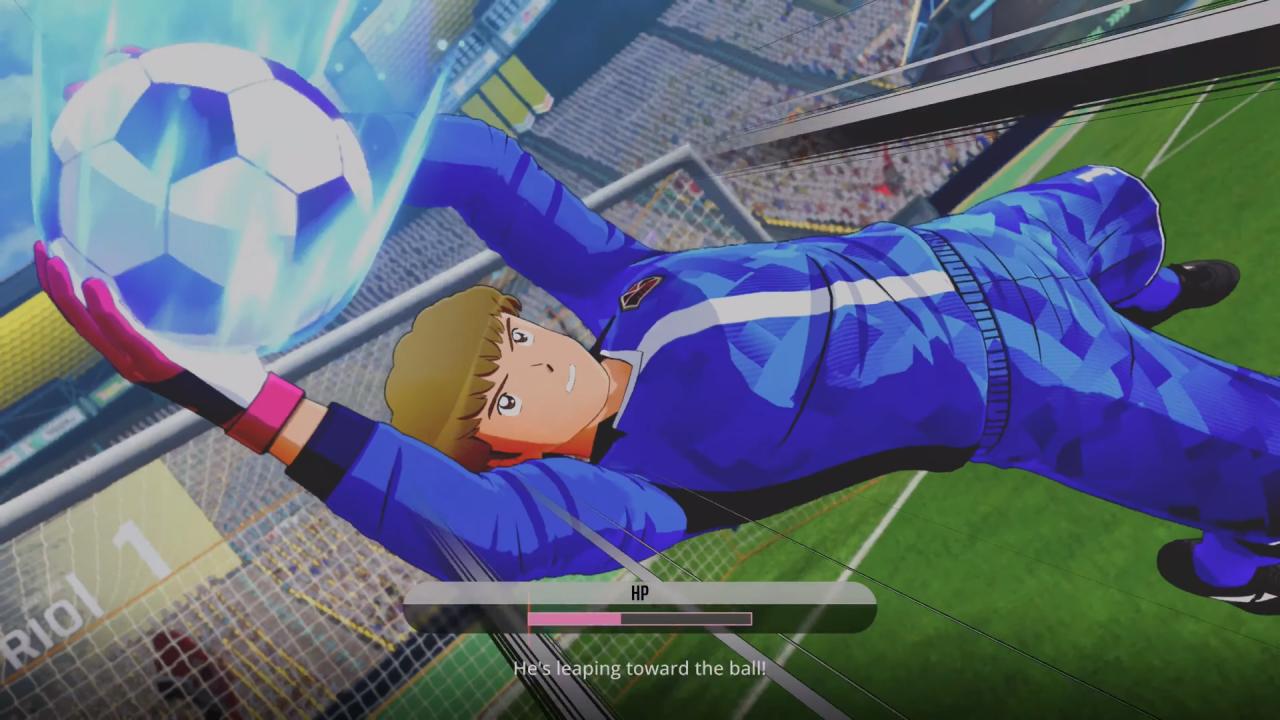
The goalkeeper system is another major change. Instead of treating the keeper as a passive character who simply reacts to shots, Captain Tsubasa 2: World Fighters turns scoring opportunities into confrontations between the shooter and goalkeeper. When an opponent shoots, you must react to the shot's direction and attempt to make the correct save.
This means scoring is not simply about reaching the penalty area and pressing shoot. You have to wear down the goalkeeper and create situations where your strongest attack can overwhelm their remaining stamina. A keeper who has been forced to make several difficult saves can eventually become vulnerable to a shot that would have been manageable earlier in the match.
The system works particularly well because it elevates goalkeepers. At the same time, it can become frustrating when a powerful shot effectively guarantees a goal because the goalkeeper no longer has enough stamina to respond. That fits the game's arcade philosophy, but it also means matches can swing quickly.
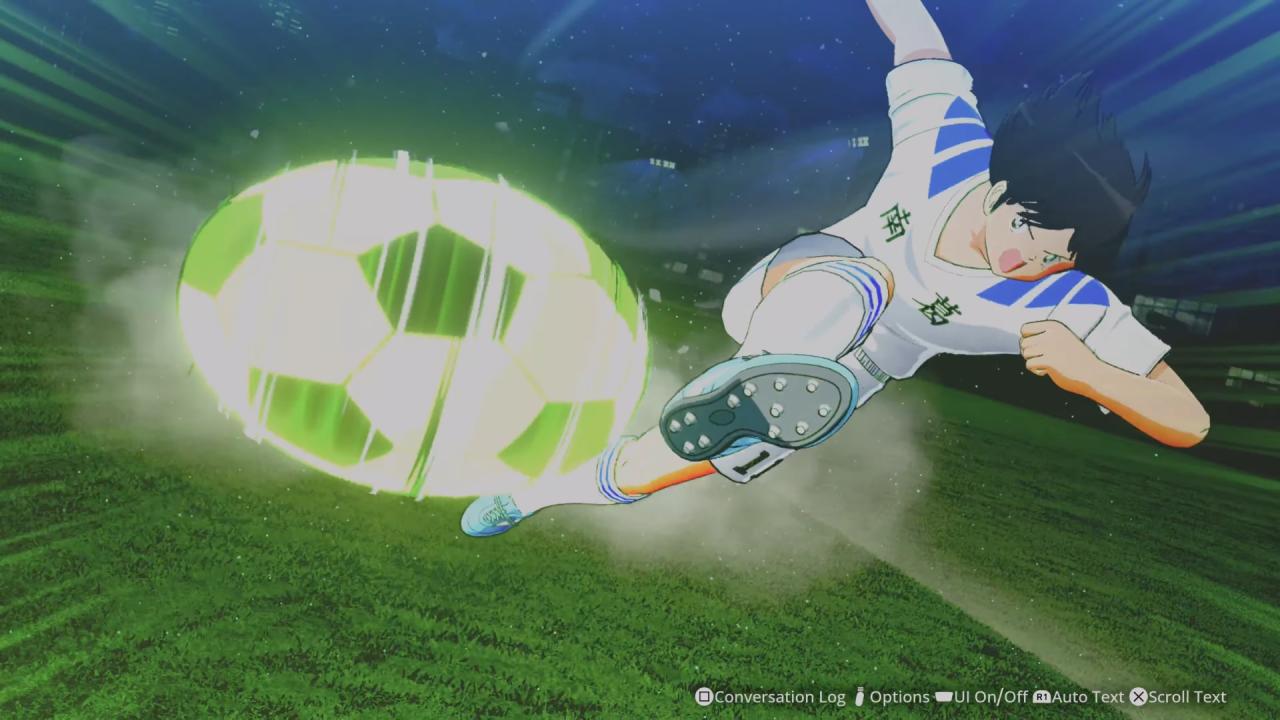
The special moves themselves are where the Captain Tsubasa identity becomes impossible to miss. You can launch shots that look nothing like conventional soccer, watch defenders perform exaggerated tackles, and trigger animations that recreate the dramatic style of the manga. Captain Tsubasa 2: World Fighters is not embarrassed by any of this.
Team super techniques go even further.
These powerful sequences require specific conditions and can only be used under certain circumstances, which makes successfully triggering one feel more rewarding. Miracle team moves similarly depend on particular positioning and situations, so you cannot simply activate them whenever you want.
That distinction matters because it keeps the spectacle from becoming completely mindless. You still have to understand the match to create the right situation. Knowing what a character can do helps, but knowing when to use it matters more.
However, the special-move animations can also be one of the game's biggest interruptions. They look impressive, but watching a long sequence repeatedly can break the rhythm of a match, especially when you were trying to respond quickly to what was happening on the field.
Progression is a mixed area. Your custom player can develop over the course of the story, and optional objectives can unlock additional moves and abilities. Completing certain match conditions can also reward you with new content, giving you a reason to replay specific encounters instead of simply finishing them once.
This system is more focused than the previous game's approach, but it also feels somewhat limited. You can customize your avatar's appearance and abilities, and your character can borrow special moves from the wider roster. That gives you some freedom to build a preferred style, whether you want an attacking forward, creative midfielder, or defensive player.
The problem is that Captain Tsubasa 2: World Fighters does not always give you enough meaningful reasons to experiment. Once you find combinations that work, it is easy to stick with them. Some missions encourage you to perform different actions, but they can feel more like optional objectives than meaningful changes to the way you approach an opponent.
The lack of a deeper team-building system is also disappointing.
The previous game allowed you to create customized dream teams, while World Fighters is more restrictive. You can adjust lineups, but you cannot freely create the same kind of fully customized squad. Considering the size of the roster, this feels like an opportunity that the sequel leaves on the table.
With more than 110 playable characters and 22 national teams, Captain Tsubasa 2: World Fighters has enough material to support a much larger team-building experience. You can see the potential in the roster, especially when familiar characters share the field with teams and players drawn from less familiar parts of the manga.
That limitation becomes more noticeable once you finish the main story. The game includes free practice, offline matches, local multiplayer, and online PvP, so there are ways to continue playing. However, the surrounding progression systems do not always give a strong enough reason to keep experimenting.
This is probably World Fighters' biggest weakness. The matches are enjoyable, but the systems around them aren't as developed as they could be. You can have a great time learning the mechanics, discovering special moves, and building combinations, but once you become comfortable with your preferred setup, Captain Tsubasa 2: World Fighters does not always give you enough new incentives to change it.
The same issue affects the game's customization. You can alter your avatar and unlock things such as hairstyles, songs, balls, and other cosmetic options, but these rewards do not have the same impact as building a new team or developing an entirely different player.
The graphics, on the other hand, understand exactly what this game needs to look like. World Fighters uses a visual style that captures the anime's exaggerated energy without turning every moment into a static recreation. Characters have expressive animations, special moves are filled with dramatic effects, and the pitch becomes a stage for the game's most ridiculous attacks.
The presentation works especially well during the most significant moments.
A normal pass can suddenly become the beginning of a longer combination, a defensive move can turn into a dramatic counterattack, and a shot can produce an animation that makes the match feel more like an episode of the anime than a soccer game.
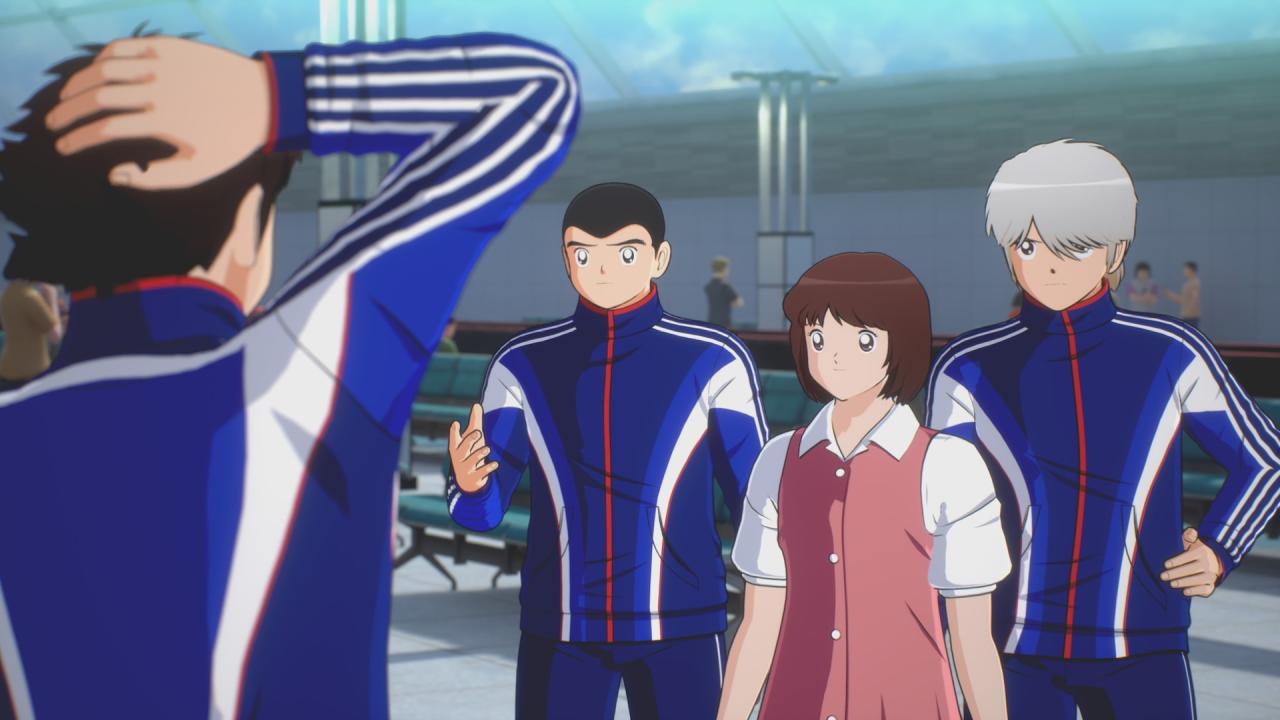
The game's visual novel-style story sequences are less impressive. Some conversations feel static, especially compared with the action during matches. Still, the number of optional story scenes and additional moments gives longtime fans plenty to appreciate, while some scenes use a manga-inspired presentation that fits the source material.
The sound design supports the action well too. Tadayoshi Makino returns as composer, with Captain Tsubasa 2: World Fighters featuring a large collection of energetic tracks designed around the fast pace of the matches. The music sells the drama of the biggest moments without making the game feel like it is trying to imitate a traditional sports broadcast.
Ultimately, Captain Tsubasa 2: World Fighters succeeds because it understands what kind of football game it should be. It does not need realistic formations, complex ball physics, strict foul systems, or detailed simulation mechanics. If you approach it expecting a traditional soccer game, you will probably find the absence of those systems strange.
The sequel also improves match flow in several important ways. Passing feels smoother, movement is easier to understand, special techniques are integrated into more gameplay, and the goalkeeper system adds more tension to scoring opportunities.
Its biggest problem is that Captain Tsubasa 2: World Fighters does not always keep pace with the quality of the matches themselves. The story is enjoyable and packed with fan service, but some playable opportunities are replaced by scenes. Progression gives you new abilities but does not always encourage experimentation.
Still, there is a lot to enjoy if you are interested in Captain Tsubasa.
The World Youth storyline gives longtime fans material that has been waiting for this kind of treatment, while the custom character lets you become part of that world rather than simply watching Tsubasa's story unfold.
Even if you are not deeply familiar with the series, the gameplay is accessible enough to give you a chance to understand why these matches are so entertaining. You do not need to know every rivalry or recognize every character to enjoy the basic loop of passing, attacking, defending, building your chain, and waiting for the perfect opportunity to unleash a special move.
Captain Tsubasa 2: World Fighters ultimately feels like a sequel that chose focus over trying to become everything at once. It takes the arcade foundation of Rise of New Champions and pushes it further, making the football more immediate while adding enough defensive and offensive systems to reward players who spend time learning them.
The problem is that six years was a long wait, and the sequel does not always feel as expansive outside the pitch as you might expect from that amount of time. The matches are the strongest part of the package, while the progression, customization, and long-term content could have been much more ambitious.
Even so, when the whistle blows and both teams start throwing special techniques at each other, World Fighters becomes exactly what a Captain Tsubasa game should be. It is fast, exaggerated, competitive, and built around moments that would make very little sense in a normal soccer game. That is also why it works.
For fans, the appeal is obvious.
You get the World Youth arc, familiar rivalries, a large roster, a customizable player, new super actions, and matches that capture the personality of the series. For newcomers, you get an arcade sports game that is simple enough to pick up but has enough systems underneath to reward better timing and decision-making.
Captain Tsubasa 2: World Fighters does not completely fulfill the fantasy of building your own football career or assembling the ultimate dream team, and its progression can leave you wanting more. But once you accept that the title is not trying to be a soccer simulator, the game's strengths become much easier to appreciate.
It is a colorful, fast-paced return that improves the most important part of the previous game: being on the field. The sequel may not have enough surrounding content to become a game you play forever, but it gives you plenty of reasons to keep coming back for another match, especially when you want to see just how ridiculous your next goal can become.
Editor, NoobFeed
Verdict
Captain Tsubasa 2: World Fighters delivers spectacular anime football with deeper mechanics, excellent goalkeeper battles, and exciting progression, though it still needs refinement in player switching, loading screens, and Super Tackles.
86
Related News
No Data.