
Europa Universalis V: Across the Pillars Review
PC
The expansion gives Iberia more political depth, alternative paths, and reasons to keep fighting long after the opening conflict ends.
Reviewed by Sarwar Ron on Nov 03, 2026
Europa Universalis V has a lot of ground to cover in historical strategy, but Iberia is one of those regions where a few major countries can shape an entire campaign. Castile, Morocco, and Granada all have their own ambitions, and their positions around the Strait of Gibraltar make their relationships particularly important. However, when you start a campaign in 1337, the familiar story of Castile eventually becoming Spain is still a long way from taking shape.
There are different powers to consider, political relationships to manage, and plenty of opportunities for history to take another direction. That's where Europa Universalis V: Across the Pillars comes in. Rather than simply adding a collection of historical events and country-specific bonuses, the expansion introduces systems that give the region a more connected campaign structure.
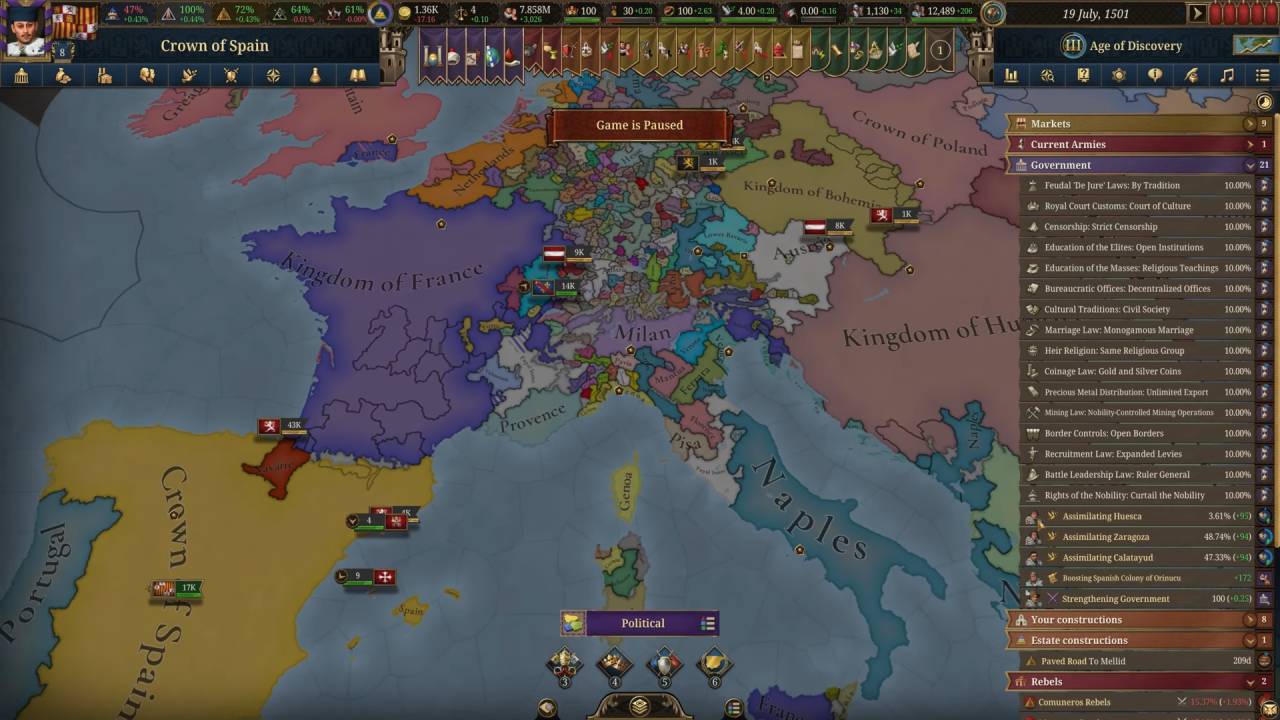
Your decisions during the opening decades can influence who controls the Strait of Gibraltar, while the outcome of that struggle can lead to another contest for dominance across Europe and North Africa. The expansion also gives the Iberian Union more flexibility, adds government options, and expands the available content for several countries that previously had fewer reasons to attract your attention.
The expansion came out on October 28, alongside the separate free 1.4 Rio Salado update.
It is worth keeping those two releases separate because not everything discussed in the developer diaries requires the paid expansion. Europa Universalis V: Across the Pillars brings the main Iberian content, while Update 1.4 introduces broader mechanical improvements and additional regional changes. Together, they give you plenty of reasons to revisit the region, whether you want to build a powerful Castilian empire or try to survive as a much smaller country.
The most important addition is a new Situation called The Battle for the Strait. It brings Castile, Morocco, and Granada into a political and military struggle over influence in the region. Each country approaches the conflict from a different position. Castile begins with Granada as a tributary and can use that relationship to apply pressure through Paria payments and specific Situation actions.
Morocco, meanwhile, has its own ways to increase influence, letting it compete without immediately sending an army across the Strait of Gibraltar. Granada is in a more difficult position, but it isn't simply a prize for whichever neighbor becomes stronger. Its sovereignty is tracked separately, giving you opportunities to strengthen your independence and resist the influence of both Castile and Morocco.
That distinction matters because it gives Granada a campaign objective beyond waiting for the two larger powers to get distracted. You can work towards building enough political and military strength to make your own decisions rather than accepting whichever arrangement the other countries impose.
The Situation also connects with the regular mechanics you already use throughout a campaign.
Warfare, diplomacy, Cabinet actions, interactions, and territorial expansion can all influence the struggle. You aren't expected to solve everything through a separate menu or rely on a specific event appearing at the right moment.
A campaign against Morocco might involve gradually increasing pressure while preparing for war, while Morocco might seek to build influence before military intervention. If you're playing Granada, you may have to take advantage of moments when your larger neighbors are occupied elsewhere.
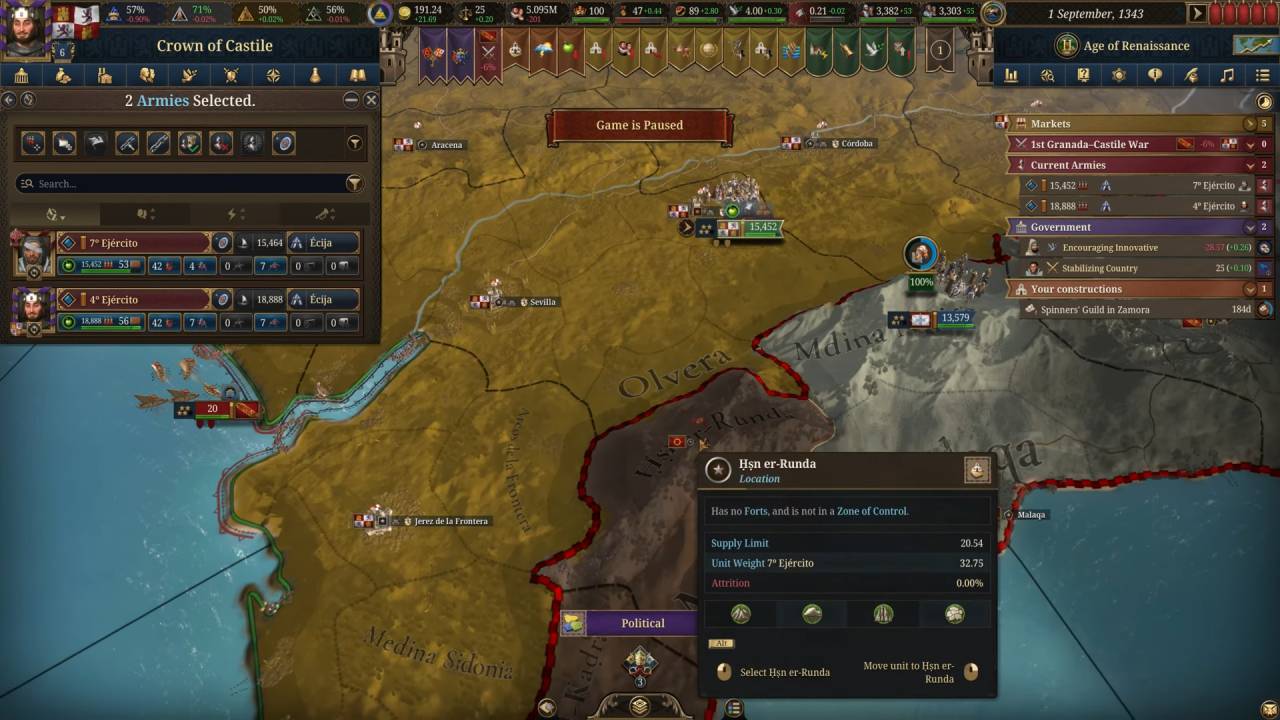
The three countries also have different conditions for winning the Situation, which should make their campaigns feel distinct. Granada gaining independence isn't supposed to provide the same result as Castile establishing control over the region. The developers have also adjusted the AI to compete more actively for the outcome, though its real performance will take extended play to judge.
The underlying idea is promising because the opening of an Iberian campaign should now depend more on which country makes it rather than following one predictable historical sequence. What makes The Battle for the Strait particularly interesting is that winning doesn't end the struggle.
Instead, the victorious country moves into another Situation called The Golden Century. Once you've established yourself as the growing power in Iberia and North Africa, other countries have a reason to challenge your position. That provides a natural route from a regional conflict to a broader struggle for influence.
The Golden Century tracks your progress in two different areas: colonial dominance and European dominance. Each has four thresholds that give bonuses and unlock powerful actions as you advance. That means you have more than one way to go. You could try to grow abroad, while holding your ground in Europe, or shore up your position at home before looking abroad. Progress in one area doesn't automatically resolve the problems in the other, so you'll have to decide where your resources and attention are most useful.
Naturally, a growing power also attracts opposition.
Countries that want to contain your expansion can organize themselves through the Grand Alliance. If the organization becomes strong enough, its members can arrange a challenge at 25-year intervals. This means you can't simply measure your success by how much territory you've acquired. You also need to consider how much resistance your expansion creates and whether the countries around you are becoming strong enough to cooperate.
Flashpoint events add another layer to this Situation. These larger events are connected to reaching particular thresholds and can present decisions with substantial rewards or penalties. Their value depends on how much they affect your campaign. Still, they offer a chance to make important moments feel different from the routine notifications that appear throughout a long strategy game. The Golden Century also has mirrored versions for Castilian (Spanish), Moroccan, and Granadan victories. As a result, becoming the dominant power doesn't automatically force every campaign into the same historical direction.
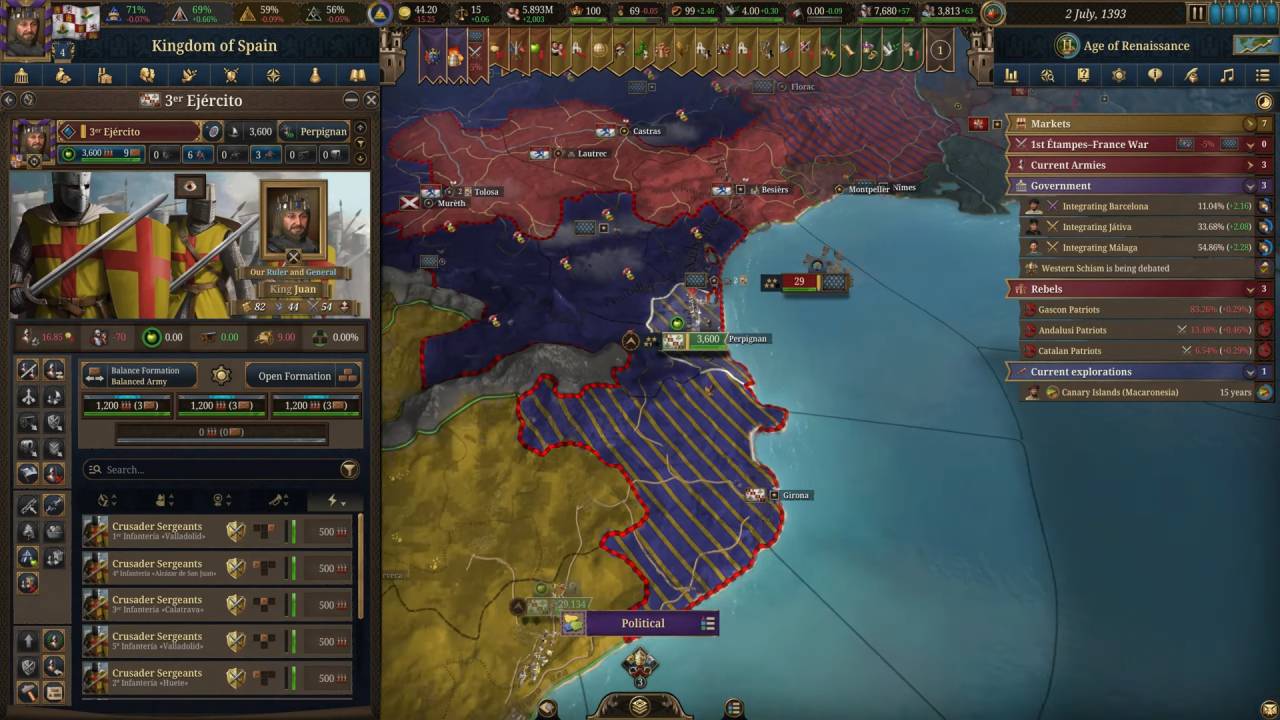
The Iberian Union receives another major overhaul, which is especially relevant if you're interested in forming Spain through an alternative route. The familiar Castile-Aragon marriage is more complicated in Europa Universalis V because the game begins in 1337, when the historical dynastic circumstances were different.
Personal Unions also involve more detailed inheritance rules, so the developers have adjusted the general marriage event as well as the special Iberian Union mechanics.
The free 1.4 update changes the marriage union event to make it more consistent. Eligible Christian Iberian monarchies can become involved between 1400 and 1550, rather than the opportunity being tied to one specific historical pairing. The event can establish a marriage union, with a proper Personal Union following if the countries have a common heir. This should make forming a union feel more natural across different campaigns.
Europa Universalis V: Across the Pillars takes the idea further by introducing a special Iberian Union that can involve Castile, Aragon, Portugal, and Navarre in different roles. You aren't limited to the familiar arrangement where Castile becomes the senior partner and brings Aragon under its influence. The system gives you more freedom to build alternative political relationships, allowing different countries to shape the peninsula's future.
Once you form the union, you can choose a centralized or decentralized approach. Centralization is meant to bring the territories together more quickly. Decentralization is a slower process, where the component kingdoms can keep more of their own laws and customs as the political union develops over time. The choice between the two is not inherently better. Centralization works well if you want to grow quickly and build a more cohesive state. In contrast, if you want to rule a composite monarchy with several distinct territories, decentralization may be a better choice.
This is a welcome change, as it makes forming the Iberian Union a strategic decision instead of another predictable step toward making Spain. This may affect how you manage the territories you control and gives Portugal, Navarre, and Aragon a better chance to be important parts of an alternate-history campaign.
That is why the new bureaucracy options are worth looking at.
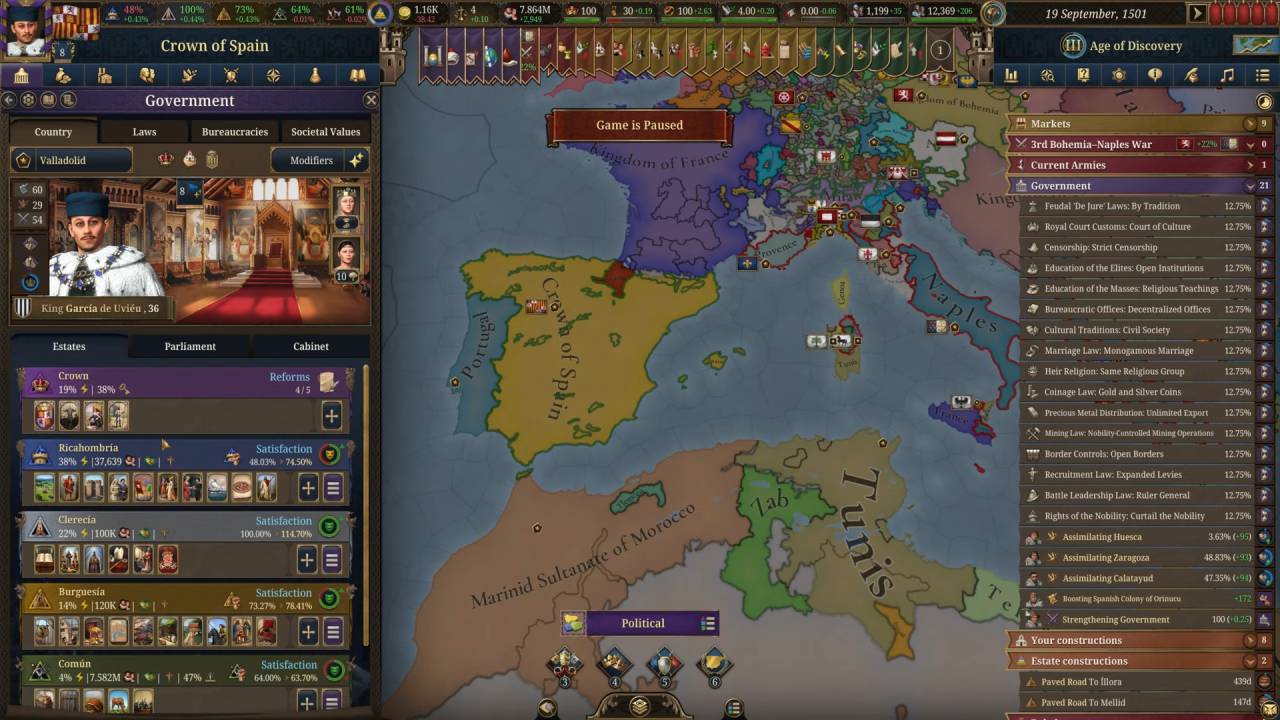
Managing those territories is another challenge. A council-based system of government for Castile and Spain, based on the historical administration of the Spanish monarchy, is provided for. Some councils oversee different areas of government, such as state affairs and finance, while others manage specific territories in your growing empire. Available choices include councils linked to Castilla, Estado, Hacienda, and the Inquisition. Extra councils of crusading or military orders may also become available when you meet the required conditions.
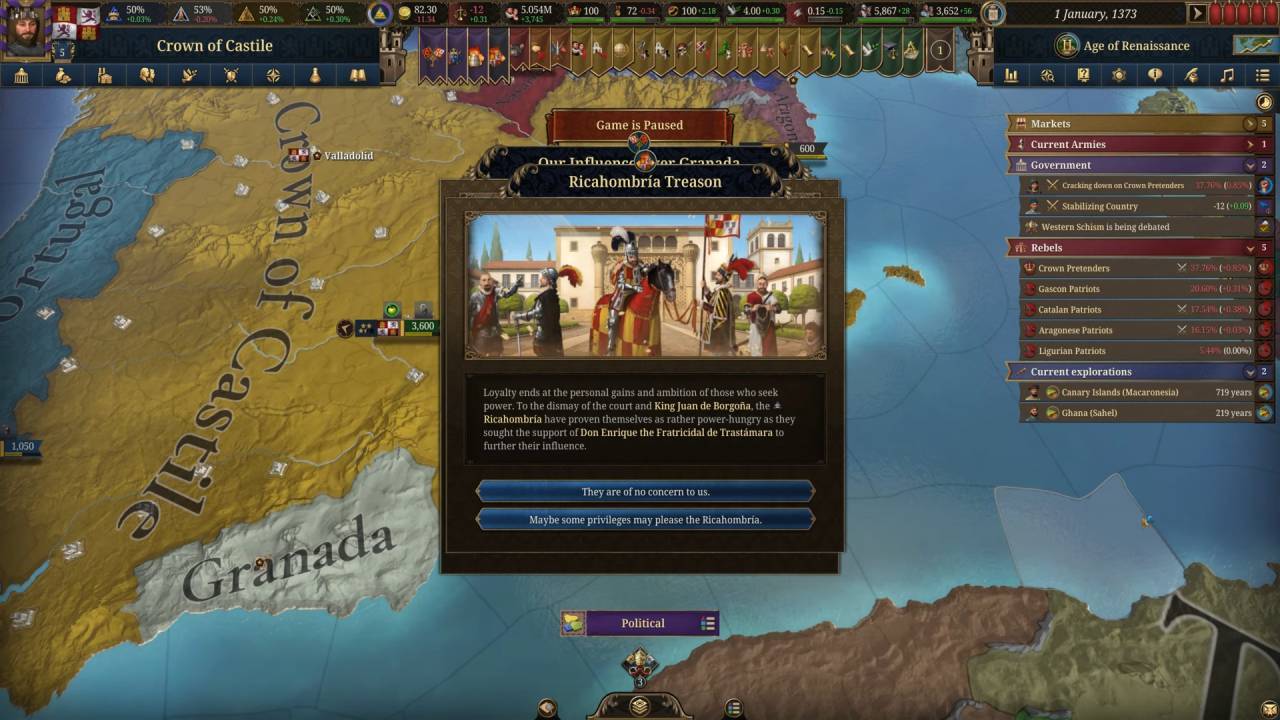
When your territory grows, you can acquire regional councils for places like Aragon, Portugal, Italy, the Indies, and Flanders. This gives your government a closer connection to the lands you control, rather than treating administration as a collection of unrelated bonuses. The system also extends beyond Castile and Spain. Morocco and Granada receive their own government options, while Portugal, Navarre, and other smaller Iberian countries gain additional choices.
The free 1.4 update also adds eight more general bureaucracy options for Islamic countries, making the changes relevant beyond the Iberian region. Another useful addition in the free update is the improved Itinerant Court. Previously, the policy was mostly tied to an event that let you move your capital at the start of a ruler's reign.
Update 1.4 makes it more practical through the Seat of the Itinerant Court building. It works somewhat like a local governor, but you can move it elsewhere, giving your government a more direct connection to the map. There are restrictions, however. You need to be sufficiently decentralized, with the developers specifying a value of plus 10, and moving the court requires a Parliament request.
You can make that move once every five years, and you aren't restricted to major urban centers because provincial capitals are also eligible. This makes the feature useful for countries outside Iberia, including Ethiopia, which is highlighted in the developer diary. Moving your court closer to key territories can offer administrative advantages, though its position also affects how proximity spreads to surrounding locations.
It might not be the biggest feature in the update, but it gives you another reason to think about where your government operates. Instead of treating your capital as a permanent administrative center, you can adjust your court's location to meet the needs of your expanding country.
Exploration also receives additional regional content through Europa Universalis V: Across the Pillars.
Once the Americas have been discovered, you can undertake eight expeditions searching for legendary golden cities. These expeditions give you specific objectives to pursue rather than simply providing another country modifier. They also introduce the possibility of finding something significant through the resources and people you send into unexplored territory.
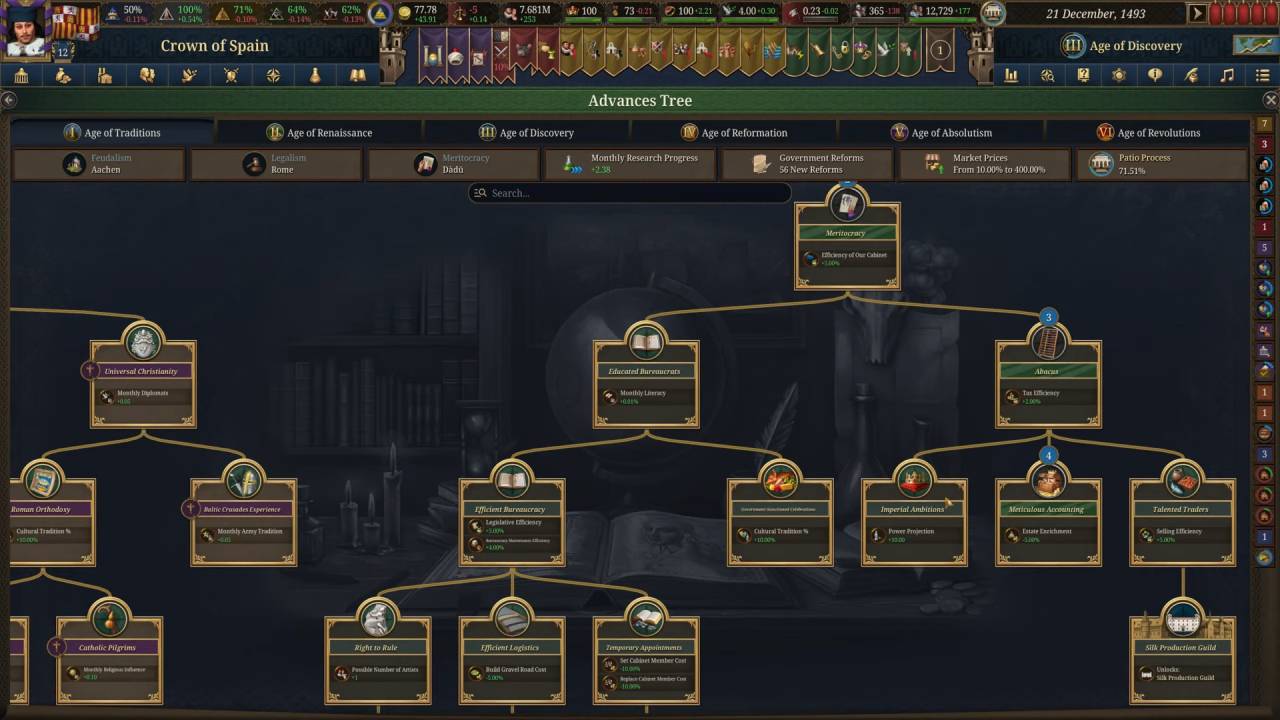
Castile receives additional treasure-fleet expeditions tied to the wealth moving from the Americas, including the Flota de Nueva España and the Galeones de Tierra Firme. These additions fit naturally into a campaign focused on colonial expansion and give the country's naval activities more regional flavor.
Religion receives attention as well. Iberian and Maghrebi countries gain actions connected to Crusades and Jihads, including demanding Papal Bulls, organizing crossings of the Strait, calling volunteers, and summoning military orders. The religious mechanics introduced elsewhere in Europa Universalis V provide the foundation for these additions. Still, the new regional options help connect them to the political and military situation around Iberia. Military religious orders also receive additional types, holdings, and historical Grand Masters, giving them a more recognizable presence in the world.
Beyond the major systems, the expansion adds more country-specific content throughout the peninsula.
Castile and Granada receive plenty of attention, but Portugal, Aragon, and Navarre aren't being left behind. Smaller places such as Mallorca and Andorra also receive additional flavor, while some smaller countries and releasable nations gain their own advancement paths. This matters because regional expansion should give you reasons to try different starting positions instead of focusing almost everything on the largest countries.
Castile, for example, can research Hermandades Concejiles before unlocking a decision that leads to the Santa Hermandad government reform and eventually a light infantry unit. This is a good example of how the additional content can connect different parts of your country. Rather than receiving several unrelated rewards, you follow a chain of research and decisions that leads to another government option and a military benefit.
The free update also expands research across the region, adding hundreds of advances spread between individual countries and culture tracks. Jewish and Sephardic communities also receive additional content, including events dealing with the difficult coexistence of religious communities in medieval Iberia. These additions add historical and cultural depth without forcing every country to follow the same development path.
North Africa receives its own share of improvements. Morocco gets content dealing with its relationship with tribal groups, which can provide strength while also creating challenges for the ruler. Tunis has an overhaul of its starting position, while Tlemcen and other Maghrebi countries and cultures receive new advances, units, and decisions.
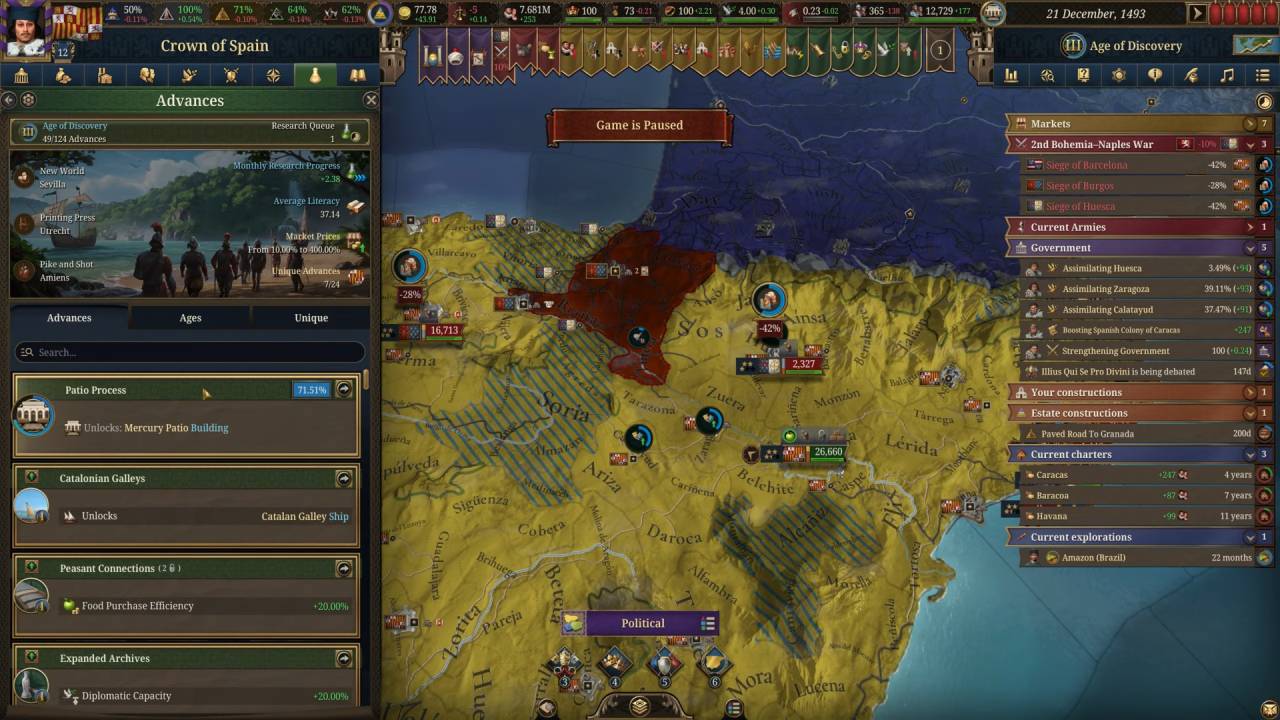
Town charters and naval options add further regional content, helping make North Africa feel like a campaign region in its own right rather than simply an area waiting to be conquered by an expanding Iberian power.
The strongest part of Europa Universalis V: Across the Pillars is how its different additions support one another. The Battle for the Strait gives you an immediate objective, while The Golden Century provides a reason to keep pushing after you've secured your position. The Iberian Union offers alternative political arrangements, and the council systems give you more ways to manage the territories you acquire. Expeditions, religious actions, research, and country-specific decisions then provide additional directions to explore.
Some questions can only be answered through extended play.
The AI's ability to compete for the Strait and organize the Grand Alliance will strongly influence how challenging these Situations become. The value of the new councils and government options will also depend on whether they create meaningful trade-offs or simply encourage you to select the same obvious bonuses every time.
The expansion's systems sound connected on paper, but their long-term value will come down to how well they work together during an actual campaign. Even so, the different starting positions already offer appealing possibilities. Castile is the natural choice if you want to experience the struggle for Iberia, work towards the union, and build an expanding empire.
Morocco offers a different challenge, balancing its domestic political position with opportunities across the Strait. Granada is perhaps the most tempting option if you want a difficult campaign, since you'll be trying to establish independence while dealing with two much stronger neighbors.
Portugal, Aragon, and Navarre also become more interesting thanks to the flexible Iberian Union and their additional regional content. The distinction between the paid expansion and the free update is also worth remembering.
You don't need Europa Universalis V: Across the Pillars to benefit from the broader 1.4 changes, including the improved Itinerant Court, additional bureaucracy options, and expanded research content. However, the expansion brings the main Situations, the special Iberian Union, and much of the country-specific flavor that gives the region its new campaign structure.
Ultimately, Europa Universalis V: Across the Pillars can make Iberia feel like more than a collection of countries competing for territory. You begin with a struggle over Granada and the Strait of Gibraltar, but the consequences can develop into a much larger contest for dominance.
Whether you're trying to build Spain, establish a powerful Morocco, or lead Granada towards independence, your decisions can shape what happens next. That sense of possibility is exactly what makes a regional expansion worth revisiting.
Admin, NoobFeed
Verdict
Across the Pillars expansion adds meaningful political struggles, flexible unions, and deeper regional content, giving Iberia several distinct campaign paths. Its long-term success will depend on how well its new systems perform in practice.
87
Related News
No Data.