
Rivage Review
PC
A first-person sci-fi puzzler about a time loop, a limited power meter, and a missing crew.
Reviewed by Adeela Tas on Oct 12, 2026
Rivage comes from Exnilo Studio, a small indie team based in Quebec, and it is their first game. The studio is two people, and the idea they built the project around is simple to say but tricky to pull off: a time loop that works like a budget rather than a punishment.
Raw Fury is publishing it, the same label behind Blue Prince, Kuukiyomi, Routine, Plank Mana and Monsters Are Coming. That name raises expectations, and it is worth setting them back down a little, because Rivage is a smaller, quieter game than the ones it gets compared to. It's single-player only and available on PC, PlayStation, and XBOX.
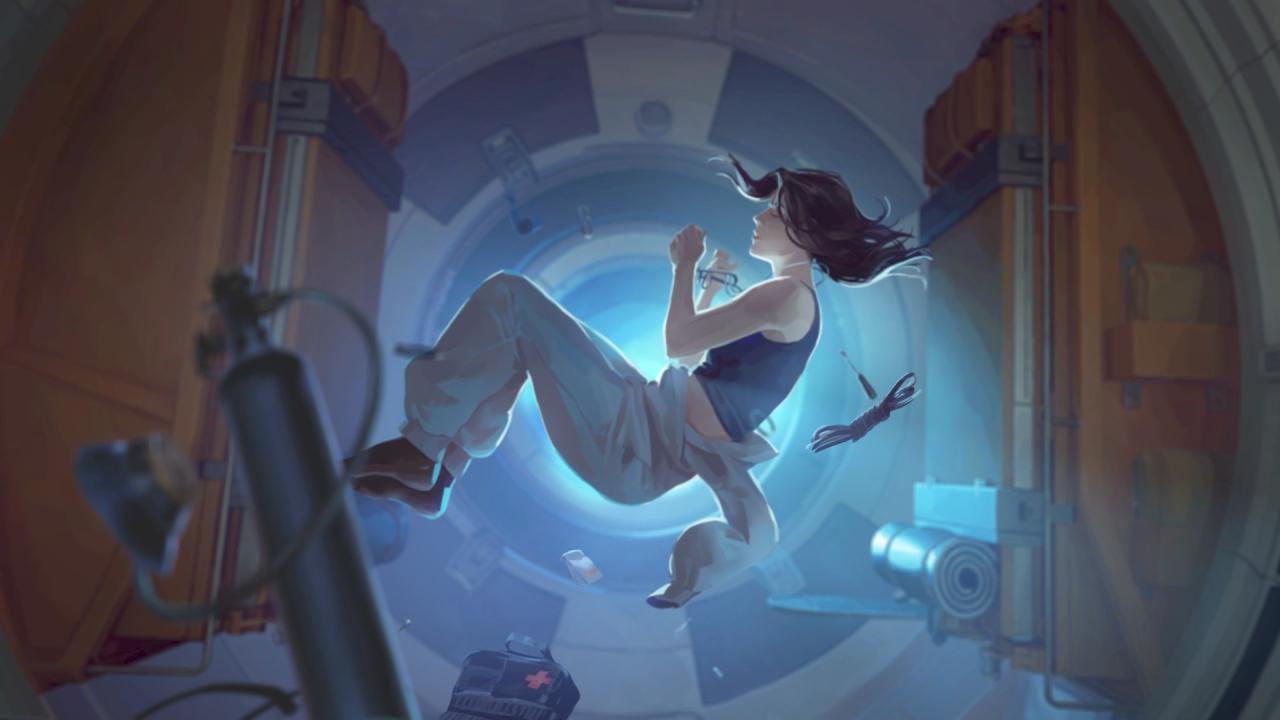
Rivage's story begins in the 25th century.
Humanity has looked for a new home beyond the solar system, and a promising candidate appears: Vesta, an exoplanet that might support human life. A research station called A.R.E.S. is put into orbit around it, with a team of scientists on board. Then something goes badly wrong: the station gets swallowed by a space-time anomaly, and every link to the outside world is lost.
You play as Miranda, a young doctor who wakes up at 9:32 A.M. on Sunday, May 1, 2467. Nobody else is there. Your crewmates are missing, the station runs on very little power, and the only voice keeping you company is the K9, an automated unit you seem to have been fitted with for research.
Your job is to figure out what happened to everyone, and the only way to do that is to relive the same stretch of time again and again. The story works because the crew never appears on screen. You get to know them through what they left behind: journals, encrypted messages, research logs, and papers sitting on workstations nobody has touched.
Each person comes across as someone with their own goals, beliefs, and worries, and as you collect these pieces, you start to see a group under strain long before the anomaly arrives. What happened to them, and how the anomaly ties into the station's fate, stays open until the finale, and progress always costs something. In Rivage, the story is good enough to pull you from one puzzle to the next, but the people in it are a weaker point.
The characters read as cartoonish.
Few of them feel poorly matched to their jobs. Each of these characters could be brilliant, yet none seems able to work well on a small team. Even Miranda is hard to warm to. You can see why they act the way they do after months of stress, but you never meet them before things fell apart, so it is hard to care. Some of the dialogue also feels stiff, with a few turns of phrase that make you stop and figure out what they mean.
Events also escalate faster than the characters can keep up with, so you end up playing for the next step more than for the people. The loop is where Rivage is most interesting. In most time-loop games, you reset when you die, so every cycle counts as a failure.
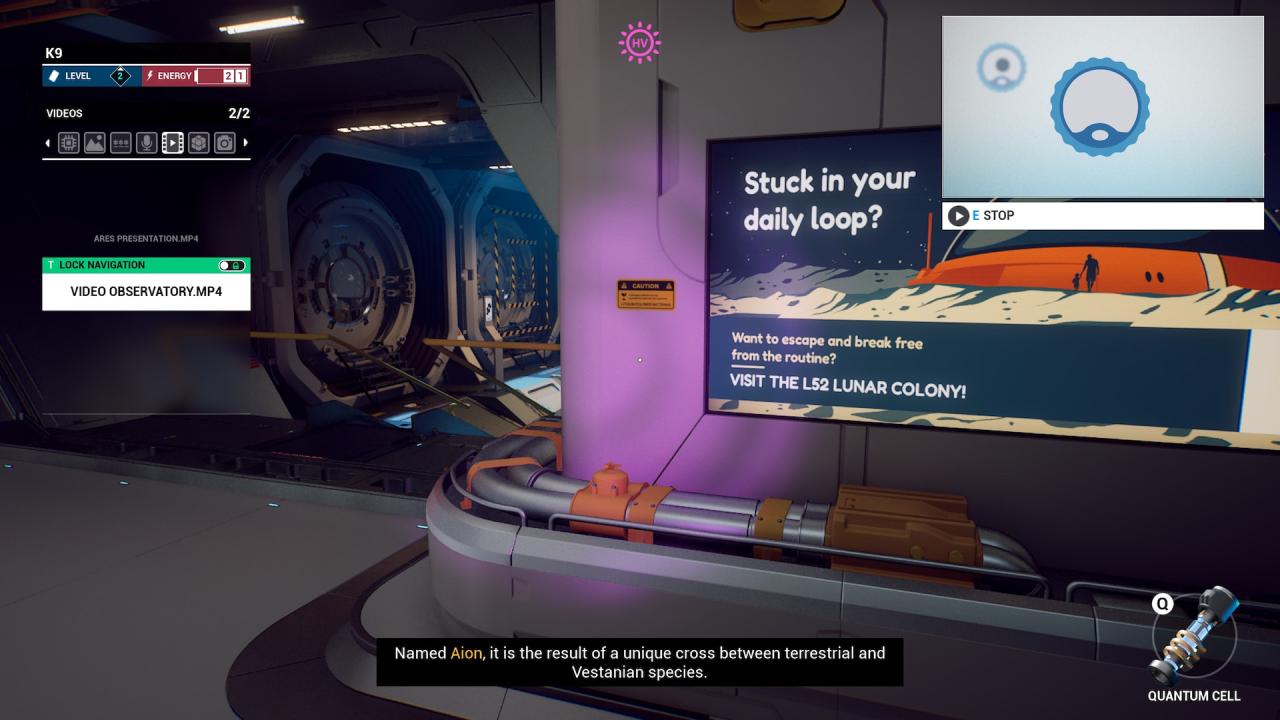
Here, the station simply runs out of power. When the lights go out, Miranda wakes up at an arcade machine in the storage room, which is strange for the middle of a high-tech research station, and the game never really explains why it is there beyond a few messages on a computer. Nothing killed you.
You just used your time poorly, and the game wants you to spend it better next time. That turns the loop into a planning exercise rather than a test of reflexes. You manage power, and every action costs some of it. Opening a door uses a unit, and running certain machines does, too.
You start with only four blocks, so you plan a route before you walk it, and a wrong turn can cost you a whole loop.
Beyond the power limits, the station is full of anomalies that tend to stay in one place. In the galley, a handful of fruit hangs in the air like a tiny edible solar system. In the garage, large boxes drift about on their own. Some objects bend time, and some can move you from one spot to another.
Almost everything in Rivage is interactive. You can open drawers, pick up books, look through shelves, and turn objects over in your hands. Most of it leads nowhere, and picking up your fifth plate in the kitchen, hoping this one will matter, is part of the experience. You can only hold one item at a time, which feels clunky until you remember the loop is built around that kind of limit.
Some actions ask you to hold a key for three seconds and wait three more, and in a game this repetitive, those pauses add up. The K9 makes the repetition bearable. It works as an in-universe journal, recording the codes you find, the puzzles you solve, the messages you decrypt, and any access level you gain by scanning an ID card.
It carries into the next loop, so each new cycle starts with what you already know rather than from nothing. It also has a built-in screenshot function, and you should use it constantly because emails, codes, and images show up more often than you expect, and skipping one means another loop to find it.
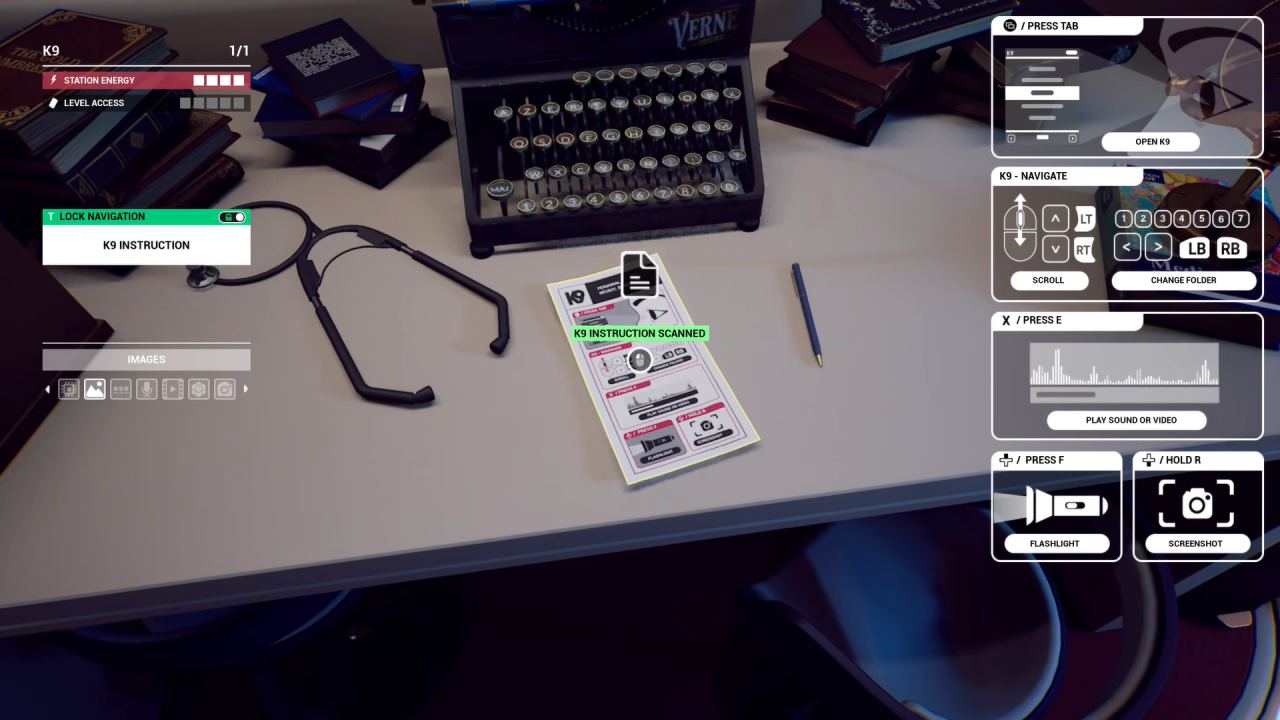
The K9 has friction, though. Inspecting an item while the overlay is open to compare photos is awkward, and the lock navigation toggle only makes it bearable, especially when the view resets between days. Scanning a card is fiddly too: you print it, flip it over, hold the scan button, then dig through a crowded menu to confirm it saved.
The puzzles are the old-fashioned kind.
You deal with circuit boards, keypads, passwords, and codes that are written down somewhere else entirely. You can use computers directly, and a few have command-prompt screens where you type out what you need. These feel natural with a mouse and keyboard and less so with a gamepad. Some puzzles finish in a single loop, while others need several, because something you learn in one cycle only matters in the next.
Rivage plays like an escape room with a time loop layered on top. The setting conveniently strings puzzles together, and the clues' placement often makes that obvious. A box on a corridor bench holds a card explaining how to reset the date-of-birth code on your safe, and it is hard to say why it was left there.
Three batteries sit in different rotating workspaces, and a handwritten placard in the corner marks where each one is. Once you accept that the station is a puzzle box first and a believable workplace second, most of it holds together. Think Myst, with the good and bad that comparison carries. Certain Puzzles in Rivage are lovely. Plotting a probe's course around Vesta in a single run looks great and feels good.
Working out an ASCII code to reveal a password is satisfying too. The rotating workspace is a neat idea, though it unlocks by arranging a cube that projects a zigzag pattern onto the ceiling, an odd way to open a terminal. Other designs don't quite fit the station: three escape pods for a crew of four or five, and cramped quarters that give way to a long corridor and an enormous atrium.
Small things like that chip away at the sense that the place is real.
Other puzzles are harder to like. The timed one is a chore and needs adjustment. The audio puzzle only works if you can listen over clean background noise. A circuit puzzle depends on color, which would be a wall for anyone who is colorblind, and the game acknowledges nothing about it.
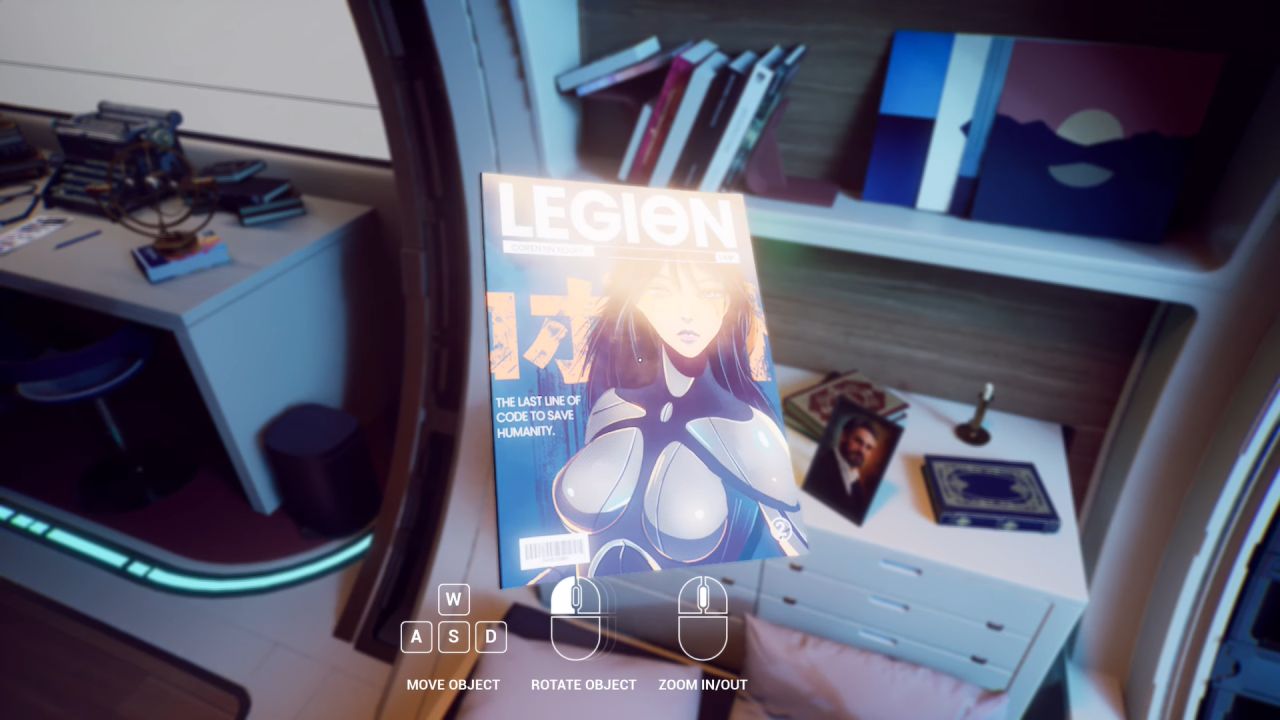
Some solutions seem randomized, which helps replay and keeps a guide from handing you the answer, but sometimes a clue feels like it landed in the wrong spot. A unique Rubik's Cube stumped you completely, and the answer turned out to be simple, but the clue just didn't click visually.
Dragging an item to turn it can also accidentally toggle its buttons, and the cube is the worst offender. In places, you think you are following the story but are actually pulling the thread toward the optional ending, which you want, since the base ending feels flat.
Rivage is rarely hard in the way that makes you feel clever. When the clues aren't obvious, you can often brute-force the answer. The last puzzle you solve before the credits has you mixing components and chemicals to build a part, and you can guess it correctly without having found the information you needed. That kind of ending deflates the fun.
The sharp, satisfying moment of spotting the missing link and cracking something rarely comes. After around 85 loops to reach the credits, you know every corner of the station, and that familiarity has its own appeal. The true ending hits just over ten hours in.
Rivage has no combat or XP to grind.
Only what you know grows. The K9 stores that knowledge, and your progress comes from putting it to use, so the nearest thing to leveling up is spotting a better route through the station on your next loop. That mostly works. The danger is that nothing visually separates important objects from decorative ones.
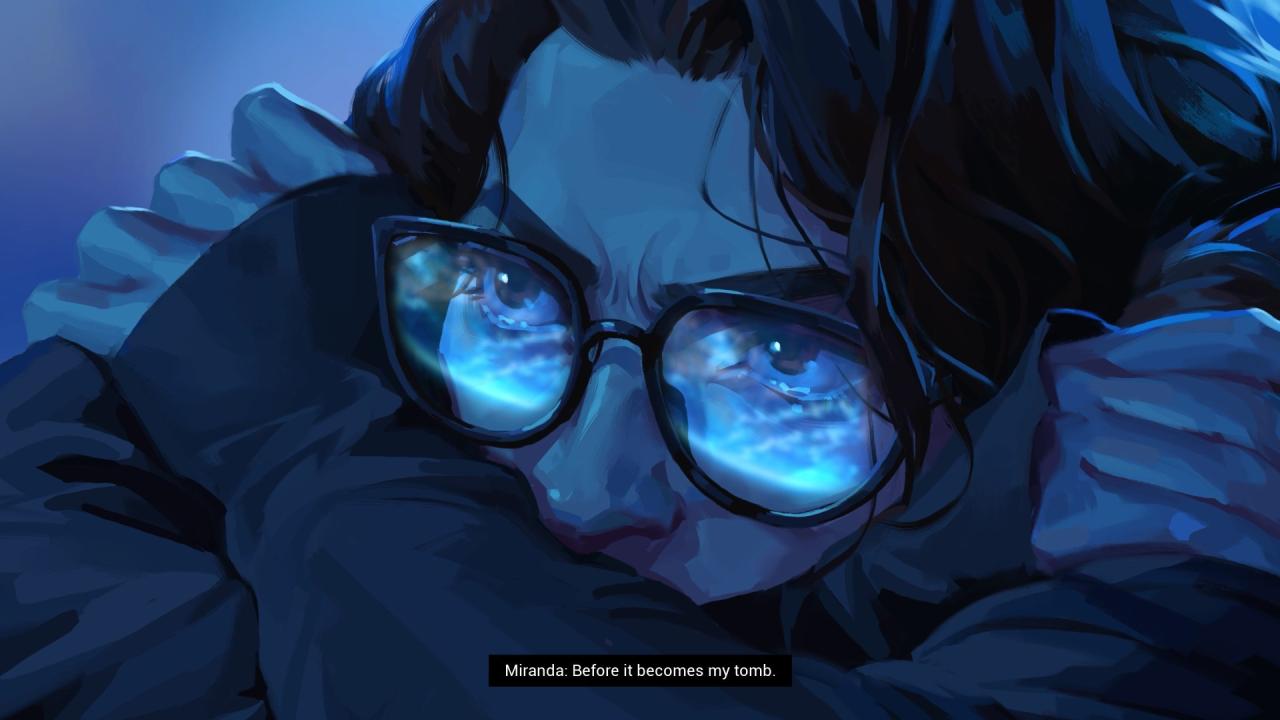
You can burn time hunting for a needle in a haystack, and it is easy to repeat solved work before you realize the K9 already holds it. Rivage introduces itself with a short, barely animated concept-art sequence and says very little else, so you figure out the loop and the K9 by trying things.
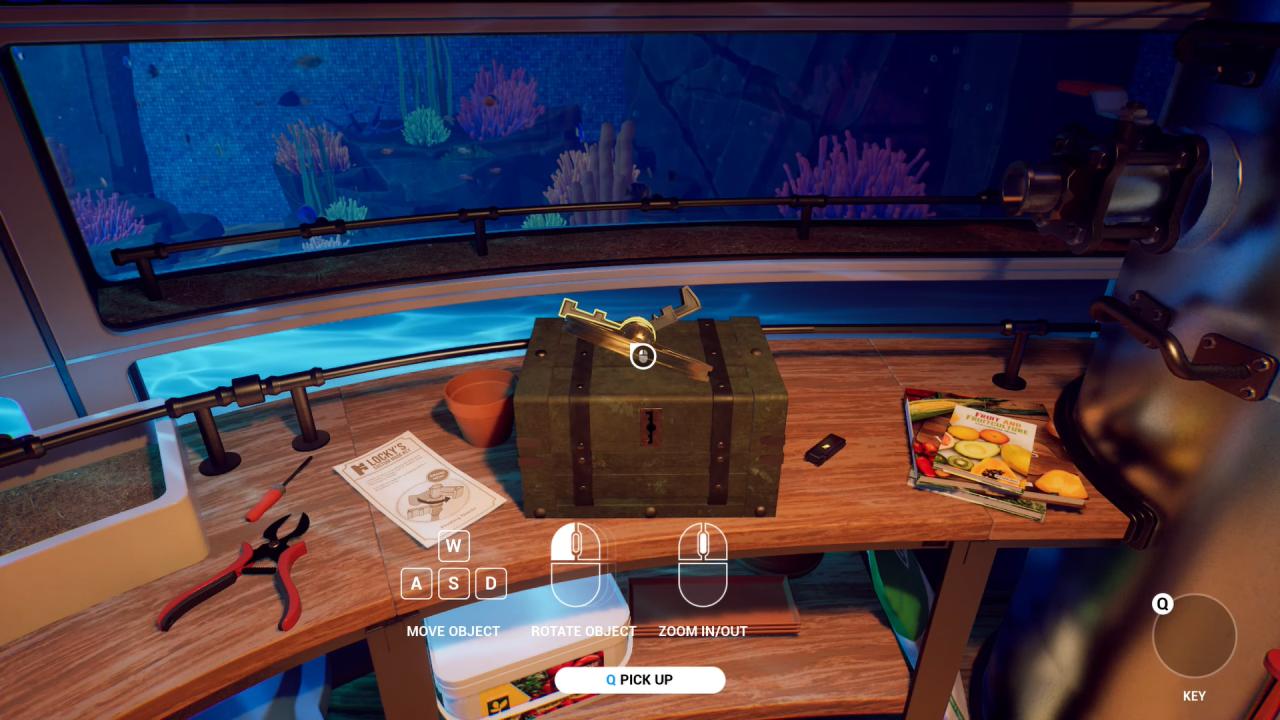
Visually, the station is Rivage's best feature, and it looks great. The design mixes futuristic Art Deco with NASA-style industrial, and even medium settings on an older laptop look good. Rooms are distinct and pleasant to move through, from crew quarters to labs, a greenhouse, and engineering, with a rail line running through it all.
Each space belongs to someone, and you learn who they were from their desks and leftovers. The views of space are beautiful, though reflections sometimes spoil them. The lighting is a different matter. The contrast between light and dark looks pretty, though it makes items easy to miss.
The scene lights up objects you pick up, so you end up tilting a sheet of paper to catch a light source before you can read it. The flashlight does not fix this. Its beam is too narrow to light the room you are searching, yet too bright to read text up close because it washes out the writing.
Blue pen on white paper doesn't help, and film grain across the whole picture blurs fonts even more.
The grain was a bigger problem at launch; a patch addressed some of the blurriness within days, and some settings tweaks helped. A few graphics settings also seem to revert after you relaunch the game, and frame rates dropped often until you turned some options down, at which point a stable 60 FPS became possible. The game has no manual save, only autosave, which is odd for a game built around repetition.
Rivage's sound is a mixed bag. The ambiance suits an empty station, and the quiet adds to the isolation, but the voice acting is harder to defend. French-speaking actors deliver many lines in English, and the inflections often land awkwardly. The audio logs have people nearly shouting over very little, which feels directed rather than natural.
For a small indie project that is easy to forgive, though, you will want to skip a few logs if you are not afraid of missing something. One more thing is how the game was made. The studio has said it used generative tools in an early prototype and replaced those assets with art made by its own artists for the final version.
That settles it for you. At the end, the phrasing around a Dyson sphere can be read as a sphere built by someone named Dyson, which takes some weight out of an otherwise emotional scene. By the end, Rivage leaves you with mixed feelings that lean positive.
Rivage's strengths and flaws are both clear, so here is how they balance.
It does several things well: the K9 is a smart tool, the station is a place you want to be inside, the puzzles are mostly satisfying and ask you to recall things from earlier, and the world and its story unfold naturally. It also does several things poorly, from onboarding to lighting to a handful of chores that need adjusting.
Many of these problems can be fixed without touching the story or the gameplay, so waiting for a few more patches makes sense if you are undecided. Expect Blue Prince, and you will be let down, and the scale of Outer Wilds is out of reach. Rivage is much smaller and more personal.
Editor, NoobFeed
Verdict
Rivage is a puzzle game about a time loop and a power limit, with a detailed station and a K9 that saves progress. Lighting, characters, and a few chores need work. Suits patient players.
68
Related News
No Data.