
Why Resident Evil Requiem Keeps Leon Kennedy In The Background
Capcom finally brought its veteran agent back in a major role, but the return leaves his biggest character threads untouched.
Opinion by Adeela Tas on Sep 10, 2026
For almost three decades, Leon Kennedy has embodied the calm competence you expect from a Resident Evil hero. He walks into bioterror disasters, survives impossible situations, and usually finds a way to keep moving. So when Capcom confirmed his return as a playable lead in Resident Evil Requiem, the excitement was understandable.
After more than ten years since his last major original appearance in the series, it seemed like the perfect opportunity to give one of the franchise's most recognizable characters a meaningful new chapter. Instead, the game gives you plenty of Leon without giving him much of a story.

Leon is playable for a large portion of the campaign, sharing the spotlight with Grace Ashcroft, and his action sequences generally do what they need to do. The issue is not his gameplay. The issue is what happens around that gameplay.
Resident Evil Requiem uses Leon heavily, but rarely explores the history, conflicts, or personal baggage that could make his return matter.
Before launch, Capcom and the game's director framed Leon's comeback as part of an effort to reconnect the series with its central narrative. After years of introducing new protagonists and focusing on side stories, bringing Leon back as a main character was supposed to help return the franchise to its foundations. Yet once the story reaches its conclusion, the material that actually defines Leon remains largely untouched.
You can spend hours controlling him and still learn surprisingly little about the person he has become. His current life, his work, his frustrations, and the things he has carried since his earliest days are mostly treated as background. Being a major playable character is not the same as being a majorly developed character.
That distinction becomes especially noticeable when you look at how the series handled its protagonists in earlier games. Resident Evil 5 and Resident Evil 6 gave their main characters clear personal stakes. Chris, Sheva, Leon, Helena, Jake, and Sherry were not simply familiar faces inserted into an outbreak. Their histories affected what was happening around them, and their individual journeys helped give the plots direction.
Resident Evil Requiem takes a more restrained approach with its returning characters. The older heroes can occupy significant portions of the campaign while their deeper histories remain in the background. Leon is perhaps the clearest example because there is so much unresolved material available to draw on.
One of the biggest missed opportunities is the Division of Security Operations, or DSO.
Leon has spent years working within the organization, which was created in response to the failures and political complications surrounding earlier government attempts to deal with bioterrorism. It should provide a natural way to explore what happened during the long period between the previous mainline game and the events of Resident Evil Requiem.

Instead, the DSO barely develops beyond being an organization Leon works for. You do not get much sense of how it changed over those years, what its internal problems might be, or where Leon fits within it beyond his basic position. Fourteen years of potential character material effectively disappear. The organization could have shown you how Leon's career affected him, but the story largely chooses not to.
The second major problem is the unresolved government corruption surrounding Leon's career. His work repeatedly puts him in situations where the institutions claiming to protect people are compromised, secretive, or responsible for covering up failures. The previous game left some of those tensions hanging, creating an obvious opening for a future story.
Resident Evil Requiem does not meaningfully continue that thread. Instead, the political questions that once gave Leon's missions another layer fade into the background as immediate threats take priority. That makes his job feel more functional than personal. He is there to handle the crisis, but the larger reasons he might distrust the system around him are rarely allowed to shape his character.
Raccoon City is another major part of Leon's history that gets less attention than it should.
He was one of the survivors of the 1998 incident, and that experience has followed him throughout his adult life. The government's handling of the disaster, the cover-up, and the decisions made during those final hours have always offered a strong foundation for Leon's character.
Resident Evil Requiem does connect to that history, but it doesn't offer the kind of substantial new revelation that could finally move those old questions forward. The official story surrounding Raccoon City remains largely unresolved from Leon's perspective. Considering how much of his life began with that incident, leaving those questions sitting in the background feels like another missed opportunity.
Then there is the simplest problem: Leon doesn't really get a new personal arc after Resident Evil 6. That should have been one of the easiest places to start. He has experienced trauma, loss, government manipulation, and repeated bioterror disasters. After Resident Evil 6, everything he survived made a new story that explored how those experiences changed him.
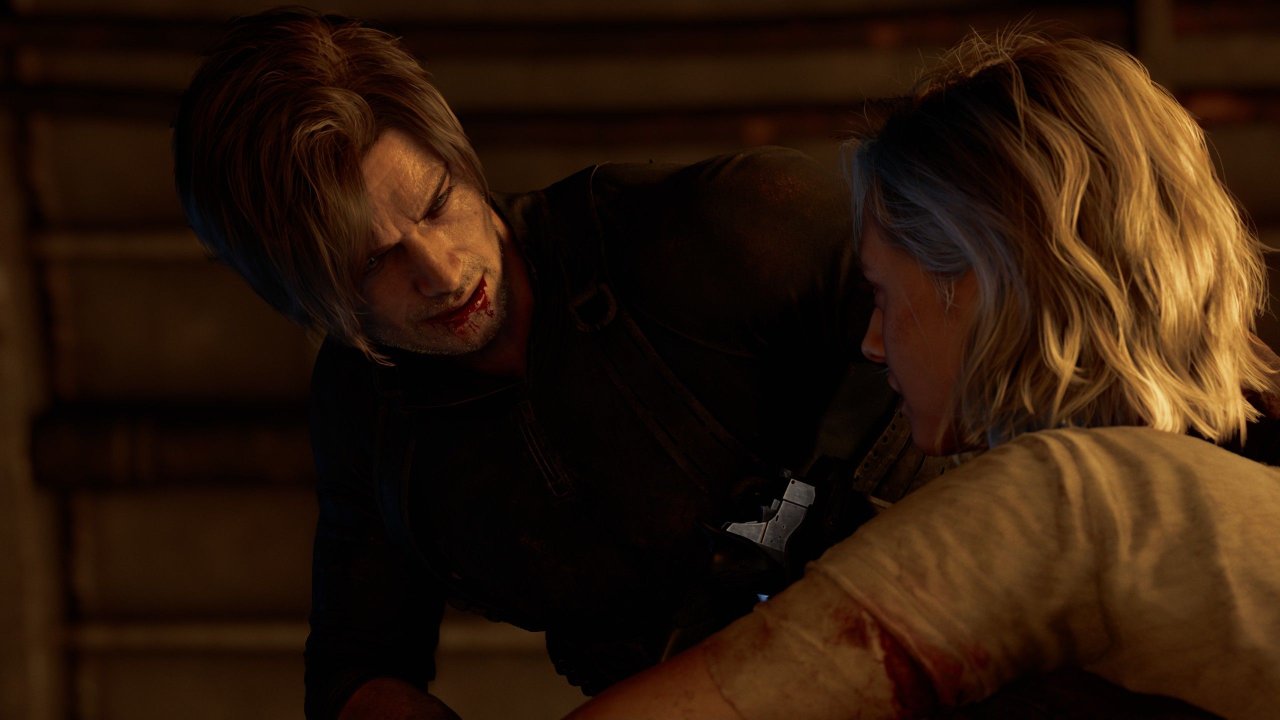
Instead, Resident Evil Requiem mostly presents him as an older and more tired version of the same capable agent. You can see he's become more world-weary, but the story doesn't spend enough time examining what caused that change or what it means for his future.
Put those four issues together, and the problem becomes much harder to dismiss as a matter of taste.
The DSO's missing history, the abandoned government-corruption storyline, the limited follow-up to Raccoon City, and the lack of a new personal direction all point to the same decision. Capcom brought Leon back physically without bringing much of his character history back with him.
That becomes even more noticeable when compared with the older games. Resident Evil 5 and Resident Evil 6 could be messy and overloaded, but they still gave their protagonists distinct narrative purposes. Their relationships, past experiences, and personal stakes were part of the actual story rather than decoration. That approach made the characters feel like people whose lives continued outside the immediate outbreak.
The modern series seems more interested in tightening its wider mythology. Organizations, incidents, and conspiracies are increasingly connected into a single timeline, creating a cleaner overall structure. That can make the universe easier to follow, but it also risks making individual character arcs less important.
When the same organizations and overarching conspiracies become the center of everything, characters can start feeling like pieces moving through a larger machine. Leon Kennedy suffers from that shift more than most. His appeal has never been only that he is good at shooting infected creatures.
A major part of his character comes from the conflict between his competence and the flawed systems he works for.
His experiences have given him reasons to question those systems, and that tension could have supported a much more personal story. Resident Evil Requiem instead makes him a reliable operative within the larger plot. He gets action, major set pieces, and a substantial amount of the campaign, but those things do not automatically create character development.

Grace gets space to build a different kind of tension, while Leon's sections often feel designed primarily to deliver the action players expect from him. That does not make Resident Evil Requiem a bad game. The dual-protagonist structure has strengths, Grace's sections offer a different atmosphere, and Leon's action sequences can be satisfying on their own. The criticism is much more specific.
Capcom had one of its most established protagonists available and chose not to explore the material that could have made his return significant.
Leon Kennedy deserved more than a familiar face and a collection of action scenes. The series had years of unresolved material ready to be used, from the DSO's missing history to government corruption, Raccoon City's unanswered consequences, and the question of who Leon became after everything he endured.
Instead, Resident Evil Requiem brings him back without truly moving his story forward. For a character who was once central to the franchise's biggest conflicts, that feels like an especially frustrating missed opportunity. The game had the chance to make his past relevant again and establish what his future could look like. It largely walks past both.
Editor, NoobFeed
Latest Articles
No Data.