

Snapdragon X2 Elite Extreme vs Handheld Gaming PCs Power and Performance
Snapdragon X2 Elite Extreme demonstrates strong low power gaming performance while highlighting current ARM compatibility limitations in modern titles.
Hardware by Katmin on Apr 17, 2026
The rapid development of ARM-based processors is beginning to change expectations for portable gaming hardware. As CPU efficiency, integrated graphics, and AI-assisted upscaling continue to improve, the concept of ARM-based handheld gaming PCs is becoming a reality. However, the ecosystem is not yet fully developed.
Snapdragon X2 Elite Platform Overview
The ARM-based handheld gaming PCs have now become a subject of serious discussion with the recent launch of the Snapdragon X2 Elite and the X2 Elite Extreme CPUs. Regrettably, no handhelds are available at the moment that run on these chips. Still, extensive testing and gaming on laptops gives a good idea of what they can do.
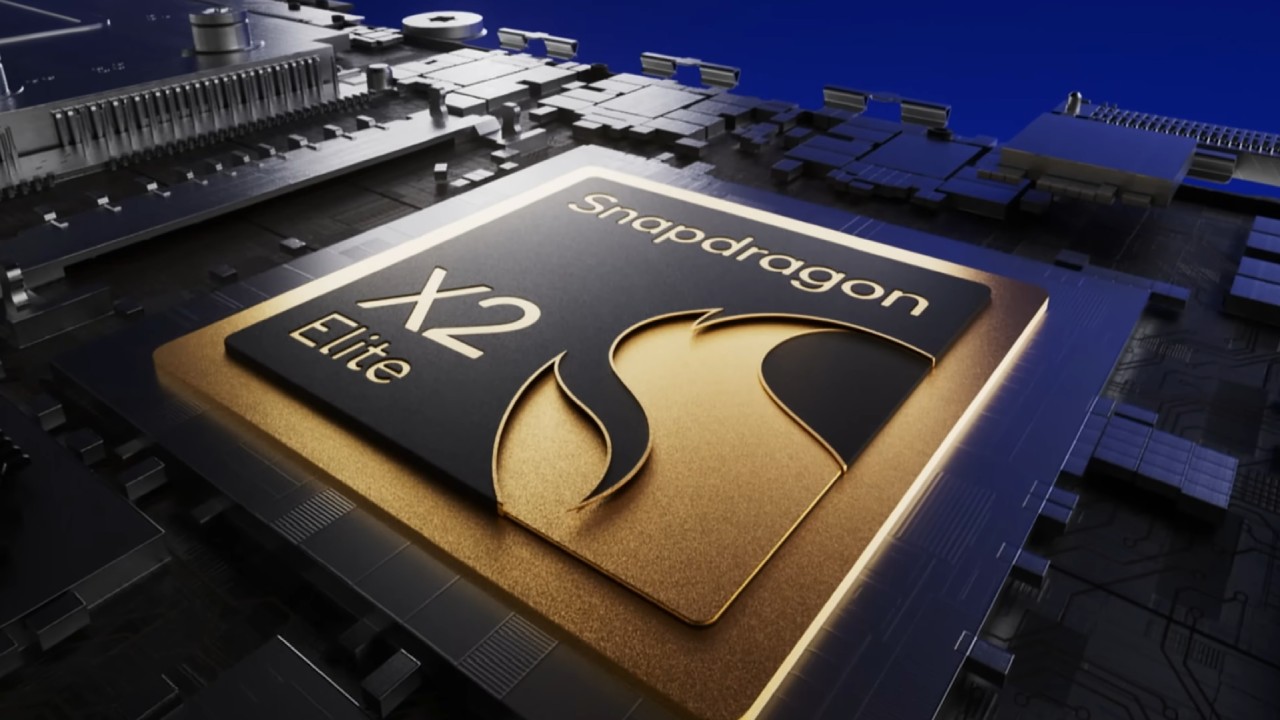
The Asus ZenBook A14 with the X2 Elite and the Asus ZenBook A16 with the X2 Elite Extreme provide a solid foundation for comparing performance. The Snapdragon X2 Elite Extreme X2E94100 model reaches up to 4.4GHz, with a more expensive model reaching up to 4.7GHz. The system here has 48GB of RAM at 9523 MT/s and a Qualcomm Adreno X690 graphics card at 1850 MHz.
The Snapdragon control panel brings in new gaming-oriented features. Per-game and global settings can be adjusted with filtering, frame caps, mip mapping, multisampling, and texture filtering. Super-resolution video is also available, but it is only applicable to video playback. Another interesting feature is automatic super resolution, which uses the NPU to scale 720p to 1080p, which can be particularly handy on smaller screens.
Power Profiles and TDP Behavior
Performance tuning is managed in three modes: low-power mode at about 21W, balanced mode at up to 45W, and performance mode at about 60W. The system may momentarily peak at 79W in certain instances. Nevertheless, no fine-grained TDP control is currently available, which limits optimization flexibility.
Testing concerns the performance and low-power modes. The latter is particularly important in handheld scenarios where battery efficiency is the most important, typically ranging between 17W and 22W.
Gaming Performance: High and Low TDP Testing
Red Dead Redemption 2 is a high-performance mode game that runs at 1080p and consumes between 50W and 57W, with good performance. At 720p high settings, switching to low power mode maintains the system at 21W to 22W, and frame rates approach 60fps. FSR enables further performance gains, averaging about 63 fps.
Cyberpunk 2077 performs well in performance mode at 1080p on high settings with FSR quality mode, but it can consume up to 64W. The system averages 56 fps in low-power mode with 720p high settings. Adjusting FSR to balanced can further stabilize performance. FSR3 has much higher frame rates than FSR2 or XeSS, but XeSS can provide slightly better visual quality.
Ratchet and Clank: Rift Apart is a good performer with an average of about 68 fps at 1080p on medium settings in performance mode. The 720p low-power mode does not compromise performance. There are minor graphical glitches, including occasional black boxes, but they do not significantly affect gameplay.
Japanese Drift Master is more challenging. Even in performance mode, the system consumes between 45W and 50W. Under these conditions, the GPU clock speed is at its peak. In contrast, in low-power mode, it cannot maintain 1850 MHz because power is shared between the CPU and GPU. The chip has 18 cores, which is more CPU-oriented, so a handheld-oriented version could have fewer cores and more graphics resources.
Mortal Kombat 1 can be played at 1080p on medium settings in performance mode, maintaining 60 fps. Interestingly, this platform only supports low or medium settings in the game. When in low-power mode with 720p medium settings, the system consumes approximately 20W while still providing stable performance.

Efficiency, Scaling, and Architectural Considerations
The X2 Elite Extreme seems to possess dynamic TDP control, which distributes power between the CPU and the GPU when required. This results in effective use, but also points out the weaknesses of the current design in practical use. The 18-core design is highly skewed towards CPU workloads, which may not be the most suitable to gaming-oriented devices.
A handheld-friendly design in the future could reduce the number of cores and devote more power and silicon to the GPU, enhancing gaming performance with lower wattage. Also, smaller TDP controls would be much more useful in mobile applications.
Compatibility Challenges and Future Outlook
Software compatibility is a major challenge despite good performance metrics. Other titles do not start at all, such as Crimson Desert, Borderlands 4, and newer Fallout 4 releases, but older releases might still be compatible. These issues indicate that Windows-on-ARM gaming support is still not fully functional.
Hardware such as the Snapdragon X2 Elite and X2 Elite Extreme makes ARM-based handheld gaming PCs evidently possible. However, to be adopted more broadly, both Qualcomm and Microsoft need to support the software, optimize drivers, and provide platform-level support.
As long as these problems are addressed, ARM-based handheld gaming devices can be a viable alternative in the near future, offering a compromise between efficiency, performance, and advanced upscaling technologies.
Also, check our other hardware articles:
- AMD Ryzen 9 9950X3D Review: Setting The Standard For 2025 Gaming CPU
- Amazon Luna 2025 Review: Is Prime Gaming's Cloud Service Your Go-To For Casual Fun?
- AMD RX 9070 XT Review: AMD's RDNA 4 Champion for 1440p Gaming
- GeForce Now Ultimate: Ditching Your Gaming PC For Cloud RTX 4080 Power?
- NVIDIA GeForce RTX 5080 Review (2025): Still A 4K Gaming Powerhouse?
- Intel Core Ultra 9 285K Review And Performance Breakdown (2025)
- AMD Ryzen 7 9800X3D Review: 3D V-Cache Goes God Mode with Stunning Gaming Performance
- Intel Core Ultra 9 285K vs AMD Ryzen 7 9800X3D: In-Depth Gaming Performance and Benchmark Comparison
- NVIDIA GeForce RTX 5080 Super Performance In Cyberpunk 2077: Path Tracing & DLSS 4.0 Tested
- AMD Radeon RX 9070 XT In Cyberpunk 2077: Ray Tracing & FSR 4.0 Tested
- Intel Arc B580 Review: The $250 GPU Revolutionizing 1440p Gaming
- Intel Arc B570 Vs. B580: Value, Specs, And Real-World Gaming Performance
- RTX 5090 Laptop Vs. M4 Max MacBook Pro: Ultimate Raw Performance Vs. Battery Endurance
- Intel Arc b580 Vs. RTX 4060: Game Performance And Value Analysis
- RTX5090 Hell Is Us Demo 4K Ultra Benchmark: DLSS Vs. Native Performance Guide
- NVIDIA RTX 5070 Review: Mid-Range Muscle or Marketing Hype?
- Nintendo Switch 2 Review: Handheld Performance, Features & Value Breakdown
- RTX 5070 Ti Review: Performance, Thermals & Power Efficiency Tested
- Samsung Odyssey OLED G81SF Review 2025: Ultimate 32-Inch QD-OLED Gaming Monitor
- AMD RX 9070 Performance Review: Thermals, Clocks, and Real-World FPS
- AMD Ryzen 5 7600 Review: Best Budget Gaming CPU of 2025?
- AMD Radeon RX 7800 XT Review: RDNA 3 Power For Midrange Gaming
- Asus ROG RTX 5090 Astral OC Vs. Founders Edition: The 4K Gaming Benchmark
Senior Editor, NoobFeed
Latest Articles
No Data.