
Sony Patent Reveals AI Upscaling System That Could Power Future PlayStation Graphics
Sony’s new patent explores machine learning upscaling that dynamically adjusts model precision to maintain stable frame rates during gameplay.
Hardware by Masaru Hoshino on Mar 09, 2026
A new patent from Sony Interactive Entertainment has come up that talks about an interesting idea for upscaling technology that uses machine intelligence. Some people think it might have anything to do with a future version of PlayStation Super Resolution, which is sometimes called PSSR 2.0.
However, there is also speculation that the technology might be aimed at a longer-term scenario, possibly aligning more with a future console generation, such as the PlayStation 6, rather than current hardware.
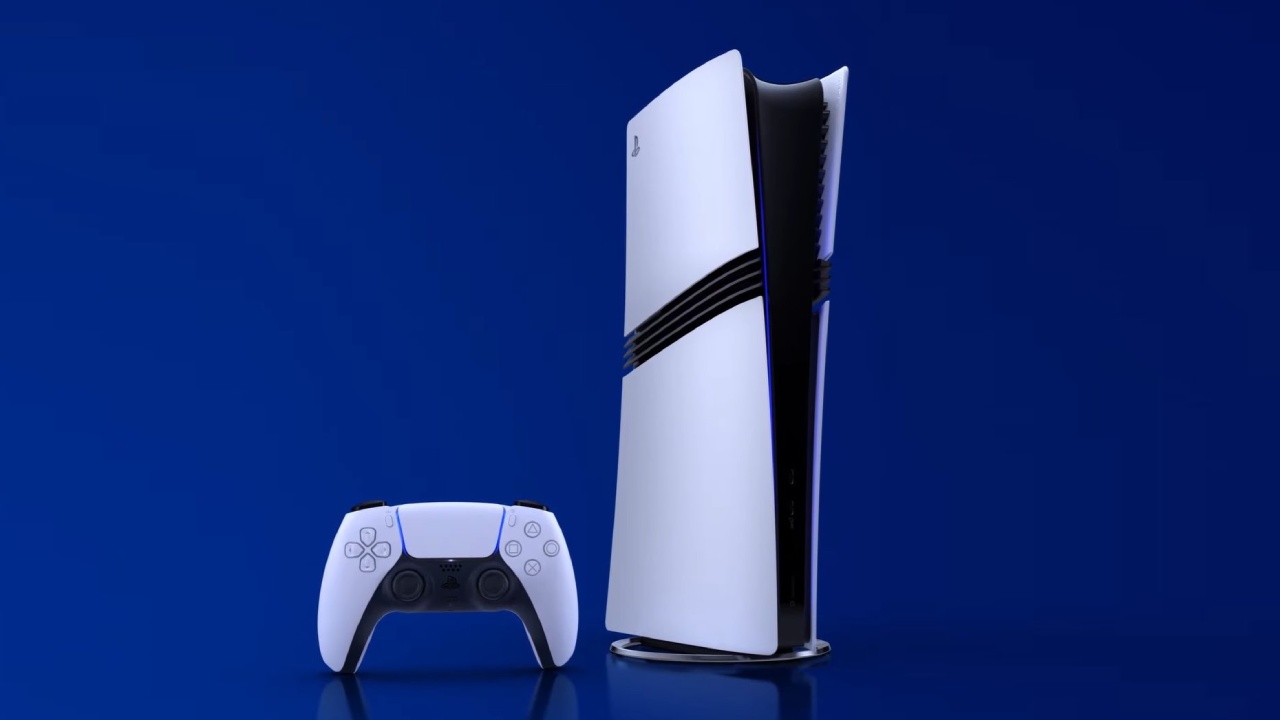
The patent describes a method that adjusts the quality of machine learning-based upscaling depending on the available frame time. Instead of lowering the internal resolution through dynamic resolution scaling (DRS), the idea is to dynamically scale the precision of the upscaling algorithm itself.
Adjusting Upscaling Quality Instead of Resolution
The general goal outlined in the patent is to maintain a stabilized frame rate without cutting pixel counts. Because super resolution can be computationally expensive, the concept suggests lowering the quality or precision of the super resolution model instead of reducing rendering resolution.
The technical concept described involves storing multiple versions of the upscaling model at different precision levels. The system could then switch between these models depending on the current frame time requirements. Another possibility mentioned is maintaining a single neural network model and dynamically quantizing its weights in real time if the rendering load increases too much.
From there, the patent describes a more complex system that monitors load, averages frame time requirements, and manages the transition between different precision levels of the model to maintain performance stability.
Limitations Compared to Dynamic Resolution Scaling
Despite the technical novelty, there are questions about the real-world utility of the approach. In many scenarios, varying resolution using DRS is already a very effective tool.
For example, imagine a game that supports a rendering resolution window between 720p and 1440p. Dropping from 1440p to 720p can reclaim roughly 8ms of GPU time, which is a substantial performance gain. Even when the image is eventually upscaled back to 1440p using temporal upscaling, the rendering workload is significantly reduced.
In comparison, the time required for an upscaling process such as PlayStation Spectral Super Resolution is believed to be around 2ms when scaling from 1080p to 4K. Even if a future version increases this slightly, the frame time savings from adjusting upscaler precision may still be relatively small.
At 60fps, a frame lasts roughly 16ms, meaning a 2ms adjustment does not provide a huge performance margin compared to reducing internal rendering resolution.
Where the Technique Could Become Useful
The approach might make more sense in certain specialized scenarios. One example is extremely high frame rate targets.
If a game is running at 120fps, each frame only has about 8.3ms available. In that case, saving 2ms becomes significantly more meaningful because it represents a much larger portion of the total frame time budget.
However, very few games currently run machine learning-based upscalers like PSSR at 120fps. The computational cost is generally considered too high. Even if the output resolution were something like 1440p instead of 4K, it would still be demanding.
Lower precision versions of the model could help address that. A similar concept already exists with Nvidia DLSS, where lighter versions of the model are used in certain scenarios.
Potential Advantages in Compute-Limited Games
Another scenario where this technique could help is in games that are not primarily limited by pixel throughput. Some titles are more constrained by compute workloads or ray tracing performance.
In those cases, reducing the time spent on the upscaler rather than lowering rendering resolution might actually produce better results.
There is also the issue of visual artifacts. Sometimes dynamic resolution scaling interacts poorly with upscalers and can cause image instability. In certain games, large swings in rendering resolution can produce a fuzzy or jittery appearance when combined with reconstruction techniques like AMD FidelityFX Super Resolution.
Developers occasionally restrict the range of DRS for this reason. If adjusting the precision of the upscaler instead produces fewer visible artifacts, the technique could potentially offer a cleaner result.
Why Patents Do Not Always Reflect Final Products
It's crucial to note that patents are often based on ideas that haven't been proven to be true yet. Companies often patent ideas just to preserve their intellectual property, even if the ideas never make it into hardware or software that is shipped.
In many cases, engineers explore experimental techniques and file patents to establish ownership, but those techniques may never be implemented in a final product.
Because of that, the technology described in the patent may never appear in a real PlayStation system. It could simply be a concept that engineers wanted to protect for future research.
A Possibility for Future Neural Rendering Techniques
While the idea may not have a major impact on current implementations of PSSR, it could become more relevant as neural rendering techniques evolve.
Future upscalers may perform much more complex reconstruction tasks, such as advanced ray reconstruction or neural image generation. If those networks become significantly heavier, dynamically adjusting model precision could become a meaningful performance management tool.
For now, the concept remains an interesting glimpse into how graphics technology might evolve in future PlayStation systems.
Also, check our other hardware articles:
- AMD Ryzen 9 9950X3D Review: Setting The Standard For 2025 Gaming CPU
- Amazon Luna 2025 Review: Is Prime Gaming's Cloud Service Your Go-To For Casual Fun?
- AMD RX 9070 XT Review: AMD's RDNA 4 Champion for 1440p Gaming
- GeForce Now Ultimate: Ditching Your Gaming PC For Cloud RTX 4080 Power?
- NVIDIA GeForce RTX 5080 Review (2025): Still A 4K Gaming Powerhouse?
- Intel Core Ultra 9 285K Review And Performance Breakdown (2025)
- AMD Ryzen 7 9800X3D Review: 3D V-Cache Goes God Mode with Stunning Gaming Performance
- Intel Core Ultra 9 285K vs AMD Ryzen 7 9800X3D: In-Depth Gaming Performance and Benchmark Comparison
- NVIDIA GeForce RTX 5080 Super Performance In Cyberpunk 2077: Path Tracing & DLSS 4.0 Tested
- AMD Radeon RX 9070 XT In Cyberpunk 2077: Ray Tracing & FSR 4.0 Tested
- Intel Arc B580 Review: The $250 GPU Revolutionizing 1440p Gaming
- Intel Arc B570 Vs. B580: Value, Specs, And Real-World Gaming Performance
- RTX 5090 Laptop Vs. M4 Max MacBook Pro: Ultimate Raw Performance Vs. Battery Endurance
- Intel Arc b580 Vs. RTX 4060: Game Performance And Value Analysis
- RTX5090 Hell Is Us Demo 4K Ultra Benchmark: DLSS Vs. Native Performance Guide
- NVIDIA RTX 5070 Review: Mid-Range Muscle or Marketing Hype?
- Nintendo Switch 2 Review: Handheld Performance, Features & Value Breakdown
- RTX 5070 Ti Review: Performance, Thermals & Power Efficiency Tested
- Samsung Odyssey OLED G81SF Review 2025: Ultimate 32-Inch QD-OLED Gaming Monitor
- AMD RX 9070 Performance Review: Thermals, Clocks, and Real-World FPS
- AMD Ryzen 5 7600 Review: Best Budget Gaming CPU of 2025?
- AMD Radeon RX 7800 XT Review: RDNA 3 Power For Midrange Gaming
- Asus ROG RTX 5090 Astral OC Vs. Founders Edition: The 4K Gaming Benchmark
Editor, NoobFeed
Gaming Hardware Updates
No Data.