
Sony's PSSR and Microsoft's FSR 4 Take Different Paths
Sony did not intend for PSSR's development to block FSR 4 from reaching Xbox consoles through AMD's existing partnerships.
PlayStation by Nahe Yan on Nov 02, 2026
The arrival of FSR 4 on Xbox consoles has raised questions about Sony's collaboration with AMD and its development of PlayStation upscaling technology. Speculation suggests Sony's work on PSSR was partly intended to secure access to AMD's technology before it became available on other platforms. However, the timing and development process suggest a different explanation.
The question is whether QSSR was less a philanthropic effort and more a firefighting exercise once Sony learned FSR 4 would be coming to all Xbox consoles. Another possibility is that Sony's relationship with AMD is now close enough that both companies agreed to prevent FSR 4 from being released more broadly, including on Xbox, until Sony had its own implementation on both PS5 and PS5 Pro.
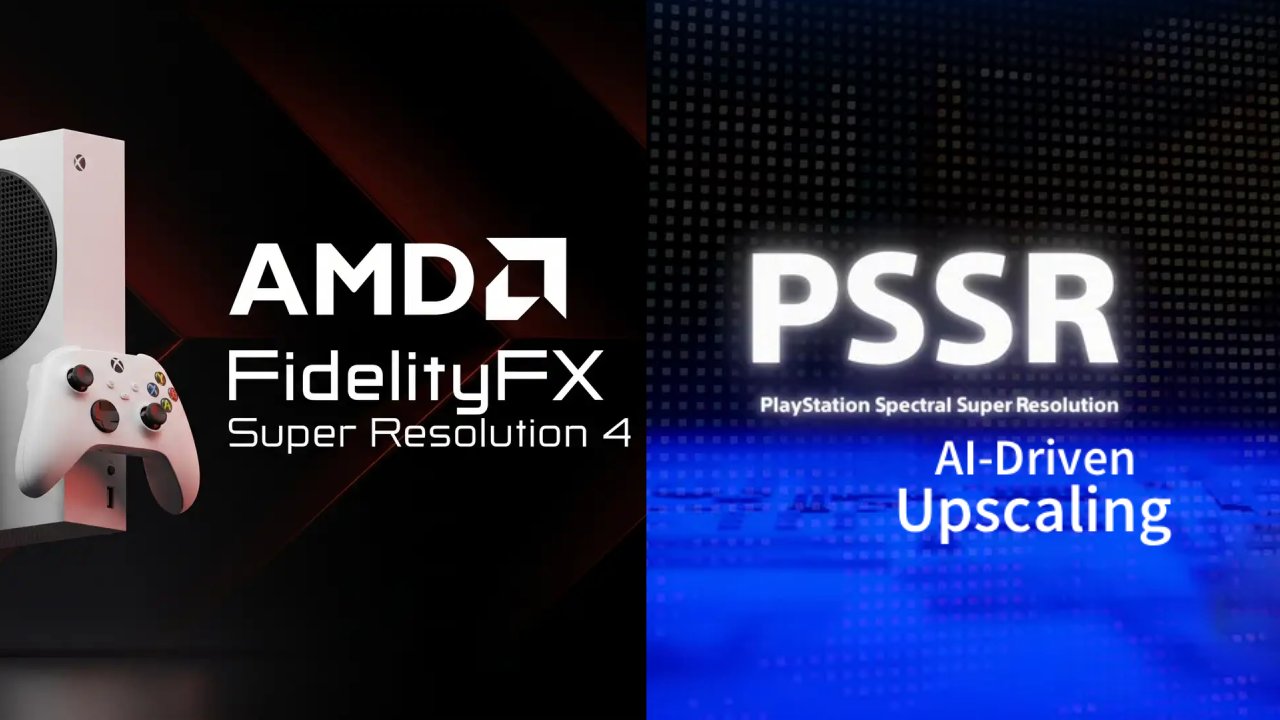
Sony's Relationship With AMD and the Development of PSSR
The timing certainly raises questions about that possibility. However, the concept of FSR 4 coming to XBOX is nothing new. As soon as an initial version became available through last year's leak, an XBOX implementation was only a matter of time because the hardware already supported it. It took more than a year for QSSR to arrive and for a fully validated RDNA2 solution to become available.
It is difficult to say that QSSR was ever a philanthropic expedition. Sony would have been aware that FSR 4 was eventually coming to XBOX without requiring any confidentiality breaches. From discussions with people involved in making consoles, AMD is known for dealing with each partner separately. The company does not share hints about what one partner is doing with another.
If that happened, it could fundamentally damage its relationships with those companies. Sony may have pursued its own implementation because the technology was viable and the company believed it could deliver a working solution. At this point, PlayStation leads in console unit sales, which raises questions about how much the traditional console war still exists.
When discussing console design with Mark Cerny, there has never been much interest in talking about what other companies are doing. His focus remains on PlayStation and its hardware development. Concentrating on what competitors are building offers little when the goal is to deliver the best possible product.
Sony's Focus Remains on PlayStation
People looking at the market from the outside also tend to create their own narratives rather than understand how the industry works. It is easy to assume Sony developed PSSR to prevent Microsoft and AMD from doing something else, but little evidence supports that interpretation.
Sony's collaboration with AMD may have helped fund some of the technology and research behind these solutions. Since the companies have a joint relationship, Sony may have received some priority in certain areas. However, it is difficult to establish how much of an advantage that provided. It should not be surprising that similar technologies are being developed with other partners.
Microsoft was not simply waiting while Mark Cerny and Sony worked on their solutions. The XBOX team was also considering the same problems and working with AMD to develop its own approach. The difference is that Microsoft appears to be sticking with AMD's branding by calling its implementation FSR 4. Sony, by contrast, developed its own version and uses a separate naming convention for its technology.
Sony's work on PSSR also seems like a natural extension of its existing development efforts.
If a technology such as PSSR can operate using FP16, there is a reason to explore porting it to other hardware architectures. Sony likely understood that FSR 4 was being adapted for other AMD architectures. However, the XBOX team's day-to-day development decisions may not have mattered much to Sony.
The situation was different during the Xbox 360 and PS3 generations. Microsoft and Sony competed at a similar level, and one company's decisions often influenced the other. When Microsoft moved in one direction, Sony frequently had to respond with a different approach. The competition was closely connected, and both platform holders eventually ended up on similar footing.
Ultimately, PSSR and FSR 4 appear to be separate developments arising from AMD's collaboration with its platform partners. Sony is focused on PlayStation, while Microsoft is working on its own XBOX implementation. The timing may look connected, but that does not necessarily mean one company developed its technology to prevent the other from moving forward.
Editor, NoobFeed
Latest Articles
No Data.