
CXMT Challenges Major DRAM Makers With New LPDDR6 Memory
CXMT enters the LPDDR6 market with mass production and Xiaomi integration, marking a major shift in the competitive memory landscape.
Hardware by Shinji Okazaki on Sep 05, 2026
The memory industry is moving into a new generation of low-power DRAM as LPDDR6 begins appearing in commercial devices. Changing Sin Memory Technologies, better known as CXMT, says they have started mass production of LPDDR6, the newest generation of low-power RAM, and Xiaomi has confirmed that the memory will appear in its upcoming 18-fold smartphone.
CXMT lists a peak data rate of 12.8Gbps and a capacity of up to 16GB. The important part is not that CXMT suddenly dominates the entire memory industry. It does not. Samsung, SK Hynix, and Micron are still far larger, and they remain stronger in several advanced categories. For a company that only began mass-producing its first DRAM in 2019, that is a serious shift in position.
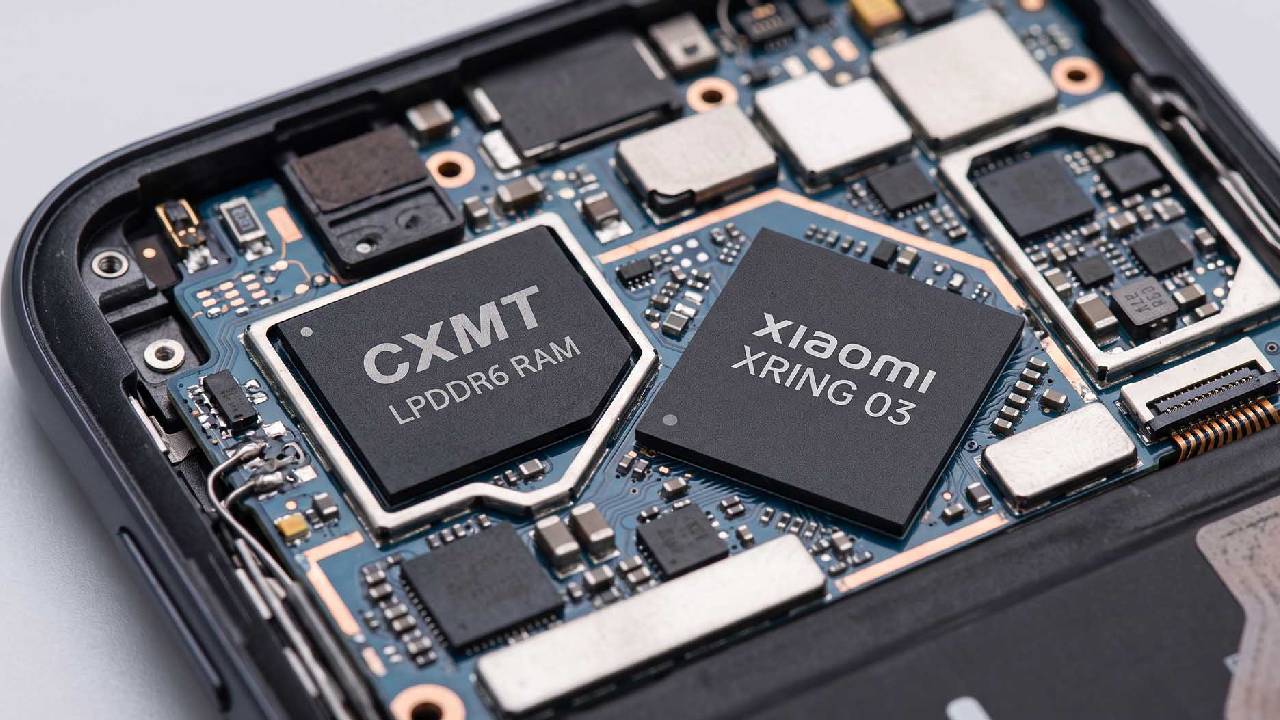
Understanding the Difference Between RAM and Storage
To understand why this matters, it helps to separate RAM from storage. The flash memory inside a phone keeps your photos, apps, and files when the power is off. DRAM is the fast working memory that the processor constantly uses while the device is running. Open a browser tab, edit a photograph, run navigation, process a camera image, or run an AI model locally.
The processor shuttles data in and out of DRAM at enormous speed. A faster processor does not help much if it spends too much time waiting for memory. That problem has grown as phones and laptops run larger AI workloads directly on the device, rather than sending every job to a remote server.
LPDDR stands for low-power double data rate memory. It is a branch of DRAM designed for devices where every watt matters. That originally meant smartphones and tablets, but the category has spread to thin laptops, automotive computers, edge machines, and even specialized server modules. When the workload is light, the system does not have to energize every path.
Flexible Transfers and Memory Reliability
LPDDR6 also reserves part of each transfer for metadata. That metadata can support protection and reliability functions without relying on the same old arrangement of dedicated signaling pins. The result is a memory interface designed not just for higher throughput, but for computers that are becoming more complicated, more parallel, and more dependent.
One way to picture the bandwidth change is to forget the label and look at how information can be moved per connection. LPDDR6 increases the data width per device to 24 bits, split across two 12-bit subchannels. The fastest memory in the world isn't especially useful in a handheld device if it burns through the battery just sitting ready.
It also adds new reliability features, including stronger error protection and mechanisms to address repeated row activations within DRAM. A DRAM cell is basically a tiny electrical storage element paired with a transistor. It represents a bit by holding or not holding charge, but that charge leaks away, so DRAM must be refreshed constantly.
Pack billions of those cells tightly together, switch them at extreme speed, and subtle electrical interactions become a serious engineering concern. Modern memory is not just about making cells smaller. The controller, power system, signaling, refresh behavior, error handling, package, and manufacturing process must all work together.
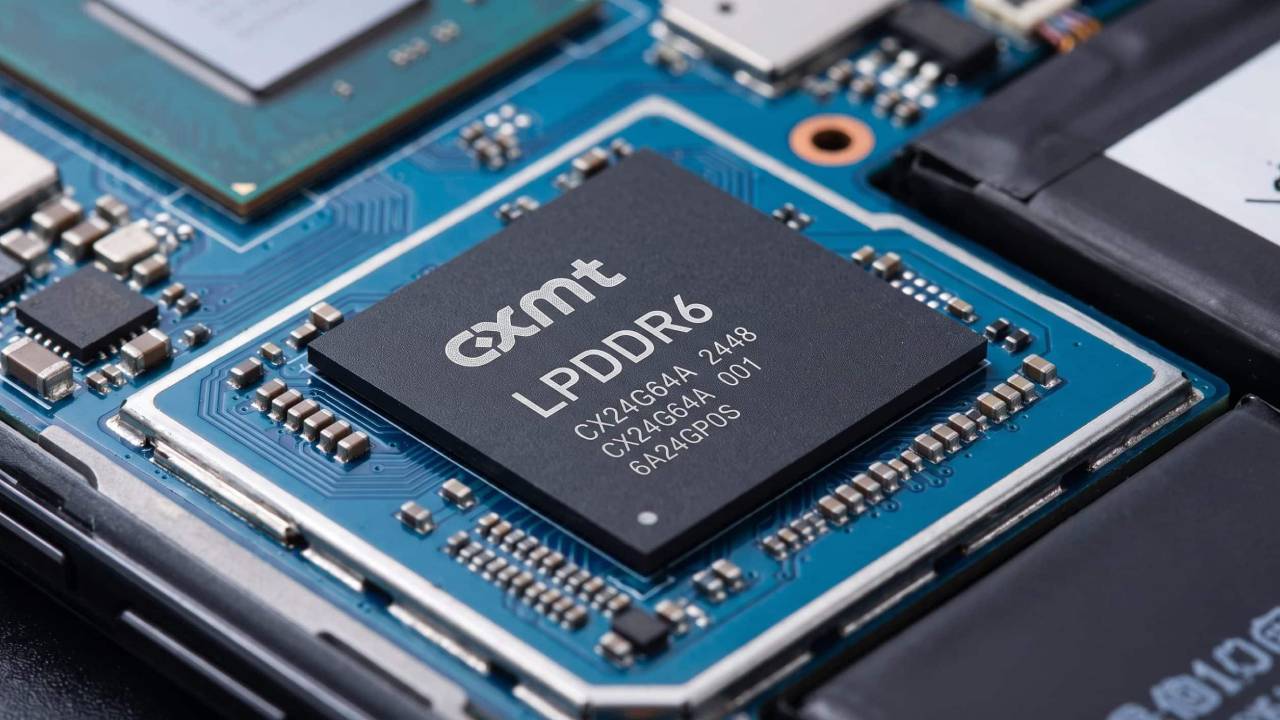
CXMT's LPDDR6 Specifications
What matters today is that CXMT has moved from samples and customer validation to a claimed mass-production product, and Xiaomi has publicly named the device that will use it. That device is the Xiaomi 18-fold, scheduled for release in September. Xiaomi says the foldable will pair CXMT's LPDDR6 with its own X Ring 03 mobile processor, a new 3nm chip.
A memory chip sitting in a laboratory is one milestone. Shipping it inside a thin folding phone is a much larger integration problem. That is why calling this a race requires some precision. Samsung had already shown LPDDR6 and described its own design as a world-first next-generation solution.
SK Hynix announced a 16Gb LPDDR6 device on its sixth-generation 10nm-class process in March 2026 and said it planned to begin mass supply in the second half of the year. Micron has also been sampling LPDDR6 to customers. These companies did not wake up late.
DDR5 products for PCs and servers with speeds up to 8,000Mbps and die densities up to 24GB.
CXMT's progress becomes even more striking when you consider how recently the company entered the advanced DRAM market. Founded in 2016, it began mass production of its first DRAM products in 2019. By 2025, it was mass producing LPDDR5X at 8.533Gbps and 9.6Gbps, while a faster 10.667Gbps version was entering customer sampling.
None of those figures made CXMT the technology leader on its own, but they showed the company moving through successive product generations unusually quickly. The market has noticed. CXMT is now the world's fourth-largest DRAM supplier. That is still a huge gap between CXMT and the established leaders, but memory is an industry where scale improves learning.
More wafers mean more production data. More customers mean more qualification experience. More volume gives engineers more opportunities to find weak points and improve yields. The economics are also changing. AI has pushed enormous demand into memory of almost every kind.
Editor, NoobFeed
Gaming Hardware Updates
No Data.