
Sony’s Secret PS6 Handheld Could Redefine Portable Gaming
Rumors suggest a powerful native PlayStation handheld capable of running PS5 and PS6 games, signaling Sony’s bold return to true portable gaming.
News by Zahra Morshed on Mar 15, 2026
This PS6 portable report is intriguing because it does not give the impression that Sony is experimenting with some other device. This seems far more significant and weighty than that. For the simple reason that Sony is not developing yet another PlayStation Portal-style glorified streaming screen if these rumors are even somewhat true.
It seems like their ultimate goal is a native machine, a true handheld, that can independently run PS5 and PS6-style games. Since that subject had been floating around for so long, it really shifts the focus of the discussion. Could this be the beginning of Sony's proper return to handheld gaming?
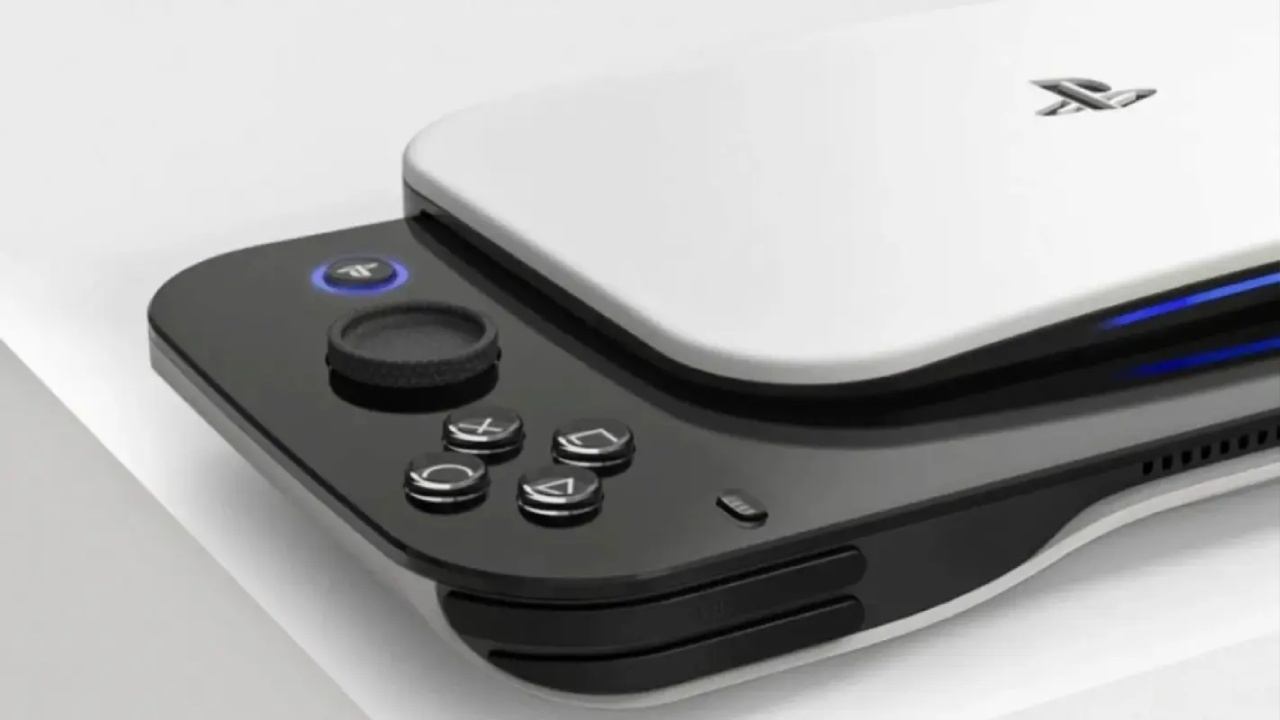
No, with a genuine device you can hold in your hand, bring with you everywhere you go, and run actual games on; not with some cute accessory, not with branding for remote play, and not with some niche experiment. And now, out of nowhere, this codename Canis is being linked to the same general release window as the PS6, which is sometime around the holidays in 2027. Just saying that will spark conversation.
The rumored specs and the overall picture become apparent when you keep searching.
At this point, it seems less like fanfiction and more like Sony is attempting to establish a complete ecosystem in which to play it. Sony isn't merely creating a companion device if this handheld is native, doesn't stream, and can run games from the PS5 and PS6 in some way. In creating this device, they may be forming the groundwork for a hybrid future in which portable gaming meets the conveniences of home console gaming.
They essentially addressed Nintendo's long-standing question: What if a single device could perform both of these? And that's when things start to heat up. Rumor has it that a 3-nanometer device, 16 computing units, AI upscaling, LPDDR5X memory, and AMD RDNA 5 graphics could be used by this. Let us state the obvious: nothing here is official.
Sony has been mum on the matter. These are rumors, whispers, and conversations within the industry. Sony is not aiming low if those details are even slightly accurate. They are not attempting to create a feeble little novelty portable that cries foul at the sight of a contemporary game. It appears that they are striving for something significant.
The state of mobile gaming in the year 2026 has changed significantly, thus it is an important consideration. These days, it takes more than a decent-looking handheld game to wow gamers; gone are the days of ESP and VA. Yes, the bar has risen significantly. Everyone in the game has witnessed the Steam Deck in action.
Modern games can be brute-forced by portable PCs.
Nintendo has been able to dominate the hybrid concept with less powerful hardware due to the sheer strength of the convenience. Sony is well aware that they cannot return to this market while still in their slumber. They are unable to introduce yet another product that appears to be an afterthought. For that reason, the true story here is the rumor's native component, not the code name, render, or release window.
The main claim is that it can supposedly run games locally, which is where the headlines are. Then Sony knows exactly why the Portal was a flop for so many people, if that is indeed the case. Yes, the Portal serves its purpose, but let's be honest: many folks saw it and assumed that was it. Sony seems to be experimenting without making a firm commitment.
The devotion required, though, is for a native handheld, a genuine machine. "Okay, enough with the warm-up," Sony is essentially saying. This is the real maneuver. It would also be logical in terms of timing. If Sony is serious about constructing a cohesive platform family, it would be very Sony to launch it around the same frame as PS6. Picture the message.
Fund the next-generation PlayStation. Plus, it's more than simply a console under the TV anymore. What you're getting is a home machine, access to a larger ecology, and a way to take that environment with you wherever you go. The architecture, the goals for game development, the branding, the services, and the account ecosystem are all similar.
Perhaps in future first-party games we will see shared cloud saves, performance profiles, cross-buy incentives, and even philosophies surrounding handheldware creation. The extension of the platform is more than simply a new product.
There is one thing that naturally makes people anxious, and rightfully so.
Does the fact that developers in the same ecosystem must take into consideration a portable with less power hinder ES6 games? Is it necessary to design nextG titles around less robust hardware? The very mention of a portable edition makes one think of watered-down game design, scaled-down ambition, and yet another generation in which developers are compelled to exploit the game's weakest link, all of which are reasonable concerns.
However, that is totally dependent on Sony's handling of the situation. This might be a smashing success if Sony handles the handheld like a malleable target and uses AI reconstruction, lower settings, intelligent scaling, dynamic resolutions, and smart optimization.
It's something that PC games do all the time. If the engine is well-built, the same game can run on quite varied hardware. Whether or not lower-powered hardware exists is not the problem. It all comes down to whether the platform owner provides developers with adequate resources and reasonable expectations.
Sony might be trying to catch up if the story concerning AI upscaling turns out to be genuine. Since that is the current challenge, isn't it? Nowadays, raw power isn't everything. More efficient rendering, reconstruction, and machine learning tricks are being pursued by all parties.
A number of previously unplayable games would suddenly become playable enough, not at top settings, not in insane native 4K nonsense, but in a very impressive handheld form, if Sony can market a device with a solid architecture, reasonable memory bandwidth, and modern upscaling technology.
Actually, that's all it has to be. With significantly more power and thermal headroom, no reasonable person would expect a handheld system to compete with a full-sized PS6 lying beneath a television. I find that absurd.
Verifiable mobility is what consumers seek. On day one, they would like a device that doesn't feel dated, runs actual games, and has a premium feel to it. The bar is that. Sony needs to reach that benchmark for this to be a smashing success.
Contributor, NoobFeed
Related News
No Data.