
Demons' Night Fever Review
PC
A wicked turn-based RPG turns your own army into its most expendable weapon.
Reviewed by Adeela Tas on Oct 22, 2026
A new strategy RPG can struggle to distinguish itself when so many of its basic rules have been established over decades. Grid-based battles, character growth, party management, and the steady push toward stronger enemies are familiar territory. Demons' Night Fever finds its identity by taking one of those rules and turning it upside down.
Instead of protecting your units, you are encouraged to sacrifice them. That single idea shapes its combat, its progression, and its sense of humor, giving you a game that feels less like a conventional tactical adventure and more like a management simulator run by a cartoon villain.
Drecom developed Demons' Night Fever with SuperNiche, the independent studio founded by Sohei Niikawa after more than twenty-five years at Nippon Ichi Software, and Arc System Works published it internationally. Niikawa's name naturally brings Disgaea to mind.
Niikawa's Disgaea legacy gives way to a game about deadlines and sacrifice.
He produced and wrote Disgaea: Hour of Darkness and helped shape the series that made him known for eccentric systems and oversized numbers. Yet this project isn't an attempt to recreate that formula under a different name. Niikawa describes his creative principle as making something that doesn't already exist, and Demons' Night Fever makes that separation clear.
Disgaea centers on deep, long-term character development, elaborate endgame routines, and the pleasure of pushing stats to ridiculous heights. Here, you have a deadline and a very different idea of what a successful battle looks like. Instead of keeping every ally alive, the best outcome may leave only your main character standing.
The title's self-description as a "raising speedrunning simulation RPG" is unusual, but it captures the mix of unit development, time management, and efficient execution that defines the experience. The story begins with Giga Super Death, a devilish deity who is close to defeating God when his enemies catch him in a trap and reduce him to a helpless baby.
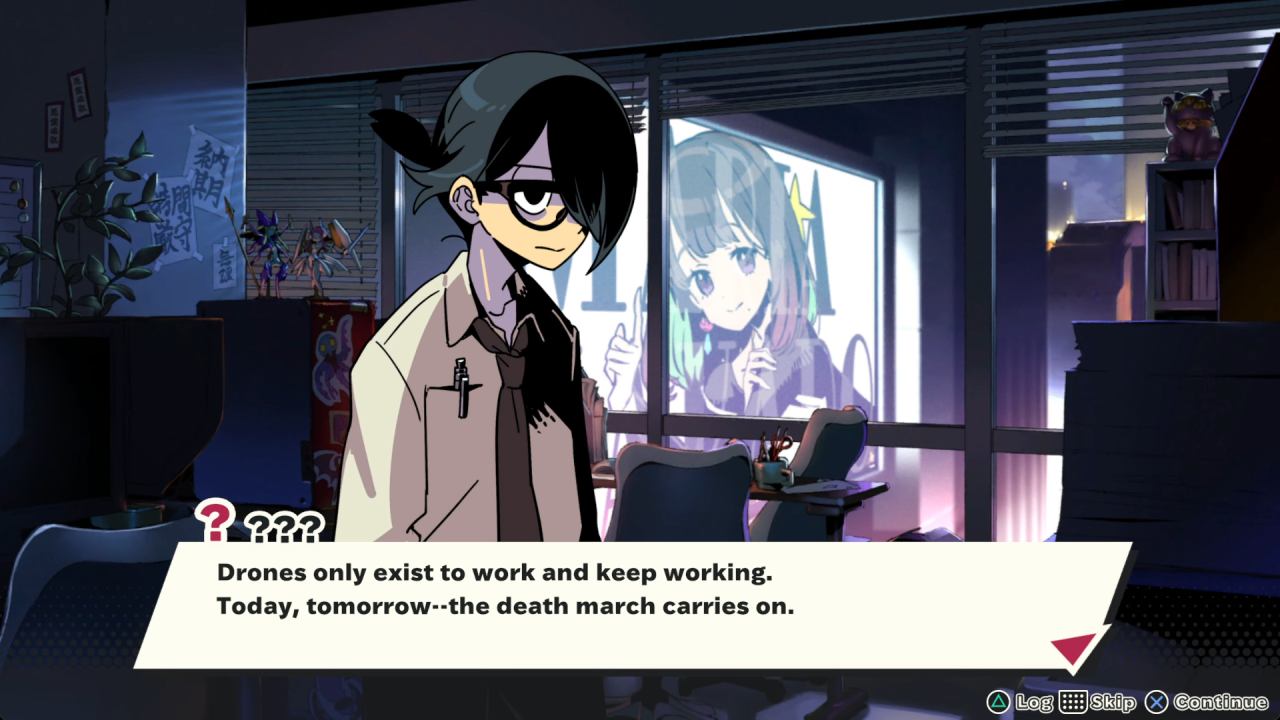
He prepared a resurrection program in case he lost his power, so he activates the ritual and draws Killshiro Katanaka into it. Killshiro is a gloomy young man who despises the world and has spent years recording the names of people he would like to kill. He is also an overworked corporate employee, bitter enough to accept an alliance with a baby devil without much hesitation.
They have a common goal, and the strange duo embarks on a quest to regain Giga Super Death's power.
It's about tearing down a false image of holiness. God is the villain, and he keeps trying to kill Giga Super Death. Mary Haley is a pop star who worships God, so she ends up fighting against the heroes. She also loves Killshiro and wants to save him from the godly oppressor.
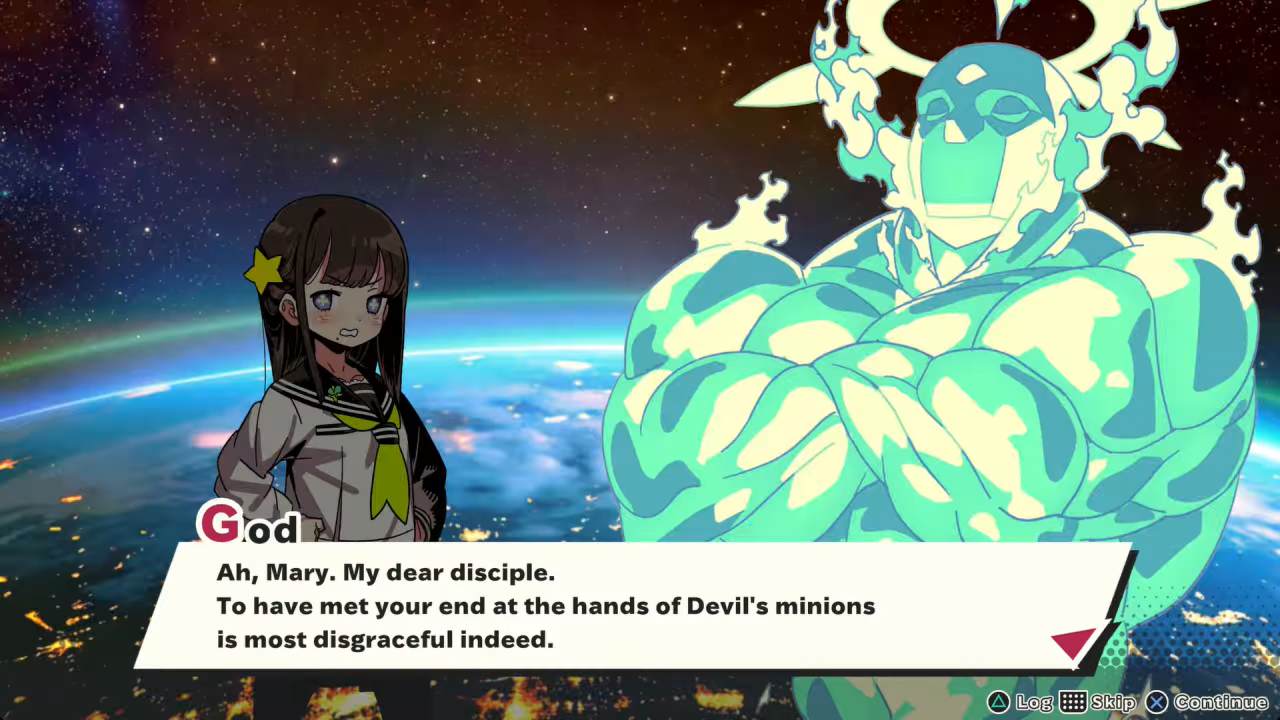
The story rarely treats any of this with solemnity. It prefers absurdity, meta jokes, and exaggerated anime satire, often making its characters feel like people trapped inside a video game that has become part of a resurrection ritual. Killshiro is deliberately unpleasant. He has no friends, despises humanity, and seems emotionally stuck in adolescence.
He is pathetic, not a secretly noble hero waiting to be understood. You are not being asked to guide a traditional champion toward moral growth. Your partner in crime is a spiteful guy who sees the whole campaign as a chance to vent after getting burned by a shady game company.
This interplay shapes much of Demons' Night Fever's voice. The dialogue ranges from self-awarely absurd to plain tiring, and some jokes won't land with everyone. The humor often makes fun of itself, breaks the fourth wall, and drags jokes out long after they have stopped being funny.
Some tutorial conversations feel like superfluous distractions on the way to the next big choice.
Its quick changes and surreal scenes will surprise you, and the mix of cruel deeds and silly attitude is what makes it so interesting. If the humor clicks with you, that alone will carry you through some of the mechanical elements that still feel like they're finding their pace.
The game's key elements include the grid-based battle system and Hideout management. Each chapter gives you a set period to prepare to defeat its boss. You can spend several days committing crimes, hiring minions, stealing equipment, and enhancing your characters. However, each task involves an opportunity cost, as the timer never stops.
This means doing one thing prevents you from doing another, so you need to choose. Misdeeds earn Perverse Points, which you can spend on Corruption Upgrades to improve statistics and unlock skills. Abductions add more peons to your available pool, while larceny and pillaging can provide items and other rewards.
Randomized dungeons offer another route to upgrade materials. You cannot simply grind every option until your team is powerful enough. You need to decide which actions give you the most value before the deadline. Pillaging is the least comfortable part of this routine.
It turns combat into a shortened encounter with a fixed number of turns, adjustable from one to five.
More turns can improve rewards, but the risk makes the activity feel stressful when the rest of Demons' Night Fever already asks you to manage a ticking clock. The trade-off can feel too severe for the reward, although the system may appeal to players who enjoy calculated risks.
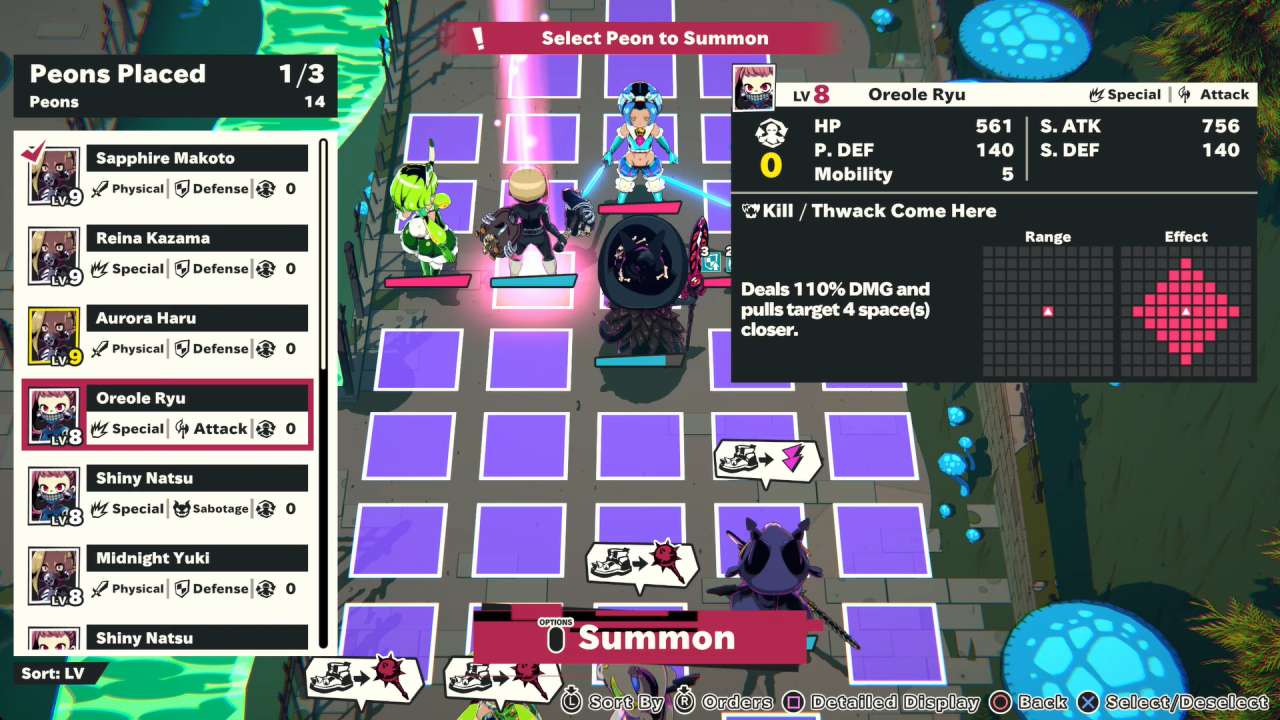
Once a battle begins, the familiar grid gives you a clear view of positions, targets, and movement, but the units don't behave like a traditional tactical army. You directly control Killshiro, moving him around the map, attacking enemies, and using misdeeds that function much like spells.
Your peons act independently during their own phase. They may attack their enemy head-on, take weird paths, or stray from the objective altogether, and you cannot select each one to tell it what to do. Controlling them is much harder than commanding regular soldiers; it's more like herding livestock than giving orders.
While it is somewhat irritating when a unit strays from the right location, it is also appropriate, since these are all miscreants working for an evil lord. You can influence their position. A skill can swap Killshiro with a peon, letting you move an underling into a better spot or get yourself out of trouble, although the action consumes resources. Other abilities can pull enemies into position.
Demons' Night Fever's central tactic is to turn the army into ammunition.
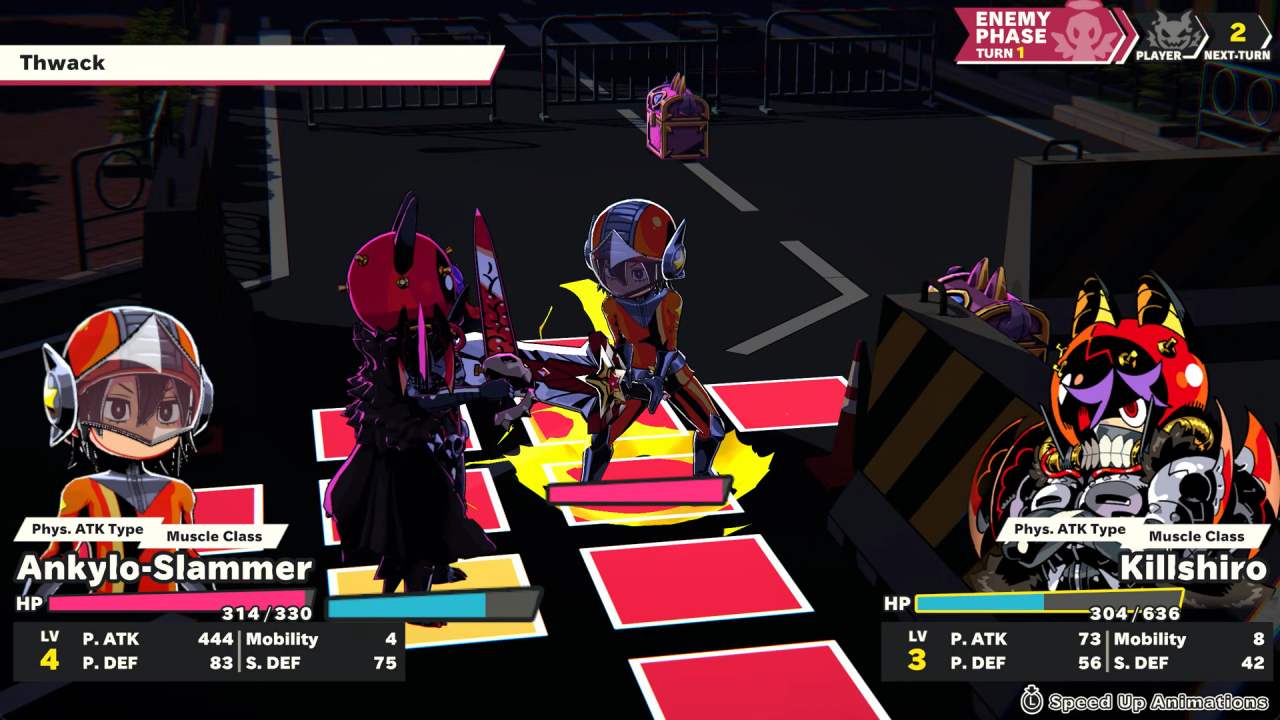
Kill skills sacrifice a friendly unit and trigger an effect based on its type. One peon might hurt enemies on the squares around it, while another lays down a line of destruction or hits a bigger area. A single sacrifice can take out a whole group of enemies, and a unit that looked badly placed can end up deciding the fight.
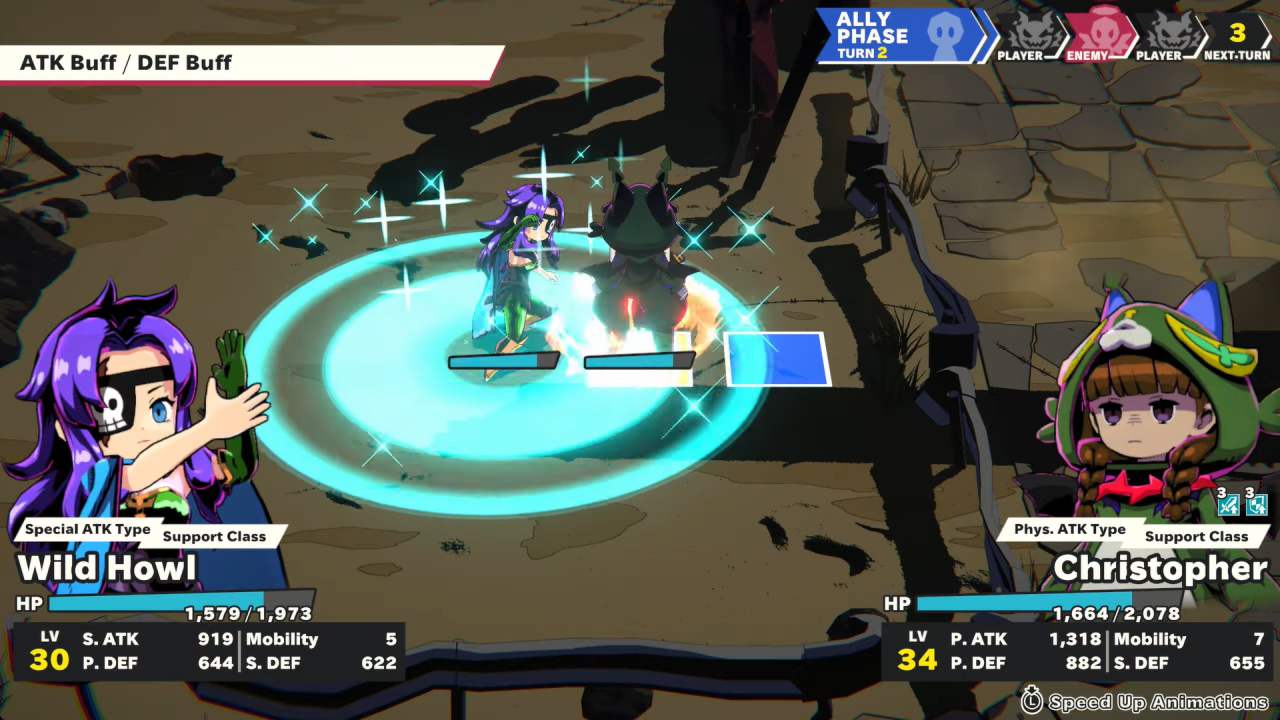
You can also absorb a peon's life force to recover health. That choice reduces your available numbers in the short term, but you can summon more units later if you have recruited enough. The important distinction is who delivers the killing blow. When Killshiro sacrifices a peon, that unit can reincarnate and return stronger after you recruit it again. If an enemy kills the peon first, you lose it permanently.
Demons' Night Fever therefore pushes you to eliminate your own underlings before the opposition can. It is a strange reversal of the usual tactical instinct, and it takes time to stop treating every friendly casualty as a mistake. The Peon Exploitation System is the most memorable idea here because it turns cruelty into a way to win, not just a bit of role-playing flavor.
At first, you might hesitate to throw away units you've spent time building. Years of strategy games teach you to look after your allies, hold your formation together, and clear a stage without losing anyone. This system wants you to break that habit. A peon stuck in an awkward spot becomes useful once you teleport it into a pack of enemies and sacrifice it.
An underling with the right skill can do more damage by dying than it ever could with a normal attack.
You get rewarded for being a rotten boss, and the cartoon look keeps it darkly funny instead of grim. There is still room for tactical frustration. The peons' autonomous movement can make it hard to set up the ideal attack, and Demons' Night Fever doesn't always make it clear why one unit's sacrifice deals more damage than another's.
You may learn that difference through trial and error, including a few wasted actions against enemies that barely take damage. Because each chapter limits your time and each battle demands efficient choices, unclear feedback can be costly. Once you understand it, the system is compelling, but some of its rules could be communicated more directly.
The campaign also changes its demands as you progress. The early chapters slowly acclimatize you to the basics, giving you the time to appreciate the power trip before the system gets too complex. By the third chapter, however, Demons' Night Fever shifts how you approach the lead character, rather than simply adding another layer to the existing style.
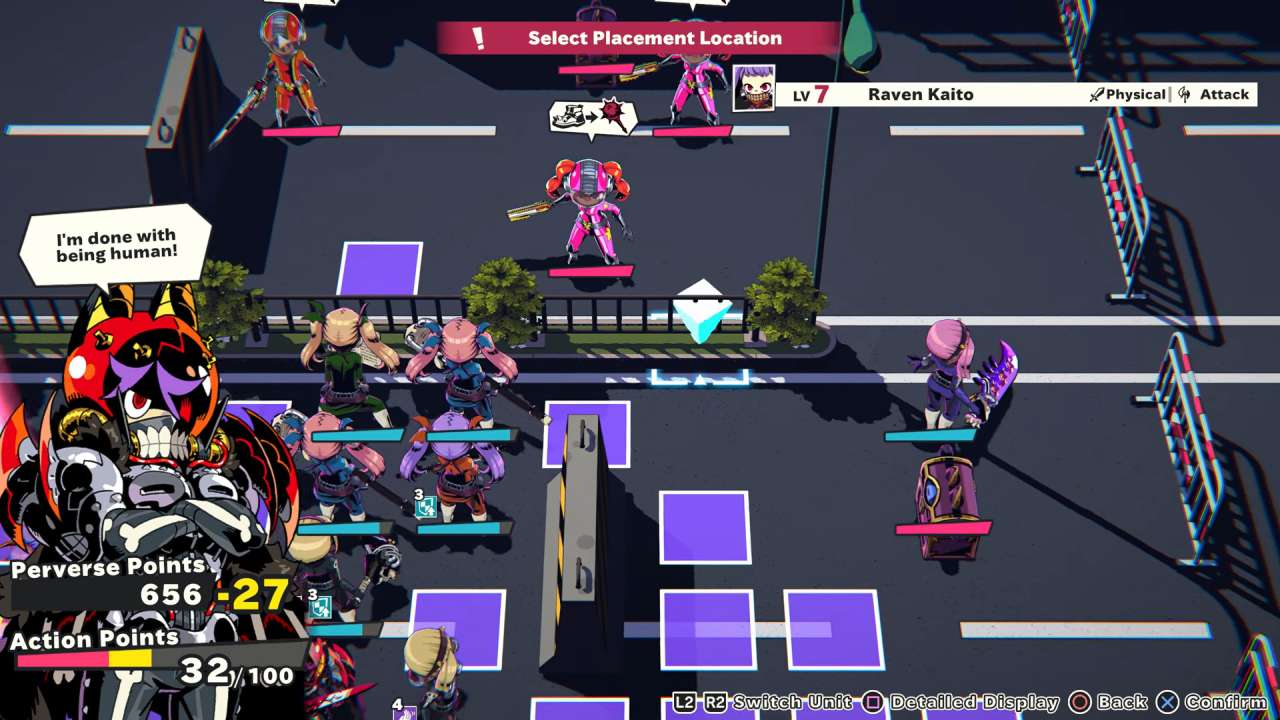
The difficulty rises, and a new way of playing may not feel as satisfying as the tools you have already learned. It is the sort of change that can divide players: a fresh challenge for some, an interruption for others. There is a learning curve outside battle, too. The Hideout packs a dense collection of menus, stats, and options, so the opening hours can feel like being handed a control panel without knowing what each switch does.
The tutorials spread information across several chapters, which helps prevent the systems from arriving all at once.
By Chapter 3, the routine of spending days picking upgrades and getting ready for bosses becomes easier to follow. The trouble is that most of the explaining happens in long chats between Killshiro and Giga Super Death. Their banter can be funny, but repeated instructions and jokes hold you up before you can make your next real decision. The game would be better if it let you start experimenting a little sooner.
The time limit is more than a source of pressure; it gives the whole campaign its speedrunning identity. You can lose by failing to resurrect the devil before the deadline, not simply because all your allies have been defeated. Once you complete the main campaign, Demons' Night Fever encourages you to revisit stages and improve your clear times.
A first playthrough can take around twenty hours, but the real challenge is refining your approach and finding how quickly you can clear each stage without wasting precious actions. It offers a different kind of replay value from a game built around endless stat inflation.
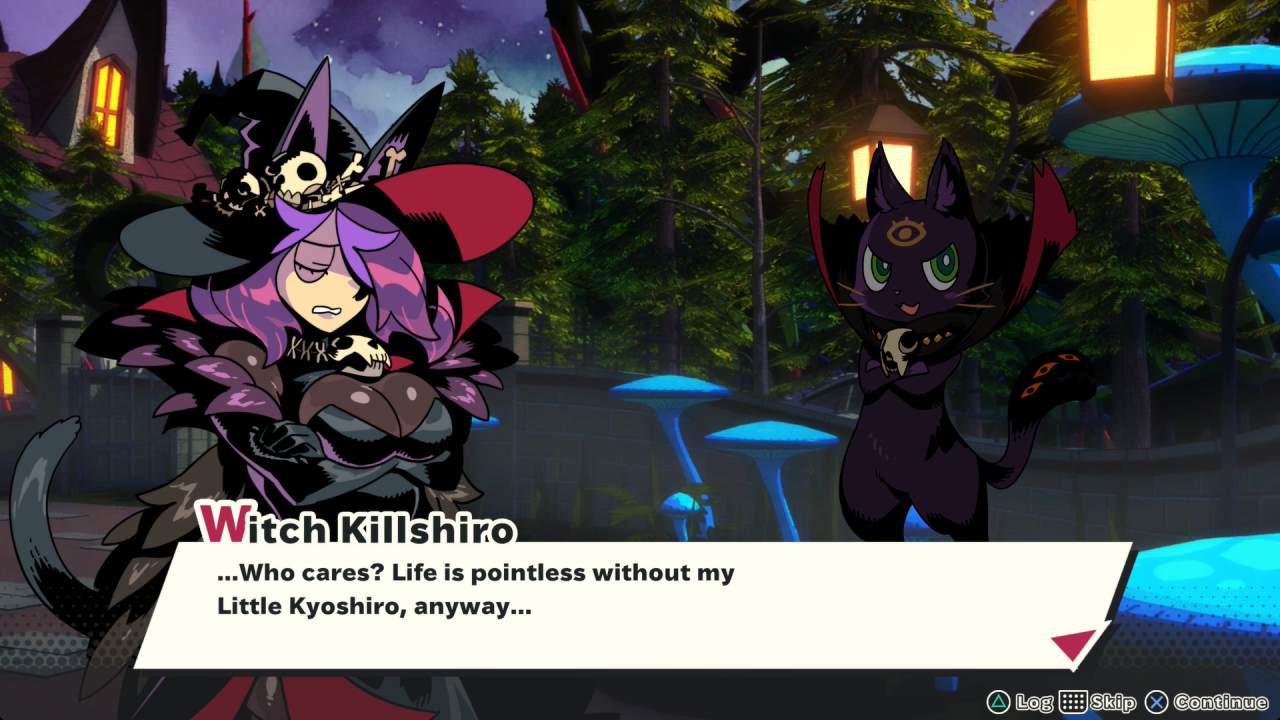
The presentation supports Demons' Night Fever's tone without trying to compete technically with the biggest productions. Yuji Himukai's character designs give the characters personality through expressive facial features suited to the story's exaggerated comedy. Bold lines, shadows, and illustrations distinguish the characters from their equally dynamic backgrounds.
The story's dialogue scenes use varied illustrations rather than repetitive poses.
The interface generally keeps the battlefield readable, which matters when several units are moving, and multiple explosions fill the screen at once. Its clean grid presentation lets you follow the action even when the screen becomes chaotic. The art direction does much of the work of giving Demons' Night Fever an identity, covering its modest technical ambitions with consistency rather than spectacle.
The soundtrack matches that mix of mischief and theatrical excess. Tatsuya Yano, known for work with Koei Tecmo and LOVEANNEX, as well as Vocaloid and pop music, coordinated the music, while producer syudou composed the opening theme. The tracks often sit comfortably in the background, but some are catchy enough to draw attention without disrupting the action.
Voice performances are less consistent. Some lines work because their delivery feels exaggerated enough to match the comedy, but others sound stiff, with odd emphasis and unnatural-sounding conversations. A few moments make it feel like the dialogue was recorded in a single take. That weakness stands out because the narrative occupies so much of the experience.
When a game relies on character banter to explain its systems and sustain its humor, awkward delivery can make an already long scene feel even longer. In the end, Demons' Night Fever works because it knows exactly what makes it different.
It takes the familiar tactical RPG setup and swaps the usual fantasy of loyalty and survival for a loop of recruiting, sacrificing, reincarnating, and getting faster.
The best moments come when you turn a throwaway unit into an advantage, then use the time you saved to do better next time. The management phase gives you real choices between battles, and the deadline stops you from leaning on endless preparation. These systems fit together well, even if some options feel too risky and some rules could use clearer explanations.
Demons' Night Fever isn't an easy recommendation for everyone. The humor is deliberately obnoxious at times, the lead is hard to like, and the wandering peons can make combat feel messy when you want precise control. The shift in the third chapter may also throw off the rhythm you've built up.
But if you like unusual RPG systems, dark comedy, and the challenge of finding the most efficient route through a tactical puzzle, there's plenty to enjoy. You're not here to protect a loyal party or build the perfect team. You're here to exploit a crowd of disposable underlings, take down enemies with their own destruction, and bring the devil back before time runs out.
Demons' Night Fever doesn't need to replace Disgaea or imitate the genre's familiar standards to justify itself. Its best ideas are strange enough to stand apart, and the combination of time management and sacrificial combat creates a loop that feels genuinely different.
The rough edges are real, especially in the humor, voice work, and occasional lack of clarity, but the underlying design is engaging. For players willing to embrace its wicked logic, this tactical RPG offers a fresh reason to rethink every move.
Editor, NoobFeed
Verdict
Demons' Night Fever is a distinctive tactical RPG built around sacrificial combat and deadline-driven planning. Uneven humor, clunky voice work, and odd, unclear moments don't take away from how fun its strange systems are.
74
Related News
No Data.