
Silver Pines Review
Nintendo Switch
A side-scrolling blend of survival horror, detective mystery, and Metroidvania exploration.
Reviewed by Asura Kagawa on Oct 10, 2026
Some horror games rely on sudden noises and monsters rushing into view, but Silver Pines takes a slower route. You arrive in a half-abandoned mountain town as Red Walker, a private investigator sent to find a missing musician named Eddie Velvet.
The job sounds simple until you realize the streets are nearly empty, the remaining residents act like they know more than they are saying, and hostile creatures roam places that should be ordinary. Before long, your investigation becomes a search for answers about the town itself, with every discovery raising another question.
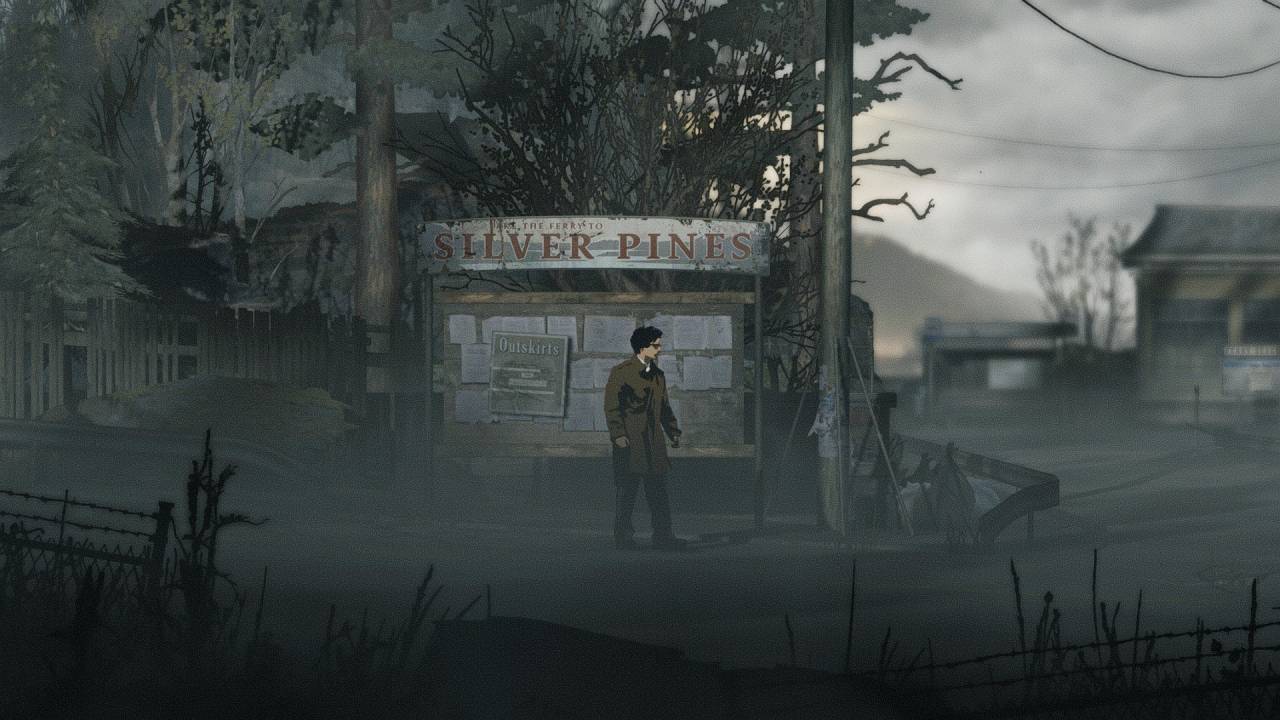
Developed by Scandinavian studio Wych Elm, Silver Pines draws openly from classic survival horror while adapting its ideas to a side-scrolling, two-and-a-half-dimensional format. You get the locked doors, scarce ammunition, puzzle clues, item management, and unsettling locations associated with older horror adventures, but the interconnected map also gives the experience a Metroidvania structure.
Under the genre blend, a missing-musician mystery and eerie town drive everything.
This unusual combination works because exploration ties survival and mystery together. The game isn't flawless, but it has a clear identity. You start with little understanding of why Red was sent to Silver Pines or what he is expected to find. His contact communicates through payphones, leaving you with a task but few reliable details.
You do not even have a clear picture of Eddie Velvet. That uncertainty establishes the detective story without feeling like a conventional investigation. Instead of following obvious markers, you have to pay attention to notes, signs, conversations, locked rooms, and shifts in the environment.
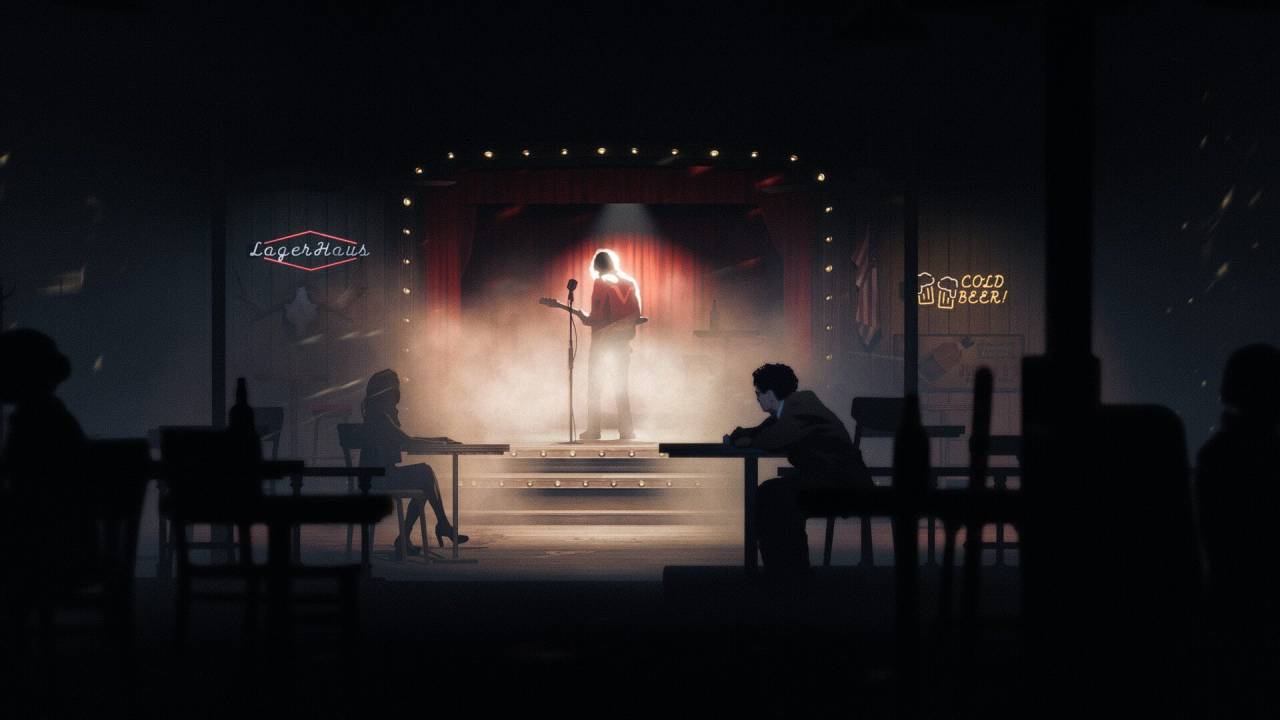
Silver Pines has a strong small-town-noir feel. Diners, motels, payphones, apartments, and local businesses make it seem like a place you already know, but the people you meet make even ordinary conversations feel a little off. Conversations rarely sound completely natural.
Characters speak as though they follow the rules of everyday conversation while quietly operating by another set of rules, and even Red seems slightly out of step with his surroundings. His dry delivery helps him blend into the strange world without ever seeming fully at ease.
The story also carries a streak of surreal psychological horror.
Fog-covered streets and deformed creatures recall classic survival horror, while odd, almost meta moments hint that what's happening around Red may be more complex than it first looks. Film noir adds another layer through the character portraits and the feeling of a private investigator working a case that keeps slipping away. You can spot these influences, but they come together into one believable world instead of a pile of references.
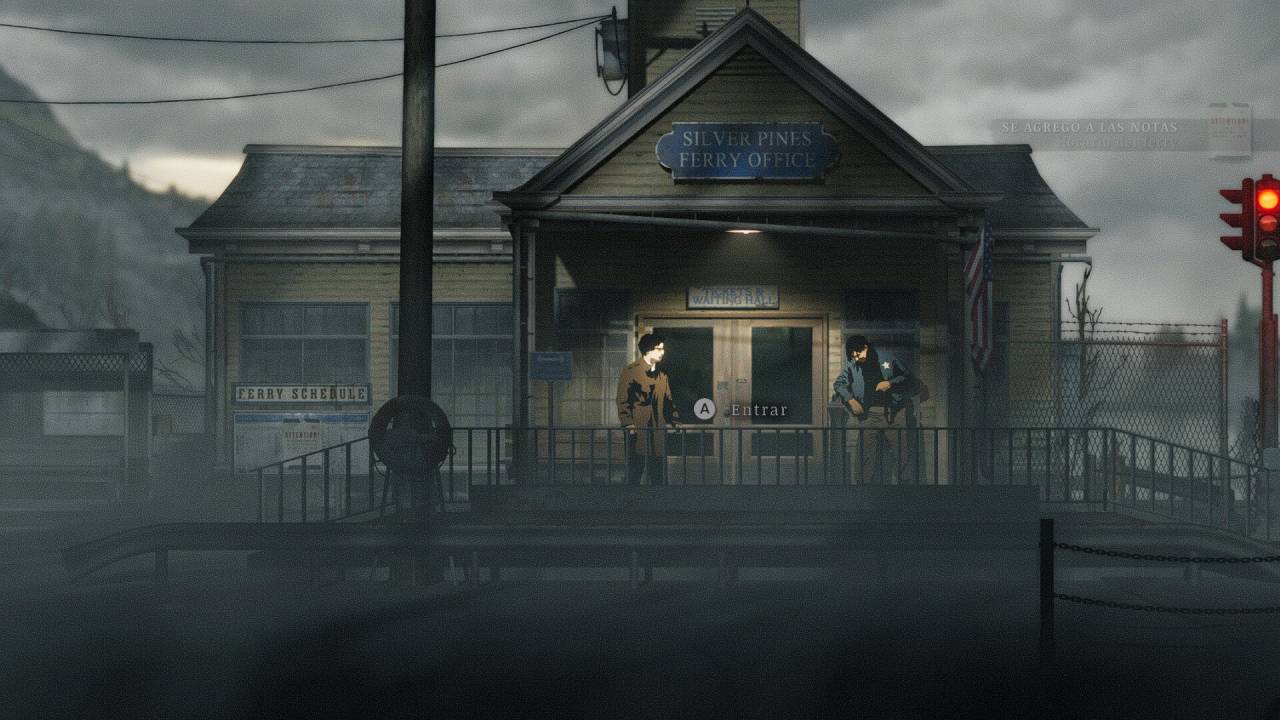
Much of the town's history comes through in the environment and the written material. Notes, letters, journal entries, and records from people caught up in the disaster slowly show how the place ended up the way it is. Some entries describe people losing their grip on themselves, while others offer fragments of local history or strange observations about what is happening.
Even an eccentric conspiracy magazine can become part of the experience, giving you another voice reacting to the town's impossible circumstances. The narrative rarely stops to explain every implication. Instead, you connect the dots yourself, sorting out which clues count and how they link up. That approach makes you feel like a detective rather than a passenger being carried between story scenes.
Still, the story gives you enough concrete details to keep your theories grounded. You are encouraged to interpret what you find without feeling that every answer has been deliberately hidden behind meaningless ambiguity. As you progress, the town's condition increasingly reflects the story's descent into madness.
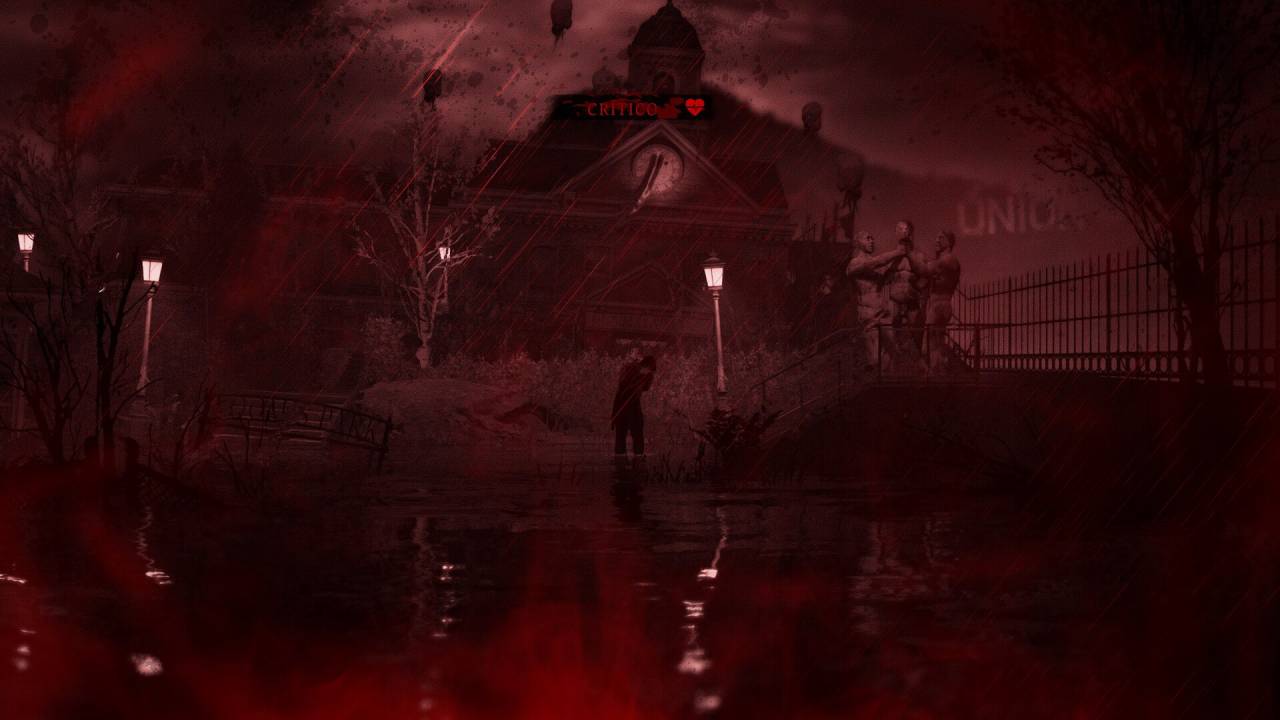
The weather grows more menacing, the places feel increasingly unsettling, and signs of violence start appearing where there used to be ordinary scenery.
The changes show you how bad things are getting without a character having to explain every step. The mystery remains the strongest reason to continue, though the final stretch doesn't build toward a conclusion as powerful as the earlier hours suggest.
Exploration is the foundation of Silver Pines. The campaign is divided into three main acts, each focused on a major area of the town. Once an area opens up, you can explore its streets and buildings, but progress depends on finding keys, learning codes, collecting tools, and discovering previously blocked routes.
A locked door might need an item stashed several screens away, while a cracked wall or a stretch of water can stay out of reach until you find the right gear or build up Red's stamina. That setup makes the town feel small but tightly linked. A spot that looks pointless at first can matter hours later, and a shortcut can turn a long trek into a quick trip back.
New tools change how you read familiar places.
A box cutter can clear material blocking a doorway, a flashlight lets you enter dark spaces, and a hook opens access to sewer grates. Later, a sledgehammer lets you break weakened walls, while repairing a boat motor lets you travel around town faster. You constantly revise your mental map as new options appear.
The downside is that Silver Pines does not always make its boundaries clear. You can wander into places before you have the tools to solve their puzzles, spending time searching for a solution that isn't available yet. Some passages are easy to miss, and the difference between a genuine dead end and a hidden route is not always obvious. That uncertainty suits the mood, but it can leave you retracing your steps just to make sure you didn’t miss something.
You may find yourself treating every room as though it must contain a secret, even when there is no useful way forward. A map helps you track locations, and a Polaroid camera is one of the most practical tools you get. You can photograph clues and points of interest, then leave those images on the map for later reference.
When you finally find the tool needed to break through a series of damaged walls, for example, those saved photographs can guide you back to places you've already noticed. Puzzles generally reward observation over abstract brainteasers. You might find a combination hidden in nearby notes, use symbols you saw earlier to interpret a clue, or match room numbers to positions on a lock.
Sometimes a journal explicitly points you toward the order of several clues.
In other cases, the solution depends on remembering a detail from another part of the building. Silver Pines trusts you to read what you find instead of highlighting the important lines for you. Your exploration is complicated by the need to manage a limited inventory. Weapons, healing items, ammunition, and useful objects all compete for a small number of slots, so every trip forces you to consider what you may need next.
Certain objects are required to open doors or access passages, so you can reserve those slots long before you know when you'll need them. Resource scarcity creates much of the tension. Ammunition and healing supplies are limited, and Silver Pines doesn't seem to place items to match your habits. If you spend too many shells on ordinary enemies early on, you may struggle in later encounters.
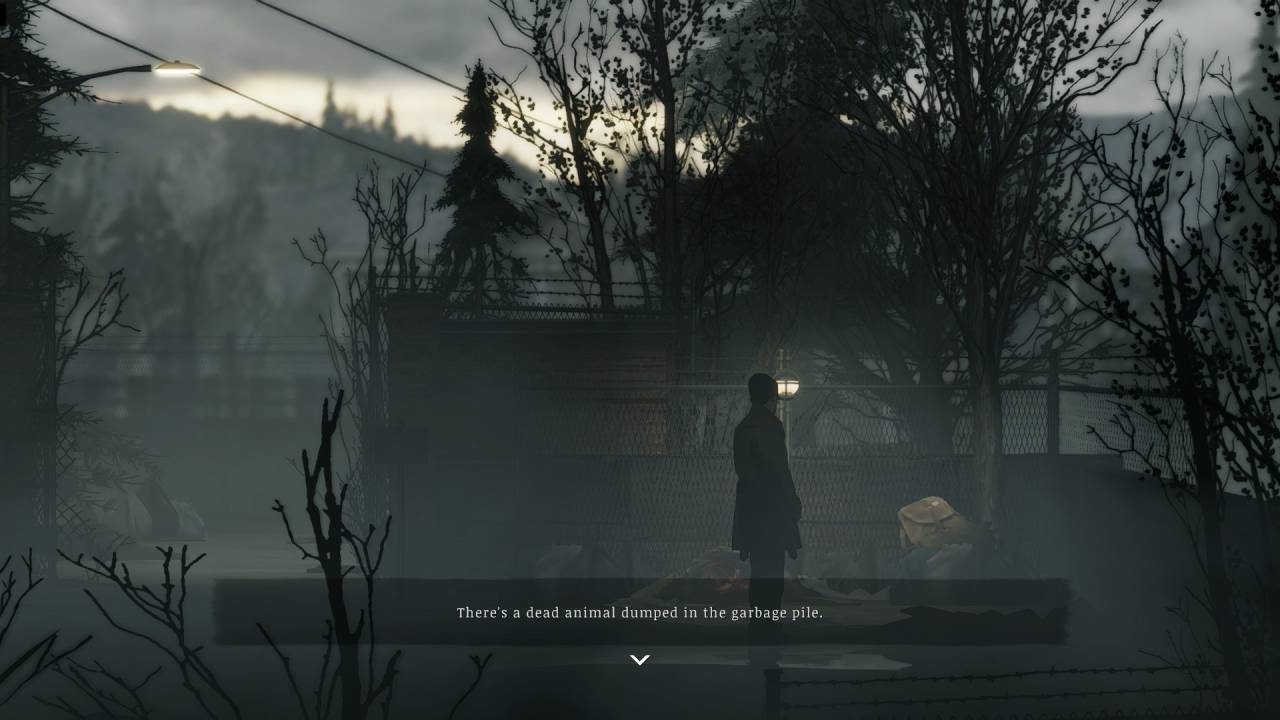
Vending machines provide another source of supplies, but their stock is limited; they are scattered around the town, and purchases can be expensive. That balance can feel harsh: careful play is rewarded, but a few wasteful decisions can put you in a difficult position much later.
Combat in Silver Pines is deliberately slow. Red isn't built to move and fire like an action hero, so you generally have to stop, aim, and shoot rather than run through every encounter. Guns such as the pistol and shotgun feel weighty, and some weapons require manual actions between shots. Reloading can involve feeding ammunition into a weapon one round at a time, making it risky to stand your ground while enemies close in.
Most common enemies are dark, zombie-like figures that approach and attack at a fairly readable pace.
Other types appear as you advance, including faster or airborne threats, but the enemy roster is not especially memorable. You can dodge a telegraphed attack and fire during the opening, or avoid combat altogether by slipping past an enemy unnoticed. That choice is important because fighting every creature can drain the supplies you need elsewhere.
Melee weapons let you conserve bullets, but they have their own limits. You have to wind up your attacks before they land, and stringing together dodges or swings burns through Red's stamina fast. If you run out, you become vulnerable while recovering. Weapons also wear down with use, but you can repair them instead of losing them permanently.
Coffee improves stamina, and mementos offer smaller passive benefits, such as stronger headshots or longer time in water. The combat's biggest weakness is how inconsistent it can feel in forced encounters. Dodging relies on timing, but it is not always easy to judge where an attack will land, and the hitboxes can feel imprecise when you are climbing or jumping between levels.
The slow controls make those moments more frustrating because correcting a mistake takes time. Healing and inventory management also happen in real time, so opening your menu or trying to use a health item does not protect you from nearby threats. You often need to clear an area first or act quickly before an enemy interrupts you. Boss fights expose another limitation.
The Boss designs can be visually striking, but many encounters follow a similar rhythm.
Dodge a heavy attack, wait for an opening, fire several shots, then repeat the pattern from the opposite side of the screen. Once you understand the timing, the fights can feel repetitive rather than demanding in new ways. They also burn through a lot of ammunition, occasionally forcing you to return to town and scavenge for more supplies before trying again.
Later sections introduce explosive enemies that rush toward you, making ammunition feel mandatory rather than optional. The presentation is a major reason Silver Pines remains compelling through its rough patches. Characters and enemies are flat 2D sprites, while the spaces around them have a layered, almost-3D look.
As you walk through streets and buildings, you pass objects in front of and behind you, and the camera shifts around them to add depth. Soft-focus effects and carefully placed scenery make the town feel more solid than a flat, side-scrolling stage. Lighting plays a big part in exploration. Dark rooms are genuinely hard to read, and the flashlight reveals how much detail the environments contain.
Unfortunately, its batteries need replacing often enough that you may choose to leave it switched off to conserve power. That makes an otherwise useful mechanic feel more like a chore, especially when you want to appreciate the lighting. Performance can also vary, with some areas running smoothly and others suffering from severe frame-rate drops.
The sound design matches the visuals' restrained approach.
Much of the music comes from radios inside the world, so it feels like part of the place rather than a constant nudge to be scared. The soundtrack pulls from grunge, dream pop, and industrial, and the mood suits the town's strange small-town feel. The voice work is just as good, going for a dry, sardonic delivery instead of over-the-top panic.
Red's narration guides you through new areas, and the locals' odd conversations keep the mystery alive without relying on long cutscenes. Silver Pines respects your time right from the start. After a short conversation that sets up your assignment, you can head out and explore without getting stuck in long cutscenes or forced walking sections.

The controls take a while to learn, and the first big boss tests how well you understand dodging, stamina, and weapon timing. Once the mechanics click, you can slip through fights and hold onto your resources with far more confidence. A full run of Silver Pines takes roughly ten to fifteen hours, depending on how much you explore and how long you spend tracking down clues.
Multiple endings, secrets, and passive upgrades give you reasons to come back if the mystery has stuck with you. The overall package is also priced at around $25, making the exploration and mystery feel substantial. Silver Pines succeeds because it understands how to make curiosity work alongside fear.
Silver Pines rarely nudges you to charge in without thinking.
Instead, you read your surroundings, hold onto clues, stretch your supplies, and slowly figure out how the whole town fits together. Puzzles and exploration matter more than fighting, and the mood and story give you a good enough reason to put up with the awkward moments.
Pacing that drags late in the game, bosses that feel like repeats, occasional performance hiccups, and a resource balance that shows no mercy keep it from being all it could be, but none of that erases what makes the trip feel different.
Staff Writer, NoobFeed
Verdict
Silver Pines is a memorable survival-horror adventure, steeped in mystery and rewarding patient exploration. Clunky combat and repetitive bosses keep it from greatness, but its haunting atmosphere and clever, looping world make the trip worth it.
80
Related News
No Data.