
Star Fox Review
Nintendo Switch 2
The definitive space rail shooter returns with next-gen power and explosive multiplayer action.
Reviewed by Elme Dhee on Jun 25, 2026
There is a definitive reason why Nintendo constantly circles back to the architectural blueprint of their 1997 breakthrough rail shooter. The Nintendo 64 iteration of this flagship franchise remains the undisputed benchmark of the entire property, delivering a golden standard of gameplay that effortlessly stands the test of time.
While subsequent experimental follow-ups have fundamentally floundered by straying too far from the core formula, this latest hardware iteration takes a bold step backward to move forward. Simply titled Star Fox, this high-profile project serves as a comprehensive soft reboot, acting as a definitive premier showcase for the newly released Nintendo Switch 2.
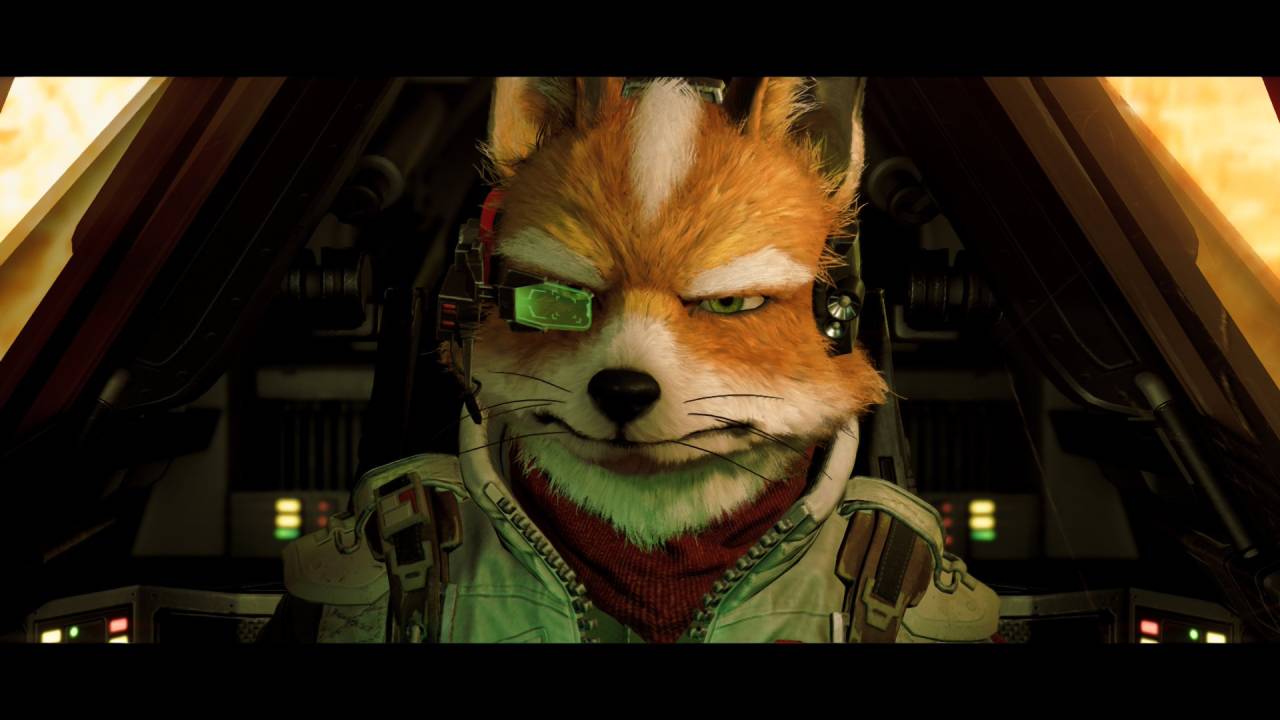
Developed by Velan Studios, the title successfully captures the visceral momentum you remember from childhood while aggressively modernizing its technical framework. However, if you are a veteran pilot who has already committed every square inch of the Lylat System to memory across various legacy platforms, an initial sense of mechanical déjà vu will be entirely impossible to shake.
This dedicated remake builds its foundation directly upon the sacred geometry of a true industry classic, pulling players back into a beautifully realized era of arcade-inspired space dogfights. For uninitiated players, or perhaps a younger demographic who recently discovered the ultra-cool mercenaries via Fox McCloud's massive spotlight-stealing cameo in the Mario Galaxy animated movie, the world-building is instantly accessible.
You are thrust directly into a high-stakes stellar conflict where anthropomorphic space pilots utilize cutting-edge interstellar technology to wage war across vast planetary systems. The narrative structure remains blissfully intact, following a premier squad of well-funded mercenary fighter jocks who are routinely contracted by General Pepper to spearhead military operations. This distinct hardware exclusive uses its upgraded horsepower not to reinvent the wheel, but to refine it into an absolute masterpiece of modern presentation.
Fully animated narrative sequences breathe cinematic life into the tragic history of the McCloud lineage.
The dramatic narrative engine of Star Fox kicks off with an upgraded, deeply emotional opening chronicle that sets a far more mature tone for the campaign. Years prior to the active mission, the legendary pilot James McCloud was betrayed during a scouting operation on the toxic planet Venom by his treacherous wingmate, Pigmon, leaving him at the mercy of the mad scientist Andross.
Veteran Peppy Hare narrowly dodged the trap, while James was lost to the void, leaving a young Fox to one day assume the mantle of leadership. This tragic back-story is expertly fleshed out through one of the remake's most notable structural additions: fully animated, long-form narrative sequences.
These beautiful cinematic moments infuse the overarching universe with an extraordinary amount of fresh life, making the central conflict feel like a high-budget animated feature. The developers opted for highly detailed, realistic character designs that initially drew fire from the community when the game was first announced.
But seeing these models actively moving and emoting within the story completely quells any remaining skepticism. The expressive facial animations and ultra-dense fur physics add a stunning layer of tactile realism to these beloved animal characters without compromising their iconic fantastical identity. Most of these long narrative transitions occur in the tactical briefing rooms of the Great Fox, where the squad carefully plans its upcoming strategic deployments.
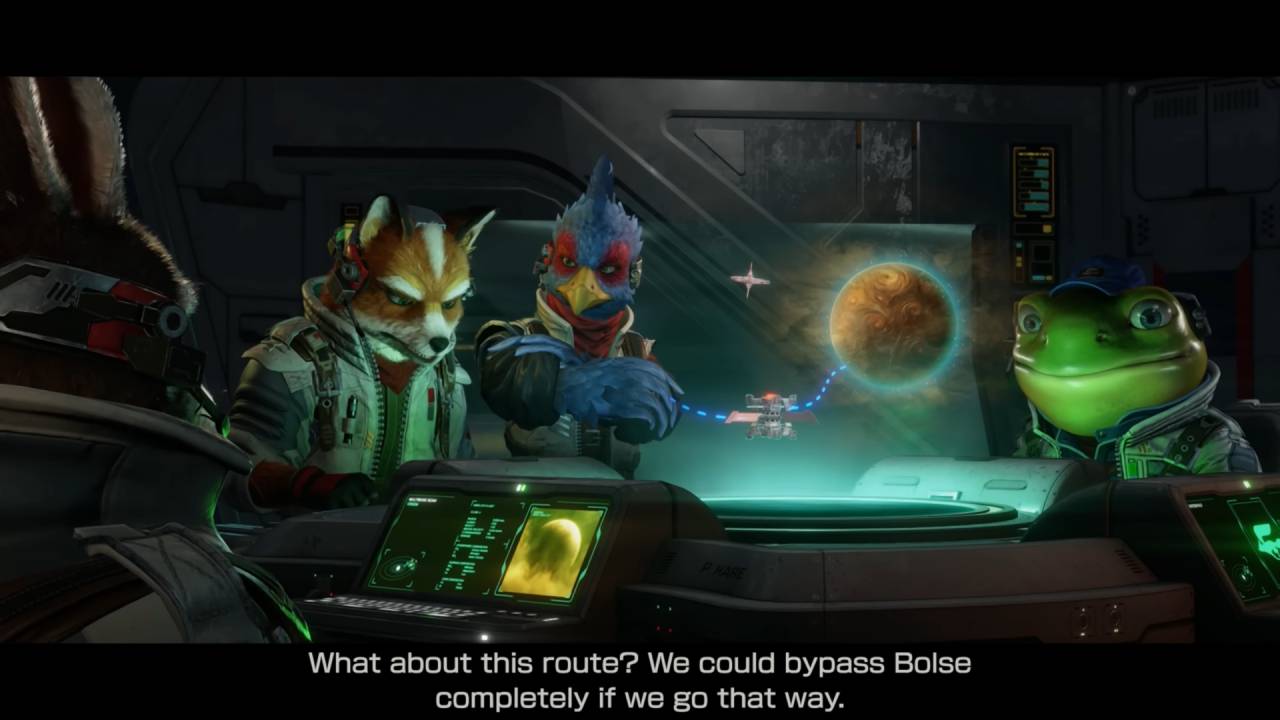
The animation team did a phenomenal job giving each subtle gesture and posture choice a distinct personality trait. Falco constantly shifts his weight and rolls his eyes with smug arrogance, emphasizing his endearing nature as a cocky hotshot, while Peppy's nuanced movements convey the quiet fatigue of a veteran who knows what he’s doing.
Branching galactic routes provide unprecedented tactical context to your interstellar deployments.
If the cinematic narrative successfully grounds you in the emotional reality of the war, the expanded level selection screen completely redefines how you navigate the broader campaign. One of the most brilliant mechanical achievements of the original design was its freeform stage progression system, which famously allowed players to carve a custom path across the galaxy by pursuing optional hidden objectives.
This single-player campaign preserves that signature framework perfectly, effectively dividing the Lylat system into overlapping difficulty tiers that function as easy, medium, and hard trajectories. Rather than locking you onto a rigid track, Star Fox actively encourages you to hop dynamically between these routes during a single run, provided you possess the mechanical skill required to unlock the harder alternative exits.
While the legacy versions presented this branching system through rudimentary colored lines on a flat grid, this modern reimagining injects immense narrative panache into your wayfinding. Every successful mission transition drops you into a dynamic military debriefing session where General Pepper outlines the strategic importance of your potential destinations.
You are forced to weigh the tactical ramifications of your choices, choosing whether to intercept a catastrophic bioweapon on one planet or rush to protect a desperate military outpost under siege elsewhere. The cutscene engine stitches these narrative permutations together seamlessly, based on your exact approach angle, so the unfolding military drama never feels disjointed or fragmented.
Volumetric laser illumination and enhanced physics highlight the staggering scale of planetary dogfights.
Once your Arwing touches down in a combat zone, the sheer graphical power of the Nintendo Switch 2 completely transforms the traditional shooter experience. The level design remains beautifully recognizable to its retro counterparts, yet the environment completely sheds its legacy low-polygon constraints in favor of jaw-dropping geographic complexity.
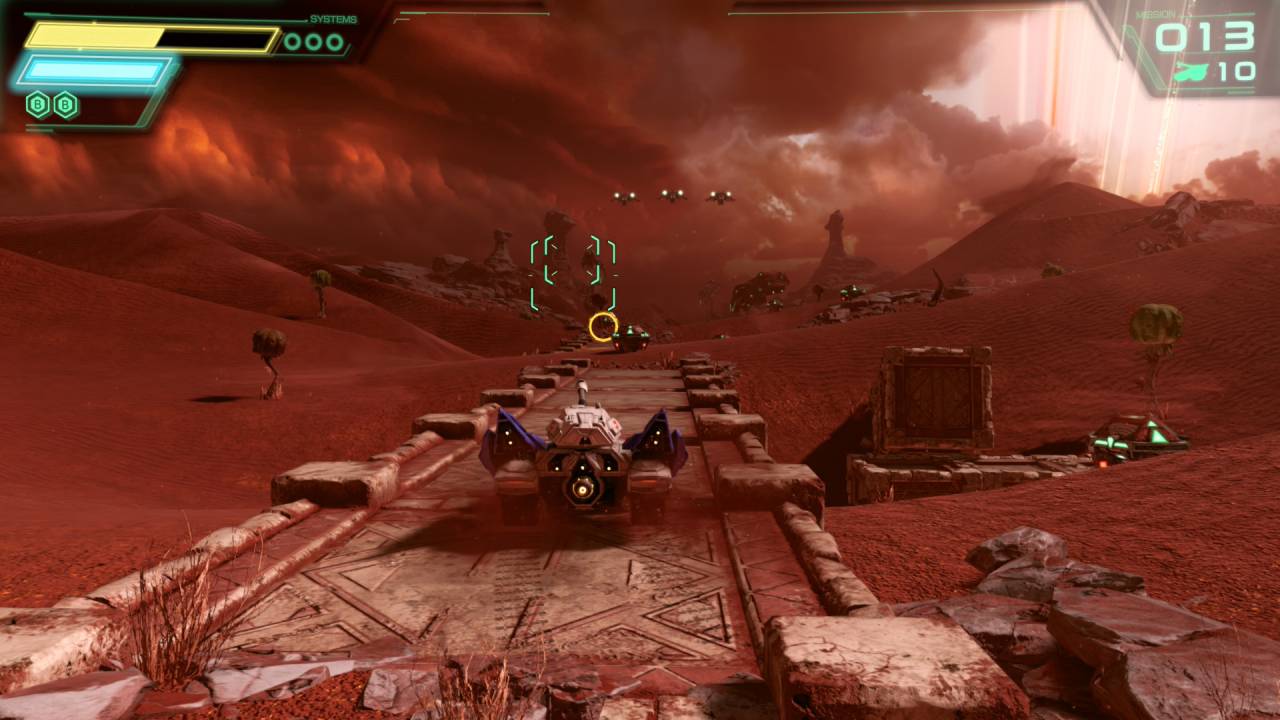
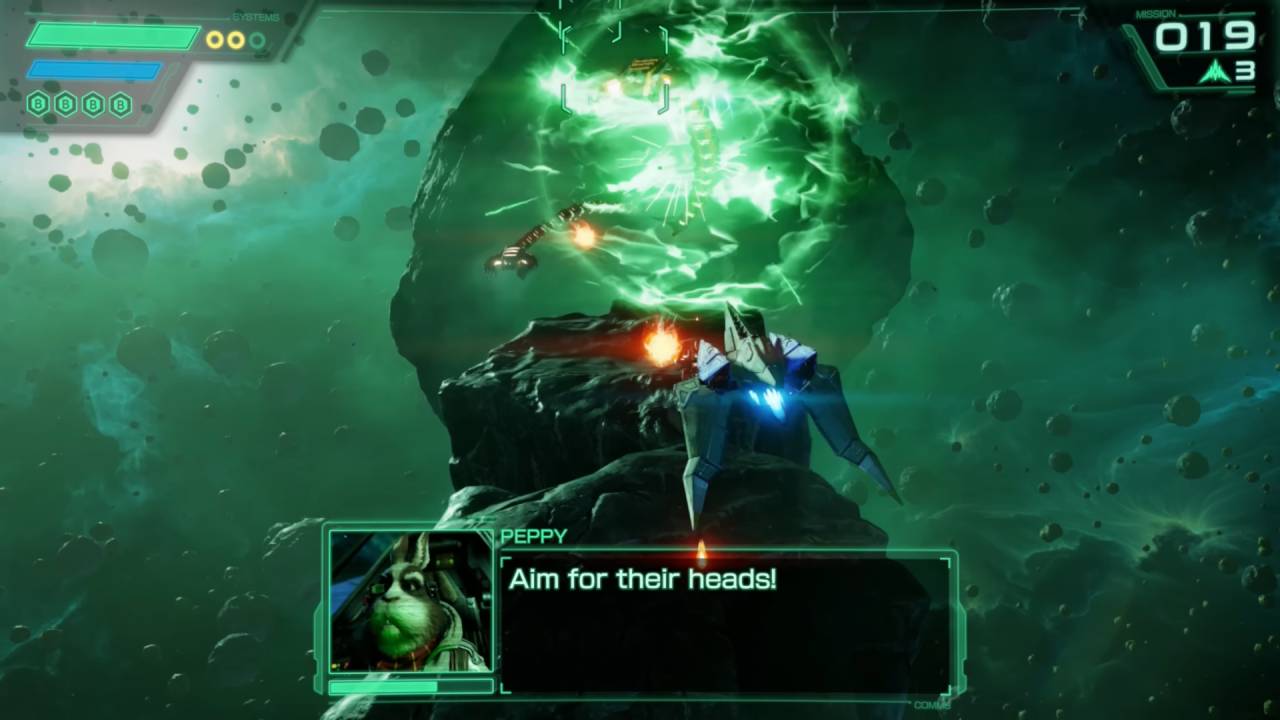
The visual update is most impressive for showcasing advanced rendering capabilities that weren't feasible on older architectures, such as real-time volumetric lighting effects. Your heavy laser blasts illuminate the dark, claustrophobic caverns of asteroid belts, casting dynamic shadows that realistically crawl across the rock formations as you barrel roll past enemy lines.
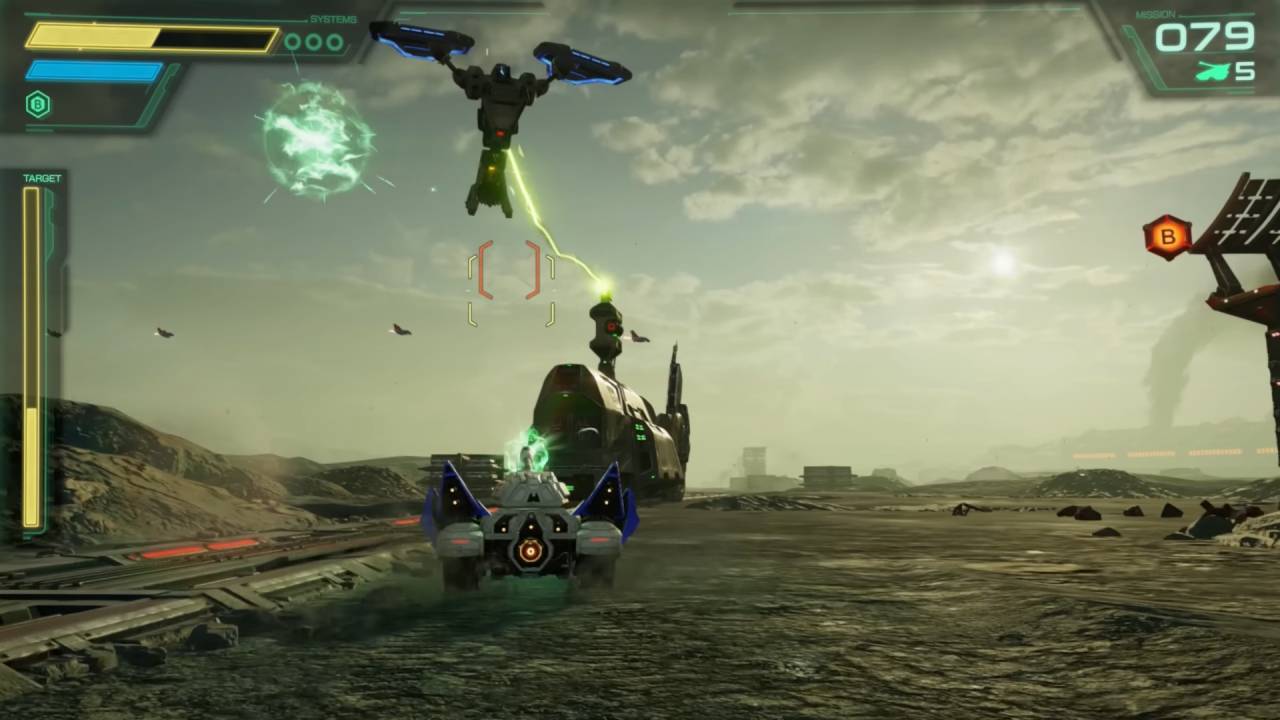
The sheer visual variety across the campaign's 15 different stages is incredibly impressive, with each planetary biome sporting its own distinct atmosphere and environmental hazards. Revisiting these iconic locales feels like a revelation, especially when the gameplay shifts away from standard flight to highlight alternative vehicular combat options.
Whether you are crushing ground forces beneath the heavy treads of the Landmaster tank or navigating the crushing aquatic depths in the Blue Marine submarine, Star Fox constantly alters its mechanical rhythms. The developers use the console’s impressive processing power well to populate the screen with hundreds of moving parts, capturing the real, chaotic majesty of a large-scale space war.
Structural progression rules are staunchly loyal to arcade tradition.
In a shocking twist that will please purists but might alienate modern audiences, the core progression structure of Star Fox refuses to compromise on accessibility. Each individual journey through the Lylat system is treated as an isolated, self-contained arcade run that must be completed in a single sitting from Corneria to Venom.
Once the credits roll or your squad suffers a definitive defeat, your campaign save data is entirely wiped, forcing you to start fresh at the edge of the galaxy for your next run. While this absolute faithfulness to the 1997 source material preserves the high-stakes tension of an authentic arcade experience, it misses the opportunity to fully leverage modern profile tracking.
A full single-sitting run through the main campaign takes roughly an hour to complete, encouraging rapid, high-intensity play sessions that test your reflexes. Navigating the more challenging planetary sectors requires actively identifying obscure environmental triggers and secondary conditions during live combat. Furthermore, the ultimate endgame goal centers entirely around racking up massive kill counters across your chosen route to earn elusive squad medals.
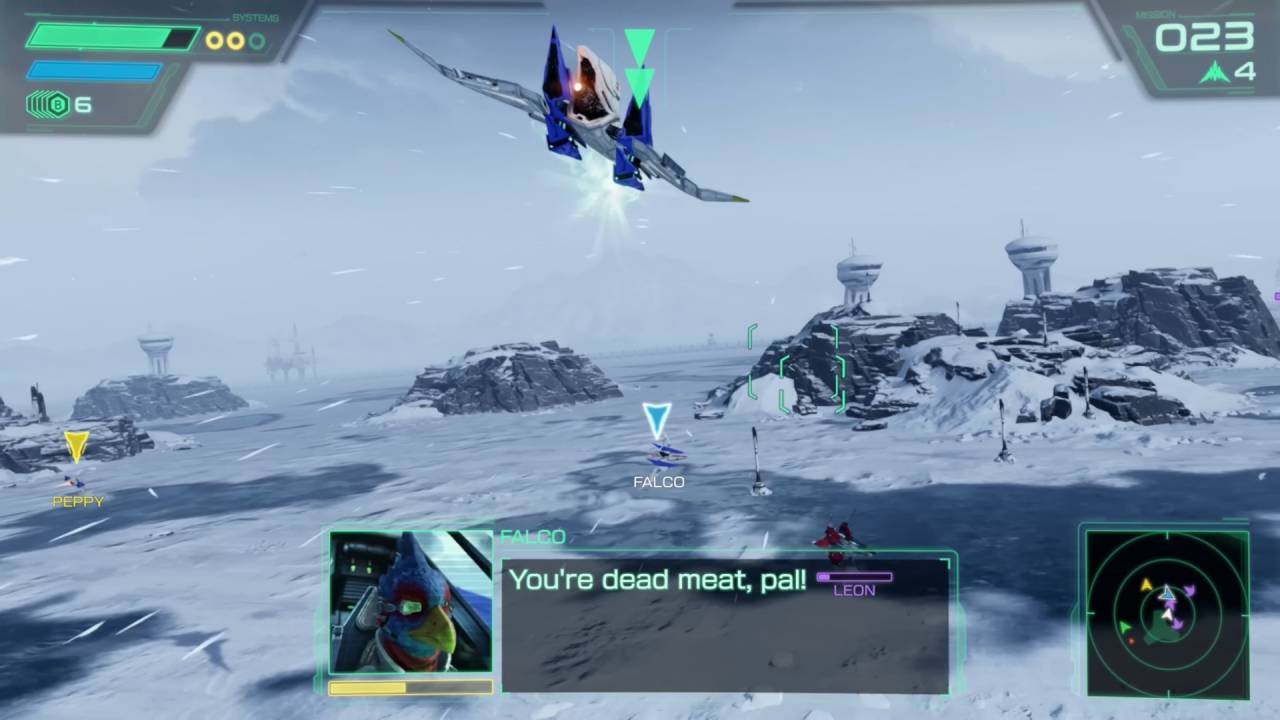
Returning fans who are deeply familiar with the galactic layout may find themselves wishing for an optional, persistent star map mode that actively tracks which paths have been uncovered across multiple playthroughs. The game does offer a separate Challenge Mode to let you practice individual stages, but the main story remains locked inside its uncompromising classic loop.
This structural rigidity ensures that every successful deployment feels incredibly hard-fought, but it simultaneously prevents the game from offering the expansive, long-form progression hooks that modern console players typically expect from a premium release.
Helpful navigational adjustments ease the burden of tracking hidden stage objectives.
While the overarching campaign structure remains unyielding, the internal mechanics governing your active mission runs have received several welcome quality-of-life adjustments. Wayfinding your way toward the more lucrative, high-difficulty planetary sectors is noticeably smoother this time around, thanks to clever integrations within the real-time radio chatter.
Your wingmen will naturally drop organic dialogue hints pointing toward secret alternative routes or critical structural weaknesses without ever breaking the immersion or feeling overly hand-held. It strikes a fantastic balance that allows newer players to naturally decipher the game's complex puzzle logic without needing to consult an external strategy guide.
Furthermore, Star Fox completely removes the frustrating penalty of losing a life or stripping away your precious laser upgrades if you choose to manually restart a stage from a checkpoint. If you realize you have completely missed a critical optional objective mid-flight, you can instantly loop back to the beginning of the zone with your full arsenal intact.
This mechanical transparency encourages active experimentation, turning what used to be a punishing exercise in perfection into an enjoyable process of trial and error. You can even fully complete a planet, analyze where the current hyperspace path is leading you, and immediately choose to replay that exact stage to hunt for a different exit condition before moving forward.
Dense environmental clutter and visual over-saturation introduce minor tactical complications.
The transition to ultra-high-definition graphics does not come entirely without its fair share of mechanical compromises, as the sheer visual density can occasionally disrupt your combat efficiency. In the original version, the stark, simple polygon models made enemy targets and incoming projectile hazards instantly identifiable against the black void of space.
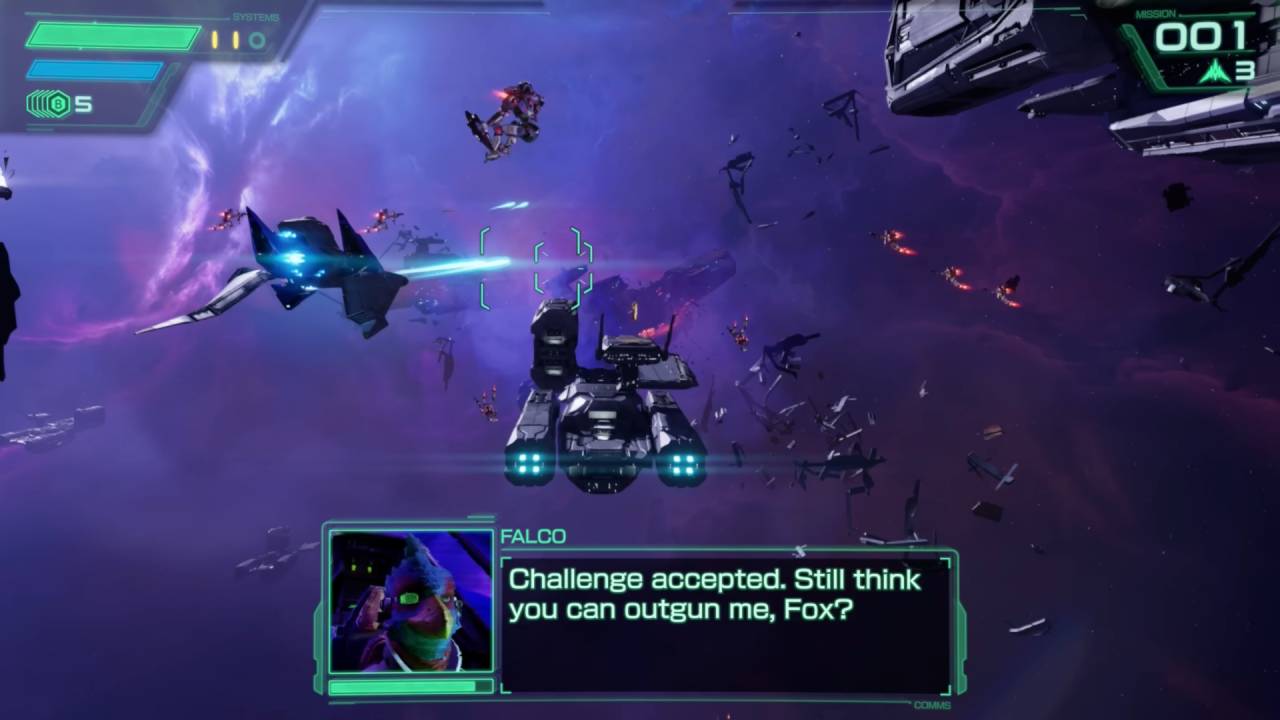
In this gorgeous reimagining, the screen is often so packed with volumetric dust, planetary debris, and spectacular explosion particles that tracking moving targets becomes a serious optical challenge. It is incredibly easy to lose sight of a rogue enemy fighter amidst the visual chaos, allowing them to slip past your sight and escape before you can secure the kill.
This problem is particularly apparent in the game’s massive, multi-stage boss battles, where finding glowing weak spots is essential to surviving. The modern, realistic aesthetic means that weak points are integrated organically into the mechanical hulls of enemy battleships rather than flashing with bright, artificial colors.
Without those explicit retro visual cues, telling whether your laser barrages are actually inflicting meaningful structural damage requires immense concentration. Additionally, the heightened environmental physics can occasionally clash awkwardly with the arcade destruction logic; watching a massive capital warship explode with the visual weight of an empty cardboard box feels somewhat jarring when everything else in the world looks so immaculately heavy.
Specialized control schemes fully exploit the Joy-Con 2's innovative capabilities.
Where the game truly capitalizes on its next-generation platform exclusivity is through its incredibly diverse and creative suite of hardware-specific control options. The standard dual-stick setup is incredibly snappy and responsive, providing a level of precision never before experienced as you thread your ship through dense obstacle courses.
However, players looking to fully experience the console's unique architecture can activate a specialized mouse-emulation mode using the new Joy-Con 2's internal sensors. This allows you to fluidly steer your vehicle with one hand while independently aiming your primary reticle across the screen with natural pointer gestures.
This innovative approach to targeting transforms traditional vehicular combat into an incredibly dynamic, tactile experience that breathes entirely new life into familiar firing lines. For traditionalists who reject modern motion-sensing mechanics, the game also features day-one compatibility with the physical Nintendo 64 wireless controller, allowing you to experience the entire campaign with its original layout.
The inclusion of these varied control architectures proves that Velan Studios was deeply committed to making this release feel like a definitive mechanical playground. It allows players to completely customize their flight style, ensuring that the high-speed tactical maneuvering remains intensely satisfying regardless of their preferred peripheral.
Expanding the mercenary contract into online spaces introduces robust competitive features.
Beyond the standalone narrative campaign, this package significantly expands the legacy formula by introducing an incredibly robust suite of modern multiplayer features. The classic four-player split-screen mode has been entirely reimagined to support high-stakes, online PvP encounters across a variety of dedicated arenas.
Players can formally align with either the heroic team or the notorious Star Wolf mercenaries, participating in intense team-based dogfighting that demands exceptional communication and spatial awareness. The online netcode performs beautifully, delivering smooth, uncompromised frame rates that are absolutely essential for maintaining competitive parity during chaotic aerial maneuvers.
The competitive suite is further elevated by the integration of the console's native GameChat software, which allows squads to utilize live video communication during active matches. To lean into the franchise's whimsical, signature charm, the software includes interactive webcam filters that map animated character masks directly onto your face in real time.
Furthermore, Star Fox supports an innovative GameShare feature that allows you to invite owners of the legacy Nintendo Switch models into your multiplayer lobbies without requiring them to own the upgraded version. While these original console users miss out on the next-gen visual bells and whistles, cross-generational parity ensures that matchmaking pools remain incredibly healthy and active from launch day onward.
Innovative co-op flight options split the operational burdens of the cockpit.
For players who prefer cooperative synchronization over aggressive competitive conflict, Star Fox introduces a brilliant Local Co-Op framework that completely recontextualizes the core campaign. This special mode allows two local players to share one Arwing, dividing in half the normal duties of a starfighter pilot. One player receives full control of the vehicle's flight path, performing defensive barrel rolls and adjusting thruster speeds, while the second player serves as the dedicated gunner, controlling a 360-degree turret to blast incoming threats.
This asymmetric gameplay style demands a tremendous amount of verbal communication and synergy to survive the game's more difficult planetary routes. This clever implementation of cooperative play makes the entire game an incredible party experience, perfect for introducing newcomers to the unforgiving rhythms of the rail shooter genre.
The pilot can focus entirely on safe navigation and executing precise flips to avoid incoming fire, while the gunner is free to enjoy the pure, sensory satisfaction of blasting enemy formations out of the sky. It beautifully maximizes the social, sharing-oriented DNA of Nintendo's hardware, transforming a traditionally solitary arcade challenge into a brilliant shared triumph.
This mode alone injects a staggering amount of fresh replayability into the package, giving veteran players a phenomenal reason to guide an entirely new generation of wingmen through the dangers of the Lylat System.
Exquisite acoustic layering captures the definitive grandeur of cinematic space warfare.
Artistically, the project is a tour de force of acoustic engineering, providing an immersive orchestral audio landscape commensurate with the scale of the visual presentation. The entire score has been magnificently re-recorded with a full live orchestra, turning the iconic themes into soaring, cinematic anthems that throb with rhythmic energy during intense combat sequences.
The sound team applied advanced positional audio mixing to ensure that every engine hum, laser blast, and distant explosion is grounded perfectly within a three-dimensional space. You can instantly hear the precise trajectory of a pursuing enemy fighter purely through the directional roar of their thrusters as they attempt to lock onto your tail.
The voice work has been entirely re-recorded and expanded to accommodate the massive influx of new narrative cutscenes, with the cast delivering nuance that far exceeds the campy charm of the original release. The industrial grind of metal tearing, the sharp hiss of Arwing air brakes, and the deep, rumbling bass of exploding smart bombs combine to create a thoroughly suffocating layer of atmospheric immersion.
Apart from minor visual oversaturation during frantic boss battles, the game runs with flawless technical efficiency, taking full advantage of the console's hardware to deliver an immaculate experience. It is a magnificent technical showcase for the new generation, proving that when Nintendo treats its classic properties with this level of structural reverence, the results are nothing short of spectacular.
In short, a beautiful remake fighting its own heritage.
Star Fox is about to get a lovely tribute on Nintendo Switch 2 with one of the best achievements in interactive video game history. Velan Studios has created the ideal arcade experience, fiercely nostalgic and excitingly contemporary, by refusing to dilute the mechanical purity that made the original design universally beloved.
The addition of high-budget cinematic cutscenes, innovative motion-control architectures, and robust online multiplayer modes elevates this package far beyond a simple visual remaster. It stands as a brilliant, uncompromised celebration of everything that makes tactical action within a sci-fi universe so inherently exhilarating.
The strict adherence to self-contained arcade campaign loops may turn off some modern gamers, as may the occasional visual clutter during hectic boss battles, but these are mere quibbles when weighed against the sheer mechanical excellence of the game. It’s an absolute technical showcase for Nintendo’s next-generation hardware, and proves that the timeless appeal of Fox McCloud and his legendary squadron is as unyielding as ever.
Whether you are a veteran pilot revisiting the glory days of your youth or a fresh recruit eager to experience the definitive version of a timeless classic, this stellar release is a must-play. Strap yourselves into the cockpit, trust your team, and get ready to defend the Lylat System like never before.
Editor, NoobFeed
Verdict
Star Fox is a spectacular Switch 2 remake that captures pristine arcade dogfighting. While its structural adherence to the original breeds a slight sense of déjà vu, the new co-op and PvP modes are phenomenal.
75
Related News
No Data.