
Tiny Bookshop Review
Nintendo Switch
Neoludic Games crafts a heartfelt journey into literature, commerce, and community in this charming bookshop simulator.
Reviewed by Zahra Morshed on Aug 08, 2025
Tiny Bookshop arrives as a refreshing take on cozy simulation, developed by Neoludic Games, a studio with a growing reputation for creating intimate, detail-rich experiences. Recently, the cozy game genre has been very popular.
Tiny Bookshop stands out because it's based on the love of books, the reading culture, and the magic of having a mobile bookstore. It combines management elements with story-based world-building to create a flow that encourages you to pay attention, remember, and care about others.
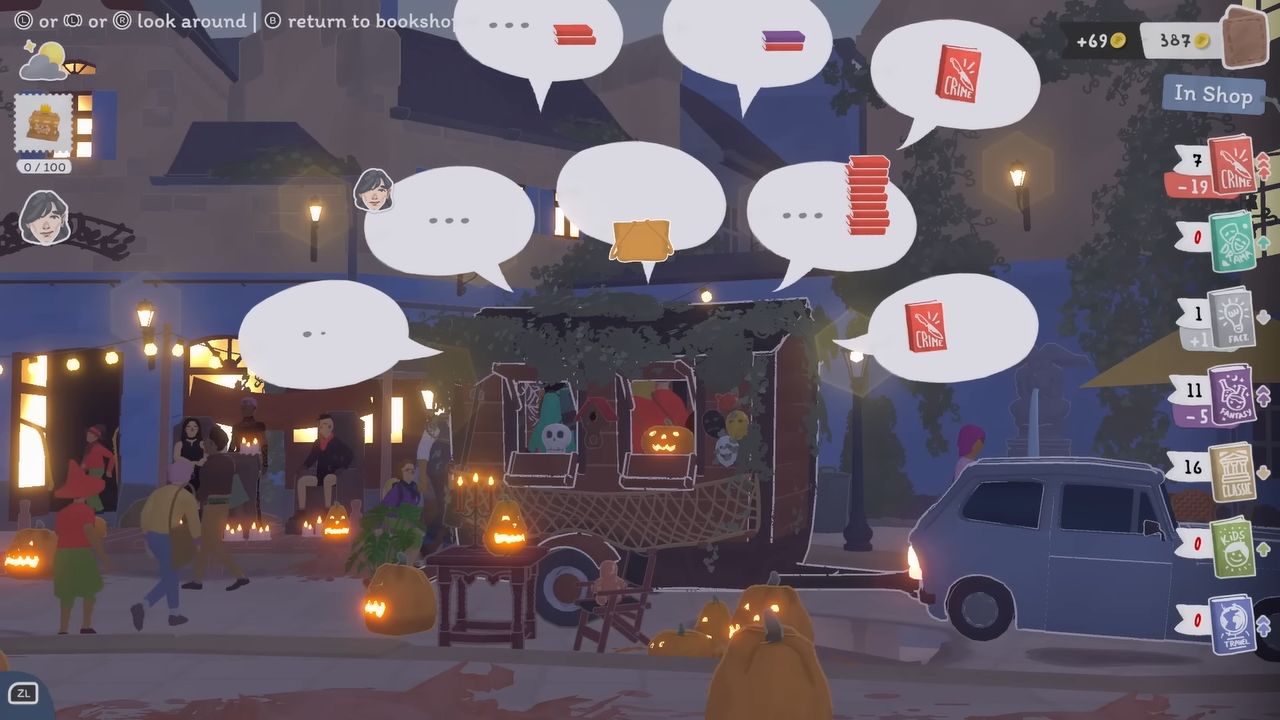
Putting you in a cute coastal town and giving them a simple job (sell books) is an idea that feels both old and new at the same time. What Tiny Bookshop is about is more than just business, though, as the story goes on. It's also about people and making a group.
At its heart, Tiny Bookshop is a narrative about movement and connection. The player is in charge of a traveling bookseller who runs a cute, movable bookcase. The journey starts with a movie-style trailer that sets the mood for a game that cares as much about atmosphere as it does about gameplay.
Tiny Bookshop doesn't lock you in one place; instead, it pushes you to explore. The shop can be set up at different scenic spots across the coastal town — from quiet docks to bustling markets — each location offering new faces, different customer personalities, and changing demands.
These shifts are not cosmetic. The people you meet remember their interactions with you, shaping future conversations and sales opportunities. Some patrons return regularly, requesting specific genres or titles, while others bring new challenges, such as unusual preferences or urgent needs. The result is a subtle narrative progression in which the town itself becomes a living, breathing character.
The writing leans into warmth without tipping into sentimentality, with each interaction hinting at personal stories beyond the transaction. Tiny Bookshop turns into a patchwork of micro-narratives, or small, personal moments that come together to paint a bigger picture of a literary community.
Tiny Bookshop is based on three main ideas: choosing the right product, picking the best places to sell it, and getting to know your customers. You start every day by getting ready and putting books from your collection on the shelves.
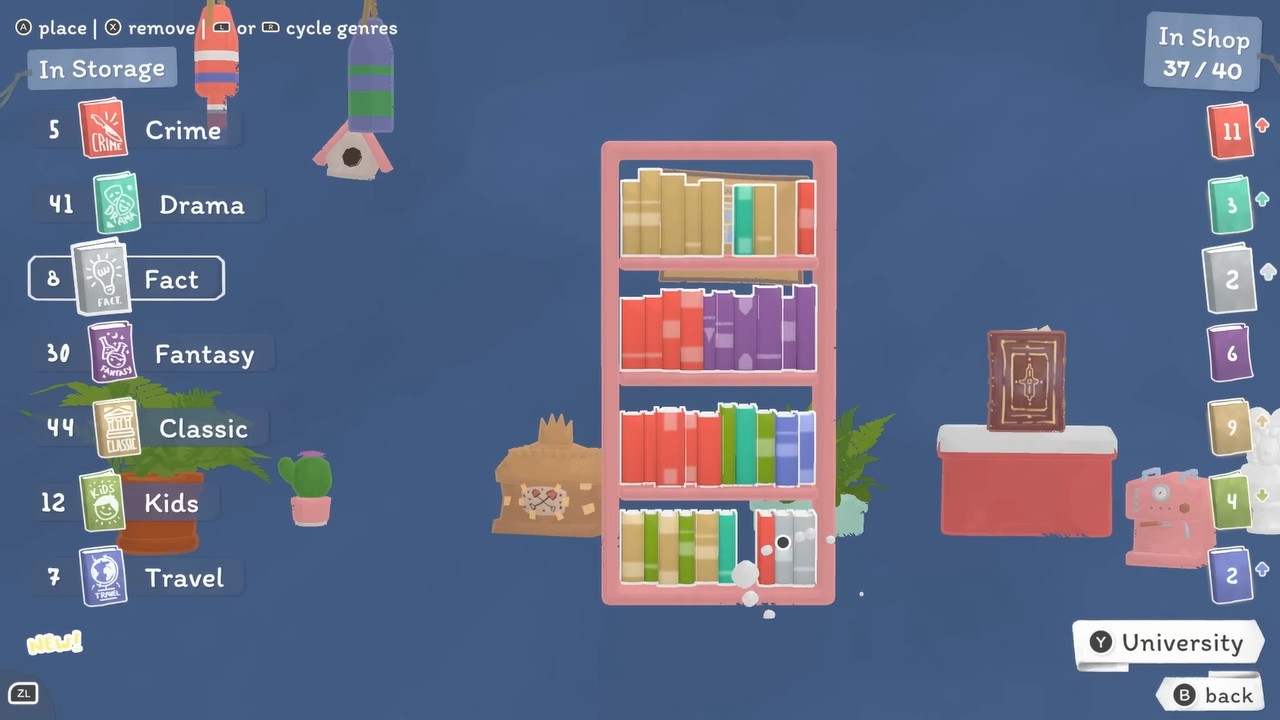
This needs a lot of thought; there is only so much room in the shelves, so finding the right balance between popular titles and niche offerings is a strategic exercise. To keep your business profitable and well-known, you need to know the habits of your normal customers and guess what new customers might like.
Once the store is stocked, the player chooses a place to do business for the day. Each spot has its own unique look and flow of people walking through it. Poetry fans might go to a quiet park, while vacation readers might hang out on a busy pier. Because success depends on matching supply and demand while also taking into account time of day, weather, and seasonal events, this location-based approach keeps the experience fresh.
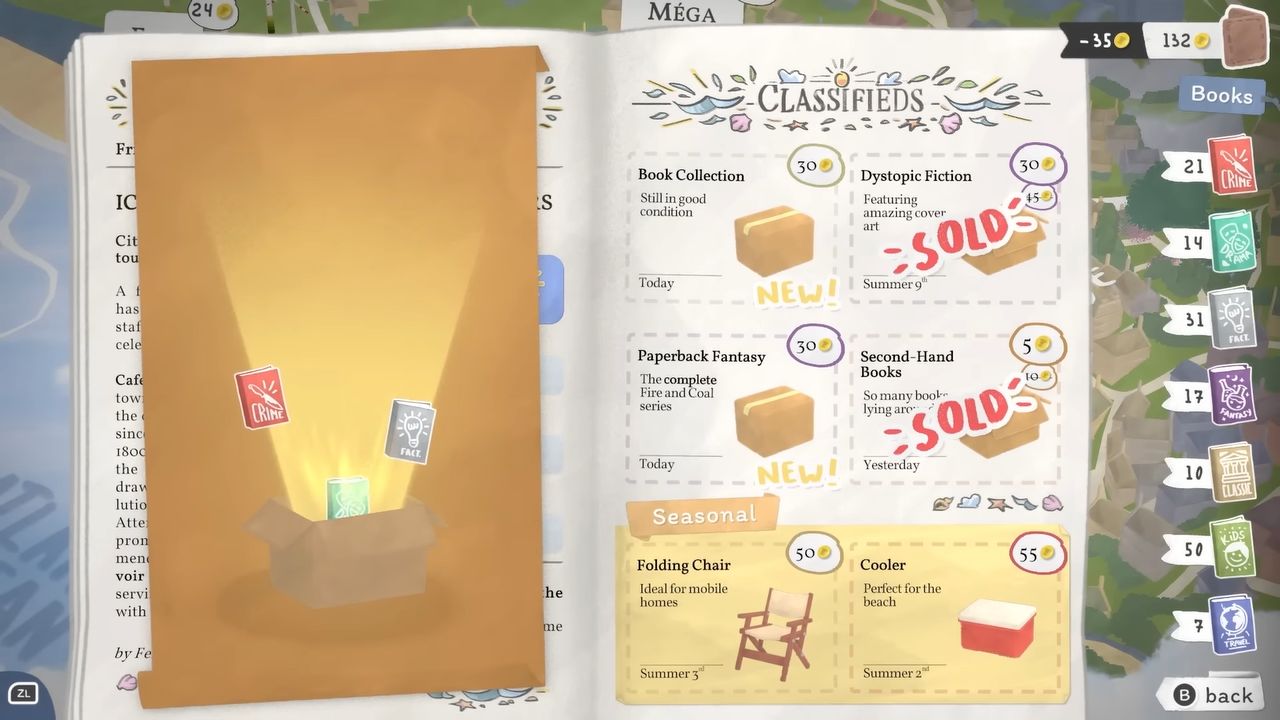
Tiny Bookshop does more than just sell books. It also does some small management tasks, like budgeting, improving the shop, and adding more space for inventory. What you do in these areas has a direct effect on both short-term sales and long-term growth.
As relationships with customers grow, unique book orders and chances to work with them come up, which makes the daily loop more interesting. Predictive planning and adaptive reaction work together to create a flow that is both relaxing and mentally stimulating. This keeps Tiny Bookshop from getting boring with the same titles over and over again.
Tiny Bookshop doesn't have standard combat, but it does have puzzle-like decisions to make, like matching customers and allocating resources. Serving the right book to the right person is not always straightforward; hints about a customer's tastes might be buried in casual conversation or reflected in their past purchases. Identifying these preferences and meeting them in time becomes a rewarding form of mental problem-solving.
These times can get surprisingly tense, especially if you have a lot of customers whose wants don't match up with the stock you have on hand. The hard part is figuring out what to do first—whether to please a loyal regular or take a chance on a new customer whose tastes are harder to guess.
The stakes aren't as high in this system as they are in high-pressure games, but the strategic layer underneath makes the game more interesting without taking away from its relaxing feel. The lack of traditional fighting means that Tiny Bookshop can be played by anyone, and the intellectual satisfaction of "solving" customer interactions keeps people interested.
The manner in which the puzzles in Tiny Bookshop are tied to the story is one of the most fascinating parts of these riddles. Each time you win, it is comparable to scoring a personal victory because it strengthens the connection between you and the character.
This is because it strengthens the relationship between you and the character. This strategy encourages focused play and remembering, which, in turn, makes things that appear to be of little relevance appear to be of immense significance.
On the other hand, the difficulty level is still quite low, and if you have more experience, then you might find the difficulty curve to be too easy to handle over time. The replayability of the game might be further improved by adding additional levels, such as special events that include time-sensitive rare books.
If you want to grow in Tiny Bookshop, the two most significant variables that decide your advancement are your reputation and your revenue. To a greater extent, your reputation will improve in proportion to the degree to which you regularly and efficiently serve your customers.
There is a potential that this will lead to the establishment of additional locations, the solicitation of requests for unique publications, and possibly even the renovation of exclusive shops. When you make money, you are able to buy a broader variety of products and change the appearance of objects.
This leads to the establishment of a feedback loop that forces you to carefully plan your activities, which in turn encourages you to make additional purchases. Despite the fact that there is no such thing as a "grind" in the traditional sense of the word, the gratification that comes from making your shop better over time is no less pleasurable or enjoyable.
For the purpose of highlighting the fact that developing connections is equally important for Tiny Bookshop's growth as making sales, the pace has been planned. A wonderful job is done by Tiny Bookshop in making the people and locations all around the world appear friendly and inviting.
Additionally, the colors are subdued and impressionistic, and there is just the right number of details to give each area the sensation that it is one of a kind without being unnecessarily fancy. In a manner that is both clear and distinct, the animations make it possible for us to hear the sound of pages turning, the sound of the river gently swaying, and the sound of people walking by.
The characters have designs that are memorable and distinctive, and each one exhibits a personality type that correlates to the character that the reader enjoys reading about in novels. The designs are also memorable and distinctive. Tiny Bookshop is an incredible treat for those individuals who take pleasure in reading visual stories, by virtue of the fact that the visual style and aesthetics of the game are well-suited to the theme.
The sound design of Tiny Bookshop is an equally well-thought-out piece of work. Additional sounds that contribute to the pleasant environment include the roar of the ocean's waves as they crash upon the coast, people talking in the distance, and the calm turning of pages. The tune is not complicated. The sounds are a gentle combination of acoustic and orchestral instruments, and they shift gradually depending on the location you are in and the time of day it is.
This music that is always changing prevents the sound of the game from becoming monotonous, which in turn enhances the sense of place and rhythm. Tiny Bookshop derives a significant portion of its allure from the music that it plays. There is a lot of background noise, and the melodies are not very complex.
Tiny Bookshop is one of the few games that does a great job of combining idea and execution. Neoludic Games has made a game that is as much about people as it is about books. It encourages you to take your time, enjoy the little things in life, and slow down. It stands out in the world of cozy games, which is getting more and more crowded, thanks to its mix of strategic planning, story closeness, and aesthetic warmth.
Even though the game's difficulty level could use some more advanced scenarios, its slow pace and focus on human connection make it a joy to play for a long time. You should play Tiny Bookshop if you want to play a game that loves books, community, and the gentle art of telling stories.
Contributor, NoobFeed
Verdict
Tiny Bookshop is a beautifully crafted, deeply cozy simulation that blends strategy, narrative, and atmosphere into an unforgettable literary journey.
89
Related News
No Data.