
Village in the Shade Review
Nintendo Switch 2
A farming sim with strict village rules and a night shift you were told to skip.
Reviewed by Adeela Tas on Nov 04, 2026
Nippon Ichi Software has spent years releasing small, emotional adventures that lean toward the unsettling. The run started with htoL#NiQ: The Firefly Diary and continued through the Yomawari series, which stands out as one of the studio's best. Those games usually follow a young character who chases something, ends up in the wrong place, and runs into trouble.
Village in the Shade comes from the same team, and on paper it looks like a sharp turn, since it is a farming sim. Once you start playing, the horror roots are still there. They just sit beneath a calendar, a plot of land, and a list of chores.
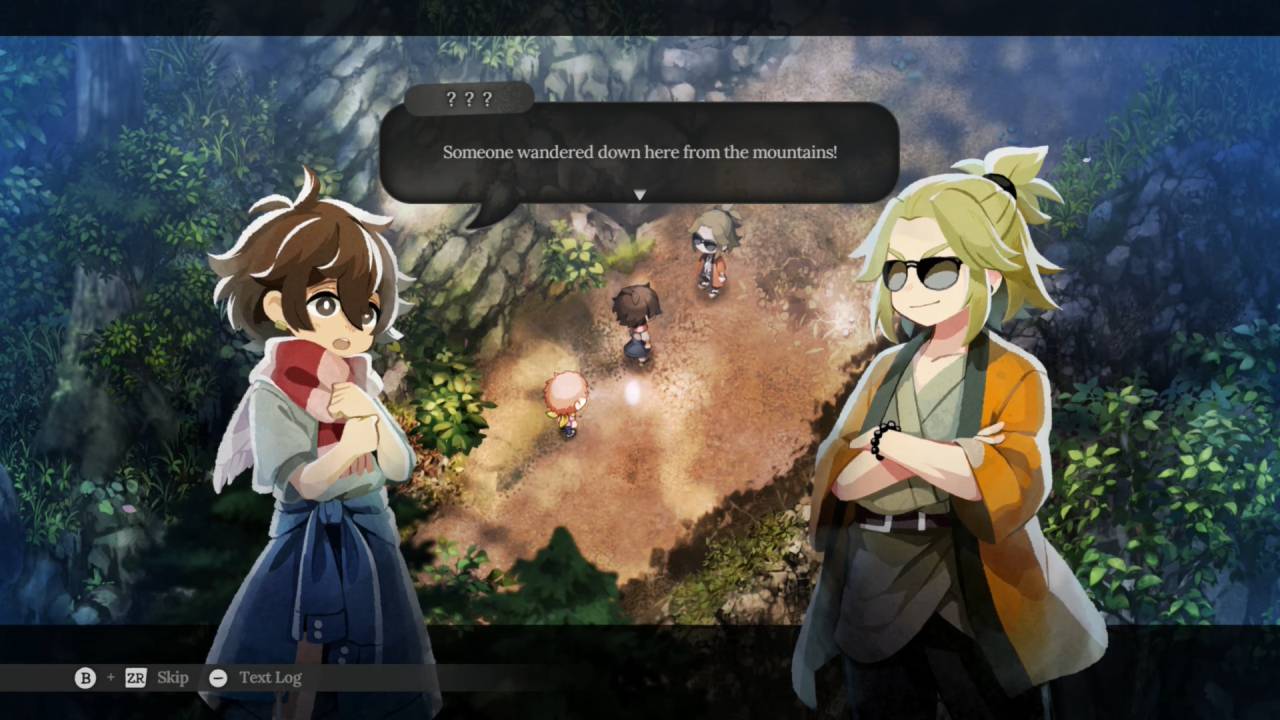
Cozy games and horror games each have a loyal audience, so combining them feels like an obvious move that few studios have tried. If you usually skip farming sims, the story and the night sections give you more to hold onto than the crops do.
If you already love the genre, Village in the Shade adds a layer you have not seen before.
You begin Village in the Shade by building your character. You pick the front and back of the hair separately, choose preset or custom colors, and work with a short list of outfits, with a few more options unlocking as you go. You can't set a skin tone, which is a strange gap for a creator screen.
This is also where you choose between Shade mode and Sunshine mode, a decision that comes up again further down. The opening will feel familiar if you know this studio's earlier work. You play a child who follows a loose chicken to a large hole in the ground, climbs in, and falls, apparently to your death. Some time later you climb back out and walk into Kagatsu, a remote village in the Japanese countryside.
Ten years have passed; you remember none of it, and the residents seem to know you. A girl named Kako greets you first and shows you around. Then you meet Ren, the village head, who offers you a place in the community with a few conditions attached. Ren leases you a run-down plot of land and expects you to pay it back through work. She also gives you eight rules that every resident follows.
You stay indoors after 11:00 P.M., cooperate for the good of the village, keep your distance from strangers, avoid exposing other people's secrets, never leave the village, ignore voices that call from the mountains, do not search for what has been lost, and treat every request as something that needs proper payment.
Nobody explains why these rules exist.
At first, the villagers barely talk to you, and you only count as a member after you make an offering to the village. Each rule is a chapter of the story, and each one hides a reason you learn only by breaking it. Under the cozy surface, the setup feels off. Ren and Kono, the village secretary, live in a large house while everyone else gets by in worn-down homes, yet the two keep collecting contributions.
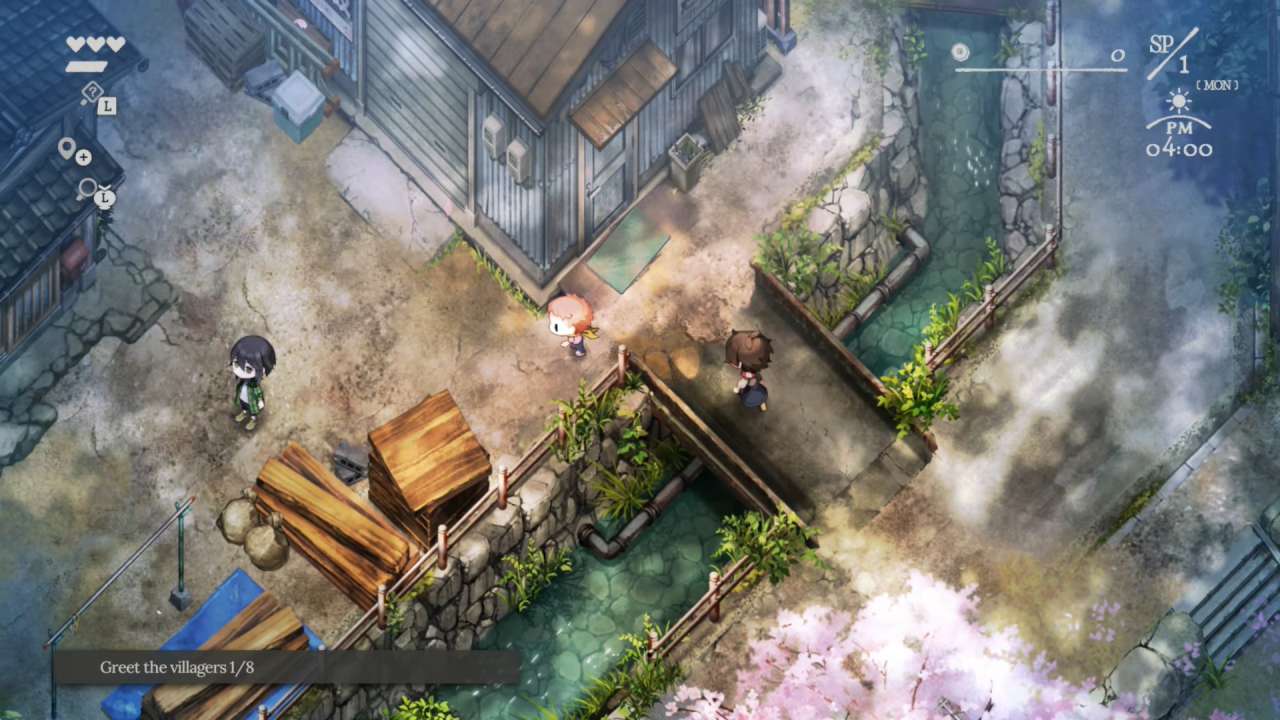
The villagers pay monthly for protection from a deity, and some recognize you from a missing-person report filed a decade ago. A village legend adds weight to that. It tells of a boy who vanished hundreds of years back and will return one day to save the place, as long as the villagers shelter him.
You start to suspect where you fit, though nobody confirms anything. Beyond the main mystery, each of the 13 villagers has a personal story you can unlock, and one more character joins later. Most of those stories stay small next to the main plot. Pacing is where the story stumbles.
During the first two hours, Village in the Shade is about 80 percent dialogue, and it takes eight to ten hours before you can leave the house area and explore properly. Later, story events sometimes wait for days or even weeks of in-game time, even when you have met every requirement. The main plot also rarely carries over outside cutscenes, so a character can threaten you in one scene and give you the usual daily greeting right after.
The writing holds up, but you need to be in the mood to read a lot.
Because you play a child, there is no romance, and the effort goes into the mystery. The story also pokes at the habits farming sims build in you. You keep working toward the next upgrade and expansion, and eventually those habits work against you. The full story takes between 35 and 50 hours.
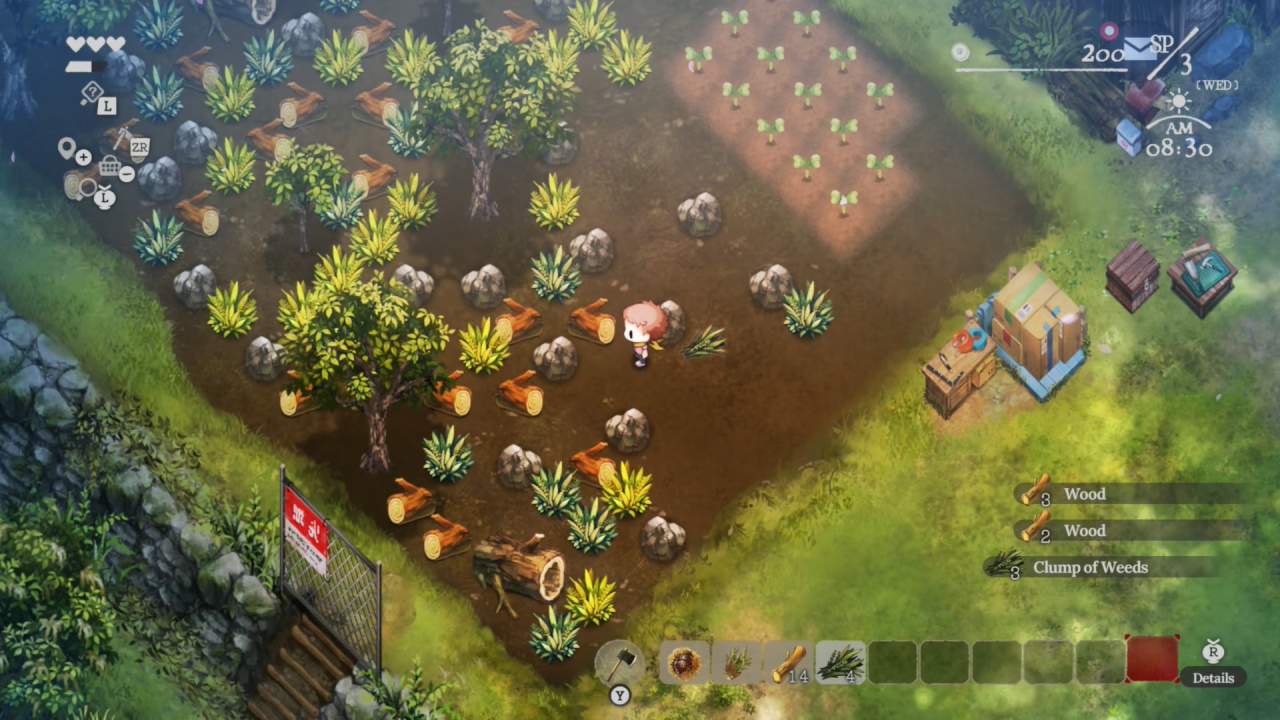
Daily life in Village in the Shade follows the usual farming calendar. A year has four seasons of 28 days each, and a day runs from 7:00 A.M. to 11:00 P.M., which is roughly 17.5 hours of real time. Stamina limits what you can do, and it refills when you sleep or eat.
More than 80 crops are available. When you till, you can leave the soil flat or dig furrows, and each crop grows faster in one style or the other. Some crops change depending on when you harvest them. Green peas picked early become snap peas, which count as a different ingredient in cooking. Plants left in the ground after their season ends die, which can cost you a whole field of turnips.
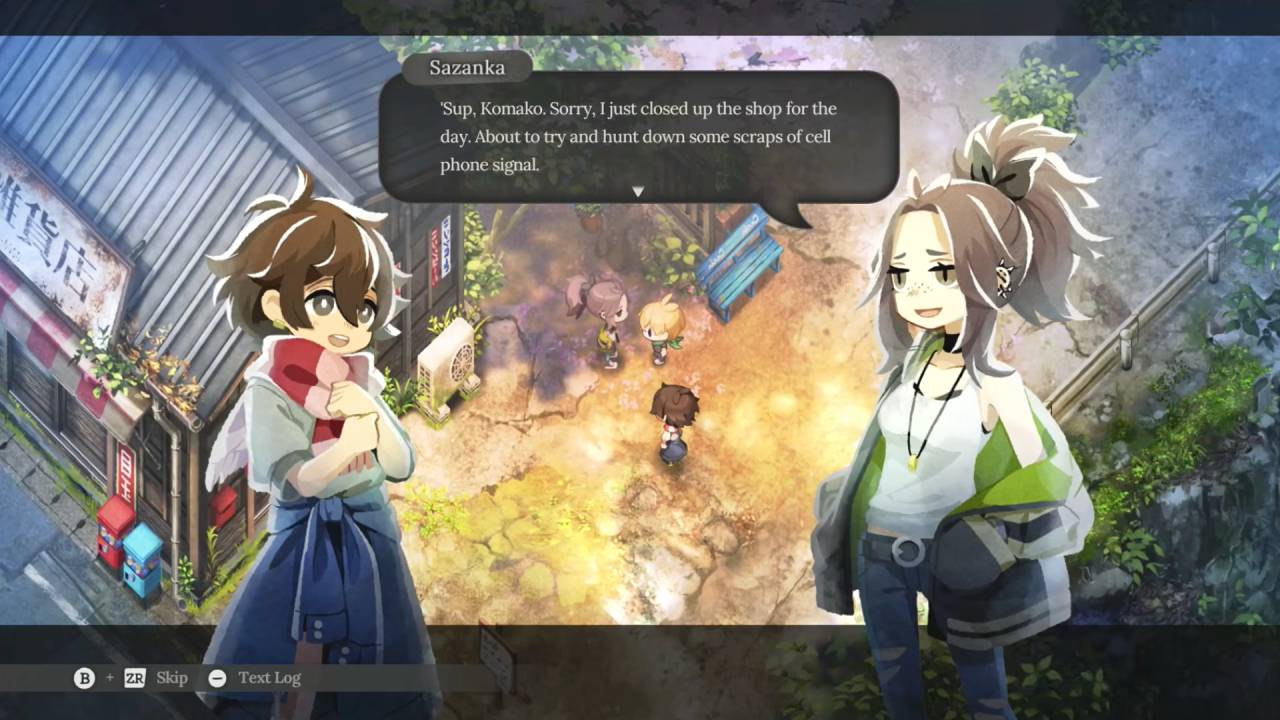
The starting plot is small and fills up quickly, so you decide what deserves the space. You can buy more land later and raise livestock such as chickens, turn eggs into mayonnaise, and put sap collectors on trees. Raw crops sell for little early on, so you rely on processing machines that take several in-game days, and money stays tight for a while. Things loosen up once the farm grows and you finish villager requests.
Between chores, you can upgrade the house, barn, and coop, build a storage shed or a fish tank, and decorate with paths, fences, and furniture.
Tool upgrades need materials that only the general store sells, which gets annoying because you cannot craft them yourself. A notebook feature makes the planning easier. Press one button to pin something you want to build or buy, and its requirements appear on the side of the screen whenever you need them.
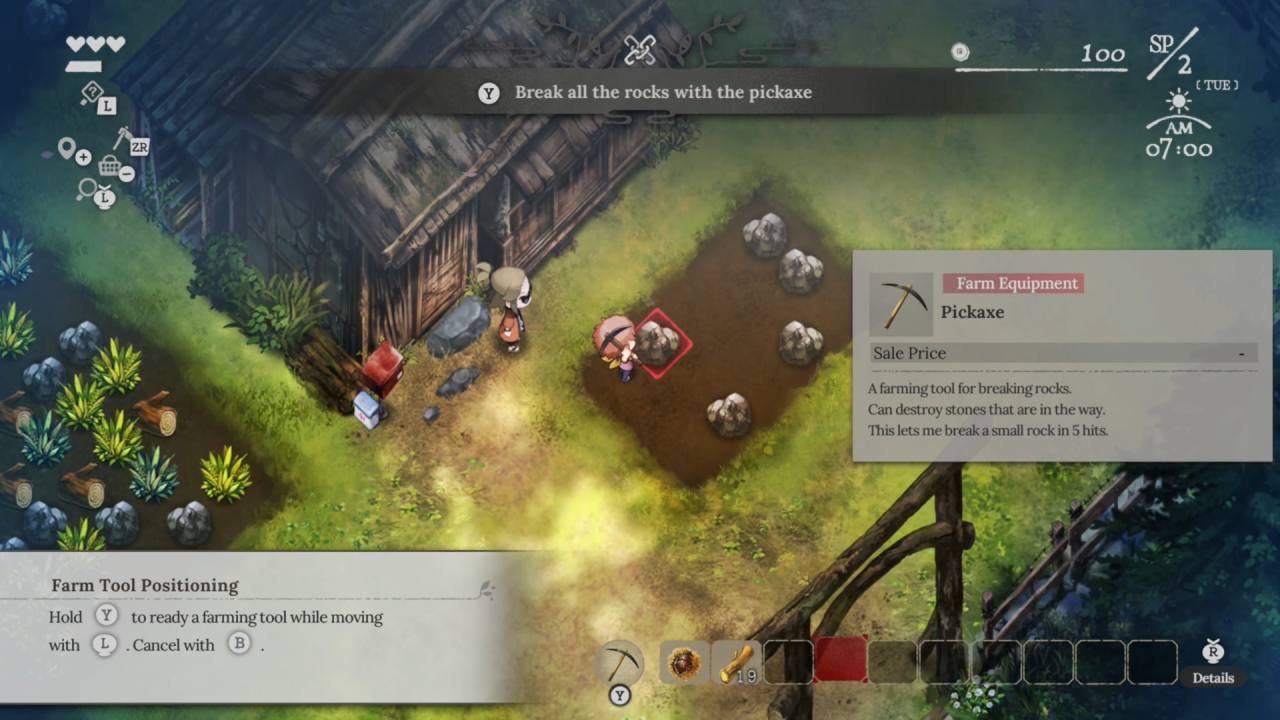
Fishing happens at set spots around the village. A fish bites; you press a button, and then you hit prompts as highlighted sections fill up. The minigame is simple, but the spots sit far apart, and there are fewer fish than you might want. Next to your farm is a quarry that opens up later.
It has countless floors, with a reward every 10 floors that also becomes a fast-travel point, and the deeper floors give materials for tool upgrades. Enemies down there are minor and fall to a few swings of the pickaxe. North of the village is a mountain where you forage and hunt.
You buy permits for each area, then use a bow, bait, and traps to hunt squirrels, tanuki, and bears for fur, bones, and crafting materials. Trapping takes more thought than it seems, and landing a tanuki feels good. Bow hunting is more repetitive: mostly cornering an animal and shooting it again and again. It works as a distraction more than a highlight.
Getting to know the villagers takes up a large share of your days.
You talk to them, give gifts, and complete their requests. Each villager can receive two gifts per week, or three on their birthday, and each has their own likes and dislikes. A bulletin board posts new requests every week, and skipping one carries no penalty. Village in the Shade has its own version of the Community Center, where you hand over resources for rewards and story progress.
At the end of each month, you evaluate crops, livestock, or a horse, and winning lets you produce more valuable branded goods. Festivals show up on the calendar, but they are mostly conversation. You also own a dog, and the dog whistle lets you fast-travel, though otherwise you do a lot of walking late in the game.
On a controller, everything feels smooth. Village in the Shade saves only when you go to bed, so quitting mid-day sends you back to the morning. It has a single difficulty setting, and no voice acting in English or Japanese. Combat is not the point in Village in the Shade. The real challenge starts at night. After 11:00 P.M., you go to bed, and on most days you wake up again in the dark, usually to a knock at the door.
The first night out is part of the story. After that, you decide whether to go out. Outside, you carry a lantern through a village taken over by yokai and spirits. Some are friendly and trade special items, raise your maximum stamina for good, or hand over hairstyles and furniture blueprints. Others chase you. Ghosts cannot be hurt at all, and most creatures cannot be beaten with arrows, so your tools are running, hiding, and watching how each one behaves.
Planting certain trees gives you cover, and the village has safe spots to retreat to.
Which creature shows up depends on the season, the weather, and chance. Village in the Shade rarely explains how to deal with any of them. Conversations and books in the library drop vague hints, and the rest is trial and error. You fail a few nights, try a different tool, and eventually something clicks. The rewards come in several forms. Magatama are small stone beads you find as shiny spots on the ground and collect for the skill tree.
Each season adds a yokai gate that asks for items in exchange for a scarecrow that helps your crops. A fox can lead you to a shrine or a small hokora for night missions, and candle-selling yokai sometimes give you hidden fragments for new items. If a night is not worth it, you can go back to bed right away or use purifying salt for a guaranteed quiet night.
What works is the contrast. Daytime is safe and straightforward, and night is where you have to think. Figuring out how a creature behaves, failing, and then getting it right the next night is satisfying, and it keeps the routine from going stale. What works less well is the cost of failure. If something catches you, you wake up at the doctor's office with your items intact and only lose the rewards you might have found.
That keeps things fair, but it also makes you wonder why dying exists at all. Some nights your vision gets blocked completely, and your health drains, and nothing tells you what you did wrong. Collecting magatama is slow, and a night can end with almost nothing to show for it. The scares are mild too. You get small jump scares early on, and after a few hours the mood becomes more eerie than frightening.
Village in the Shade has no experience bar or level counter.
Progress comes from several tracks that feed into each other. Magatama go into the skill tree, where you learn recipes like the brewing barrel and perks that lower stamina use or raise the value of your goods. You raise your maximum stamina by offering seasonal crops and forageables at a shrine at night.
Daytime work earns the money for tool upgrades, buildings, and the projects in your notebook, and the monthly evaluation unlocks better products. Night finds make the next day easier, and the day pays for more of what you want, which is the kind of loop that has you saying one more day.
Sunshine mode changes that loop. You choose it at the start, and each save file stays in one mode. It removes the night entirely. Furniture blueprints and hairstyles from the night rotate through the shops instead; magatama cost far less, and you can buy the stamina upgrades.
Progress comes faster, and the game feels a bit unbalanced. The story loses material too. Some cutscenes are cut, and the hole fall at the start is not shown. In Shade mode, your first night out has a plot-tied purpose, and you get scolded the next day. In Sunshine mode, you sleep through it, and the scolding turns into a lighter explanation. It works, but you give up the mystery.
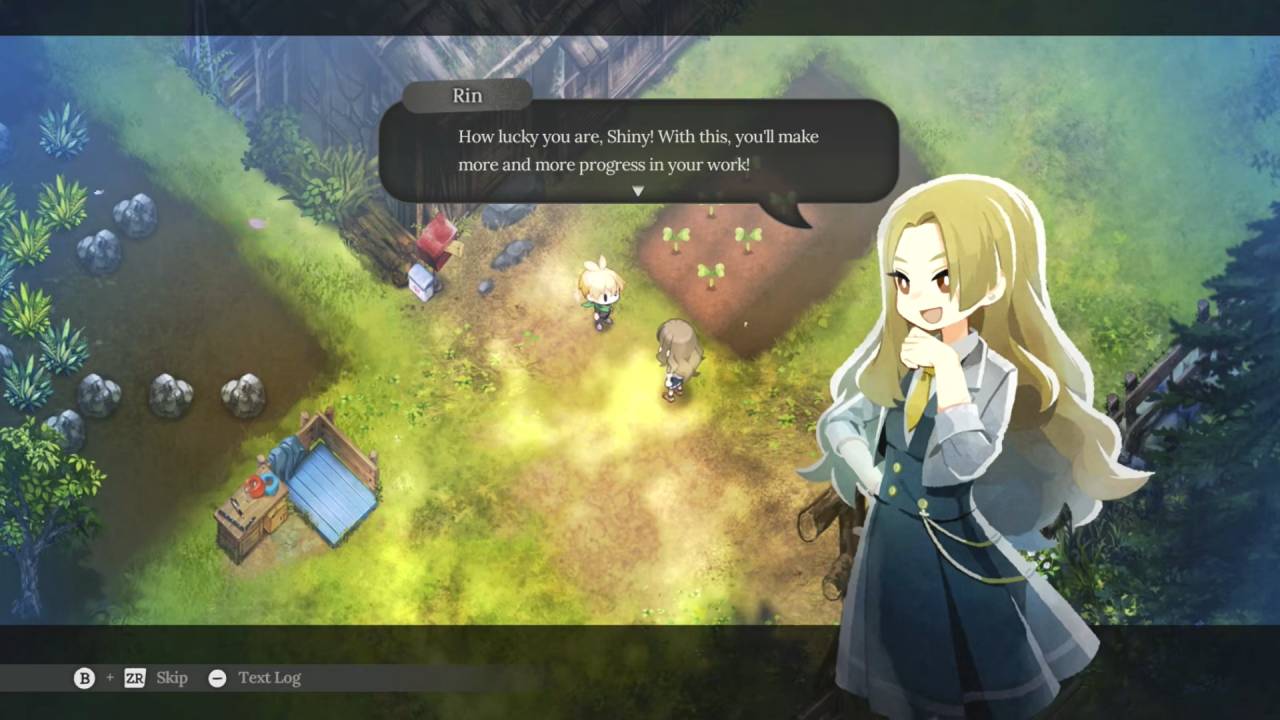
The art in Village in the Shade is hand-drawn in a top-down, near-isometric view.
Characters have a simple, crayon-like style, while the environments carry most of the detail. Roads twist around the village, plants push up through cracks, and worn pavement sits beside patches of newer paving, which gives the place a lived-in feel. At night, the palette turns dark and muted, with pools of blood, odd creatures that show up only in torchlight, and sudden distortions.
Performance is mixed. On Switch 2, the frame rate often sits between 45 and 60 in the main town instead of holding at 60, though it holds steady elsewhere. Switch 1 stays near 30 for most of the time, with a few dips in the mines. Loading screens are close to instant, and no bugs showed up during the playthrough.
The sound design may be the strongest part of Village in the Shade. In the daytime, you hear cicadas, buzzing bugs, rain, and running water, along with light music that includes a classical-style piano piece and tracks with stringed instruments. At night, most of the music drops out, and heavy footsteps, distant knocks, metallic scrapes, a streetlight buzz, and crickets take over.
Sometimes a sharp sound warns you that a spirit is close, and sometimes nothing happens before one appears in front of you. The lack of voice acting is the one gap in an otherwise immersive soundscape. Village in the Shade holds together better than its genre mix suggests. The farming side is familiar, with a slow opening, but it is complete. The night side adds the challenge, the mystery, and the reasons to keep going.
The story gets you through the slow stretches, and the village starts to feel like home even when you know something is wrong. The pacing between story and gameplay, the mild penalty for failing, and the limited festivals could be better. Even so, Village in the Shade stays enjoyable for dozens of hours, and the nights are what set it apart from other farming sims.
Editor, NoobFeed
Verdict
Cozy days and unsettling nights make Village in the Shade stand apart from other farming sims. Expect a slow start, but the story and night exploration make the wait worth it.
79
Related News
No Data.