
WARDOGS Review
PC
WARDOGS mixes large-scale combat, logistics, base building, vehicles, and a surprisingly funny money system into a tactical shooter that feels familiar without simply copying its competition.
Reviewed by Mahi Araf on Sep 14, 2026
WARDOGS enters a crowded tactical FPS market where it is getting harder for a new shooter to feel genuinely different. Over the years, games have borrowed so much from each other that you can usually recognize the ingredients almost immediately. Extraction-shooter influence, the large-scale warfare of Battlefield, the tactical approach of Squad, the vehicle-heavy combat of other military games, and the resource management now common across modern multiplayer shooters.
At first, WARDOGS can feel like it is doing the same thing. You have weapons and equipment to manage, objectives to capture, vehicles moving around the battlefield, and plenty of opportunities to get yourself into trouble. But the more you play, the more you see the game trying to connect those ideas rather than simply placing them side by side.
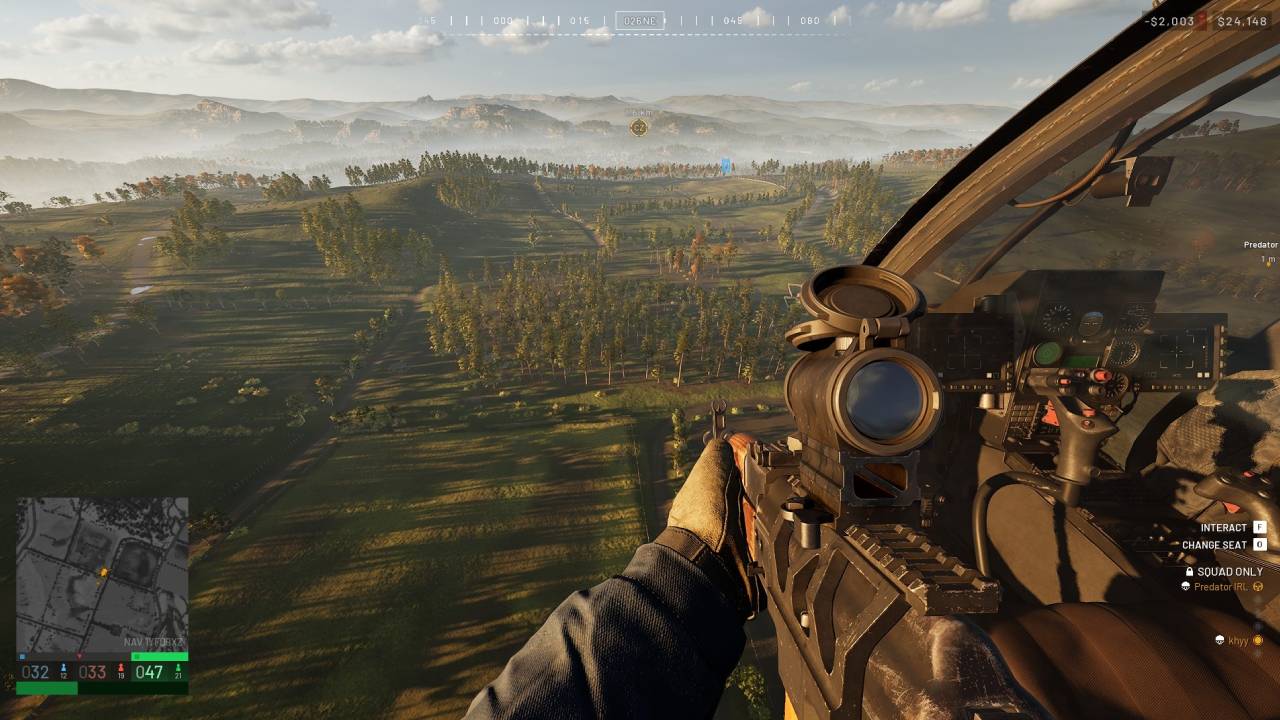
The result is a multiplayer shooter where your role can extend far beyond pulling the trigger. You can fight on the front line, transport teammates, build defensive positions, manage resources, revive other players, operate vehicles, or help turn an ordinary objective into a heavily fortified position.
That makes WARDOGS unusual because the game is not entirely focused on individual performance. Your personal performance still matters, but the bigger goal is making the entire team function properly. A player who spends the match supporting everyone else can be just as important as the person at the top of the kill feed.
WARDOGS does not rely on a traditional story-driven campaign. Instead, its narrative comes from the multiplayer battles themselves and the situations that develop while you play.
The game puts you into a large-scale military conflict where the main goal is to take control of key areas and hold them. With so many players, vehicles, and support systems on the battlefield, every match can unfold differently.
The economic system also gives WARDOGS an unusual personality. Almost everything has a price. Getting revived can involve money. Getting a ride from another player can involve money. Equipment costs money, and the resources used in construction also feed back into the game's economy. It sounds strange when you describe it that way, but it creates some of the funniest and most memorable moments in the game.
A teammate saving your life is not always just a nice gesture. Sometimes it becomes a transaction.
This fits the game's broader approach because WARDOGS clearly believes that a battlefield is made up of more than just soldiers shooting at each other. Someone has to move people around, someone has to establish defenses, and someone has to keep the operation running. Instead of giving you a scripted narrative, WARDOGS lets those systems create the story.
The main gameplay loop revolves around controlling objectives and maintaining enough players inside the relevant zones to secure them. That sounds straightforward, but reaching and holding those areas involves several different systems. The money mechanic is one of the first things that makes WARDOGS stand out. You earn money during matches and use it to access better weapons and equipment. If you are stuck with basic gear, you can feel the difference immediately, which gives you an incentive to keep earning.
The economy also extends into player interactions. If another player revives you or gives you a ride, money can become part of that exchange. It adds an extra layer to otherwise ordinary multiplayer interactions, because even something as simple as getting transported to an objective can become part of the game's economic system.
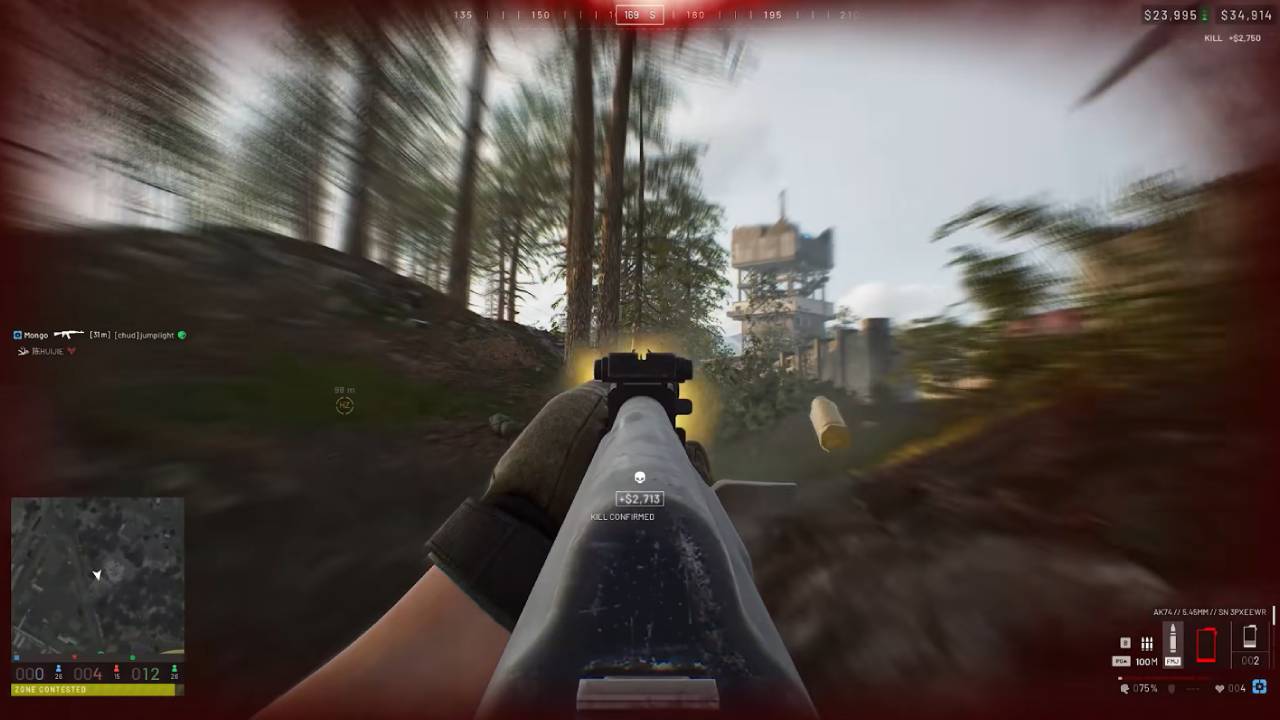
Money is also important for construction. You can help build structures around key areas, so your resources can directly affect the battlefield.
This leads into one of WARDOGS' more interesting systems: logistics. While some players fight, others can build the infrastructure that keeps the team alive. You can build radios, defenses, and eventually more complex items, such as anti-air defenses. That creates a battlefield that can change as the match progresses. An objective that starts as an open area can eventually become a fortified compound because players invest time and resources in it.
The game therefore gives you reasons to care about more than just your weapon. If you're the kind of player who gets gratification from helping the team rather than hunting kills all the time, WARDOGS offers meaningful ways to do so. A big part of the experience is the transportation system. You can use aircraft and other vehicles to traverse the map, which is especially useful given the battlefield's scale.
That can lead to some unpredictable moments. You might be flying toward an objective expecting a safe trip, only to come under fire before you reach the ground. A vehicle can turn into a useful asset one moment and a death trap the next. That unpredictability fits the game's overall design. You are not simply following a fixed route from one objective to another. The battlefield is constantly changing because other players are making decisions at the same time.
Multiplayer is effectively the foundation of WARDOGS.
Everything in the game is designed around the idea that a large group of players can contribute to the same battle in different ways. The most important part is that you are not forced into one specific playstyle. You can focus on direct combat, or take on a support role. You can transport teammates, construct defenses, provide resources, revive players, operate vehicles, or help maintain control of an objective.
That variety makes teamwork much more meaningful than simply having everyone move together as a squad. A well-organized team can have players doing completely different jobs at the same time. While infantry fight over an objective, another player might build defenses behind them. Someone may be bringing reinforcements while another player drives a vehicle or tries to keep the team in place.
This is where WARDOGS' logistics system kicks in. Even if they don't get many kills, the people doing logistics can change the outcome of the whole match. Having the most players in the relevant zone helps secure the objective, but getting them there and keeping them alive requires cooperation. That means a player who spends their time helping others reach the fight can strongly affect the final result.
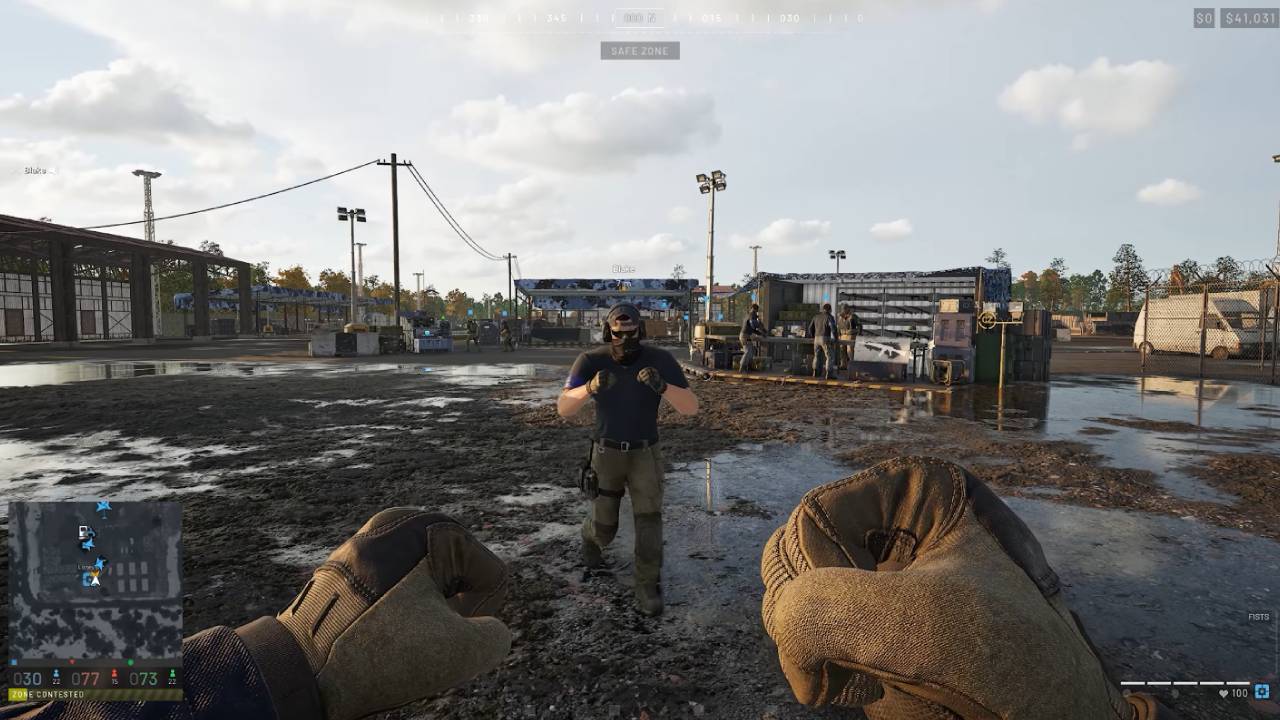
The player-driven economy also makes multiplayer interactions more interesting.
A revive, or a ride, can become part of the game's financial system, making cooperation feel more tangible. The downside is that this approach can take some time to understand. If you come into WARDOGS expecting a straightforward arcade shooter, the number of systems can feel overwhelming at first. A lot happens outside the actual firefights.
Once everything starts working together, though, the multiplayer design becomes one of the game's strongest features. WARDOGS understands that large-scale warfare becomes more interesting when different players have different responsibilities. The main objective-based mode is where WARDOGS' systems come together.
Teams compete for control of zones, and a stronger player presence inside those areas is essential to securing them. Because the objective focuses on controlling space rather than just collecting kills, the game encourages players to stay focused on the larger battle. This also adds value to the supporting systems. You can have a team with people who are really good at shooting things. But if no one is holding the objective, bringing reinforcements, or setting up defenses, that individual skill might not be enough.
That means the game mode rewards teams who know how to work all of WARDOGS' systems together.
The maps are designed for large-scale battles and are big enough to support infantry, aircraft, tanks, and other vehicles. The size of the environments matters, because transportation is a big part of the gameplay. Instead of just running between objectives, you can use vehicles to move across large parts of the battlefield.
The construction system also means maps aren't necessarily the same from match to match. Players can build defensive positions around important areas, turning open spaces into fortified positions. This creates a sense of progression. The control point evolves from a relatively exposed location into a heavily fortified compound as your team pours more resources into it.
The shooting in WARDOGS is only one part of the combat system. You still have the familiar FPS fundamentals of aiming, positioning, using cover, choosing weapons, and working with teammates, but the game places those mechanics inside a much larger battle. Positioning is key, as simply killing enemies doesn't always lead to victory. You need to control the right areas, which means surviving long enough to keep your team alive.
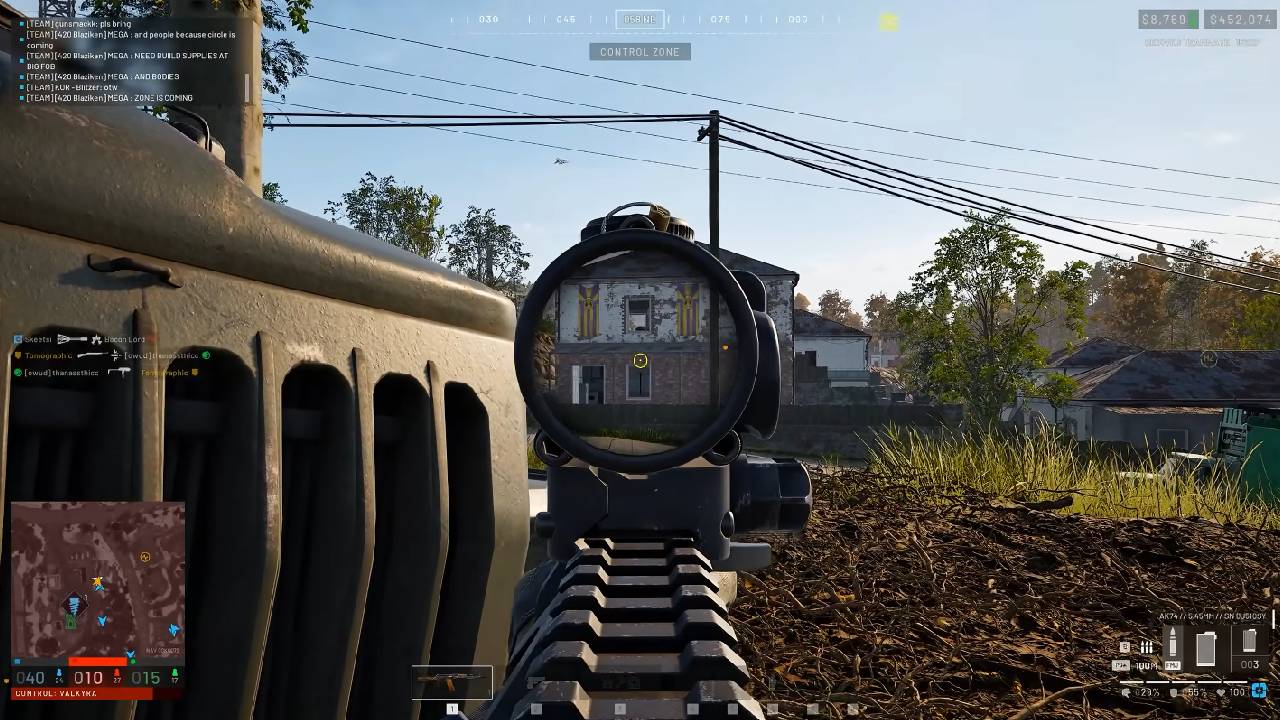
Vehicles constitute another major layer. Tanks can deliver heavy firepower, and helicopters can ferry players across the battlefield. These vehicles can drastically change your approach to an objective. A helicopter is probably the safest and fastest way to get to a place before suddenly coming under fire. That unpredictability is part of the fun in WARDOGS. The battlefield isn't always what you expect.
Players also have different responsibilities, which help in combat. You don't have to be the best shooter to contribute. Helping your teammates, supplying them, building defenses, or helping them to reach an objective can all be worth it.
Progression is closely tied to the game's economy. Instead of just grinding for XP like in other games, you get money to buy better weapons and equipment. That provides a simple incentive to keep playing. Starting with basic gear can make you want to earn enough money to upgrade, and better equipment gives you more options in future battles.
WARDOGS focuses more on scale and battlefield activity than on being a pure graphical showcase.
The maps can look impressive simply because so much is happening at once. Infantry, tanks, helicopters, defensive structures, and other equipment can all be active around the same objective. That reinforces the game's larger idea that players can influence the battlefield, not just a static environment. The graphics also benefit from prioritizing clarity.
A lot is going on at once, and it's far more important to spot enemies, allies, vehicles, and objectives than to blast every scene with pointless visual effects. The sound design does a lot to sell the battlefield's scale. Weapons, vehicles, helicopters, explosions, and defensive systems all suggest you are part of a much larger operation.
Heavy equipment can be especially loud, and systems such as anti-air defenses immediately make their presence known. The audio also helps you understand what is happening around you. An approaching vehicle, a helicopter taking fire, or a defensive system opening up can instantly change your priorities. Sometimes the battlefield gets extremely noisy, but that fits the game's approach.
WARDOGS wants you to feel surrounded by an active warzone, not an isolated firefight. It's difficult to fit into a single genre, and that is ultimately one of its biggest strengths. It borrows ideas from extraction shooters, tactical FPS games, large-scale military shooters, vehicle combat, and even base-building games. Still, it uses those elements to support one central multiplayer experience.
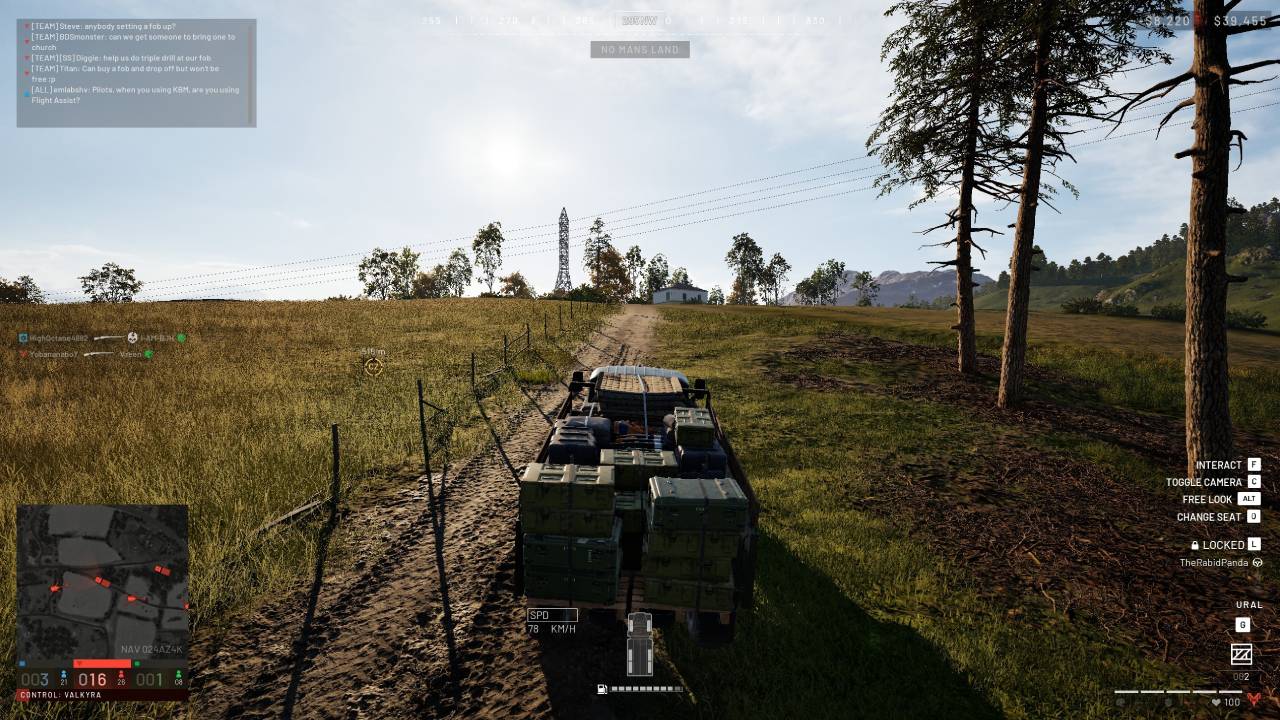
What matters is how those systems connect.
Money gives you access to equipment and can influence interactions with other players. You can also use those resources for construction. Construction changes the battlefield. The battlefield shapes how teams approach objectives. Vehicles determine how quickly players can move between areas, and logistics determines whether a team can keep its forces supplied and alive.
It creates a multiplayer experience where pretty much anything you do can affect the bigger battle. The logistics system is especially impressive because it gives support-oriented players a reason to stay engaged. Just because you aren't getting kills every second doesn't mean you aren't useful. Keeping an objective with your team can be just as important as constructing a defensive position or moving your teammates.
Watching your team turn a control point into a fortified compound makes it feel like your actions are changing the battlefield. The economic system is probably the strangest part of WARDOGS, but it is also one of the things that gives the game personality. Thinking about money while playing a military shooter is unusual, and tying that economy into player interactions makes the system even more memorable.
There are still moments when WARDOGS feels like it is trying to do too much. Its genre-bending design means it does not always have the immediate simplicity of a conventional FPS. Players looking only for fast gunfights may find the logistics, construction, and transportation systems slower than they are used to.
But those systems are exactly what separate WARDOGS from the shooters it resembles.
Instead of asking every player to do the same thing, the game lets the battlefield operate like a much larger team effort. One player can fight, another can fly, another can build, another can transport, and another can secure the objective.
That makes the best matches feel less like a collection of individual players and more like an actual operation. WARDOGS also benefits from its willingness to embrace the unpredictable side of multiplayer games. A match can start with everyone simply trying to reach an objective and eventually turn into a massive defensive operation involving tanks, helicopters, walls, radios, and anti-air systems.
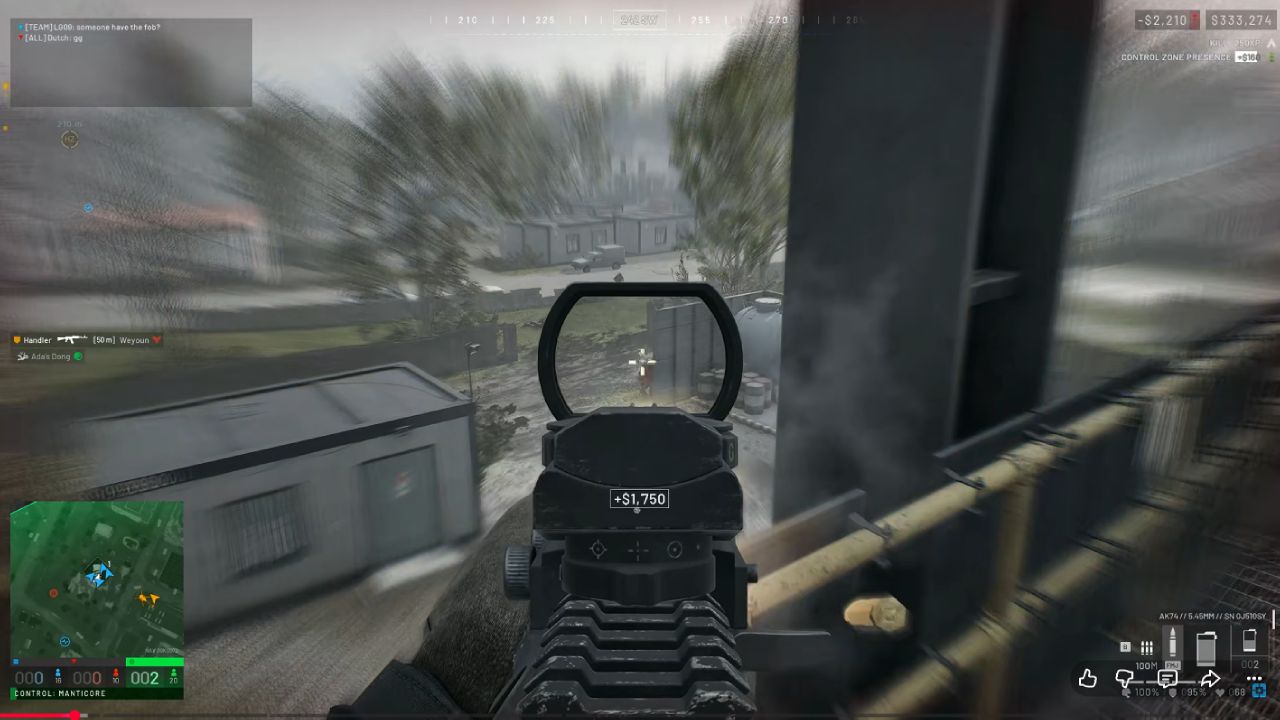
Those are the moments when the game's different ideas finally click.
WARDOGS may not completely reinvent the tactical FPS, but it offers a different approach. Instead of making the gunplay the only reason to keep playing, it builds an entire ecosystem around the battle. That makes the game especially appealing if you enjoy multiplayer shooters where teamwork matters and you can contribute without necessarily having the highest kill count.
The result is a messy but entertaining combination of tactical combat, logistics, vehicles, construction, economics, and objective control. WARDOGS doesn't always feel like a perfectly uniform experience, but its willingness to let these systems interact is exactly what makes it stand out.
For a new multiplayer FPS entering an already crowded market, having a strong identity matters. WARDOGS has one. It feels familiar enough to understand but different enough to keep you interested, and its emphasis on teamwork gives every player a reason to feel involved in the outcome.
Senior Editor, NoobFeed
Verdict
The mix of fighting, logistics, vehicles, construction, and economy of WARDOGS gives its multiplayer battles an identity of their own. It can get crazy sometimes, but its teamwork-oriented design keeps the battlefield interesting.
85
Related News
No Data.