
Rising Western Video Game Budgets Draw Industry-Wide Scrutiny
A reported $500 million price tag and ongoing layoffs have one critic arguing that comparing costs is the only way forward.
Games by Adeela Tas on Nov 03, 2026
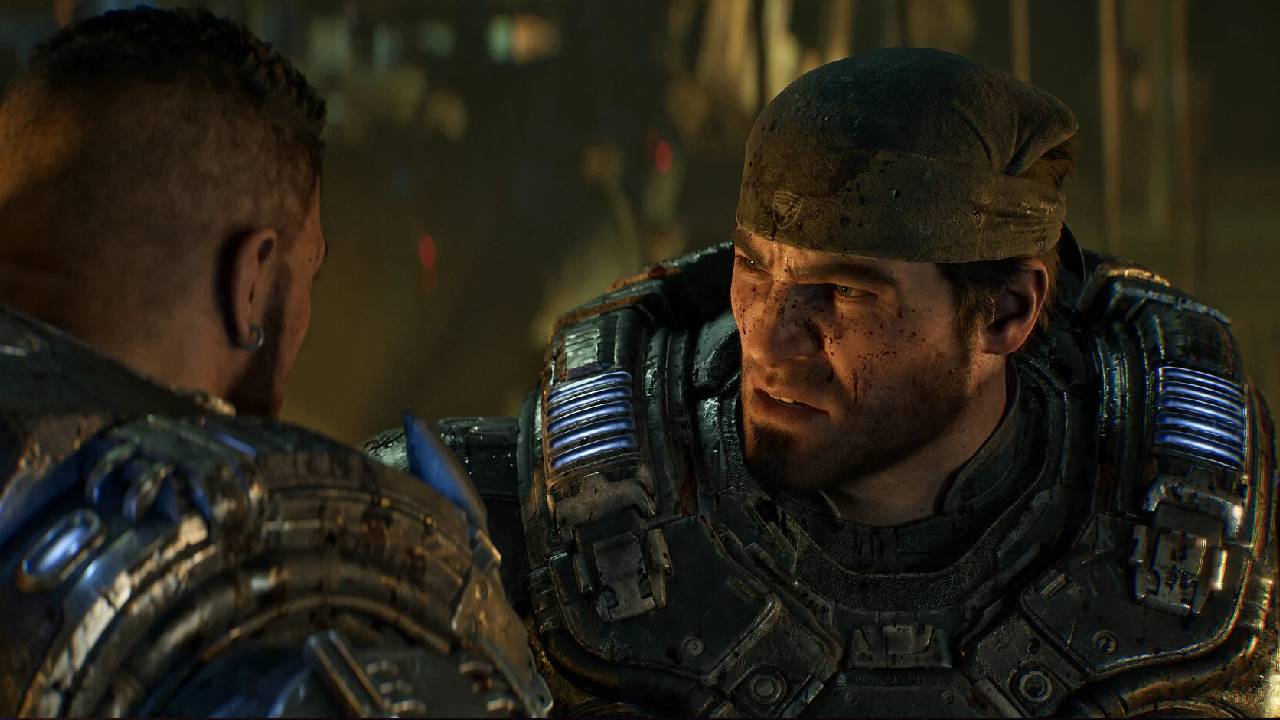
You've probably seen the $500 million figure attached to Gears of War: E-Day. An insider reported it, and the number spread quickly. Then the same reporter released a video explaining why profit and loss statements are hard to compare, and many people left thinking budgets shouldn't be discussed. That's the wrong takeaway.
Western game budgets have ballooned, and the industry needs to talk about it openly. Calling this irresponsible is fair. The executives who sign off on a P&L answer to the people on the payroll, and those people are counting on them to make the best bet they can.
Right now, Western game budgets look like they're paying for things that make no sense.
The reporter's work on this topic is strong and deserves respect, but the framing misses the point. Games have become extremely expensive to make, and you're somehow expected to untangle every accounting wrinkle before you're allowed to question the spending.
Budgets won't match one-to-one, and that's a reason to push for transparency, not to drop the comparison. Developers are losing jobs and players are being asked to pay more, so the consequences are real. XBOX's own CEO, Asha Sharma, has more or less admitted that Western game budgets carry real bloat.
She said technology gets better when it gets simpler, not bigger, and noted that in parts of the company, work passes through as many as 14 layers of management. Platform teams are 40 percent larger than when this console generation began, even though player numbers and playtime have fallen. In her words, that slowed decisions and blurred accountability, so XBOX plans to simplify.
Simplifying means layoffs, and some read the statement as spin meant to excuse job cuts. The odd part is that the same crowd keeps hammering XBOX for poor decisions, weak earnings, and a third-place finish, then paints it as the villain once the layoffs arrive.
A company in that spot can't keep losing money, and its margins are already thin.
The pressure reaches design too. Publishers now defend microtransactions in $70 games as a requirement for staying viable in the West, and that wears away good design, because once you need a store, the philosophy behind the whole game shifts.
When the team at Grinding Gear Games was asked how a free-to-play game keeps the balance between what's sold and what you earn by playing, they said they have to push developers to keep items out of the store. Diablo went the other way. Its budget was far larger, the packs are massive, and heavy spenders cover much of the cost. Leaning on microtransactions like that erodes the games you like.

Elsewhere, studios are shipping ambitious games without anything near $500 million. A God of War scene shows famous, well-paid actors running around a studio in a cube-shaped motion capture rig. The Clair Obscur team taped cameras to their faces and delivered something immersive and memorable.
Western game budgets carry obvious bloat, and tiptoeing around it helps no one. Some of the strain is specific to the West. Health insurance premiums are climbing this year, the cost of living keeps rising, and the usual response is to cut jobs to lower costs.
Meanwhile, the market is shifting toward China and elsewhere.
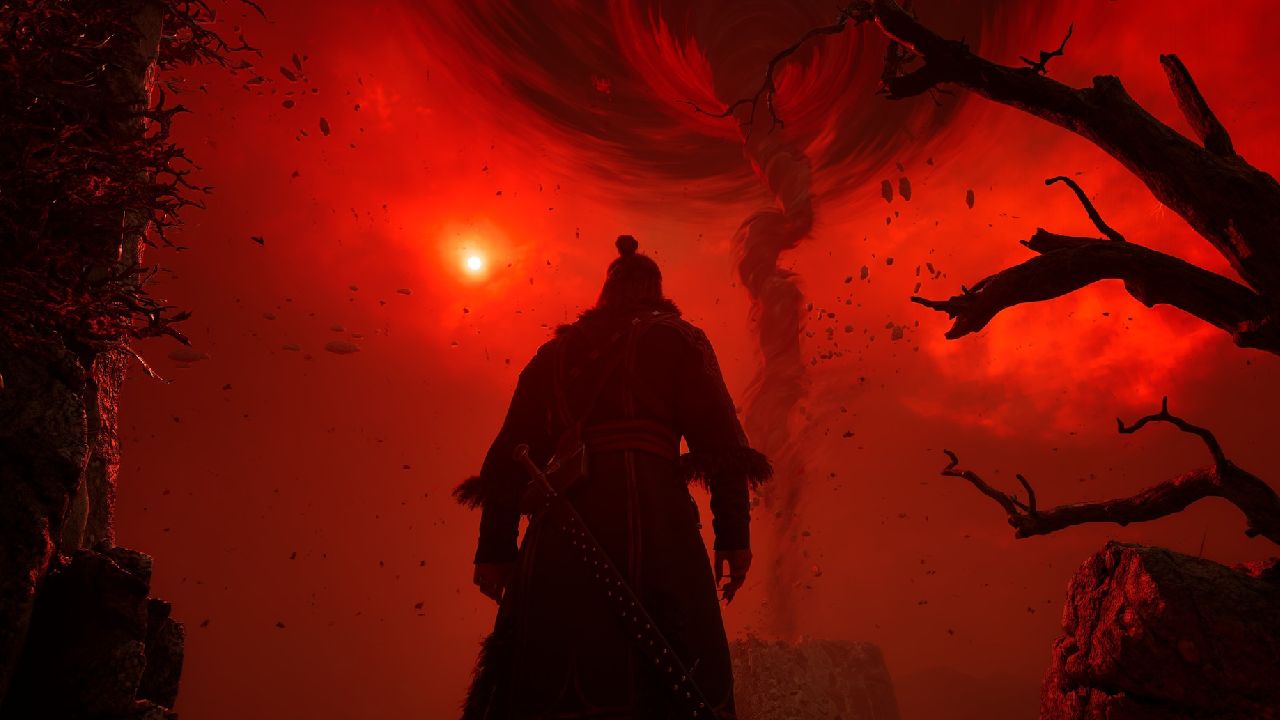
When Black Myth: Wukong launched, one research firm said it signaled a broader shift in China's market dynamics and an opening for outside developers to benefit from geographic expansion and existing AA and AAA offerings.
Run the numbers like an executive. Say you estimate a game will cost $100 million to build in the United States and you project about $101 million on the P&L. You could build it in New Zealand for $20 million and still project roughly $102 million, which leaves $80 million in profit
Any executive picking the second option should worry everyone in the Western industry. If Western game budgets keep climbing, that choice gets easier every year. Media and games are both seeing job losses, so a talk about how companies track their numbers is overdue.
The reporter called P&Ls amorphous, something that can be squeezed into whatever shape a company wants. That raises the matter of why the cost of Gears of War: E-Day was reported at all. If budgets aren't valuable data, there'd be no reason to compare Western game budgets with those of countries that build games for less, yet those comparisons are exactly what's needed. This isn't about winning an argument online.
It's about an industry at a crisis point in the West.
Some companies count bonuses and equity as development costs, load expenses from other projects onto a big one, and pay 30 percent storefront fees on owned platforms versus partners. Staffing costs can sit elsewhere, and spending can shift between capex and opex.
None of that means you should stop comparing. If a real difference turned up between how the Gears of War: E-Day budget was allocated, and how the Blood of the Dawnwalker budget was, it would be illuminating, and he's well placed to find it.
Game Pass adds another layer. Inside the company, a project gets an attribution on its P&L: finance staff calculates a number from how many hours people played the game on the subscription, and it counts toward profit and loss. The company calls it member-weighted value.
Say 1.7 million players of Gears of War: E-Day are treated as people who would have bought it at $60. That still wouldn't look good against the reported cost. The Coalition seems to see what's coming, and if that budget is anywhere near accurate, you can guess what Sharma is hearing right now.
His advice was to avoid comparing one studio's budget with another's, since each is calculated differently.
Yet he and every other outlet report these figures constantly: about $700 million for a Call of Duty entry, $500 million for Destiny as a franchise, $200 million for The Last of Us Part II, $95 million for Borderlands 3, $75 to $100 million for Shadow of the Tomb Raider, $40 million for Blood of the Dawnwalker and $20 million for Uncharted 2.
If comparisons are off-limits, reports should break these numbers down more clearly, because people are human and one figure jumps out. Blood of the Dawnwalker, at $40 million, wasn't made in the West, and people were stunned by what the team produced.
The same happened with Black Myth: Wukong, the rumored $400 million Concord budget, and the Wolverine and Spider-Man budgets. Western game budgets are what people keep reacting to. The usual fix on offer is higher prices, since game prices haven't risen in years.
Buyers are price-averse, though, so an $80 price tag means fewer purchases, while price cuts have produced big successes. Nintendo is taking another route with more remakes. Zelda is about to arrive, Metroid has returned, and Super Mario RPG, a long-time favorite, got a remake too.
PlayStation is feeling the pinch too and plans to earn more from its existing fans in new ways.
XBOX, in third place with 14 layers of management, should expect heavy staff losses. Sony has already done much of that: Sucker Punch was just hit, and Bungie had big layoffs. Microsoft is offering a buyout to 60,000 people, which isn't 60,000 job losses. Not everyone will take it, and the company will likely close the offer once it reaches its target number.
None of this stays on social media. Several outlets ran the $500 million story, so the reporter should break it down clearly, since readers trust his reporting and others will repeat whatever he publishes. Western game budgets deserve that kind of detail.
This is a reset point for the whole industry. BioWare is gone, Microsoft is carrying out mass layoffs, and it isn't finished. Maybe Western game budgets can learn from Blood of the Dawnwalker, even if you multiply its $40 million by five.
The aim is to find out whether the US can do anything to stop the bleeding. P&Ls are complicated, but the rest of the world delivers for much less. This isn't an attack on one reporter. Western game budgets have been heading toward an iceberg for years, and the industry is hitting it now.
Editor, NoobFeed
Latest Articles
No Data.