
AMD Ryzen 7 9850X3D Review: Incremental Gains at a Higher Cost
AMD Ryzen 7 9850X3D positions itself as a marginal refresh instead of a clear upgrade for existing Zen5 users.
Hardware by Nahe Yan on Jan 29, 2026
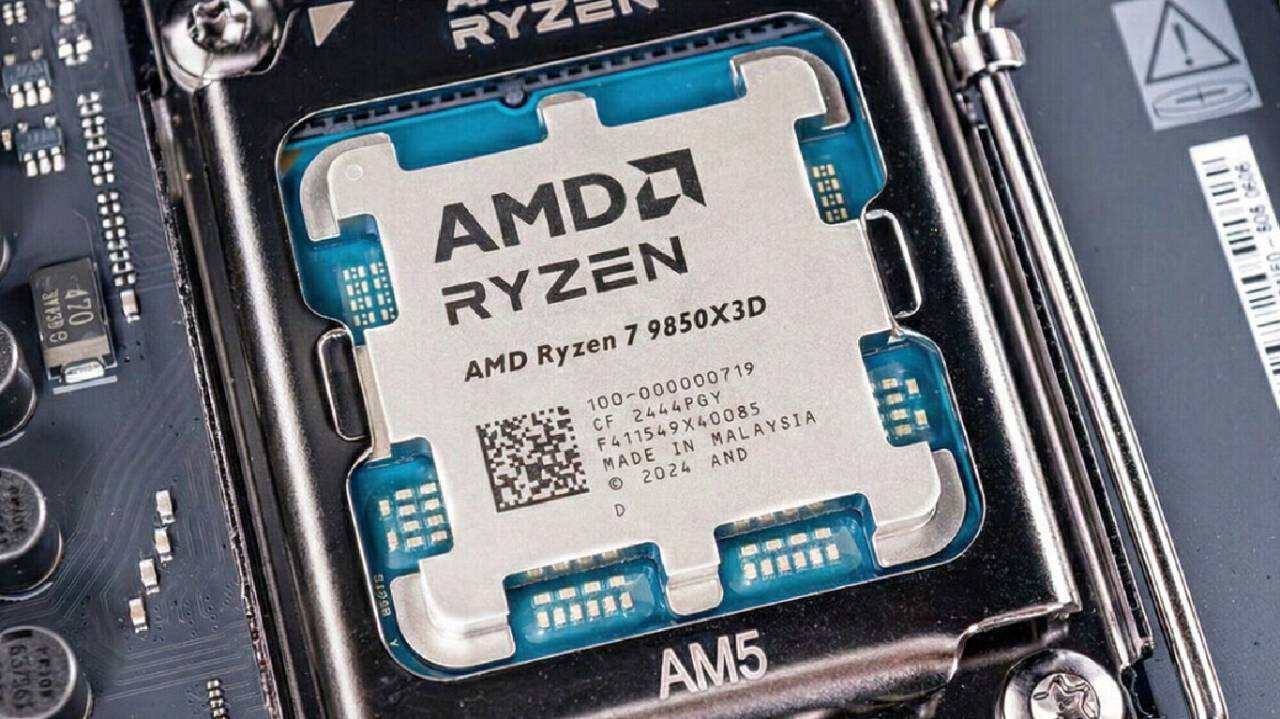
AMD discussed the Ryzen 7 9850X3D, a slightly different version of the Ryzen 7 9800X3D, in the days leading up to CES2026. The modification seems tiny on paper, with only a small rise in boost speed.
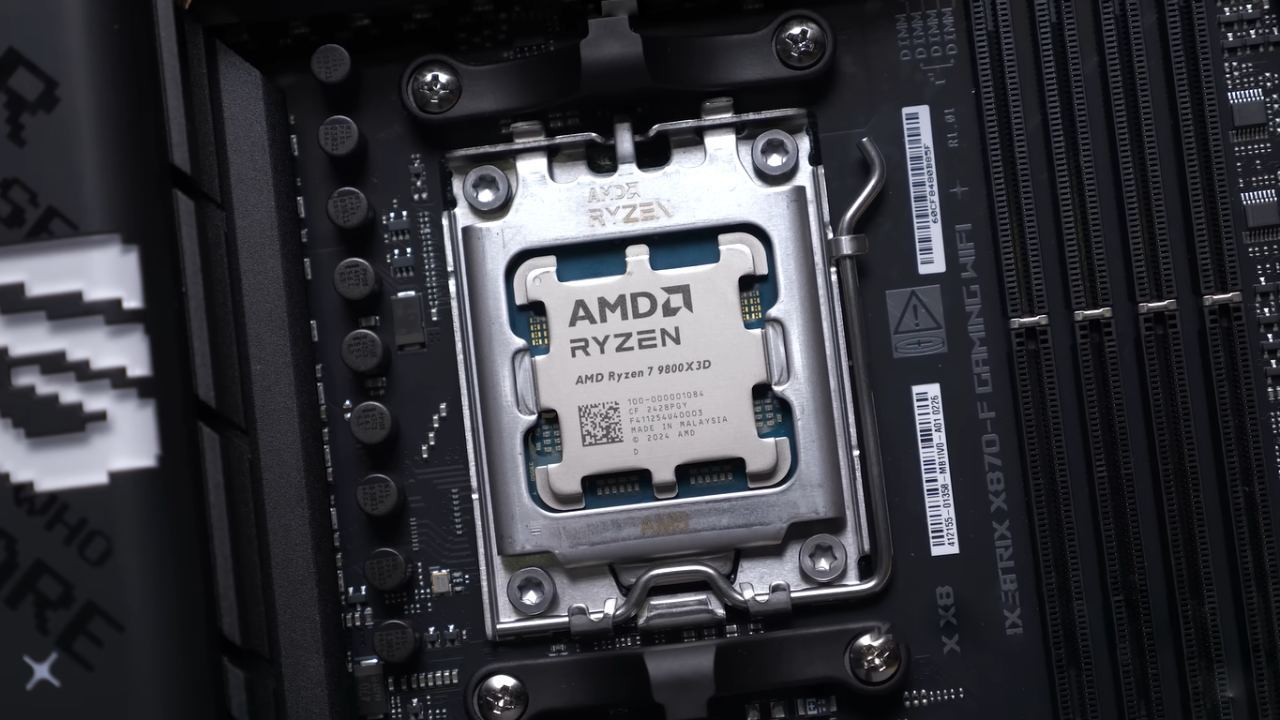
Specifications alone don't tell us much about internal changes, and even looking closely at CPU-Z data and the processor labels indicates that both chips are designated 2024. 9850X3D is important since it is not a replacement for the 9800X3D. This makes us wonder about its real-world worth and position right away.
Methodology and Test Platform
ASRock X870E Taichi motherboard AMD sent us was used for all testing. Before testing, the board was brand-new and up to date. The memory was 32GB of GSkill Trident Z5 Royal Neo, which was rated at DDR5800. An MSI RTX 4090 Ventus 3X handled the graphics, and a Phanteks Glacier 360 kept everything cool.
Some other reviews say that DDR5800 RAM is a good choice. AMD has encouraged the use of slower memory because of current prices, saying that faster processors can make up for slower memory. In real life, slower memory is still expensive; DDR5800 was chosen to keep things balanced. We also retested an Intel Core i9 285K system with an MSI MPG Z890 Carbon WiFi motherboard and GSkill Trident Z5 CK memory rated at DDR5820 to make sure the conditions were the same.
Performance of Cinebench R23
Ryzen 7 9800X3D runs at 5.22GHz across all cores and consumes about 135W in Cinebench R23 with multiple cores. Ryzen 7 9850X3D runs at 5.25GHz and consumes about 142W. In regular use, 5.22 GHz and 5.25 GHz don't make much of a difference.
Results from a single core reveal a clearer distinction. 9800X3D runs at 5.22GHz and uses 36–38W, whereas the 9850X3D runs at 5.6GHz and peaks at 5.63GHz, using about 45W. The earlier Zen4 Ryzen 7 7800X3D runs at 4.8GHz on multiple cores and 5GHz on a single core. It only uses 87W. The difference lies in where the cache is placed. Zen5 uses 3D V-Cache V2 under the chiplet, allowing it to draw more power and run at higher frequencies without overheating.
Core Ultra 9 285K has the highest multicore Cinebench score, with slightly over 42,000 points. Ryzen 7 9850X3D and 9800X3D both score well over 23000, while the 7800X3D scores just under 18000. The margin between the two Zen5 processors is still small, which shows that gains are constrained.
Results from the Curve Optimizer
When I used AMD Ryzen Master and the Curve Optimizer with a -25 setting on all three 3D processors, I noticed big variations in how well they worked. 7800X3D goes up to 4.95GHz while keeping 87W. 9800X3D can run at 5.22GHz, but its power lowers from 137W to 111W. 9850X3D goes up to 5.4GHz and lowers its power from 142W to 131W.
When you divide Cinebench scores by power draw, it becomes easier to see how efficient something is. 9850X3D is near the bottom of the list because it uses more power and doesn't improve performance much. 9800X3D works just as well but uses less power, and the 7800X3D is the most efficient at 87W. The evidence indicates that the modified silicon exhibits altered behavior, though not consistently to its benefit.
How well Geekbench 6 works
In Geekbench 6 multicore testing, Intel leads, followed by the Ryzen 7 9850X3D and 9800X3D in the middle, and the 7800X3D at the bottom. When looking only at AMD results, the difference between a stock 9800X3D and a curve-optimized 9850X3D is about 1000 points, or about 5%.
9850X3D comes out on top in single-core Geekbench tests thanks to its higher boost clocks. Curve Optimizer amplifies this advantage a bit, but the changes remain small because of how single-threaded testing works.
As expected, AIDA64's memory bandwidth test demonstrates that all AMD CPUs are bound because they all have the same memory setup. Intel is clearly in the lead for this particular workload.
How well it Plays Games at 1080p and 1440p
At 1080p, AMD's 3D processors are the best in Far Cry 6, while the Core Ultra 9 285K is behind. 9850X3D is around 10 fps faster than the 9800X3D. The results of the Curve Optimizer change. Sometimes they make older chips work worse, but they help the 9850X3D. At 1440p, the differences narrow, and the 9850X3D stays ahead by a modest margin.
At 1080p, Avatar: Frontiers of Pandora shows the 9850X3D on top, especially when Curve Optimizer is turned on. At 1440p, the results come together, with Intel momentarily ahead by a small amount and AMD chips close together.
Assassin's Creed Mirage has some good and some bad points. 9850X3D with Curve Optimizer is the best at 1080p, but at 1440p, the performance is more spread out.
Cyberpunk 2077 makes scaling more visible. 9850X3D gets about 10 more fps than the 9800X3D at 1080p. Curve Optimizer can impact 1% lows. At 1440p, the 9850X3D still has a small lead, though Curve Optimizer adds about 1 fps.
9850X3D is always ahead in Total War tests. However, the gains over the 9800X3D are still minor in percentage terms, especially at 1440p.
Things to Think about when it Comes to Value and Upgrades
Ryzen 7 9850X3D outperforms the 9800X3D in all tests, as AMD says it should. Pricing is the biggest issue that comes up. The price rise over the 9800X3D is large relative to the performance boost, suggesting AMD is adjusting the price rather than making a real generational leap.
There is also a lot of talk about a future Ryzen 9 CPU with 3D cache on both core complexes. This kind of design could yield greater benefits, but the cost is likely high.
Pros and Cons
Great performance in games. Works with AM5 motherboards and coolers already available. Low power use and easy-to-manage heat. Small improvements over the Ryzen 7 9800X3D. Prices are higher than performance. Possible market positioning that raises the platform's overall cost.
Final Thoughts
It doesn't make much sense to upgrade from a Ryzen 7 9800X3D to a 9850X3D, since the benefits are so slight. Going from a Zen4 Ryzen 7 7800X3D to Zen5, on the other hand, provides a significant boost in performance and efficiency. If you're coming from an older platform or have been using Intel systems for a long time, the Ryzen 7 9850X3D is a good way to get into AMD's current gaming portfolio.
Also, check our other AMD articles below:
- AMD Ryzen 9 9950X3D Review: Setting The Standard For 2025 Gaming CPU
- AMD Ryzen 7 9800X3D Review: 3D V-Cache Goes God Mode with Stunning Gaming Performance
- AMD RX 9070 Performance Review: Thermals, Clocks, and Real-World FPS
- AMD Ryzen 5 7600 Review: Best Budget Gaming CPU of 2025?
- AMD Radeon RX 7800 XT Review: RDNA 3 Power For Midrange Gaming
- Sapphire NITRO+ AMD Radeon RX 9070 XT Review: The Ultimate 4K Gaming GPU
- AMD Ryzen 7 7800X3D: Delivers Gaming Performance Far Beyond Expectations
- AMD Ryzen 9 7900X Review: Powering the AM5 Era with DDR5 & PCIe 5.0
- Intel Core i9‑14900K vs. AMD Ryzen 7 7800X3D: Power Profiles & Gaming Benchmarks
Editor, NoobFeed
Gaming Hardware Updates
No Data.