
FSR 4.1 Brings Major Performance Gains to RX 6700 GPU
FSR 4.1 delivers performance gains of up to 58% on RDNA 2 hardware while improving image quality over FSR 3.
Hardware by Shinji Okazaki on Nov 09, 2026
AMD's FSR 4.1 has been tested on the Radeon RX 6700 10GB, providing an early look at how the upscaling technology performs on RDNA 2 hardware. The tests cover Resident Evil Requiem and Crimson Desert at 1440p, with performance comparisons against FSR 3 and native anti-aliasing. The results show performance gains of up to 58%, along with improvements in image quality and temporal consistency.
We had a brief opportunity to test FSR 4.1, and the GPU we used for these tests is the Radeon RX 6700 10GB, the non-XT model. We chose this GPU because it is close to a console-style GPU and shares an architecture with the PlayStation 5. The main difference is that the PlayStation 5 does not have machine learning acceleration support for INT8.
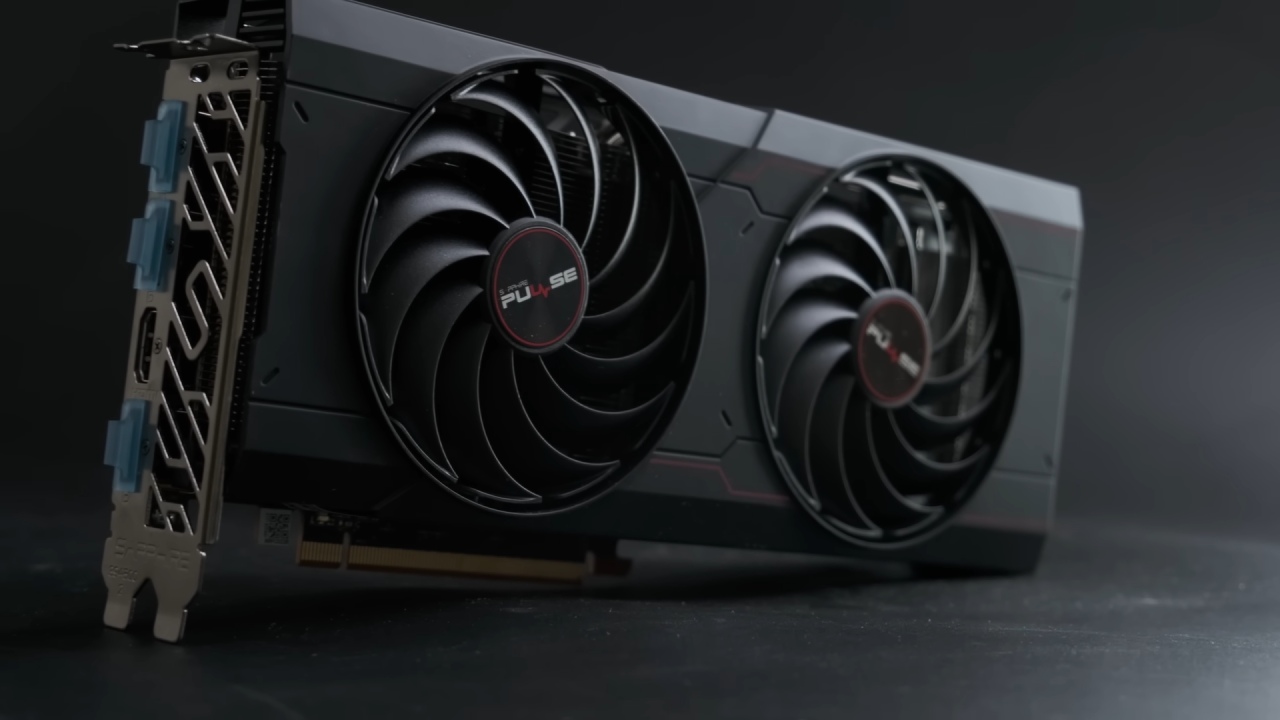
FSR 4.1 Delivers Up to 58% Performance Uplift
We would expect Xbox to potentially run this slightly faster, but let's look at the test results. We started with Resident Evil Requiem at 1440p using our mainstream optimized settings. The results look promising, with FSR 4 providing a frame rate uplift ranging from 31% to 58%. Remember, these results come from a GPU close to a console-equivalent RDNA 2 GPU.
We then replaced native anti-aliasing with FSR 3 Quality mode for comparison. FSR 3 Quality does not look good in this game, and the additional processing cost of FSR 4 compared with the equivalent FSR 3 mode is around 1.5–1.6ms. However, the main point is that we can use more aggressive scaling with FSR 4 while still getting better image quality.
The closest FSR 4 gets to FSR 3 Quality in terms of performance is FSR 4 Balanced mode. It is around 4% slower, with a frame time difference of about 0.4-0.5 ms. However, the image quality is better, making the trade-off worth considering. The results show that even in a game already running at an average of 60fps at native 1440p, FSR 4 can provide performance gains.
We also tested Crimson Desert using settings equivalent to the PlayStation 5 Balance mode at 1440p. This is a demanding scene, so the percentage gains are lower than those in Resident Evil Requiem. However, FSR 4 still provides performance improvements ranging from 23% to 43%, depending on the selected mode.
Crimson Desert Shows Up to 43% Performance Gains With FSR 4
Native anti-aliasing adds approximately 2.75ms of frame time, which is a substantial cost. It is also slower than what we observed in Resident Evil Requiem. We then replaced native anti-aliasing with FSR 3 Quality mode to compare the performance differences. FSR 3 Quality adds approximately 2ms of additional rendering time compared with FSR 4 Quality.
However, we do not need to use the same quality level to get better image quality from the newer upscaler. The performance difference between FSR 3 Quality and FSR 4 Balanced mode is only around 0.9%. This means we can use FSR 4 Balanced mode for a better overall experience without losing much performance.
We also looked at image quality in Crimson Desert, although we didn't have enough time for a full comparison. The selected scene was noisy, making it useful for comparing FSR 3 Quality against FSR 4 Balanced mode on the RX 6700. The goal was to compare image quality while keeping performance similar.
FSR 4 looks sharper, which reminded us of some differences we saw with QSSR on PS5.
We also compared the lighter INT8 version of FSR 4 against the full INT8 version running on the Radeon RX 7800 XT using the same settings. The lighter INT8 and full INT8 versions have similar characteristics, so their differences compared with FSR 3 should be similar. Particle ghosting was still present.
We wanted to make the same comparison in Resident Evil Requiem, as it would have provided a more useful look at the image-quality differences between FSR 3 and FSR 4. However, the game refused to launch on any AMD graphics card after switching from the RX 6700 to the RX 7800 XT and then back again.
Overall, the results are impressive. However, console implementations raise a few considerations. Games using dynamic resolution scaling could see a performance reduction unless developers leave more room in their lower-resolution bounds. We expect this to be manageable, but it raises questions about how games will handle the additional processing load.
FAQ
Q. How much performance improvement does AMD FSR 4.1 provide on the RX 6700?
A. AMD FSR 4.1 delivers a performance uplift ranging from 31% to 58% in Resident Evil Requiem and 23% to 43% in Crimson Desert at 1440p, depending on the selected mode.
Q. Which GPU was used to test AMD FSR 4.1?
A. The Radeon RX 6700 10GB non-XT was used for testing because its RDNA 2 architecture is close to the GPU architecture used in the PlayStation 5.
Q. Does FSR 4.1 offer better image quality than FSR 3?
A. Yes. FSR 4.1 provides more detail, reduces image noise and breakup, and improves temporal consistency compared with FSR 3, particularly around vegetation and sub-pixel elements.
Q. Does AMD FSR 4.1 work on RDNA 2 GPUs?
A. Yes. The testing showed that FSR 4.1 can run on RDNA 2 hardware, including the Radeon RX 6700, with performance and image quality improvements over FSR 3.
Editor, NoobFeed
Gaming Hardware Updates
No Data.