
Steam Machine Specifications and AMD Next-Gen Features Impact Upcoming Gaming Trends
Rising hardware costs continue shaping purchasing decisions as companies adjust production strategies amid growing AI-driven component demand
Hardware by Nahe Yan on Nov 15, 2025
There are numerous changes in the hardware industry today, including memory constraints, new console plans, and AMD's expanding machine-learning technology.
The situation shows that there is still pressure from AI demand, strategic decisions made by semiconductor companies, and changing conditions in the PC and console markets.
Memory Prices Keep Going Up
Memory prices have gone up again, and recent assessments suggest this trend is unlikely to change anytime soon. Since September, Samsung has raised the prices of individual NAND flash memory chips by as much as 60%. Since NAND flash is the main part of SSDs, the rise now affects more than just system memory.
Reports indicate that desktop DRAM prices have increased by more than 170% year-over-year, driven by demand from AI-focused data centers. The main point is that AI workloads are using up a lot of RAM, and demand isn't slowing down.
At the same time, memory makers don't plan to increase production, even though shortages persist. Companies are still cautious because of earlier demand spikes during the crypto boom, which led to excess supply when manufacturing was ramped up.
Many analysts believe there will be an AI bubble; therefore, the decision not to increase production capacity fits with their long-term plans. Companies are still investing heavily in HBM development, with plans to spend over $54 billion.
Current estimates suggest shortages may last until next year and beyond 2027. You should get RAM sooner rather than later if you want to build or upgrade a system.
Valve's New Steam Machine and How It Will Affect the Market
Valve has officially launched a new version of the Steam Deck, a hybrid console and PC designed to be a more powerful upgrade to the original. It is powered by SteamOS, which is based on Linux, and it follows the idea that hardware and software should work well together.
The system has a semi-custom AMD CPU based on Zen 4 with six cores and 12 threads. It can run up to 4.8 GHz with a TDP of 30W. With 28CUs, the built-in GPU is based on RDNA3 and can run at up to 2.45GHz with a TDP of 110W. It has 8GB of GDDR6 VRAM and 16GB of DDR5 system memory. You can choose between a 512GB NVMe SSD or a 2TB NVMe SSD for storage.
The specs may not seem high-end compared to desktop PCs, but SteamOS makes the most of the technology by lowering overhead and making it all the same. Valve wants to make games run at 4K 60fps, and FSR typically helps with that. Cyberpunk 2077 ran at 4K with FSR enabled during early hands-on tests, but the 8GB VRAM limit remains a problem.
The system could change Xbox's existing approach by allowing it to utilize Steam's vast catalog without requiring users to repurchase games. Microsoft's focus on a cross-platform environment may make things difficult for the console if hybrid PC systems become more widely available.
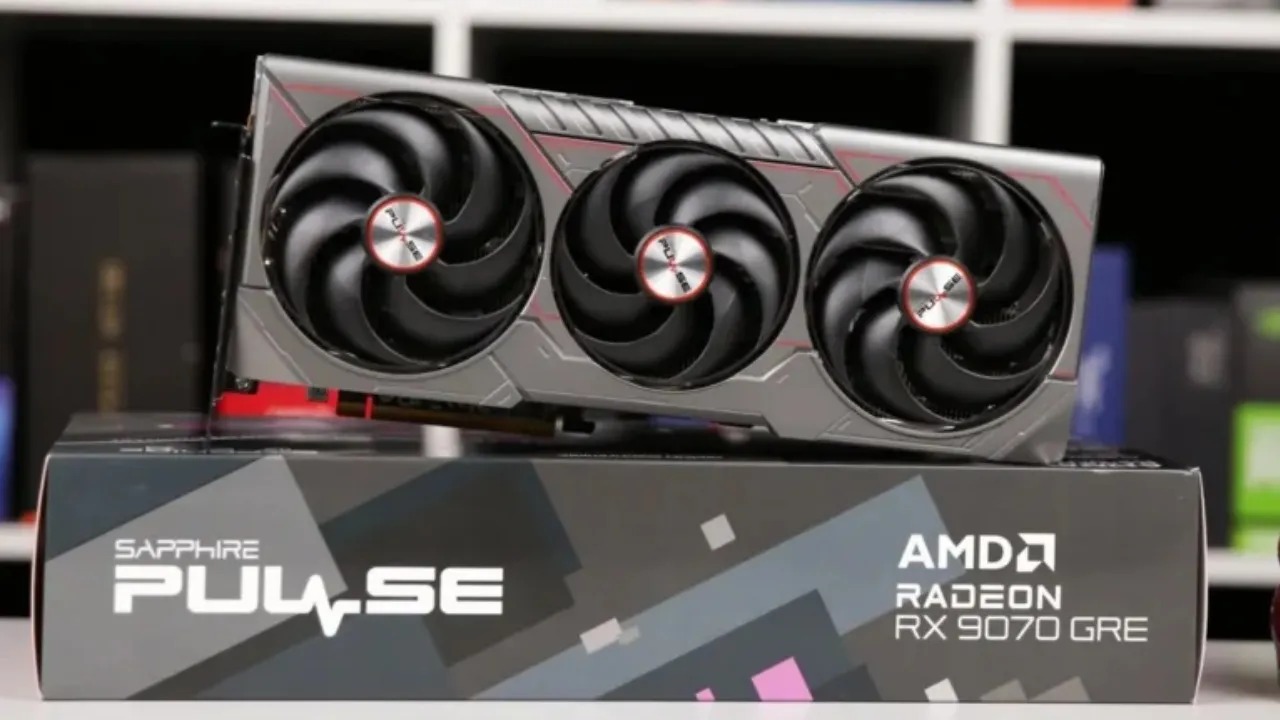
AMD Releases FSR Redstone Ray Regeneration
AMD has released the first part of its nextG technology package, called FSR Redstone. Ray Regeneration, the first feature, came out with Call of Duty: Black Ops 7. It is like Nvidia's Ray Reconstruction in DLSS 3.5, which uses machine learning to improve the quality of ray-traced images.
Ray Regeneration is not the same as upscaling or frame generation. It doesn't do that; instead, it improves the denoising process that real-time ray tracing needs. In real-time ray tracing, each pixel usually gets one ray. In offline approaches, each pixel can get dozens or even thousands of rays.
Filters, temporal history, and now machine-learned reconstruction are used to fill in the missing data. Ray Regeneration sharpens edges, removes artifacts, and improves lighting accuracy.
In real life, scenes had crisper reflections, smoother diffusion, and better lighting. For example, Ray Regeneration made ceiling reflections look more natural, whereas default denoising made them look jagged. There were also variations in the clarity and diffuseness of the lighting on floors and surfaces. In certain circumstances, performance even got better.
Currently, only the RX 9000 series GPUs support Ray Regeneration. Further testing over time will demonstrate how the technology evolves and how it compares to Nvidia's method.
Final Thoughts
The industry is still evolving in response to the demand for AI and the emergence of new gaming platforms. Memory shortages are expected to continue, Valve is pushing for new hardware, and AMD is adding more machine-learning technologies. It remains unclear whether AMD's plan will help it keep pace with Nvidia's progress.
Also, check our other AMD articles:
- AMD Ryzen 9 9950X3D Review: Setting The Standard For 2025 Gaming CPU
- AMD Ryzen 7 9800X3D Review: 3D V-Cache Goes God Mode with Stunning Gaming Performance
- AMD RX 9070 Performance Review: Thermals, Clocks, and Real-World FPS
- AMD Ryzen 5 7600 Review: Best Budget Gaming CPU of 2025?
- AMD Radeon RX 7800 XT Review: RDNA 3 Power For Midrange Gaming
- Sapphire NITRO+ AMD Radeon RX 9070 XT Review: The Ultimate 4K Gaming GPU
- AMD Ryzen 7 7800X3D: Delivers Gaming Performance Far Beyond Expectations
- AMD Ryzen 9 7900X Review: Powering the AM5 Era with DDR5 & PCIe 5.0
- ASRock Radeon RX 7800 XT Challenger OC Review: Best Price-to-Performance GPU of 2025
- Intel Core i9‑14900K vs. AMD Ryzen 7 7800X3D: Power Profiles & Gaming Benchmarks
Editor, NoobFeed
Gaming Hardware Updates
No Data.