
Linux Update Supercharges AMD GPUs While Memory Prices Spike
Older AMD GPUs gain renewed performance strength through updated Linux driver support enhancing stability and efficiency across legacy hardware.
News by Masaru Hoshino on Dec 25, 2025
Older AMD GPUs just received a massive performance boost, and the timing couldn't be more relevant as GPU prices may rise, memory costs fluctuate, and older games occasionally struggle on newer hardware. NVIDIA recently reintroduced support for 32-bit PhysX, though not for every game, and it's likely temporary.
It's reassuring to know there's still a reliable place to go for consistent support for older hardware: Linux. This applies to hardware that is more than 13 years old.
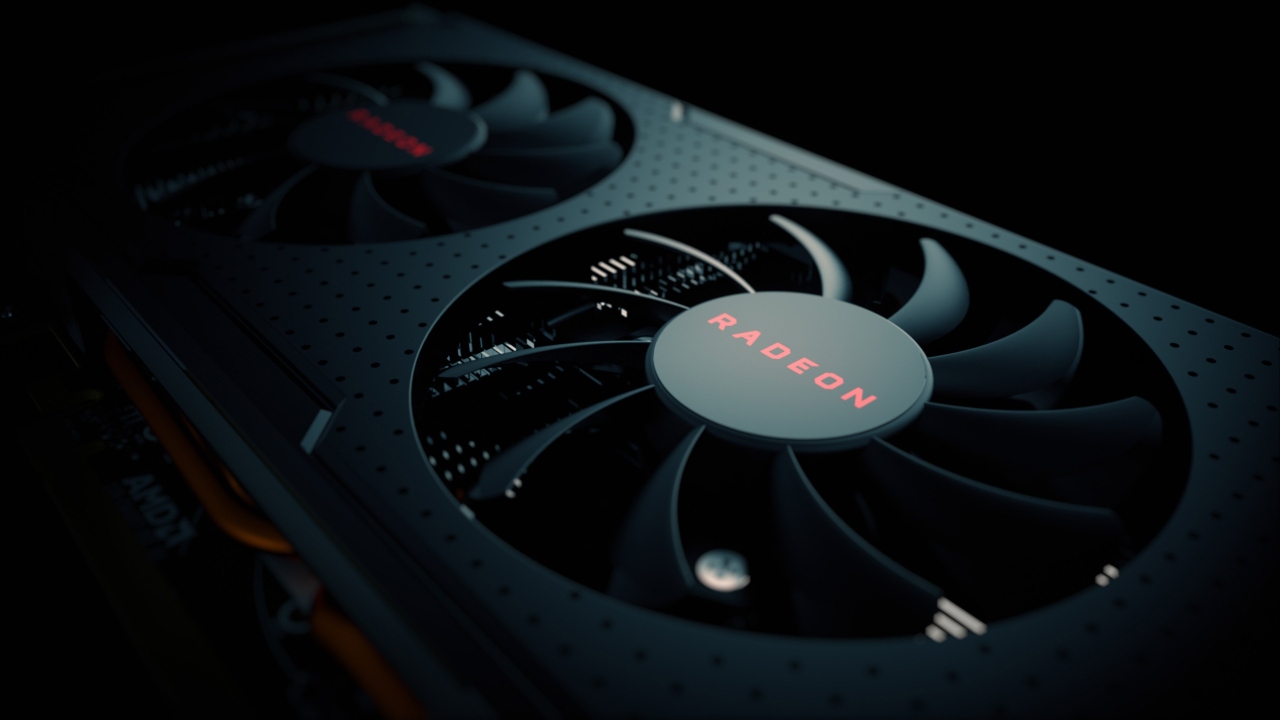
Latest update to the Linux kernel added support for the newer AMD GPU driver to GCN 1.0 and GCN 1.1 GPUs, meaning Radeon HD 7000 and 8000 cards—hardware that predates the Radeon 200 series.
Before, these GPUs used the old Radeon DRM driver.
AMD GPU driver technically worked earlier, but it wasn't the same experience. Missing hooks caused the audio and analog outputs not to work properly, and the entire performance was very aggravating. Thanks to Valve's open-source driver group and a key developer, these GPUs can now fully utilize the AMD GPU driver, gaining native Vulkan support and notable performance improvements.
ForonX tested the new driver and saw a substantial 30% performance increase. Considering the volatility of the PC market today, if we want our hardware to last as long as possible, Linux remains one of the best environments available.
Micro Center is officially expanding to a new US location in Austin. If you're in the area, you can claim a free 128GB flash drive when the store opens by using the provided link and form. If you're nowhere near Austin, there are plenty of other Micro Center stores offering major holiday savings. With memory prices threatening to impact more than just memory itself, we definitely want to pay attention.
Retailer is offering GPUs like the 9070XT below MSRP, and the 9800X3D at excellent pricing. For anyone who has never visited a Micro Center, it's a reliable place to get every part needed for a PC build, with strong in-store support and competitive pricing.
Market conditions can shift overnight, and we went from record-low DDR5 prices earlier this year to values far out of reach for many. Prices have risen so drastically that system integrator MainGear just introduced "bring your own RAM" builds. You choose all your parts, they assemble the PC, and then ship it without memory installed.
We don't fault them—this can genuinely help customers who may find RAM more affordably on their own, including on the used market. The troubling part is how extreme the situation has become. According to MainGear's CEO, their cost for a 32GB kit has risen by 394%, and for a 64GB kit by 344%.
In over 20 years of business, he claims he has never seen anything like this. What was expected to be a 2-to-5-month correction is now being described as a multi-year problem.
Reports from Japan indicate PC vendors are closing orders for the rest of the year because of overwhelming demand and inconsistent component pricing.
With only a few days left before the new year, it's unclear when they will reopen. Conditions continue to grow more unstable.
Everyone can now get up to 85% faster SSD performance for free, thanks to Microsoft adding a native NVMe driver.
Surprisingly, the driver we've been using dates back to 2006—long before NVMe even existed.
At the moment, the new driver is included only in Windows Server 2025. Still, users have already found a way to port it into standard Windows 11 systems, with impressive performance gains.
The results depend on the SSD and PC. According to NotebookCheck, a 1TB PCIe 4.0 SSD in a notebook achieved a 23% increase in sequential read rates and a 30% increase in write speeds. A Reddit user who used a PCIe 5.0 SSD in a portable device saw a 12% increase in random read speeds and an amazing 85% increase in random write speeds.
If you want to try the process yourself, it's not overly complicated, but it does require editing the registry. You should back up your system fully because there is risk involved. If you want to be completely safe, we recommend waiting for Microsoft to officially roll it out to Windows 11. A link exists for those comfortable making the changes, but we take no responsibility for any issues that may occur.
AMD's next-gen Ryzen 10000X3D chips may be getting an enormous performance leap, and the leaked numbers are wild. The information comes from reliable leaker HXL1X, who has a strong track record with AMD leaks. According to the claims, Zen 6-based X3D chips—what we expect the Ryzen 10000 series to be—will bring major advancements.
Single-CCD versions may feature 144MB of L3 cache, while dual-CCD models could reach an unbelievable 288MB. For comparison, 144MB is 50% more cache than the 9800X3D. Many people aren't considering a major architectural shift: leaks consistently suggest that 12 cores will exist on a single CCD, for a total of 24 cores across two CCDs.
A single-CCD gaming chip with 12 cores—likely the 10800X3D—would be a major upgrade over the long-standing 8-core gaming standard.
Having 12 cores communicate on the same CCD removes the latency penalties of cross-CCX communication, resulting in far lower overhead. Combine that with a 50% increase in cache, and the performance uplift could be substantial.
Intel is also rumored to be preparing a major response. There are rumors that the top-of-the-line model might have 52 cores and 288MB of last-level cache, which would make it work like AMD's huge X3D cache pool. If this is accurate, we could be entering one of the most competitive generations of CPUs ever. Before going any further, we need more proof from other leakers. Still, battle lines are swiftly forming for the next generation.
Editor, NoobFeed
Related News
No Data.