
Aliens: Fireteam Elite 2 Review
PC
Four marines, six rebuilt classes, and a franchise that keeps trading dread for firepower.
Reviewed by Maisie Scott on Aug 26, 2026
The initial iteration of Fireteam Elite from Cold Iron Studios came out back in 2021 as a quick-paced squad shooter aiming to be a bridge between Gears of War mechanics and horde management of World War Z. In the original game, you crawled down hallway corners, peppered blind fire in dark hallways, and had to manage a strict limit of three weapons to choose from.
The classes themselves were quite limited, as Gunners were responsible for sustained fire, Demolishers handled heavy weaponry, Technicians could deploy and use turrets, Docs were responsible for healing, and the Recon class was only usable after beating the campaign.
A bigger squad and rebalanced roles fix the flaws that held the original game back.
There were interesting customization options for optics and magazine extensions, but the game itself struggled in many respects. It had linear levels that boiled down to predictable loops of corridor-based navigation into arenas, Xenomorphs that spawned according to a strict script and did not hunt down players, and artificial teammates that tended to walk right into danger.
However, the elements that really clicked in the game were defensive stand-offs, when your squad deployed mines, welded doors, and defended against endless waves of enemies. This defensive tension is exactly what Aliens: Fireteam Elite 2 makes its core mechanic.
Going into Aliens: Fireteam Elite 2, you carry that history with you, because almost everything changes here in direct response to those complaints. You still play a colonial marine dropped into hostile Xenomorph territory, but the roster grows from three players to four, and that fourth slot changes more than you'd expect.
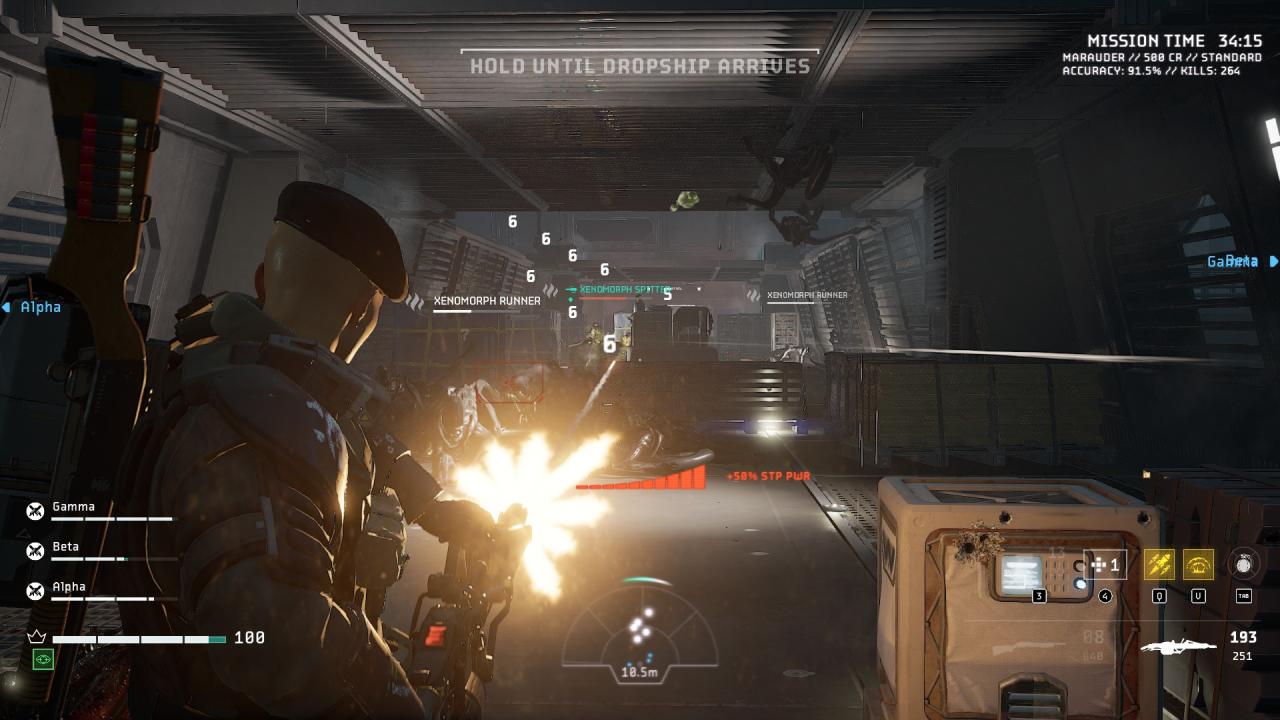
With three marines, you were always stretching one person across two jobs, someone covering both damage and control, or control and healing, because there just weren't enough bodies to go around. With four, every role can be properly staffed, allowing Cold Iron to increase the difficulty without it feeling cheap. Enemies hit harder, flank faster, and punish you the second you stop paying attention to your team.
Five years on from the first game, a distress call pulls the crew into a new outbreak.
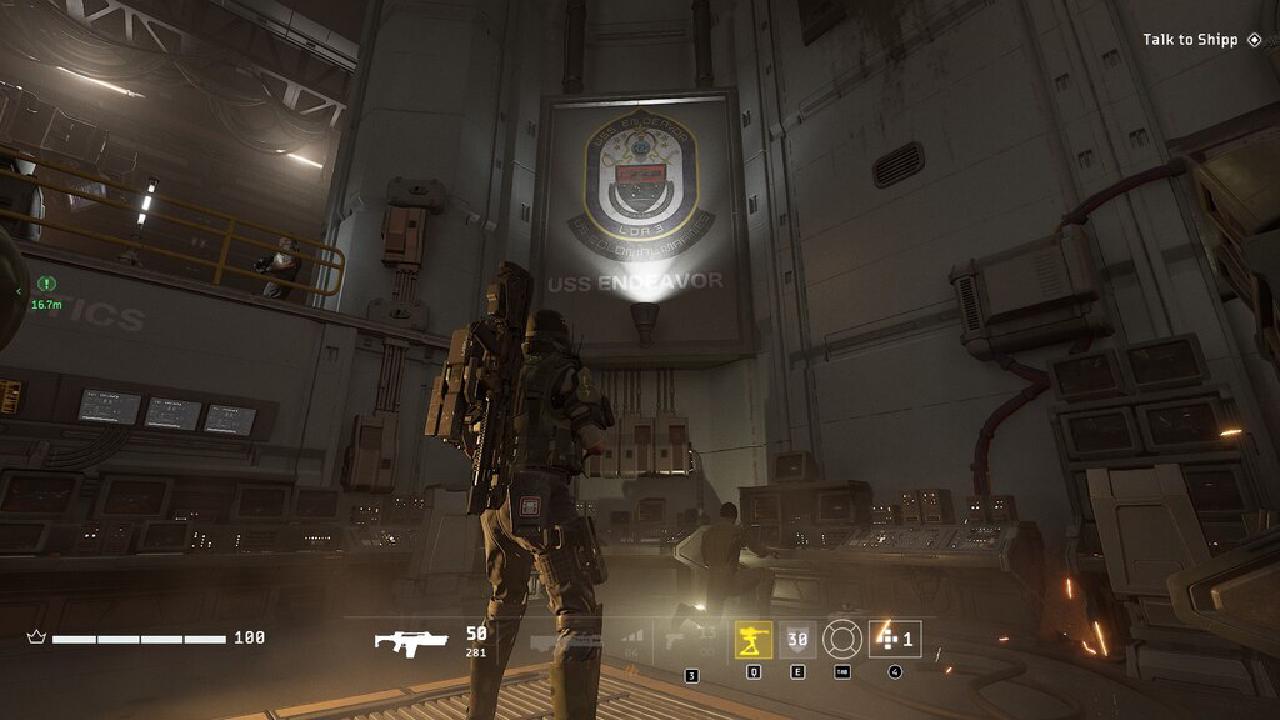
The story in Aliens: Fireteam Elite 2 picks up in 2207, five years after the first game, and follows on from the events on LV-895 and the Pathogen content that followed. Your ship, the USS Endeavor, intercepts a distress call from a clearly sick Dr. Pearce, which points you toward LV-558 and a Weyland-Yutani mining site called Storr’s Boon that's been completely overrun by Xenomorphs.
A squad called Fireteam Banshee had already been sent to deal with the outbreak, and they've gone dark. Your opening mission has you searching for Ko, a character promoted since the last game, who answered a distress call there and never checked back in.
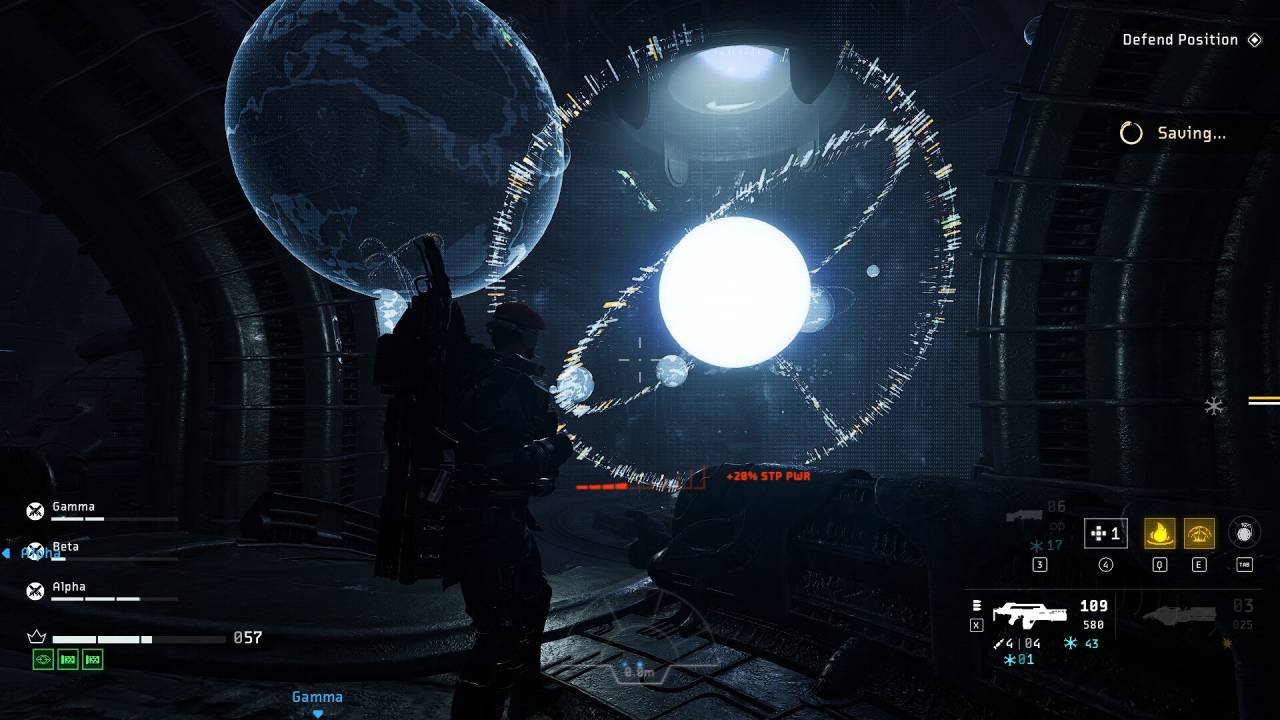
There's a Xenomorph queen involved at some point, and the campaign eventually leads you back toward locations connected to the Space Jockeys, which is easily one of the most interesting and underused corners of this whole universe.
Familiar faces like Esther and Ho are back too, though don't expect them to join you on missions; they mostly show up for conversation between deployments rather than fighting alongside you. As for how long the story in Aliens: Fireteam Elite 2 actually runs, you're looking at fifteen missions spread across six chapters and four different environments.
With the story's stakes set, attention turns to how missions actually play out class by class.
Fifteen sounds like a healthy number on paper, and it gets you through a real arc rather than a handful of throwaway objectives, but it does leave you wondering what's left to do once the credits roll, especially with paid cosmetic packs already lined up for launch.
Right off the bat when you dive into Aliens: Fireteam Elite 2, the natural separation of the basic gameplay loop takes the shape of two central hubs. You can play the story campaign as well as go on to the tactical Horde mode. Before getting into the action zone, your group has to report on board the USS Endeavor, debrief, and use mission credits earned from previous missions to purchase special attachments and perks from the Armory.
Most of the Armory grid is locked during the first hours of the game, so you won’t have access to the best weapons at first. When you land on the ground, you have five main classes available to play, and each of them comes with three active skills. One you'll want to test in depth is the Machinist class, one of the coolest classes with active pets in any squad shooter recently.
Being able to put a stationary sentry turret down while having your companion drone above your head helps create a perfect defensive wall, especially if you have the Cross-Platform Synergy perk that buffs you and your drones constantly.
Four more classes round out a roster built around very different combat styles and priorities.
Should destruction in the thick of things be more to your taste, then the Marauder will be able to handle your needs with a shoulder-mounted cannon and custom rocket pods, with running perks providing stacking combat bonuses for quick kills or blasting approaching foes away with hard melee attacks.
The Duelist offers an entirely new dynamic to typical weapon gameplay, allowing players to switch between two primary weapons during battle instead of being stuck with one rifle configuration throughout. When it comes to battlefield manipulation, the Hunter provides the tools needed to control the tempo of battle, using particle beams and freeze bolts to hold off at chokepoints and reveal key weak spots in enemy defenses.
The Medic gets a complete overhaul from the original, shifting from a purely defensive support role that heals wounded Marines after battle to an aggressive support role with adrenaline stims and trauma stations that significantly increase revival speed.
Once you've put enough time into those five, Aliens: Fireteam Elite 2 opens up a sixth option called the Specialist, and it's the best new idea in the whole game. Rather than being its own fixed kit, the Specialist lets you pull major and minor abilities from every class you've already leveled up and combine them into one loadout.
Class variety carries into combat itself, where matching damage types to enemies becomes essential.
You can't just unlock it and go wild, though; you only get access to abilities you've already earned on the classes that use them, which turns it into a genuine end-of-progression reward rather than a shortcut. You can end up mixing the Machinist's drone with the Hunter's beam weapon and a smartgun, and the possibilities only grow the more of the roster you've played.
Combat in Aliens: Fireteam Elite 2 runs on that same push-and-pull the first game hinted at. Enemies come with specific weaknesses; Xenomorphs and the synthetic units you fight through the first half of the campaign both respond differently to thermal and electric damage, so picking weapons that match what you're facing actually matters instead of being a nice-to-have.
You can lean on a plasma weapon early because it deals thermal damage and effectively never runs dry as long as you let it cool between bursts instead of firing it into overheating, and paired with an electric secondary, you're covered against both major enemy types for most of the early campaign.
Melee got a real purpose too, through stun batons that let you buy space when something's already closed the distance on you; you might expect to barely touch it, but you end up leaning on it constantly in tight spots where retreating isn't an option.
Constant movement is no longer optional, since a wider mix of enemies punishes camping fast.
On top of that, pyro and electric ammo types exist specifically to thin out a swarm before it reaches you, and using them well is usually the difference between a clean push and getting buried. The enemy variety is what makes all of this necessary in the first place.
You're facing a much wider spread of Xenomorph types than before, along with exploders and other threats that come at you from angles you're not watching, and camping a corridor simply doesn't work anymore; the moment you stop rotating and covering your team's flanks, you get punished for it.
That's a real improvement Aliens: Fireteam Elite 2 makes over the original game, where you could get by holding one doorway for most of an encounter. Progression in Aliens: Fireteam Elite 2 runs through a Tetris-style perk grid carried over from the first game, with only small tweaks. For instance, playing the Machinist, you can now swap your turret type by placing a new piece directly over the ability itself.
You don't need an entirely separate slot for it anymore. Certain perks and weapon traits are universal once unlocked, meaning something you earn on one class can carry over to another, and traits leveled on one weapon type apply across every weapon in that category, which rewards you for spreading your time across more of the arsenal instead of sticking to a single favorite.
Progression and difficulty share one perk system, tying character growth to what you can attempt next.
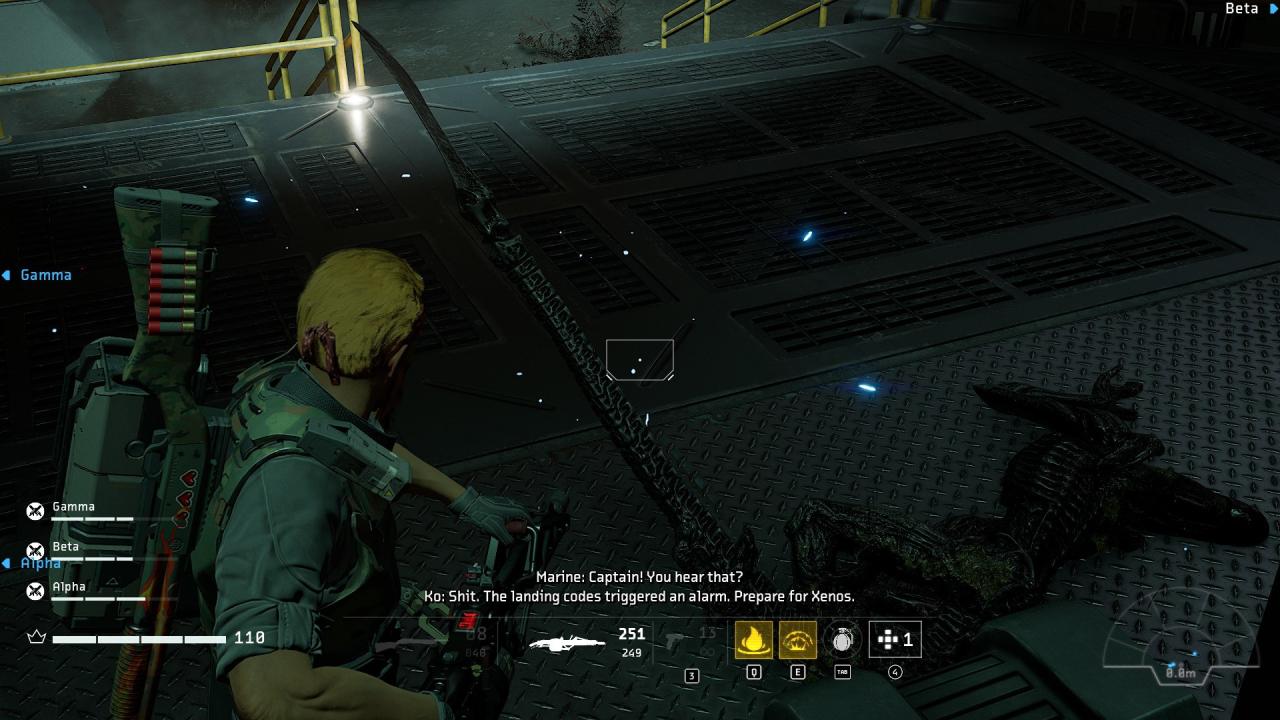
Combat rating rises as you level a class, and that rating is what gates you into harder difficulty tiers, so grinding here isn't just about bigger numbers; it directly decides what content you're allowed to attempt next. Horde mode benefits from this system too.
It launches with several dedicated maps and restructures the format from the original's long ten-wave sessions into shorter five-wave rounds that run roughly a quarter of an hour each, with rewards that scale the deeper you push. That change matters more than it sounds; it turns "one more wave" into a real decision you're making constantly instead of a single commitment at the very start, and it's far easier to fit a full session into an evening.
Challenge cards return as well, letting you modify a mission's rules to raise or lower its difficulty depending on what you're chasing. Visually, Aliens: Fireteam Elite 2 leans more heavily into horror than its predecessor, which suits the source material better.
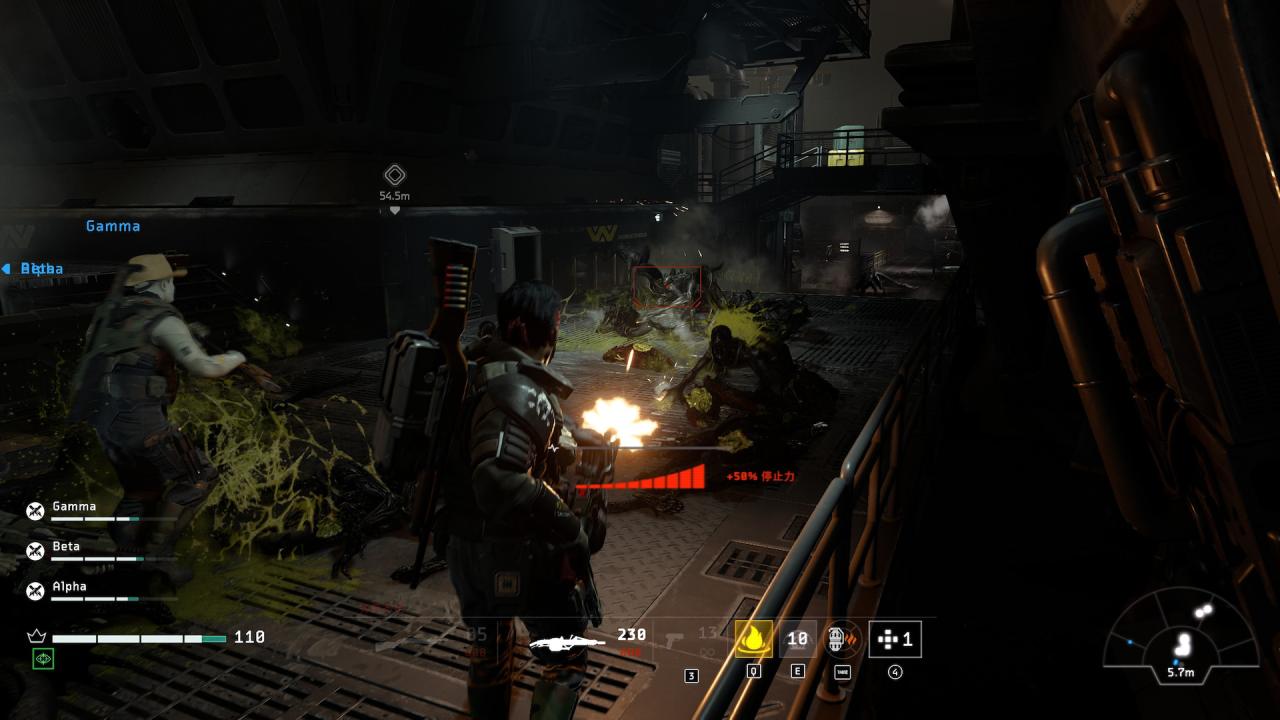
The first game had a brighter tone that worked against the atmosphere it was going for, and this one corrects that with a tighter, more oppressive feel across its environments, damp metal corridors, dim lighting, and jump scares that land because the game isn't constantly telegraphing them.
The presentation shifts toward horror, shaping how the game looks and sounds, even when it stumbles.
The animation work carries real weight, particularly in how weapons handle, giving them a heft that's reminiscent of Gears of War whenever you're crouched behind cover, though the third-person camera sits noticeably zoomed out in a way that takes some adjusting to.
The sound in Aliens: Fireteam Elite 2 pulls its weight too; audio cues for flanking enemies and distant swarms genuinely matter, since tracking sound is often how you catch a threat before it catches you. On the technical side, you'll run into some rough patches: stuttering during heavier moments, a cutscene that fails to load properly, and a crash that forces a reload.
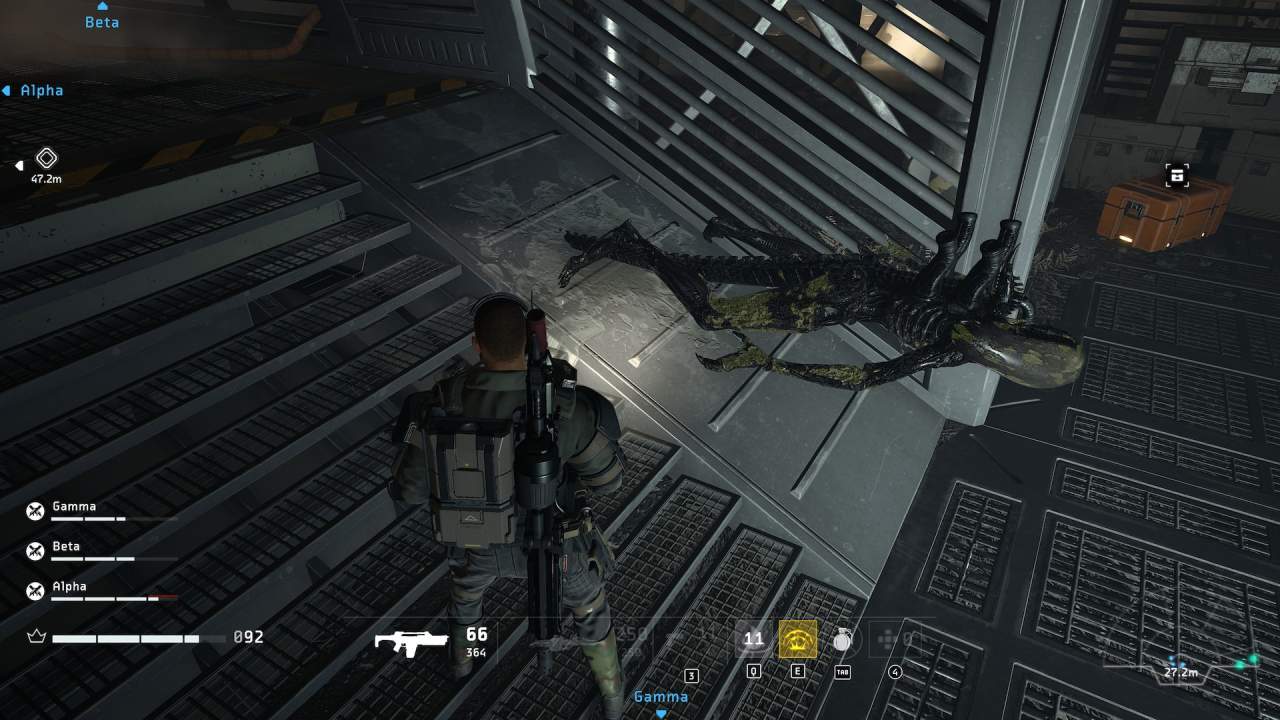
The one saving grace is that checkpoints now save mid-mission, so a crash sends you back into the fight rather than back to the start of it entirely, which the first game didn't offer. With the investment of real time and the completion of difficult drops, the game has certainly earned its right to be called a legitimate sequel, instead of another package of content released at the full price.
In addition to the total class overhaul, which alone is responsible for a huge step toward the game becoming a sequel, no marine is confined to a single weapon setup anymore. The Machinist is commanding the field with his deployable rather than planting it and hiding behind it somewhere.
Squad and class changes pay off in replay value, though post-campaign content still feels thin.
The Medic keeps maintaining squad movement in the middle of gunfights. And the Specialist system offers an immensely satisfying endgame objective that encourages you to master all other classes as well.
The expansion of squad capacity from three to four was not only a feature bullet point; it also changes encounter design and demands a lot more from your team – you have to move, cover angles, and use the tactical space effectively.
Moreover, Horde mode is no longer an additional feature but one of the main reasons people want to play this game over and over – there is a new bestiary that punishes campers and forces you to change positions. However, the problem lies in the post-campaign content.
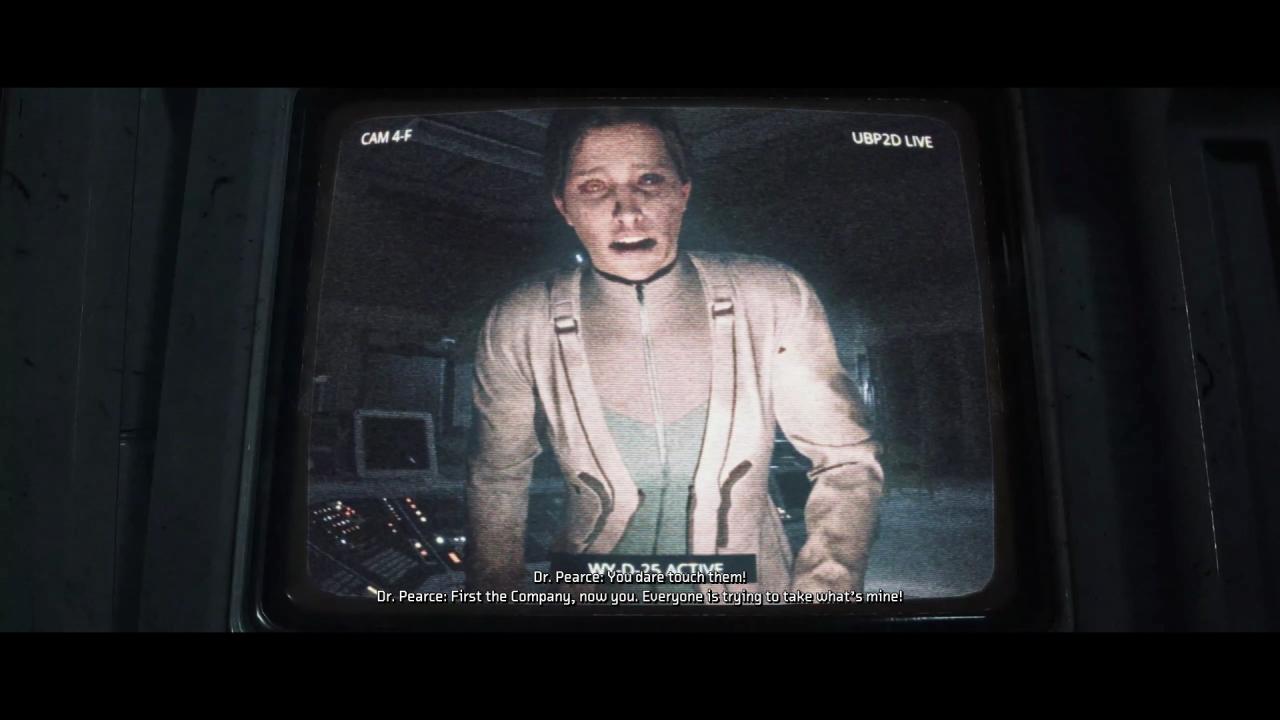
Once you complete the fifteen campaign missions available, the game content feels too thin to make you go any further, in addition to the available paid cosmetic packs, while some technical issues such as stuttering, visual glitches, and crashes spoil the overall experience.
What is important to note is that this sequel has shifted completely toward the heavy-metal end of the Alien shooter spectrum in terms of gameplay mechanics, and it is very chaotic and fast-paced. So if you are looking for a classic isolated survival horror experience, this game may disappoint you; however, as a cooperative squad shooter, it does its job pretty well.
Editor, NoobFeed
Verdict
Aliens: Fireteam Elite 2 rebuilds its classes and adds a genuinely clever Specialist system, but stuttering, crashes, and a campaign that runs out of content too fast keep it from being the leap forward it should've been.
64
Related News
No Data.