
Pieces of the Kingdom Review
PC
A dethroned queen, a shattered realm, and a chessboard that never sits still.
Reviewed by Adeela Tas on Sep 18, 2026
You go into Pieces of the Kingdom expecting a fresh spin on chess, and that is exactly what the developers at Birdworks set out to build. Instead of the familiar eight-by-eight grid you grew up with, you get a roguelite layered on top of turn-based tactics, where every piece you command has a history, a face, and a real chance of dying for good. There is no sequel baggage here and no long-running series to catch up on.
Birdworks built this as a standalone idea, mixing the rules you already know with permadeath, procedural maps, and a loot system that feels more at home in a dungeon crawler than a chess match. You go in as a dethroned monarch, and from the very first scene you can tell the studio wanted you to feel the weight of that loss rather than hand you a rulebook and a board.
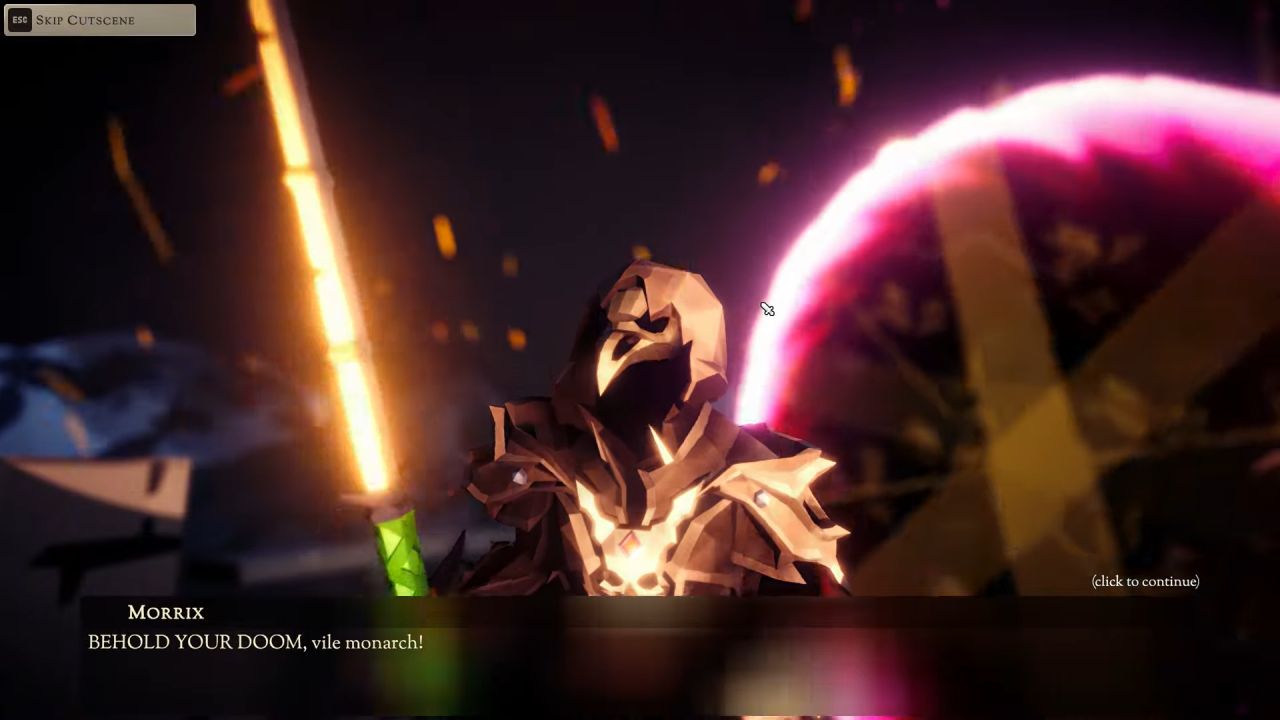
The story drops you into a castle party that is going about as well as royal parties usually do in these kinds of games.
You are Queen Kaisa, enjoying a splendid evening of drinking, dancing, and the usual castle gossip, including a bishop who apparently cannot walk a straight line after one too many drinks. Your advisor is right there with you, trading quips about the guests, when the whole evening gets interrupted by a masked attacker named Malik, who barges in shouting about your doom.
You do not get a chance to fight back in that moment. Your advisor tells you to run, and just like that, your castle is gone, and you flee into the lowland marshes known as the Fen. From there, the plot of Pieces of the Kingdom shifts from big twists to rebuilding what you lost, one region at a time.
The kingdom has fractured into six rival factions, each controlling its own patch of territory, and you have to fight your way through all of them if you want your throne back. You are told outright that your old allies have abandoned you, so the people you recruit from here on out are commoners, farmers, and whoever else is willing to pick up a weapon and fight for a queen they barely trust.
Every faction you move through has its own tone and a little slice of dialogue that gives the region personality, even if the writing never goes for anything especially dramatic. It gives you a reason to care about the fight without overwhelming you with lore, and honestly, that restraint works in the game's favor.
Once you get past the opening cutscenes, Pieces of the Kingdom hands you the actual mechanics, and a lot is going on under the hood.
Your home base between fights is a menu where you manage your roster, and you spend a surprising amount of time there. Each piece you own has a move pattern shown on a small grid, along with the number of lives it has left before it's permanently removed from your army. You can flip through your roster and check what gear each unit is equipped with, since gear affects how a piece plays.
Some gear extends a unit's movement range, some adds extra lives, and some gives a unit that was previously melee-only the ability to strike at range. You see the effect mirrored on a second grid. Hence, you know exactly what a piece can do before you send it into a fight, which is honestly one of the smarter touches in Pieces of the Kingdom, because chess pieces you already know by instinct suddenly behave in ways you have to relearn.
From that same campaign screen, you also pick your next destination on the map, since the campaign is structured as a series of regions you move through in sequence, each with its own name and its own flavor, whether that is a farm, a fort, a forest full of elves, or a desert fortress.
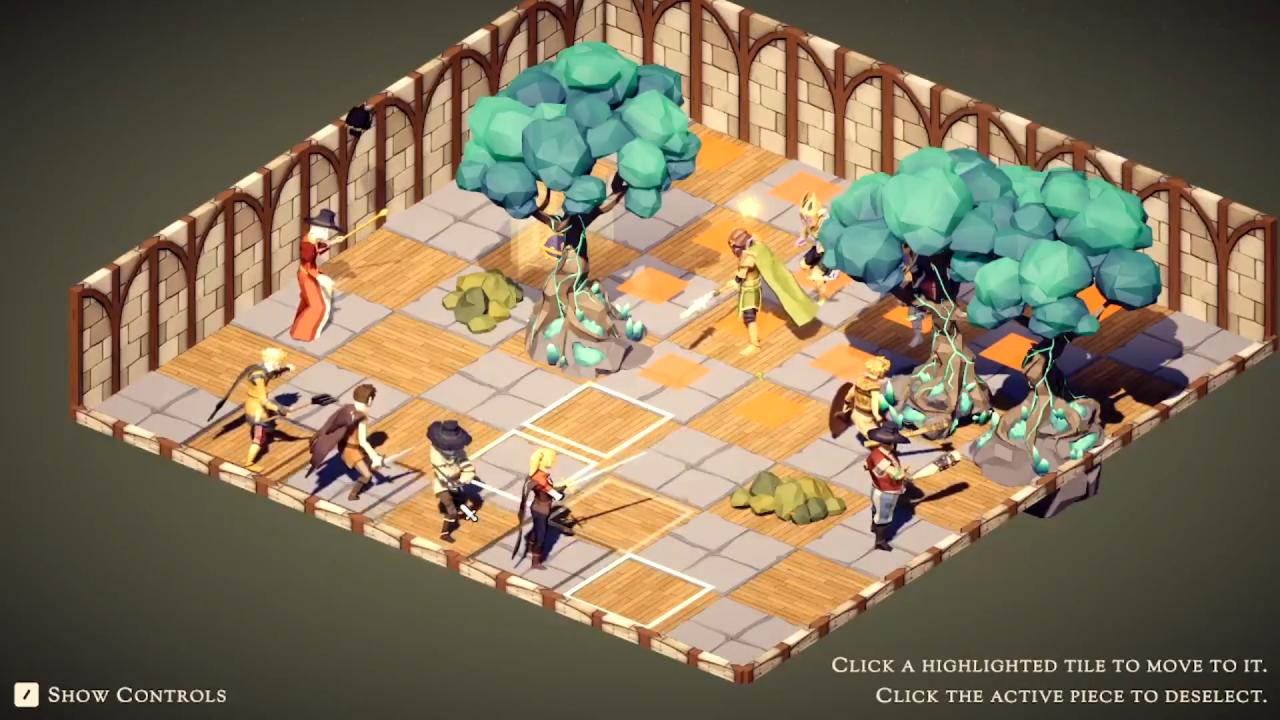
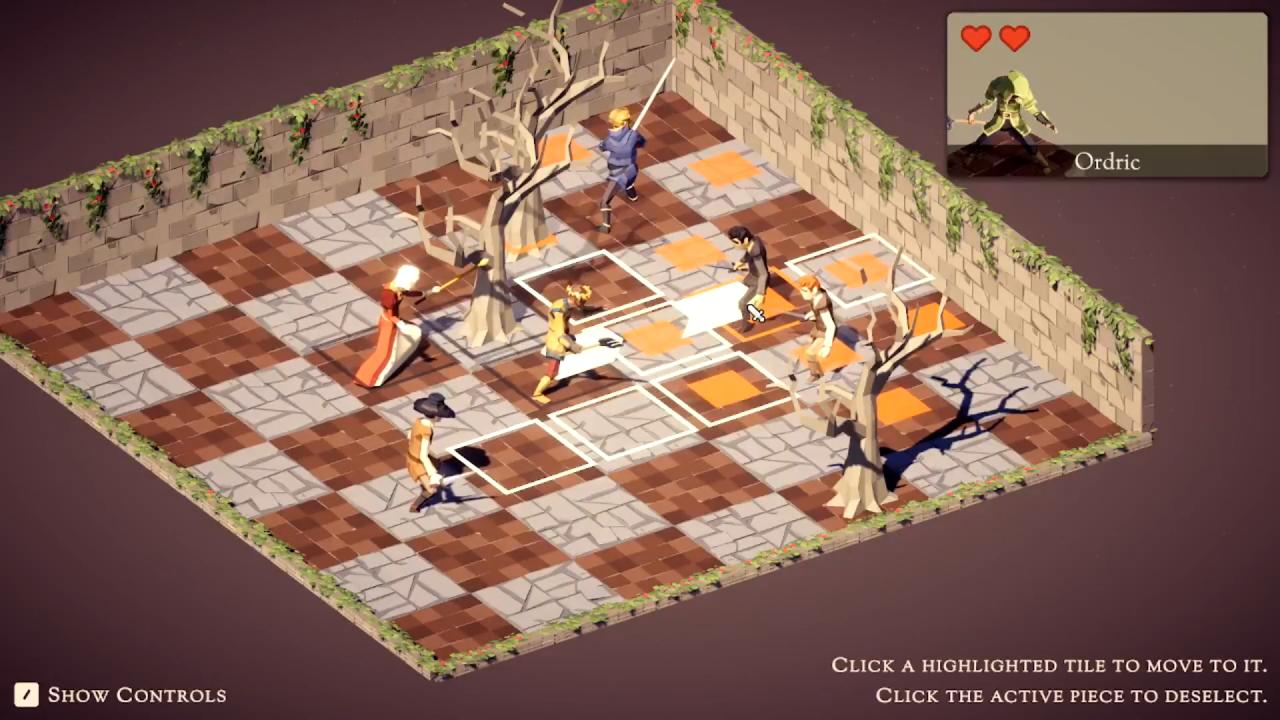
The actual battles are where Pieces of the Kingdom earns its "chess roguelite" label. You still capture pieces and think in terms of movement patterns, but the boards are procedurally generated, so you never see the same layout twice.
Trees, rocks, and other terrain features scatter across the map.
They genuinely block your line of sight, catching you off guard more than once when a unit you thought was safe turns out to have an enemy standing right behind a cluster of trees. Some fights ask you to wipe out every enemy piece, others only require you to take down a leader marked with a star, and a few have you scrambling to grab loot before the opposing side does.
You quickly realize patience matters as much as aggression, since some enemy units will not move until you wander into range, and rushing in blind is a great way to lose a piece you cannot afford to lose. The tension comes from knowing death in Pieces of the Kingdom isn't a slap on the wrist.
Once a unit runs out of lives, it is removed from your army for good, and whatever gear it was wearing goes down with it. That permanence changes how you play almost immediately. You stop treating pieces like disposable chess pawns and start protecting the ones you have grown attached to, which is a strange feeling for a game built on a format you associate with cold, detached strategy.
What works well in the combat is the unpredictability. Because the boards regenerate and the gear loadouts shift your options, no two fights in Pieces of the Kingdom play out quite the same way, and you find yourself improvising far more than you would in a standard game of chess.
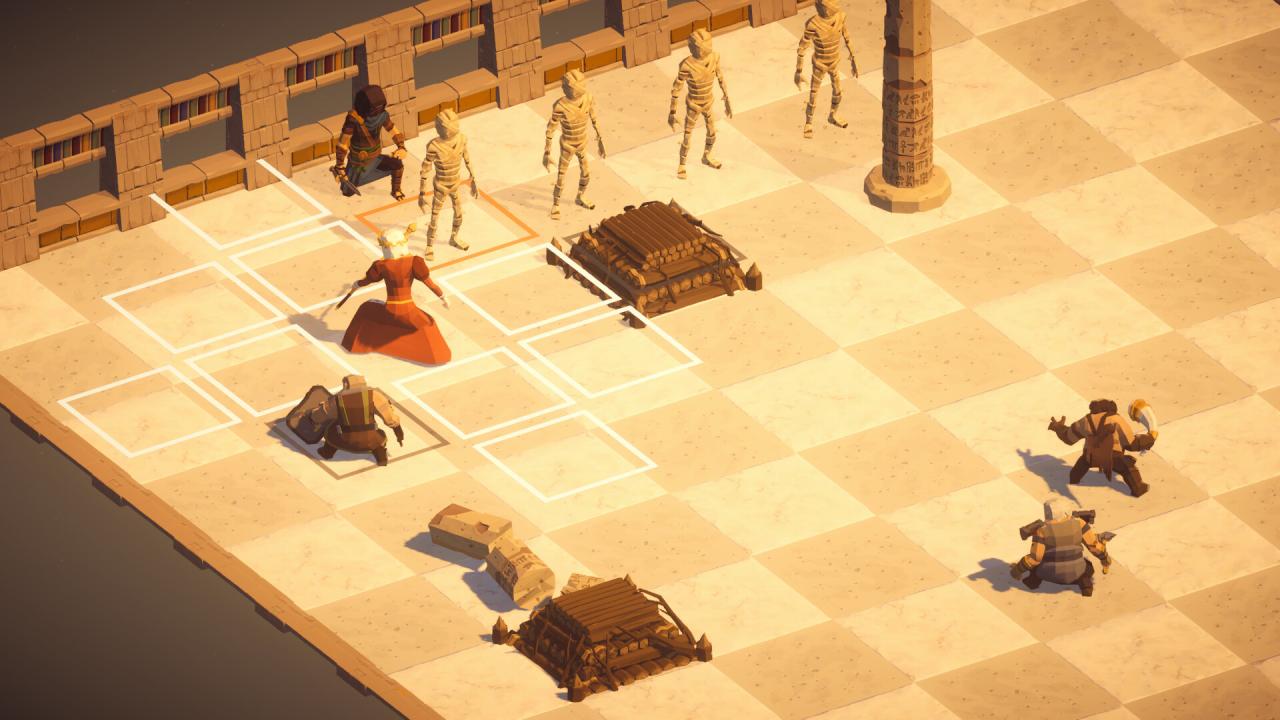
Enemy AI also behaves differently depending on which faction you are up against.
You cannot rely on a single strategy for the entire campaign. Visibility doesn't work quite as well. Terrain that blocks your view is a neat idea on paper, but in practice it can leave you guessing about where enemies actually are, and a misread position can cost you a unit before you even realize what happened.
There is also a real risk of misclicking during combat, since a wrong move can hurt your own side rather than the enemy, and in a permadeath system, that stings. Difficulty options and the ability to save whenever you want soften some of that frustration, but the learning curve is steep enough that your early hours with Pieces of the Kingdom will involve losing pieces you didn't mean to lose.
The road through the campaign eventually takes you well past the marshes. After clearing out the early regions, the story nudges you toward the desert, where your advisor mentions old allies, the Numidians, acting strangely hostile toward people who used to be reliable friends.
To get there, you first cut through Nightshade Forest, which belongs to a group of elves who are, according to your advisor, both famously helpful and famously standoffish depending on the day. Queen Kaisa has her own opinions about the forest too. She jokes that it would make a fine royal hunting ground.
There's just one problem, she admits; it's already someone else's ancestral home. Her advisor gently reminds her of this too. The elves have lived there for thousands of years, he says. And they happen to be excellent archers. These little exchanges don't slow the pace, but they add just enough character to keep the journey from feeling like a flat march through generic biomes.
Fighting through the forest itself adds a new wrinkle.
Since losing a piece means losing its gear as well, you learn that lesson the hard way the first time an enemy squad isolates one of your more decorated units and picks it apart before you can pull it back to safety. Progression in Pieces of the Kingdom relies less on traditional experience points and more on recruitment and loot.
Winning battles and opening chests scattered across the map nets you armor, relics, and weapons you can then assign back at camp. Beating an enemy squad also adds survivors to your roster, so your army slowly grows in both size and firepower as you push further into the campaign. This loop keeps runs feeling fresh, since a piece that starts as a basic unit can end up with a completely different role once you deck it out with the right relic.
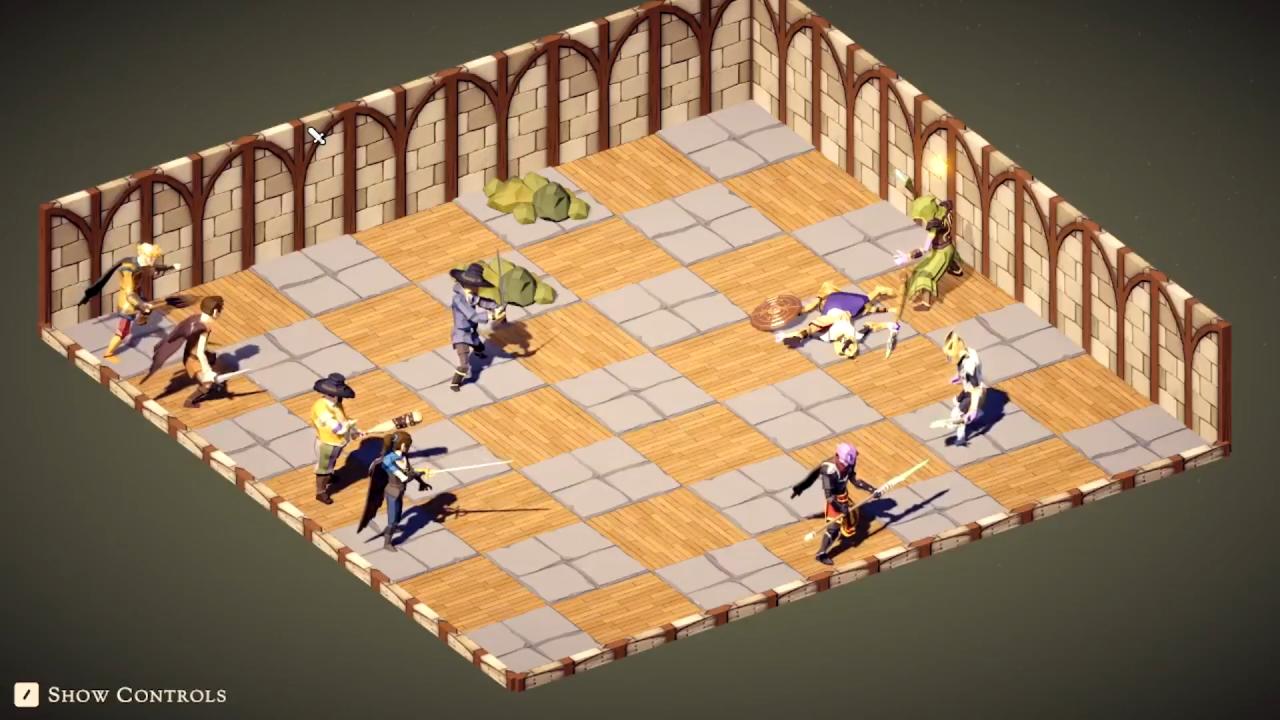
It also raises the stakes of every fight, because losing a heavily geared piece costs you more than just a body on the board. You lose the equipment too, and that gear does not come back easily. It is a smart way to tie the roguelite structure into the chess foundation, rewarding careful play without making the early hours feel slow.
Visually, Pieces of the Kingdom opts for a stylized, three-dimensional look rather than flat chess iconography, giving the board a sense of place rather than feeling like a plain grid. Each piece has its own design, and the environments around the board, from marshland to forest to desert fortress, help sell the idea that you are moving through a real, falling-apart kingdom rather than just swapping chess skins.
Unfortunately, the visual polish doesn't extend to the audio.
The interface does a decent job of marking cover, threat ranges, and unit status without cluttering the screen too much, though as mentioned, terrain can still obscure things you would rather see clearly. Sound is where Pieces of the Kingdom stumbles the most for you. The game is so quiet that you find yourself checking your volume settings to make sure something isn't broken on your end.
A light orchestral score underscores the medieval setting and builds during larger fights. Still, for long stretches you play in near silence, which makes the experience feel oddly muted for a game with this much personality in its writing. Combat sound effects land well when they do, giving weapon clashes and equipment some weight, but they aren't enough to compensate for how sparse the rest of the audio is.
On top of that, you run into a handful of technical hiccups, including moments when a unit appears to act against your input or the camera gets stuck, suggesting Pieces of the Kingdom could still use some polish before it is fully ready. Steam Deck support also hasn't been confirmed yet, which matters if handheld play is important to you.
By the time you have pushed through several regions of Pieces of the Kingdom, you have a clear sense of what the game is trying to be: chess with real consequences, wrapped in a roguelite shell that keeps every run a little different. The recruitment and gear systems give you a reason to protect your pieces rather than sacrificing them thoughtlessly.
The procedural maps keep fights from feeling repetitive, and the faction-based campaign structure gives the whole thing forward momentum.
It is not a flawless package. Near-silent audio, occasional visibility issues from terrain, and a few rough technical moments keep it from feeling fully finished, and permadeath can be genuinely frustrating when a misclick takes out a unit you've grown to rely on.
Multiplayer and skirmish modes sit alongside the campaign, giving you options once you have had your fill of the story, and that variety adds some real staying power once the six factions are behind you. You can see yourself going back for a skirmish match.
Maybe it's just to test a gear combination you never got to use during the campaign. Or you might pull a friend into multiplayer instead. Then you can see how a human opponent handles the same procedural boards. Those are the boards that gave you so much trouble.
That kind of replay value isn't something every roguelite pulls off, and it speaks to how much thought Birdworks put into the systems beneath the story. Overall, Pieces of the Kingdom is an ambitious attempt to reinvent a genre that rarely gets reinvented, and even with its rough edges, it kept you coming back to see how the next region would twist the rules.
Editor, NoobFeed
Verdict
Pieces of the Kingdom mixes chess with roguelite permadeath and loot in a way that mostly works, but quiet audio, visibility issues, and minor bugs hold it back.
69
Related News
No Data.