
Terrible Lizards Review
PC
A campy ’90s creature feature where the best way to survive is to keep moving.
Reviewed by Adeela Tas on Nov 02, 2026
Terrible Lizards takes its name from the literal meaning of the word dinosaur. British naturalist Sir Richard Owen coined the term in 1842 by joining two Greek words, one for terrible and one for lizard, and the studio simply turned that translation into a title.
It sounds like a joke until you start playing and find there’s real substance underneath. This is the first game from WDR Studios, a small indie team in North Carolina, so there’s no franchise history to catch up on. Digital Pajamas and Behavior Interactive publish it.
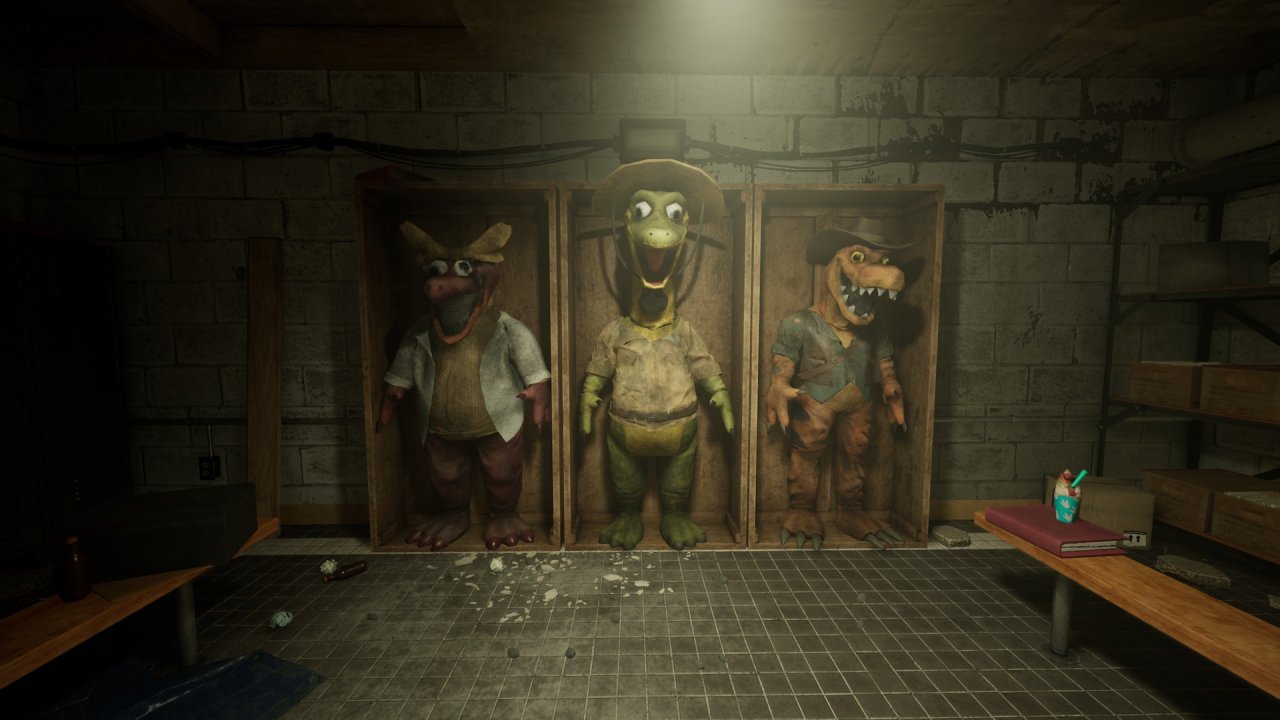
You go in cold, much like the person you play.
The pitch is a first-person horror platformer built around fast movement, borrowing the flow of Mirror's Edge and the parkour of Titanfall 2, then dropping it into a campy 1990s creature feature. Terrible Lizards is a debut, and you can feel the ambition along with the rough edges.
The setup is simple. In Terrible Lizards, it is 1992, and you play Jordan, a college sophomore who used to run track and who is driving along Route 66 in New Mexico, not far from Gallup. His car dies in the middle of the night, and it holds out just long enough to reach a gas station that has already closed.
You call a tow truck from a payphone outside and learn it will be a long wait. Across the road sits Dalton's Dinos, a huge tourist stop that is half museum and half dinosaur park. The doors are open, and the lights are on, but nobody is inside. A loudspeaker reminds you to look with your eyes, not your hands, and an automated film introduces Dalton Coolidge and his wife, Elena.
Then a door slams, you find a trail of black ooze, and a mascot costume is missing from its hook. You cannot get back to the entrance. Once you dig into the story, you learn the park sits on something much older than the 1980s tourist business. In the 1950s, the US military ran a classified operation called Project Pilgrim inside a huge cave network under the desert.
The scientists, led by Dr. Jonathan Fellows, found a tar-like black substance that reacted to prehistoric fossils.
It wrapped around bones and grew flesh, producing twisted creatures that looked like dinosaurs. When those creatures wiped out the garrison, Fellows and the commanders sealed the place and hid the key to the main elevator so nothing could reach the surface. Decades later, paleontologist Dalton Coolidge, along with Elena and their colleague Stella, built Dalton's Dinos right on top of it.
Dalton was chasing money, and a shady European buyer kept pressing him for fossils and samples of the black fluid, so he dug deeper until he broke into the old facility. The monsters woke up, the staff was killed, and Dalton's young son, known as DJ, vanished, taken by a hybrid named Dennis, whom the boy had always treated as an imaginary friend.
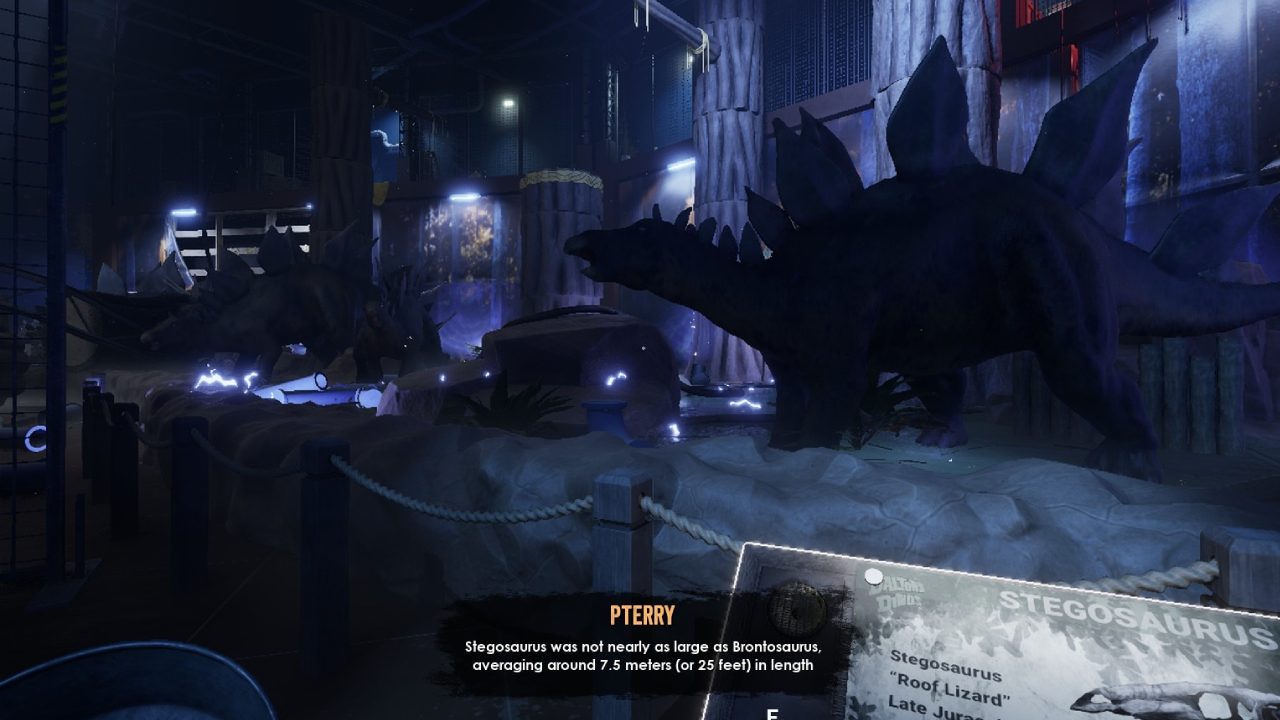
Dalton went into the caverns alone, racked with guilt over what he had done to his family, and left heartfelt video tapes behind before the Allosaurus tore him apart. You piece this together through memos, recordings, and tapes, and the early ones hint that the park's cheerful marketing hides a strained marriage and a father distant from his son.
Your own trip starts with a mascot that will not leave you alone. You contact Stella over a radio, and she guides you through the park as you restore power to the exhibits. That leads you into the mining levels, where a gigantic Brontosaurus chases you, and you trap it with dynamite. The blast drops you into deeper tunnels.
There you watch a miner named Sid get eaten by the Allosaurus, and you deal with the beast by luring it into sticky tar.
At the bottom, you reach the old Project Pilgrim lab and find DJ alive. You grab the fossil tooth from the hybrid's lair and take the elevator key from Dr. Fellows' mummified body. On the ride up in the freight elevator, Dennis makes a last attack, and you throw him into the abyss before reuniting with Stella and getting the boy to safety.
The story in Terrible Lizards works better than you would expect from a tale about a parkour student and some mutated reptiles. The tone swings between goofy and dark, and it gets heavier toward the end. Most of the cast carries it well. Christian Ames, one of the developers, plays Dalton on screen with real confidence, Katy Bentz brings energy to Elena, and Kellen Goff and Amanda Hufford fill out the voices.
The one weak spot is a cameo by Matthew Patrick as Dr. Fellows, who also turns up in a few of the video logs. The weak points sit with the two characters you spend the most time with. Jordan has no stake beyond curiosity and a wish to save the missing family, and once he is trapped below, he can only follow Dalton's path, so he never gets an arc. His constant sarcasm can feel odd given how bad things get.
Stella has a few emotional beats because of her ties to the park, but she mostly feeds you door codes and exposition. The ending also arrives abruptly. It comes after the story points are cleared up rather than at a peak, and you may finish feeling something is missing.
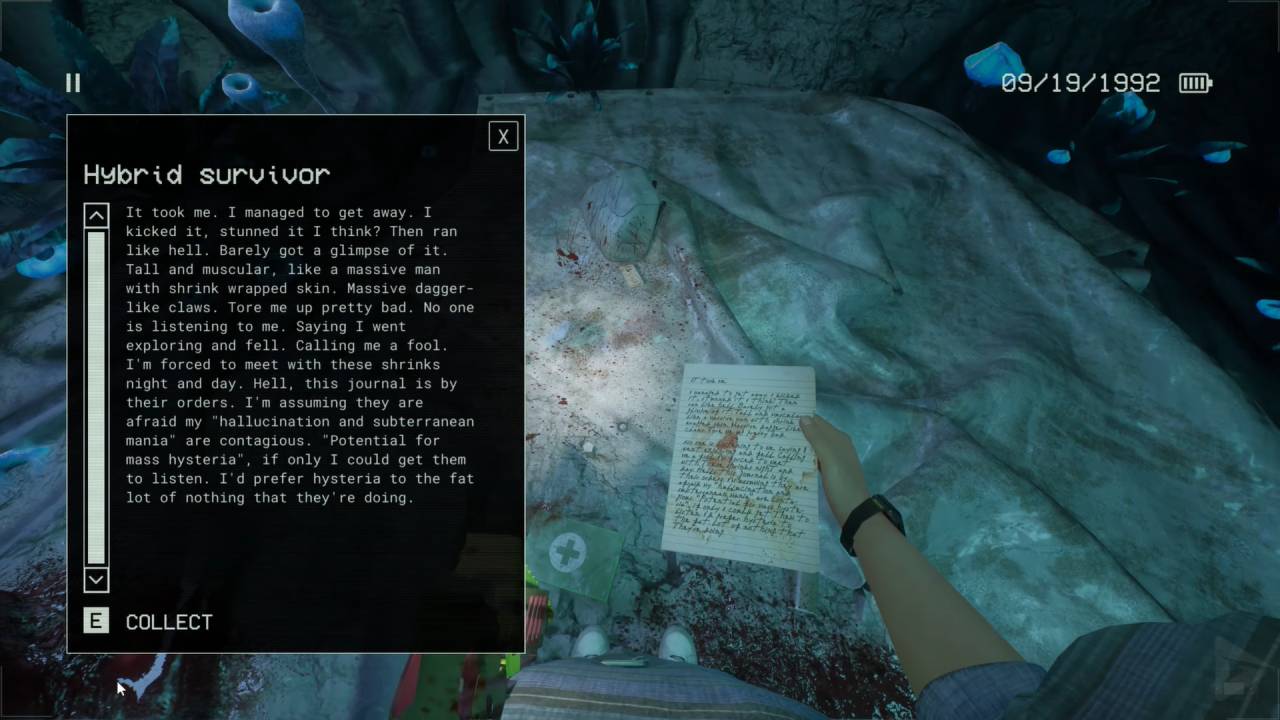
You can skip the story content if you only care about the platforming.
Now to what you actually do. Terrible Lizards is about moving through space. You run, jump, climb, and slide, and as the game goes on, you pick up swinging, wall-running, and bouncing on pads made of black goop. The controls feel quick and responsive from the first input, and leaping to a ledge, swinging off a pipe, or sliding under an obstacle puts you in Jordan's boots.
Chaining moves is where it gets fun. Some stretches give you time to plan your next foothold, while chases push you into a flow state. Turning can feel a bit slow, though the game offers settings to adjust that. The game has four long levels, and each one takes more than an hour. A full run lasts somewhere between six and ten hours depending on how much you explore.
The opening level is set in the museum and the park, and the backstage sections feel like the behind-the-scenes sequence in Portal 2. You get to see the hidden side of a huge facility, with power controls and fuse boxes sitting high above the exhibits or tucked away in back rooms. The first level can feel too open for platforming, though.
From the second level on, you head into the mines and caverns, and the design gets tighter. Yellow paint marks the places you can grab and the routes you should take. You have seen that convention in plenty of games, but it makes sense in Terrible Lizards because everything moves so fast.
You always know what you can hold onto, even in the middle of a chase, and you never feel lost.
Jordan also talks you through things a bit too much. Checkpoints are generous, so an unfair death never turns into repeated trial and error, and with no health bar or resources to manage, you can focus on moving. If you want to see everything, you have to leave the obvious path. Notes, audio logs, and tapes flesh out the story, and plushies hidden in each level count toward an achievement once you deliver them to a platform near the end of the map.
The tapes suit the early 1990s setting, and the live-action cutscenes, some filmed in Linville Caverns, give it the feel of an old FMV PC game. Jordan wears a headset with a big foam microphone, and he carries a souvenir dinosaur flashlight that casts a toothy shadow on surfaces when you switch it on.
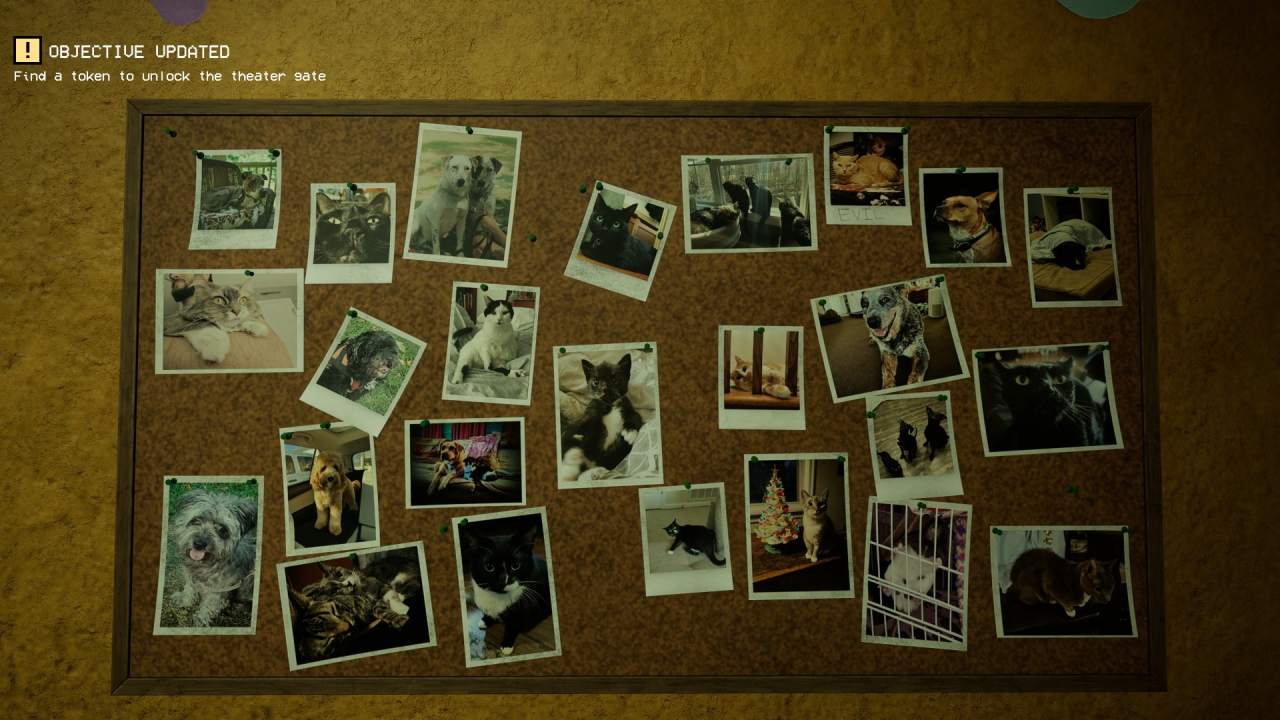
Terrible Lizards also has an accessibility menu worth opening. Jordan sways from side to side while running, which can bother you if you get motion sick, and the options to reduce shake and adjust the field of view cover the problem well.
Terrible Lizards has no combat, and that suits the game. Fighting would slow you down, and fast first-person movement does not mix with trading blows. Jordan can only outmaneuver what is hunting him, so the creatures show up as chase sequences and stealth moments instead of fights.
Between those, you handle simple puzzles.
You restore power to downed facilities, find keys and codes, pull levers, replace fuses, and start generators, and a small quick-time prompt covers the fuse-box work without feeling out of place. The best ones use your movement, like a timed door you have to sprint to and slide under before it shuts.
Elsewhere, you collect bundles of dynamite or crack a code while something hunts you. The monsters are the highlight of the whole package. You meet a Brontosaurus with shrunken legs that slithers through tunnels like a snake, an Allosaurus that hunts you with obvious enjoyment, and Dennis, the Dilophosaurus hybrid with a human face inside its jaws.
All of them have glowing yellow eyes and bodies twisted by the black fluid, and the first full reveal might drop your jaw. Dennis is the creepiest. He wears the park's mascot suits, including the one for Benji the sauropod, to move around the surface and pick off the remaining staff.
Down in the caves, he hoards toys, plushies, and the Allosaurus tooth DJ was attached to, a warped attempt to copy human habits and keep the boy close. The puzzles and chases are paced well. Dinosaurs appear only every so often, so each appearance feels like an event, not just another obstacle.
The chases are where the parkour peaks.
You make split-second choices at a hard pace while tunnels collapse around you, and a few of them had you sweating as you tried to avoid getting stomped or chomped. The Mirror's Edge comparison fits best here. The puzzles are fine but stay in a comfortable zone, and the structure repeats often enough that you notice it.
The slower material is the problem. When the game stops the sprint and asks you to scout a big room for a less obvious path, it loses its direction. You end up wandering with little to do, and the objectives could be clearer. Some items are hard to find, and the logic behind where they sit is not always clear. Repeating caves and labs also feel weaker than exploring the park.
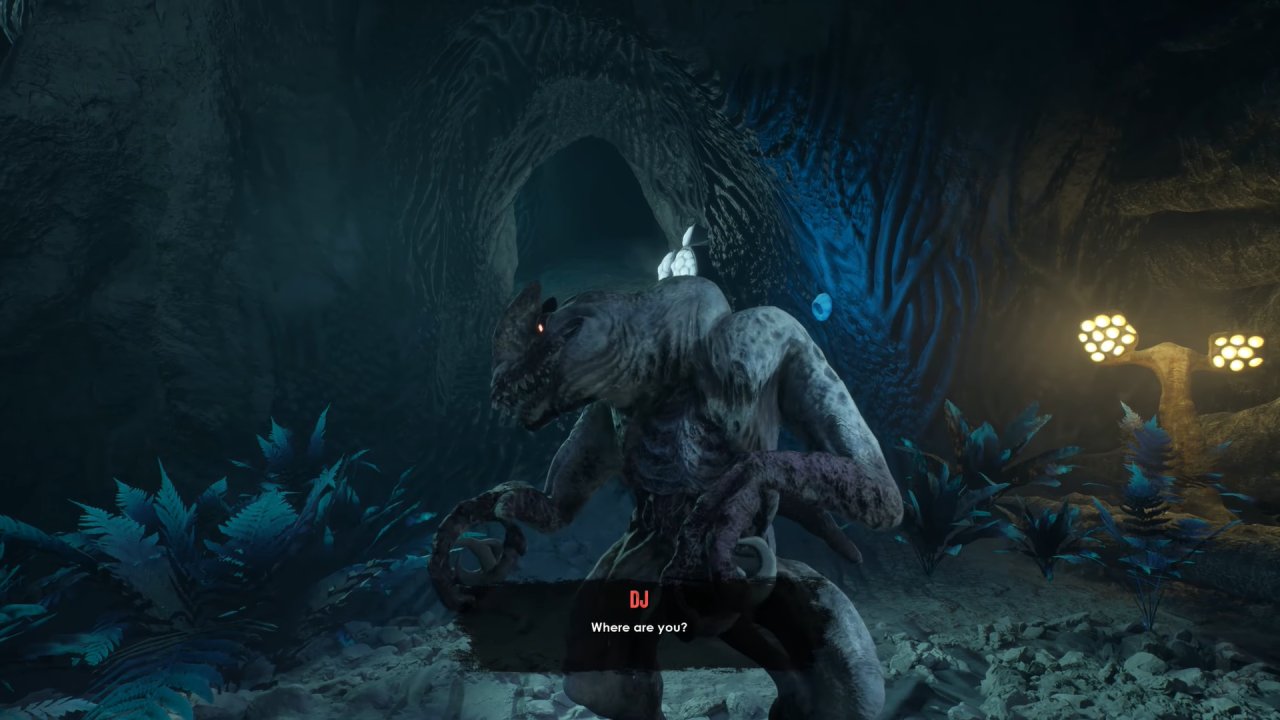
The stalking sequences are weaker still. In these, you complete objectives while something looks for you, and you're meant to stay out of its sight. When it spots you, it heads straight toward you. The Allosaurus section where you gather fuses shows the problem.
You can duck into a hiding spot, and the creature waits right outside, leaving you no way out, or it stops and stares at you before suddenly charging.
Sometimes the AI also catches on to level geometry. These moments are rare and easy, but they do not hold up. Controls cause some trouble as well. Sliding isn't precise; you will miss door timings, and you sometimes fail to grab boards or ledges even after a perfect jump, which gets annoying every time.
Jump momentum can be unreliable too, with a few key moments ruined by overshooting or by a jump the game will not let you take. The plushies never showed up in your inventory, so you can't place them. Fall damage also felt inconsistent, since a short drop killed Jordan early on and a greater height later did not.
In the final level, the frame rate drops to single digits in two stretches, although Terrible Lizards otherwise holds a steady 60 frames per second. Scripts also freeze now and then in chases if you outrun the scripted events. Most of these are small, yet they add up.
Terrible Lizards has no XP or leveling. Jordan doesn't unlock abilities through points; progression comes from the moves you are handed as you go, from basic running to wall-running and bouncing. The extra pull comes from exploration, since collectibles, notes, and logs reward you for poking around.
Visually, Terrible Lizards isn't a showpiece, but it looks better than you might expect for the budget.
The opening cutscenes are well made, and everything has a smooth look where even grimy areas appear clean. The park captures the size and scale of an old roadside attraction, with towering fossil displays, plaques, interactive exhibits, and cheesy animatronics that feel like a budget Jurassic Park.
Old phones, boomboxes, chunky computers, and camcorders sell the era, and computers show rotating 3D WordArt screensavers. Empty mascot costumes in a building with no people add the dread. The caves are the weaker side. The underground areas reuse assets and get repetitive, and the creative details taper off after the museum.
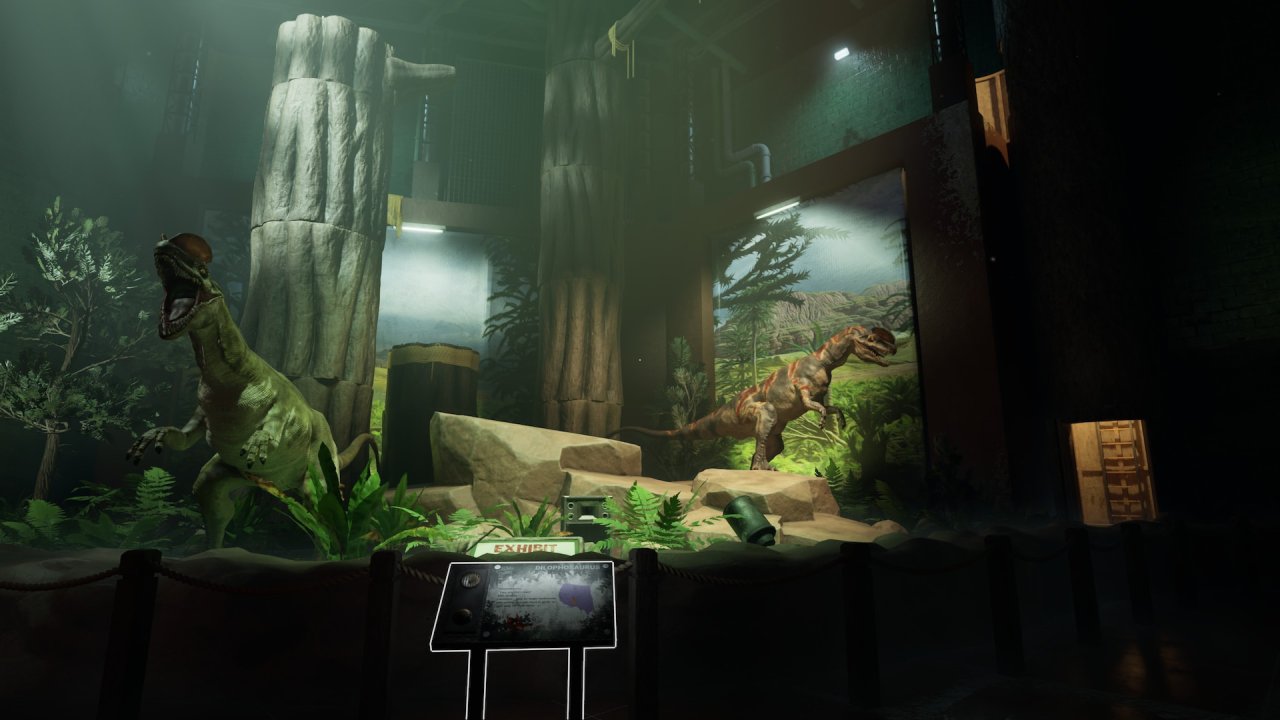
Excellent lighting gives them character, and you are meant to either hunt for secrets or move so quickly that the repetition barely registers. Large set pieces still get packed in, including cave-ins and collapsing structures. The sound in Terrible Lizards is solid. The music fits a dinosaur adventure, and the effects are what you would expect and are handled nicely.
The voice cast gives the story a lot of its life, and Jordan's delivery is believable, even if his quips can clash with the mood. Stella's radio chatter keeps you company, though a lot of it is exposition. The lore recordings are well written and performed, and they keep you invested in the mystery until the final scene.
As a horror game, Terrible Lizards is not very scary.
The park's early hours deliver the best tension, particularly in a narrow corridor in the raptor exhibit where animatronics lunge from the shadows, and there are decent jump scares along the way. The campiness runs throughout, like a cheesy 90s creature feature, and that is what sets it apart. If you want the weight of Silent Hill, this is not it, and you may wish more of the game took place in the park.
Terrible Lizards is a fun, streamlined debut that does a few things well and does not overstay its welcome. The movement is the draw, the chases are the highlight, and the setting and lore keep you going when things slow down. Slow sections, rough AI, and technical issues hold it back, and the ending leaves you wanting more. Even so, you will not find many parkour games like this, and you may enjoy running for your life more than you expect.
Editor, NoobFeed
Verdict
Terrible Lizards is a fast, fun parkour horror debut with great chases and a strong setting. Weak AI, slow cave sections, and technical bugs hold it back, but it is worth playing.
72
Related News
No Data.