
Virtue and a Sledgehammer Review
PC
An indie adventure that's short but thought-provoking, using destruction to explore family trauma, AI, and the messy nature of human relationships.
Reviewed by Maisie Scott on Nov 03, 2026
It's a misconception that video games need challenging combat, complicated mechanics, or hours of content to justify their existence. But some of the most memorable gaming experiences come from games that ask you to do little more than walk around, watch your surroundings, and follow a story. Games like Journey, Gone Home, What Remains of Edith Finch, Firewatch, and Mouthwashing have shown how powerful a relatively simple gameplay experience can be when paired with a compelling narrative.
Virtue and a Sledgehammer takes a similar approach, but with a much more destructive take on storytelling. Brought to us by Selki Harbor and Deconstruct Team, Virtue and a Sledgehammer is the simplicity of a walking simulator with the satisfying destruction mechanics of a physics-based demolition game.
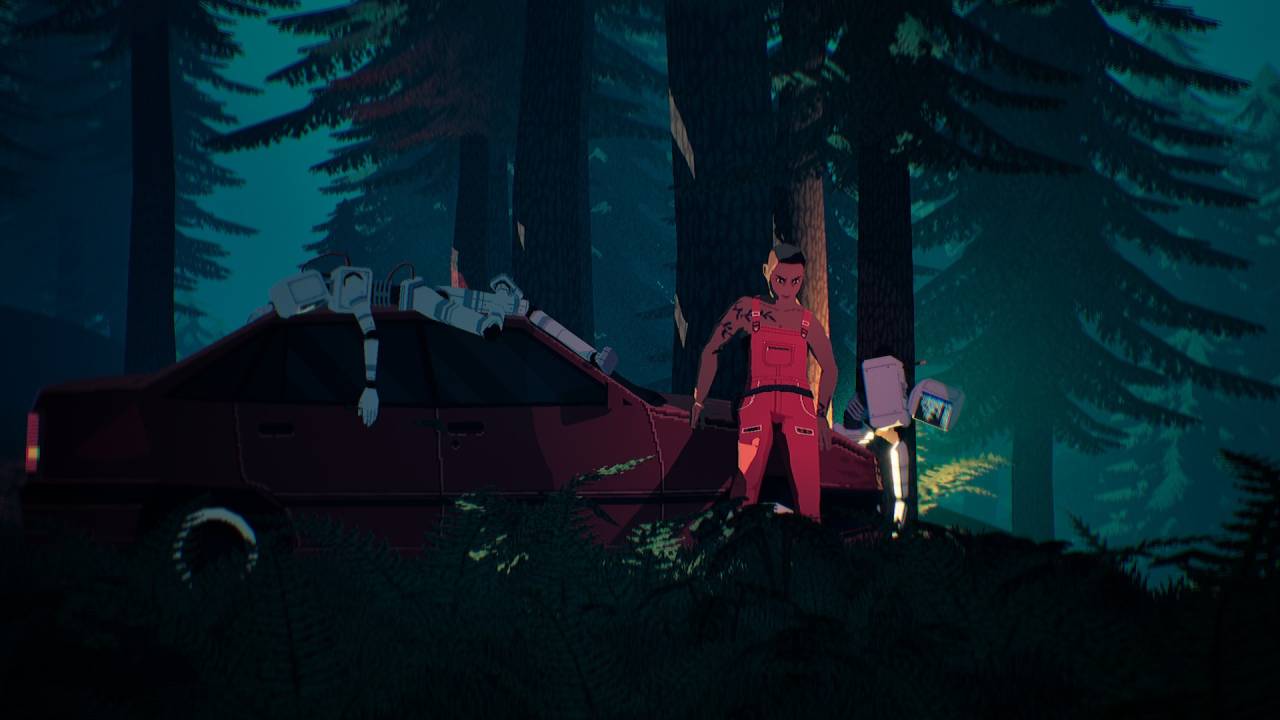
The indie experience is fairly short, focused on its story above all else, mining its thin gameplay elements for uncomfortable questions about technology, family, identity, and what it means to be human. It doesn't try to compete with big action games; it carves its own niche with a simple idea: give a guy a sledgehammer, drop him into a town full of artificial people, and let him decide what needs smashing.
The result is an experience that won't appeal to all, especially if you're expecting extensive combat systems or complex progression mechanics.
But if you enjoy games that tell a story and leave you thinking about what you have seen long after the credits roll, there is something to be experienced here. Its execution isn't always perfect, but its creative direction makes it more interesting than its fairly simple gameplay might suggest.
The story follows Patel as she returns to her hometown to find that most of the population has been turned into artificial beings. These robotic citizens look and act like humans, and remember their memories, personalities, and even some of the relationships they had before they changed. One central question throughout the experience, however, is whether these machines should be considered human.
Patel doesn't go home to explore the changes that have occurred simply. She still has problems with her family, especially her mother and her sister, Nina. Years of painful memories, personal differences, and traumatic experiences have complicated her relationship with them, shaping who she is today. So her journey is as much about coming to terms with her own past as it is about making sense of the strange new reality around her.
One of the more interesting parts of the story is the investigation of the mother's mental deterioration and the possibility of saving her mind digitally. Is putting someone's mind in a computer saving their life, or is it basically killing the original person and creating a replacement? It is a tricky question, especially when the resulting artificial intelligence thinks it is still the same person.
The game doesn't offer answers upfront.
Instead, it gives you a taste of other perspectives through dialogue memories and encounters with the robotic inhabitants. Some machines believe they are human, and some others behave with the personalities and prejudices they had before their transformation. At some point, you start to wonder whether consciousness alone is enough to be human, or whether some underlying quality makes us different from machines.
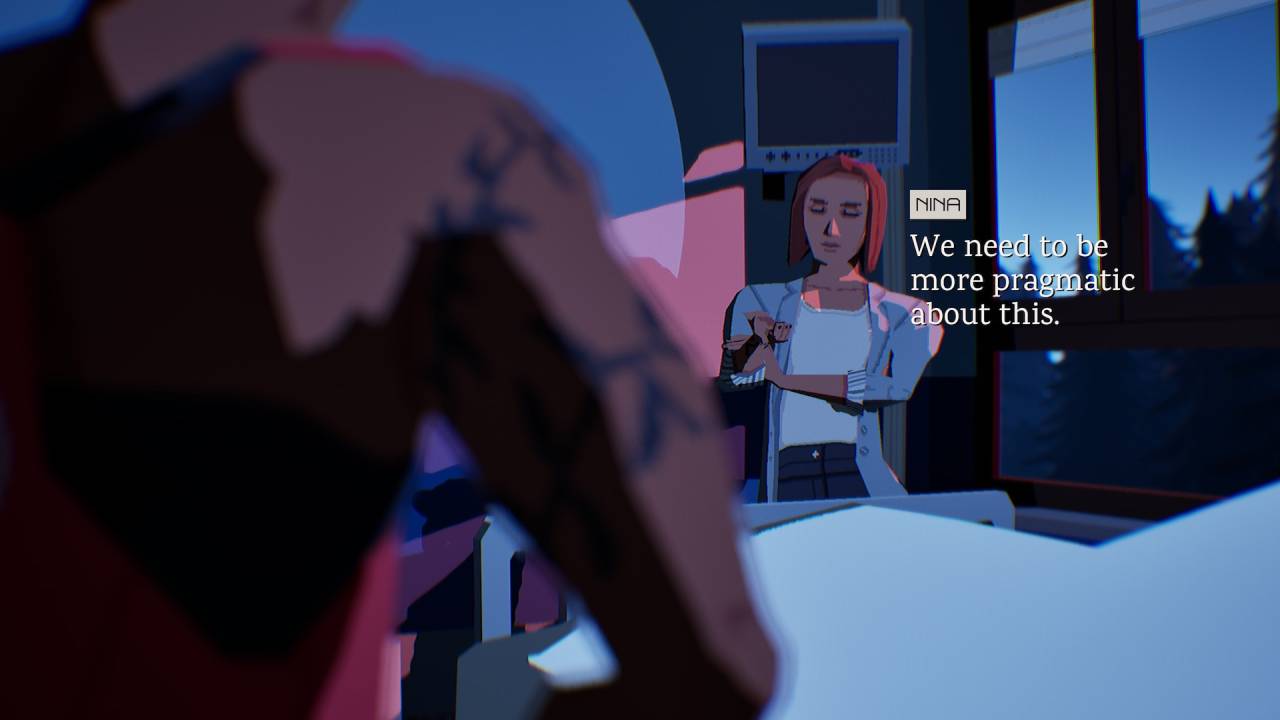
But the story is not solely about artificial intelligence. Virtue and a Sledgehammer also addresses family trauma, abuse, anger, homophobia, xenophobia, racism, illness, and the complex ways people interact with one another. These topics aren't just added to make the story darker. They relate to Patel's upbringing and help explain why she meets the world with so much frustration and hostility.
Some meetings reveal how much her experiences have taken their toll, while others subvert the first impression you get of her actions. The story also poses some interesting moral questions through the robotic community. Familiar faces have transferred their consciousness into mechanical bodies, but not everyone reacts to Patel the same way.
Some of the residents become violent after seeing her destroy their friends, while others run away begging her to spare their lives. These encounters make for an awkward situation where you are not just fighting faceless enemies. You're literally destroying people who remember having families, relationships, entire lives, before they were machines.
The writing occasionally misses the emotional mark it is aiming for.
Some conversations hit harder than others, and some moments are just too heavy-handed. It also tries to say a lot at once in its ending and doesn't leave enough room for any of the themes. However, the central conflict is interesting enough to keep you invested. You may not agree with all of Patel's choices, but understanding her point of view is an important part of the experience.
It also uses a clever narrative device by asking players questions about their own moral boundaries. Right at the start, you are asked if you would harm members of your family to stop them from doing something you think is unforgivable. These questions establish Patel's anger while prompting you to consider how much of her behavior comes from personal experience rather than simple hatred. And it makes the experience feel more personal, because you aren't always given an obvious answer to follow.
You will find blue and red glass sculptures placed around the environment when you walk around the town. Destroying these objects unlocks interactive memories, slowly filling in the gaps in Patel's life. The blue crystals are reminders of important childhood moments, like chats with her sister about souls and what makes a person. Gathering enough red crystals unlocks deeper memories, revealing more of the traumatic events that formed her personality.
These discoveries give you a reason to stray from the beaten track.
You'll sometimes have to decide whether breaking into a building to find another memory is worth destroying everything inside. The memories also give you more context for the dialogue choices and decisions you make throughout the story. The game doesn't simply lay out Patel's past in chronological order; it lets you piece together her history slowly.
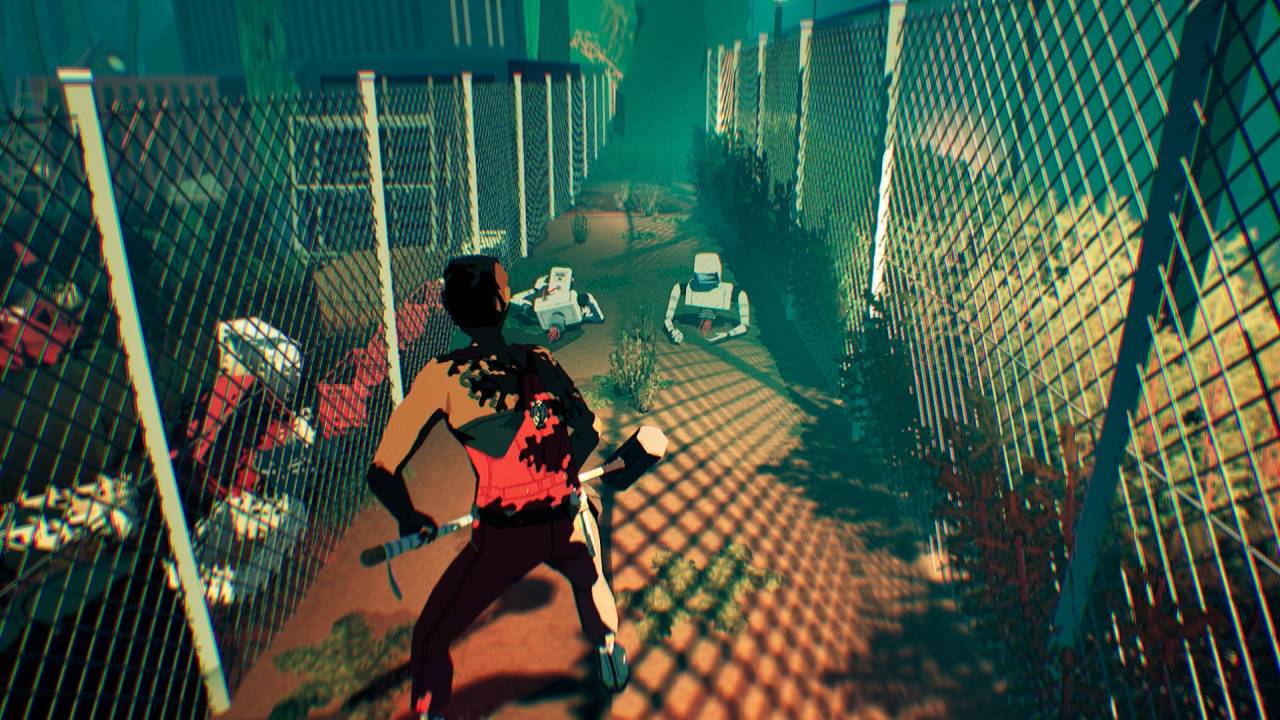
The gameplay is pretty straightforward. You play as Patel, walking through her hometown, talking to the people, finding memories, and destroying anything that gets in her way. Her main weapon is a sledgehammer, which she jokingly calls 20 pounds of physical media. This is essentially the only tool you'll need for the entire adventure, and most of the gameplay revolves around using it to interact with the environment.
The controls have three basic attacks. A quick press gives a light shove, a longer press gives a damaging swing, and holding the button down longer lets Patel do a powerful overhead smash. Each attack has a different use, but the medium and heavy swings are usually the most useful options during combat. The controls are responsive, and every successful hit feels fairly satisfying.
The destruction mechanics are easily the biggest draw of the game's gameplay.
You can smash down walls, rip houses apart, and make holes through buildings, instead of following a predetermined path. There's something really satisfying about seeing a whole building crumble after a few good swings, especially when you're initially learning the mechanic. The physics-based destruction feels satisfying, with a strong sense of impact, and you can tell the developers put a lot of work into making these interactions feel just right.
The permanence of your actions is also interesting. Blowing up a building is not a temporary animation that disappears when you leave the area. You can see the damage you've done, giving your choices a physical manifestation in the world. This matters even more when you're destroying a robotic body and a whole structure that can't be simply restored.
However, the destruction system has limits. Some things you find are indestructible, and sometimes the limits feel random. You can smash a house to bits with your sledgehammer, but if you try to bust up a nearby tree, car, dumpster, shipping container, or chain-link fence, you'll accomplish very little. These limitations can be immersion-breaking at times, especially given how much the game leans into environmental destruction.
The movement experience could have been better, too.
Patel moves at a relatively slow pace, and there is no sprint button to help you move around faster. This means your walking speed stays pretty much the same throughout the adventure. This can be frustrating, especially when traveling between objectives, but it forces you to look around and really take in the changes in the town.
Combat makes the game's limitations far more apparent. The fighting against robotic enemies isn't varied, but the sledgehammer is fun to use. You'll see robots of all sizes, from the big guys that can take more hits to the smaller ones that you can knock out with a strong overhead strike. Half-destroyed robots also crawl toward you and require a specific attack to kill.
However, these encounters often add little challenge. You will repeatedly use the same attacks against enemies that move in largely predictable ways. No complex combos to learn, no extra weapons to unlock, and no real combat upgrades change how you approach encounters. From time to time, the game throws a couple of enemies at you at once, forcing you to create distance before you can swing away with some force. You can also destroy environments to create alternate paths and avoid certain enemies altogether.
But even with these opportunities, combat eventually gets repetitive. It feels like the developers added it to fill space between story sequences, rather than creating a truly engaging fighting system. Because it's not difficult, encounters are seldom threatening. Patel can take a few hits before going down, and enemies are rarely a real challenge.
The game also has no traditional XP grinding or character progression system.
There are no experience points to collect, skill trees to unlock, or improvements to Patel's abilities over time. Instead, progression comes from discovering memories, exploring the town, and slowly understanding the characters and their motivations. This makes sense given the game's story focus, but it offers little for players who enjoy character development through gameplay.
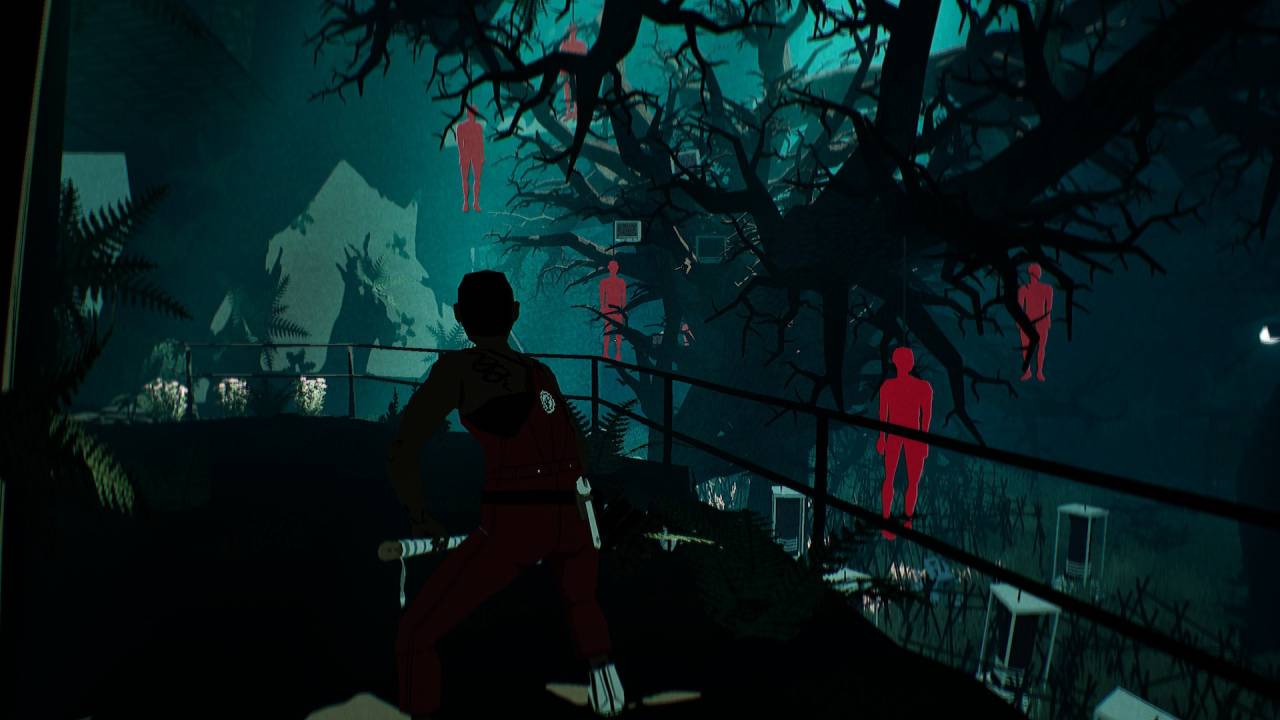
Virtue and a Sledgehammer goes for a low-poly look reminiscent of older PlayStation-era games. The game definitely has a retro vibe, with simple 3D character models and pixel-art details throughout, and it isn't trying to compete with modern graphics. If you like the retro look of 32-bit games, you will probably enjoy its presentation.
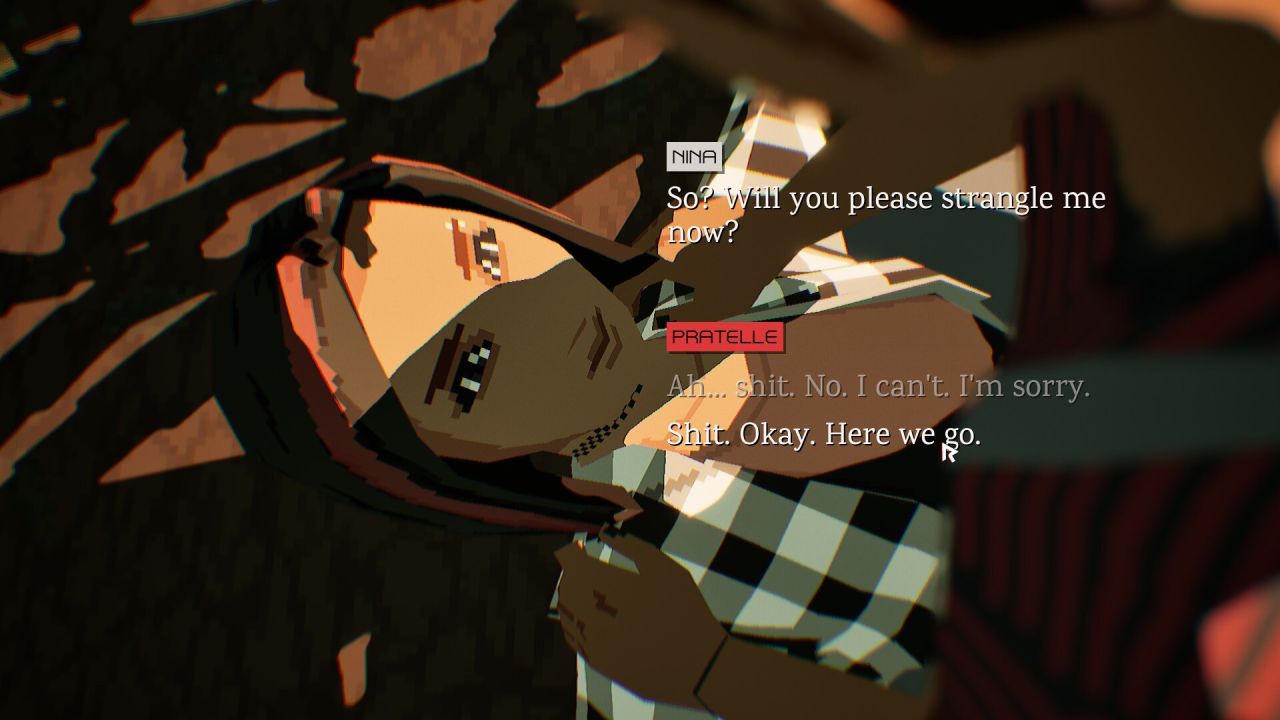
The environments rely heavily on dark trees, blocky rocks, and residential buildings with similar designs. The lighting, especially the red and blue hues, sets a mood that fits the story's darker themes. Bright red visuals often underscore Patel's anger and frustration, whereas the more muted colors help to establish the melancholy around her hometown.
The presentation also benefits from relatively modest technical requirements.
You don't need an expensive gaming PC to enjoy the experience, and it runs well on a variety of hardware configurations. Performance stays consistent whether you're playing on a high-end computer, a 4K monitor, or a Steam Deck. The game is pretty simple, so the visual direction does most of the lifting and doesn't need anything too beefy.
However, the environments can sometimes be hard to differentiate from each other. It is easy to lose one's bearings when walking through a town with similar houses, dark vegetation, and repetitive scenery. The robotic inhabitants also lack expressive character models, and their dialog boxes don't always provide enough environmental storytelling to make the community feel as alive as the narrative intends.
Another notable decision is to forgo voice acting. All dialogue is written, which might disappoint gamers who like to hear characters speak their lines. At the same time, it lets you focus on Patel's decisions and interpret her answers from your own point of view. There's no constant tether to a specific vocal performance, which arguably helps the game feel more personal.
Luckily, the soundtrack fills much of that silence, and it does a great job. Finger Spit's music scores everything from environmental destruction to important memories and cinematic sequences. Its sad electronic compositions suit the atmosphere, and sometimes shift to fit your surroundings. In some places, distortion is added, and the music fills with alarms and other environmental effects.
Arguably one of the strongest parts of the experience is the soundtrack. It knows when to be subtle and when to make a moment more emotionally charged. Some sequences work especially well because the music allows you to absorb the weight of what Patel is going through. With the many hard subjects the story tackles, it is important to have a soundtrack that supports those moments without constantly overwhelming them.
The game also offers a fascinating discussion of how it critiques artificial intelligence and its relationship to contemporary creative industries.
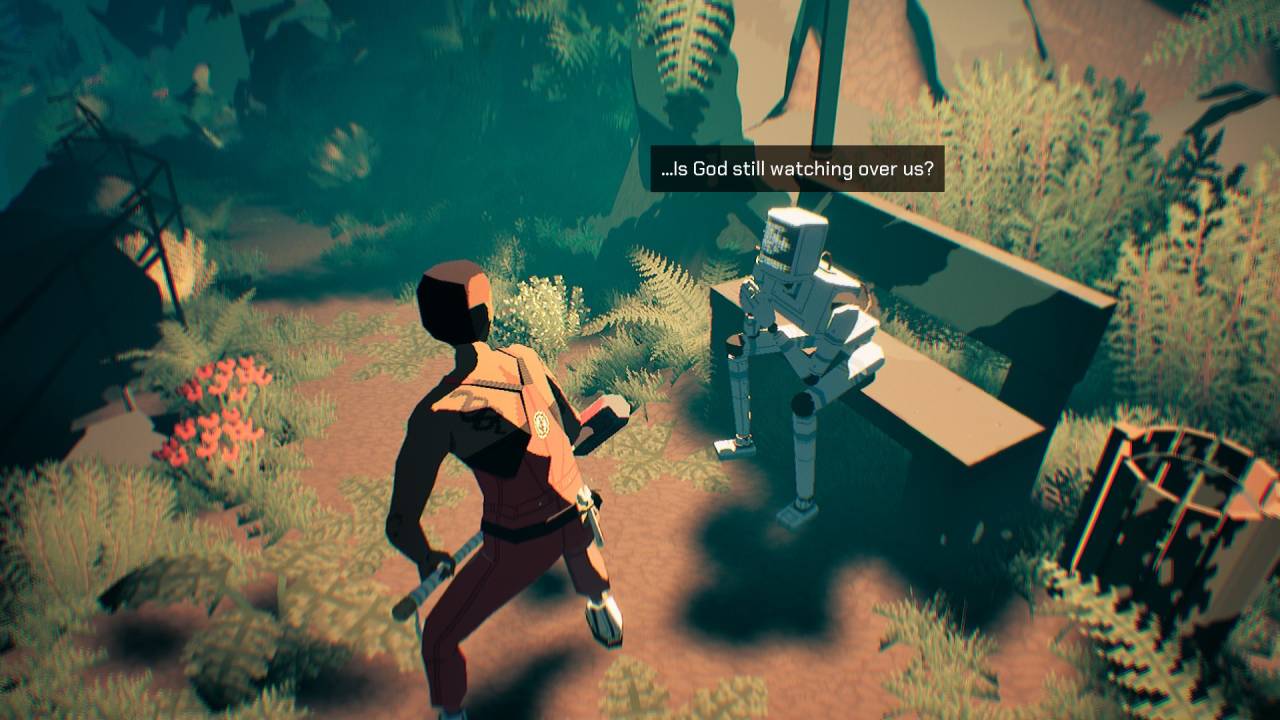
The developers aren't shy about their thoughts on a more automated future. Through the characters and their actions, the story asks what happens when we remove the human element from what we make. This is especially relevant in video games, music, and other creative fields, where the rise of AI-produced content continues to raise questions about originality, ownership, and artistic expression.
You may not agree with everything the developers say, but the game gives you enough material to look at the subject from different angles. This works because the developers rarely spend too much time explaining their ideas. Instead, they make you feel the consequences of the characters' choices.
You see people trying to preserve their loved ones through technology, others struggling to accept that the machines replacing them could ever be considered human. These different perspectives make the story more interesting than just a humans vs. artificial intelligence story.
Ultimately, Virtue and a Sledgehammer knows what it wants to accomplish, though some of its individual mechanics could have used more development. The combat is repetitive, the movement is unnecessarily slow, and the environmental destruction is sometimes limited.
But these shortcomings don't completely spoil what the developers have made.
Also, the experience is short enough at around three to four hours that its limited mechanics don't have an overwhelming amount of time to become tiresome. While more complex systems might have detracted from the story, a bit more variety in enemies and environmental interaction would have made the experience even better.
Fundamentally, a Virtue and a Sledgehammer is an experience about understanding people, confronting painful memories, and deciding what you want to leave behind. The core themes aren't particularly novel, but integrating destruction into the storytelling gives the game a unique identity. The game constantly reminds you that actions have consequences, whether you're destroying a building, confronting a robotic resident, or uncovering another painful memory from Patel's childhood.
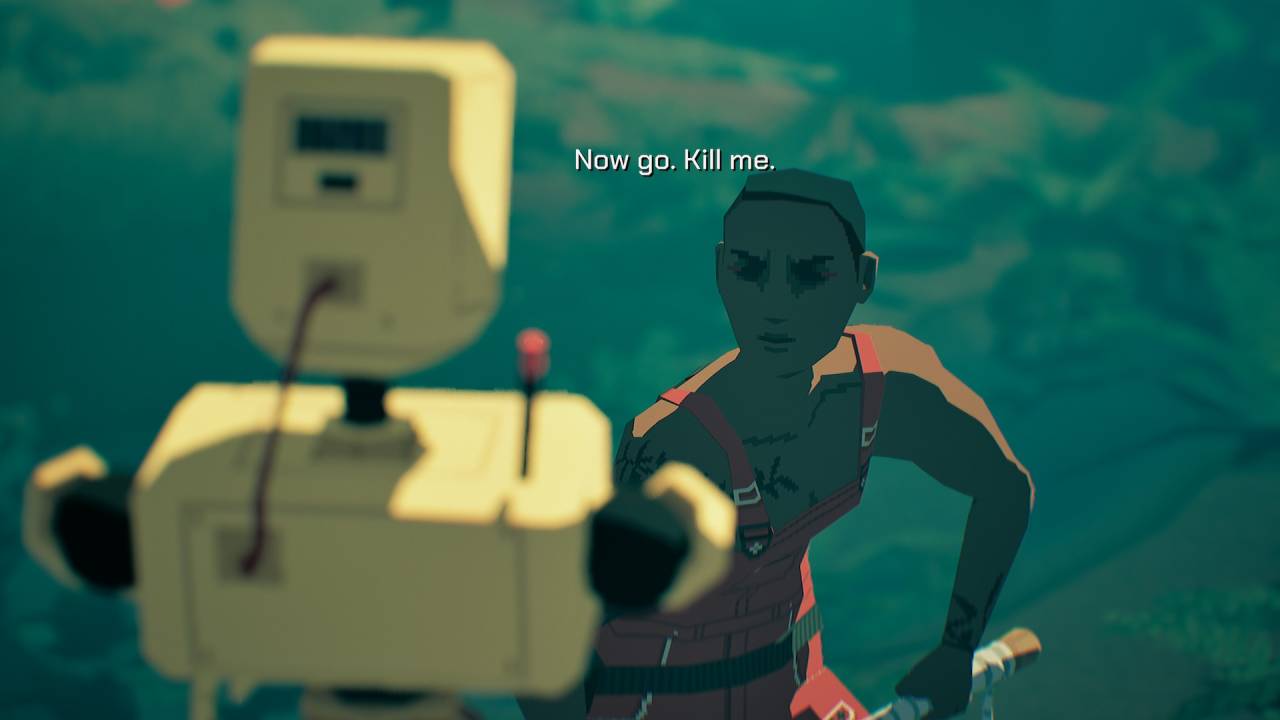
If you want an action-packed adventure with lots of combat mechanics, Virtue and a Sledgehammer probably isn't the game for you. But if you like philosophical sci-fi, narrative-driven indie games, and stories that wrestle with tough subjects without easy answers, it's worth considering. For about $15, you're basically getting a three-to-four-hour narrative experience, not a game designed to keep you busy for dozens of hours.
Given the quality of its core ideas and soundtrack, I think that price is reasonable, but waiting for a sale is also a perfectly fair option. There's a lot to like in what Selki Harbor and Deconstruct Team have attempted here. There are problems, however, and the repetitive combat means it never quite reaches the same level of quality as some of the more memorable narrative adventures.
Still, Virtue and a Sledgehammer has a distinct creative identity, and that alone is worth mentioning. In an industry where the same formulas are being used, and talk of automated content is becoming the norm, it's nice to see a small team throw so much personality into a project.
Editor, NoobFeed
Verdict
Virtue and a Sledgehammer is a short but thoughtful narrative adventure with satisfying destruction mechanics, an excellent soundtrack, and meaningful themes. The story is worth experiencing, but repetitive combat holds it back.
78
Related News
No Data.