
Godzilla: Destroy All Monsters Melee Remastered Review
Nintendo Switch 2
A classic kaiju brawler returns with upgraded visuals, new content, and unnecessary grinding.
Reviewed by Asura Kagawa on Nov 03, 2026
If you grew up playing games on the Nintendo GameCube, you probably remember Godzilla: Destroy All Monsters Melee. Originally released in 2002, the game gave Godzilla fans something they rarely got in video games: the chance to control their favorite giant monsters and let them fight each other in the middle of a destructible city.
Whether you wanted to throw Godzilla across a skyscraper, have Megalon burrow underground to surprise an opponent, or watch Rodan take to the skies, there was plenty of ridiculous kaiju action to enjoy. It wasn't the deepest fighting game around, but it understood exactly what made the concept entertaining. The game eventually made its way to Switch, but despite a dedicated following, the franchise never really got many fighting games that captured the same experience.
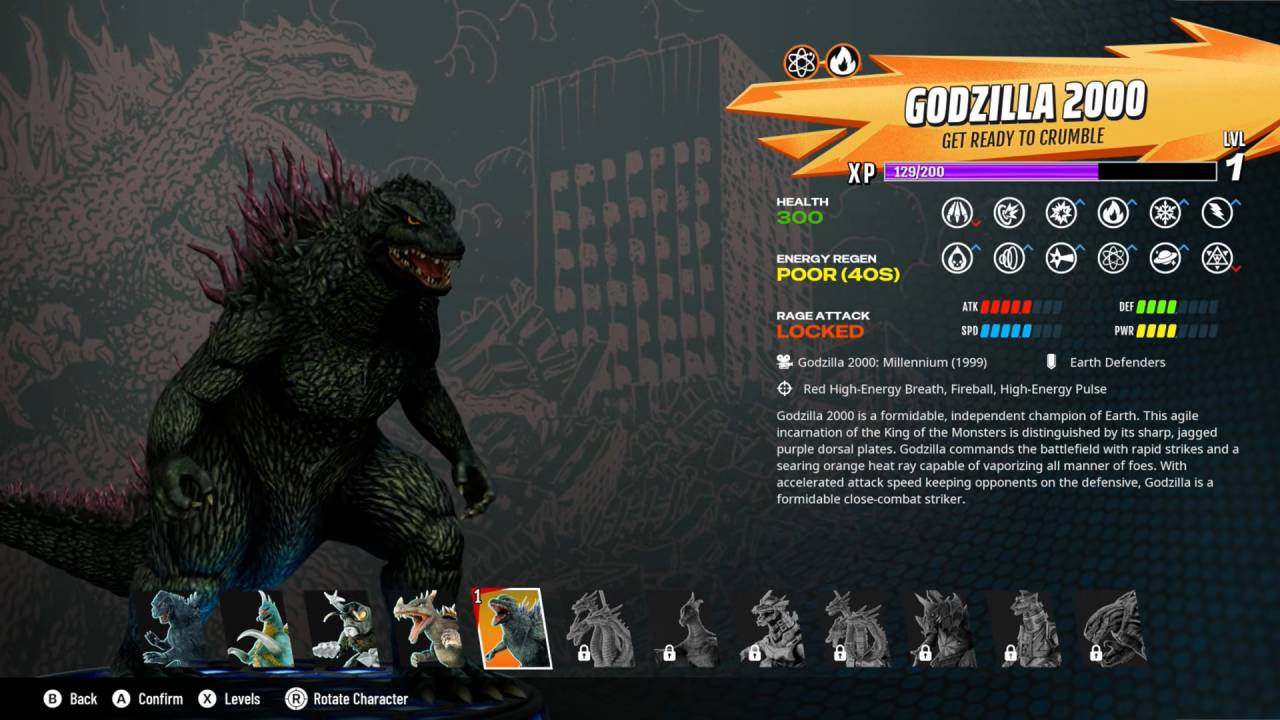
Now, after more than two decades, Godzilla: Destroy All Monsters Melee Remastered brings that familiar experience back to modern platforms. Rather than simply applying higher-resolution textures to the original game, this release rebuilds its visuals in a new engine, bringing the monsters and their environments up to modern standards. It also includes new single-player modes, a new progression system, new unlockable content, and online multiplayer.
The timing is also right, with the Godzilla franchise continuing to build on its legacy with new movies and other projects.
For longtime fans, this remaster will be a treat to revisit a game that made childhood monster battles surprisingly fun. But breathing new life into an older game also requires you to consider which aspects of its original design should be left well enough alone, and which parts need work. While the remaster gets plenty right, some of its modern additions create problems that weren't present in the original experience.
Narratively, you aren't getting anything particularly complicated. Adventure Mode is the main draw, and it's exactly what you'd expect. You play as a monster, fighting off a small group of enemies before facing down a much bigger threat. The story is about an alien invasion, with the Vortex, a group from a faraway galaxy, arriving. They say they have intelligence and technology that is beyond human capability. This is where the monsters come in.
It's a simple setup that allows you to throw giant creatures at each other, and that is all the game really needs. The remaster also brings back the original cutscenes, although they have been recreated with completely new renders while retaining their classic audio. It's a nice addition because these scenes were part of what gave the original game its personality. They might not offer particularly sophisticated storytelling, but seeing them return helps preserve the experience longtime players remember.
Of course, the narrative isn't the main reason you're here. The real attraction is taking control of the monsters and watching entire sections of a city fall apart as they fight. Fortunately, the remaster understands that and keeps the core gameplay largely intact.
The first thing you'll notice is how much attention has gone into rebuilding the monsters.
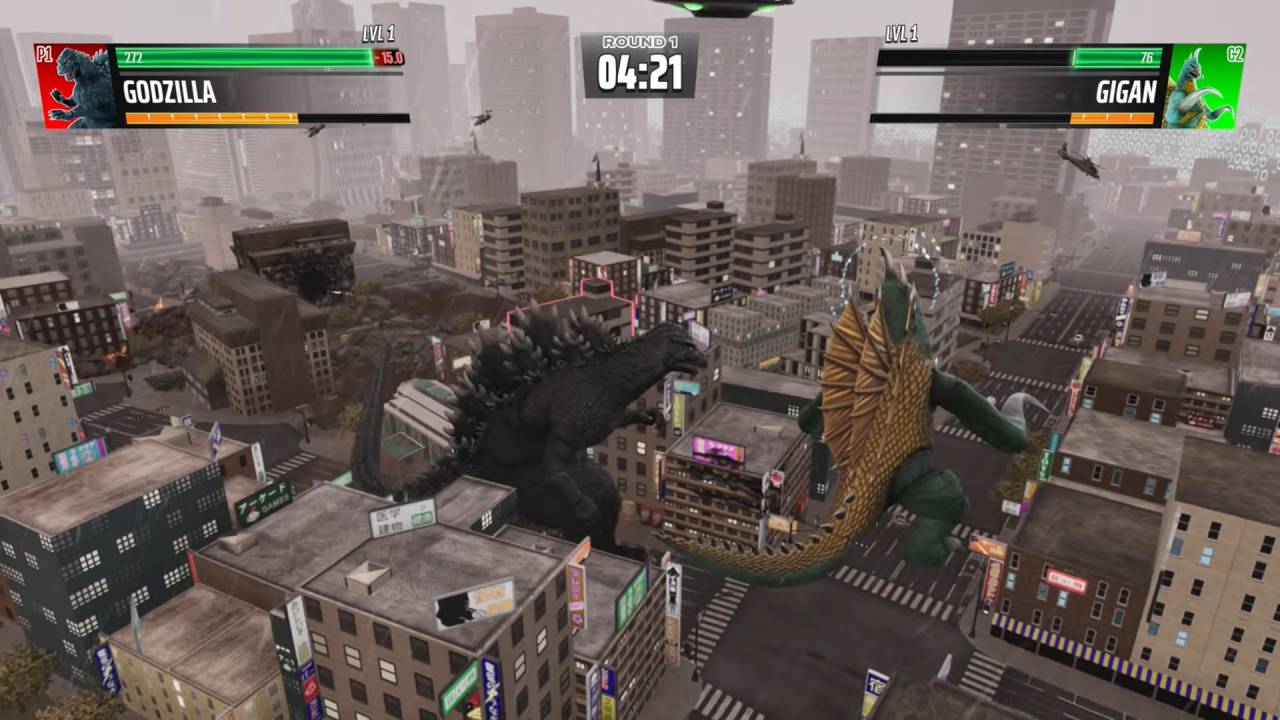
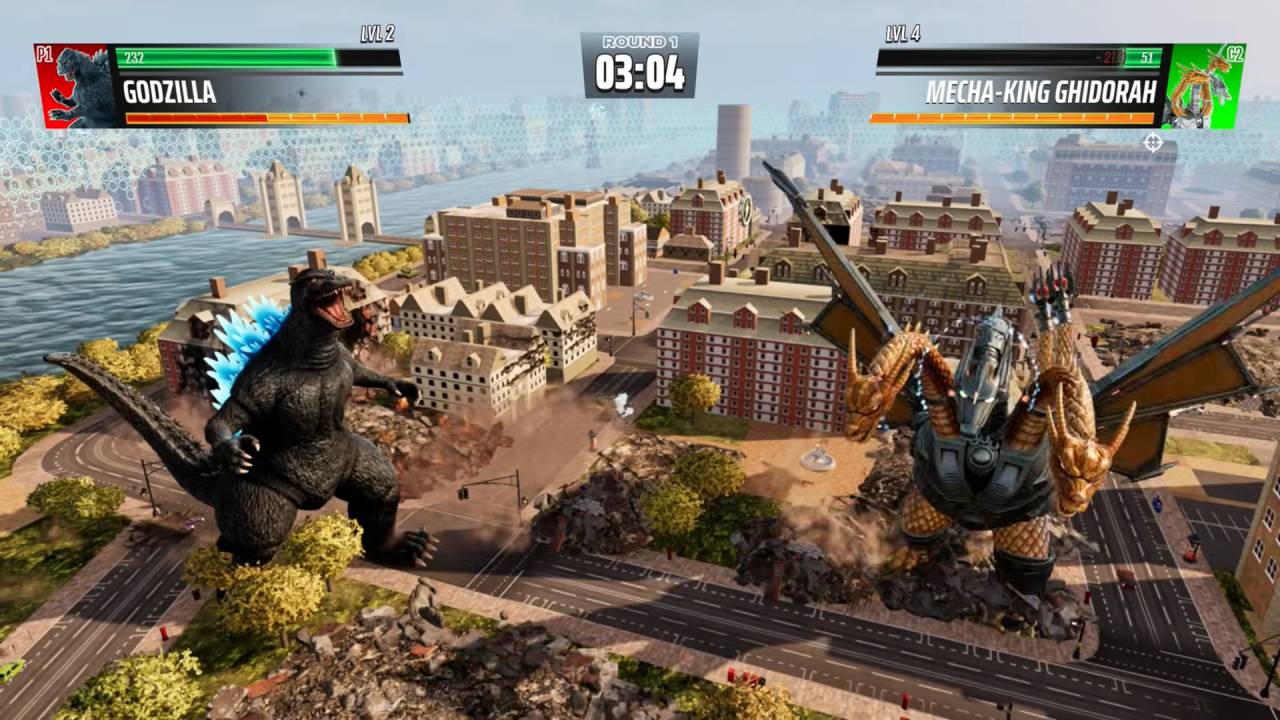
Instead of looking like slightly improved versions of their original GameCube and Xbox appearances, they have received a complete visual overhaul. You can see individual scales, smaller details across their bodies, and more personality in their movements. The designs also retain the look of the classic movie rubber suits, which matters because the game clearly celebrates the history of the Godzilla franchise rather than trying to reinvent its monsters.
The environments have also improved, though not as dramatically as the character models. Every location feels like a mini city built for giant action figures, with buildings, vehicles, and other objects just waiting to be part of the fight. There's something fun about watching these monsters roam through environments that feel like interactive dioramas. You don't just fight in an arena; you're basically playing with giant monster toys and using everything around you to wreak as much havoc as possible.
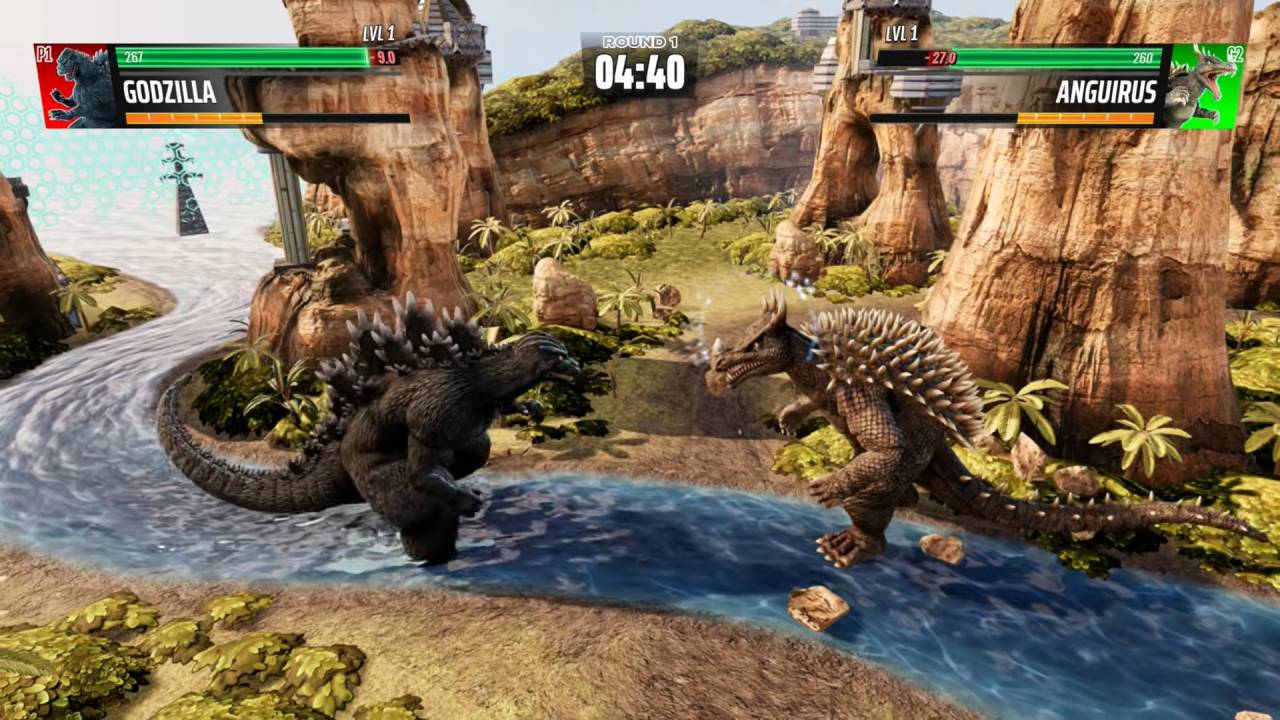
The presentation also has a slightly different visual identity compared to the original. Some menus and gameplay effects now feature a more noticeable comic book style, with beams and gusts of wind appearing more cartoonish. This contrasts with the original game's relatively realistic presentation, but it doesn't necessarily ruin the experience. The menus also feature excellent artwork, though the redesign loses some of the personality of the original fiery, molten-lava background and orange color scheme.
A few visual issues are also worth mentioning, particularly on Nintendo Switch 2. The monsters can appear noticeably dark in the menus, and certain lighting conditions during gameplay can create a similar problem. Unfortunately, there is no way to adjust the brightness to fix this. A future update with some extra display settings would be nice to see, especially since the issue doesn't seem to plague the other versions quite the same.
But in a real fight, the presentation gets a lot more fun.
Monsters crash into buildings, collapsing them; explosions spread throughout the environment, and heavy footsteps make it feel like the surrounding areas are being shaken apart. The action is fast enough to keep you interested, but not so fast that it's hard to take in everything happening around you. The game also maintains a fairly stable 60 FPS on the Nintendo Switch 2 for the most part, which helps the fights feel responsive.
The monster roster includes 12 playable characters, and Godzilla 1990, Gigan, Megalon, and Anguirus are available from the start. The lineup also includes King Ghidorah, Rodan, Destroyah, Mechagodzilla, and other variations on the franchise's iconic monsters. The selection is pretty small, compared to modern fighting games, but there's enough variety to give you different ways to approach each encounter.
But not all monsters are completely different. Many characters share similar basic combos and attacks, which can make their move sets feel repetitive at first. However, their individual capabilities and minor differences in fighting style help distinguish them. For example, Gigan teleports around the battlefield, and Megalon can burrow underground and grab opponents when he comes up.
King Ghidorah and Rodan can fly, letting them attack enemies in different ways.
Even Anguirus has a few tricks that make him entertaining to use. His defensive move allows him to turn around and expose his spiked back to an incoming attack, briefly stunning an opponent when they strike him. It's a small thing, but these interactions add character to each monster beyond their looks.
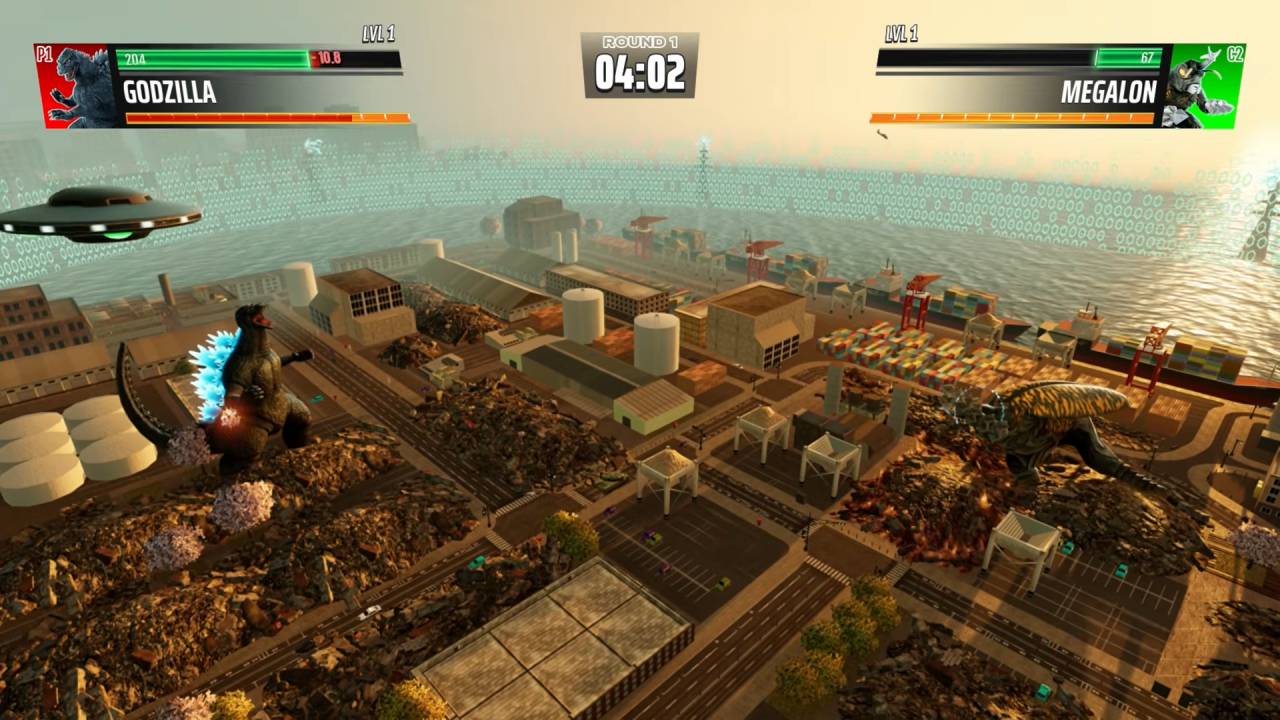
The fighting itself is fairly simple, so even if you've never played a traditional fighting game, it's easy to pick up. You have punches, kicks, and stronger attacks, and directional inputs for different moves. It's kind of like Super Smash Bros.: you hold down a direction and an attack, and that decides what your monster does. You don't need to remember complex combinations to start enjoying the fights, but learning which moves work best in different situations can make a noticeable difference.
You can also grab opponents, do dropkicks, stomp on their feet, and unleash the familiar beam attacks Godzilla fans will instantly recognize. Watching these moves is especially fun because they look ridiculous when giant monsters pull them off. Seeing one creature grab another and throw it through a building never really gets old.
Another important part of the combat system is interacting with the environment.
Buildings are not just scenery; you can pick them up and hurl them at your enemies. Some areas also have trains and other objects you can use as weapons. Use the arena layout to your advantage, positioning yourself around buildings to avoid incoming attacks or find opportunities to catch an opponent off guard.
Power-ups are scattered throughout the environments, such as health pickups and offensive boosts that increase your range. Some pickups will even let you call in Mothra to attack your enemies from the air. These additions help prevent fights from becoming repetitive, forcing you to pay attention to your surroundings instead of just attacking the nearest enemy.
The arenas themselves are also additional hazards. Armed and alien forces can also disrupt battles, attacking the monsters and adding another layer of chaos to the already busy battlefield. With environmental destruction, incoming attacks, power-ups, and multiple monsters fighting at the same time, on-screen action is rarely in short supply.
Godzilla: Destroy All Monsters Melee Remastered isn't meant to be a competitive fighting game where every character has perfectly balanced abilities. Its appeal comes from the spectacle and how easily you can jump into a match. One-on-one battles are enjoyable enough, but the experience becomes considerably better when you have four players fighting locally.
Having several monsters running around, firing beams, throwing buildings, and trying to avoid one another creates the kind of ridiculous chaos that makes the game memorable.
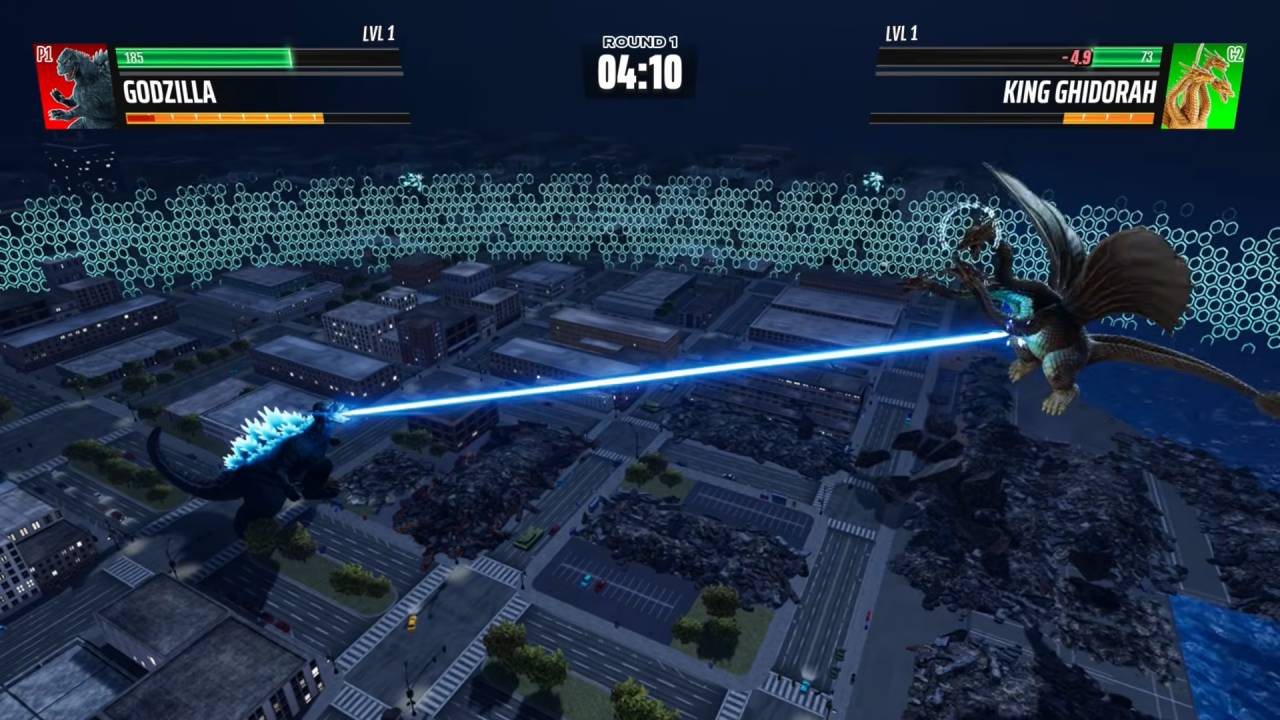
The single-player experience has also received some welcome additions. Alongside the traditional Adventure Mode, you now have Adventure Gauntlet and Adventure Challenge. Gauntlet pits you against two CPU opponents, with each round getting progressively harder. Challenge takes things further by making the opponents even harder and giving them power-ups from the beginning.
Destruction Mode also lets you choose a monster and unleash a rampage across a city within a time limit. Instead of worrying about another monster interrupting your fight, you can focus entirely on destroying as much of the environment as possible and scoring as high as you can. It's a nice change of pace when you simply want to experience the destructive side of the game.
Survival offers another way to play, putting you through an endless series of encounters where the goal is to survive for as long as possible. Practice Mode is also available if you want to spend some time learning the controls and understanding how individual monsters fight.
Together, these additions give the single-player portion more variety than the original release.
Unfortunately, the way you unlock content has become one of the remaster's biggest problems. In the original 2002 release, unlocking monsters was relatively straightforward. You simply completed the Adventure Mode, defeated one opponent after another, and eventually received additional playable characters as rewards. It was a short arcade-style progression system that encouraged you to keep playing without making the process unnecessarily complicated.
Godzilla: Destroy All Monsters Melee Remastered replaces that approach with a much more involved system involving individual character experience, research points, projects, and rumors. Each monster has its own progression, meaning you need to spend time leveling up individual characters to access certain content. Rumors, however, give specific targets that unlock research projects. To complete these, you will need to collect enough research points through various activities.
The research system gives you a bit more control over what you unlock.
You're no longer just playing through the game hoping to get something new; now you can work toward specific monsters, stages, and gallery content. But it can take a lot longer to accomplish these goals than you might think. Some rumors require you to win a certain number of fights with certain monsters; other projects require you to spend more time playing Adventure Modes or multiplayer battles.
What's frustrating is that achieving one goal doesn't necessarily mean you're close to unlocking what you really want. Sometimes, you may find that once you finish a research project, there are more requirements or another project you need to complete first. You may think you're on the verge of unlocking a certain monster, only to find there's yet another long objective in your way.
After a few hours of trying to unlock the rest of the characters, the progression starts feeling more like a chore than a reward. Even the additional Adventure Modes are tied to individual monster levels, meaning you have to invest time into specific characters before accessing everything.
This becomes especially frustrating when all you really want is to play as Rodan or Destroyah with your friends.
Thankfully, there is a workaround. Tournament Mode lets you access every monster and stage without going through the full unlocking process. However, the option is strangely hidden inside the settings rather than being available directly from the main menu. Activating it disables the other modes and stops research and level progression, leaving Custom Battle as your main option.
You can then choose any monster and play against the CPU or invite up to three friends for local multiplayer. The downside is that Tournament Mode doesn't support online play, so you'll still need to work through the intended progression system if you want to use your unlocked characters online. Nevertheless, it's a useful option that makes the game considerably more enjoyable when you're simply looking to have fun with friends.
Online multiplayer is another area in Godzilla: Destroy All Monsters Melee Remastered that feels incomplete. It's nice to finally have online functionality, but the options are surprisingly limited. You can only play one-on-one matches, and you cannot play Destruction Mode online or have four-player matches. There's also no crossplay, which makes the multiplayer offering feel somewhat bare-bones.
That's a shame, because the four-player battles are arguably the game's strongest suit.
Playing locally with friends is still a fantastic experience, especially when you can share Joy-Cons on Nintendo Switch 2 and get everyone involved without needing additional controllers. But the inability to recreate that experience online limits the appeal of the modern release. Hopefully future updates will expand on these options and give players more ways to have fun with multiplayer.
As for audio, the remaster benefits from using the original audio in its restored cutscenes, which helps preserve the connection to the 2002 release. The usual monster beams, crashes, explosions, and environmental destruction help build the atmosphere of each encounter. The overall presentation feels like watching giant creatures fight through a city, and the returning audio helps retain some of the original game's identity.
Ultimately, Godzilla: Destroy All Monsters Melee Remastered succeeds at bringing back a game that didn't need a complete gameplay overhaul. Its combat remains entertaining, the monsters look considerably better, and the additional single-player modes give you more ways to enjoy the experience. It's also one of those games that gets a lot more fun with friends next to you, because it's hard not to laugh at several giant monsters pummeling each other into senseless oblivion.
But the progression system is a step in the wrong direction.
Grinding through character levels, rumors, and research projects to unlock monsters that were much easier to access in the original game feels unnecessary. There's also plenty of room for improvement in the lack of online multiplayer options, given how much four-player battles shape the experience.
The core gameplay, however, has aged surprisingly well. Whether you're throwing Godzilla through a skyscraper, watching Megalon emerge from underground, or having Rodan knock another monster across the arena, the game understands what makes a Godzilla brawler enjoyable. It doesn't need complicated mechanics or an elaborate story to deliver that experience. Sometimes, you just want to pick your favorite monster and cause absolute destruction.
For longtime fans, this is a welcome return of a classic that deserves to be available on modern platforms. Just don't expect the unlocking process to be as straightforward as it used to be. After all, when you're playing a game about giant monsters smashing cities, the last thing you want is to spend hours completing research projects before you're allowed to have fun.
Staff Writer, NoobFeed
Verdict
Godzilla: Destroy All Monsters Melee Remastered is a faithful, entertaining Godzilla brawler with excellent visual upgrades and enjoyable multiplayer, but excessive grinding and limited online options hold back an otherwise worthy remaster.
80
Related News
No Data.