
AMD FSR 4 Could Help Ryzen Handhelds Compete With Intel
AMD FSR4 expansion could improve gaming performance on Ryzen-powered handhelds, including devices equipped with the Z2 Extreme processor.
Handheld by Nahe Yan on Oct 11, 2026
AMD is expanding its FSR4 technology beyond desktop graphics cards, with support planned for APUs, gaming laptops, and PC gaming handhelds by the end of 2026. The update is expected to improve performance in supported games, giving AMD-powered handhelds another way to increase frame rates through upscaling.
According to a report from The Elec, Jack Huynh, who heads AMD's Computing and Graphics Group, told the Korean press that FSR4 will expand beyond desktop graphics cards to APUs, gaming laptops, and PC gaming handhelds by the end of this year. For those new to PC handheld gaming, FSR4 uses machine learning to improve performance in supported games.
AMD Confirms FSR4 Support for PC Gaming Handhelds
In other words, it can increase FPS and make games more enjoyable on devices that might otherwise struggle to maintain consistent performance. However, FSR4 will only work in supported games. These include demanding AAA titles such as the Spider-Man games, The Last of Us Part I and Part II, Call of Duty, and Oblivion Remastered, along with several other games that can benefit from upscaling on PC handhelds.
Currently, devices such as the Xbox Ally X, which uses AMD's Z2 Extreme chip, are limited to the older FSR3 technology in supported games. For example, in Forza Horizon 6, selecting FSR3 in the video settings can help increase performance to the mid-60 fps range when upscaling from 900p.
Unofficial workarounds already exist for using FSR technologies in supported games. One option is OptiScaler, a free and open-source gaming utility that can inject supported upscaling technologies into games. This allows users to experiment with different upscaling options before official support becomes available.
FSR4 Will Target New and Existing AMD Chips
The FSR4 expansion appears to be moving in two directions. The first involves new product lines, where a future AMD Z3 Extreme chip could offer full FSR4 support. Newer hardware could be designed to take advantage of the technology without the limitations associated with existing chips.
The second direction involves developing a lighter version of FSR4 that is better suited to current hardware. This version could target devices powered by chips such as the AMD Z2 Extreme, which is found in the Xbox Ally X and the upcoming Xbox Ally X2. This approach would allow AMD to extend the benefits of FSR4 to existing handhelds rather than limiting the technology to future devices.
There is some disappointing news for owners of the original white ROG Ally. AMD did not list its Z1 Extreme chip as a supported processor for the new lightweight version of FSR4. As a result, the original ROG Ally may not benefit from this version of the technology. Until AMD provides a more detailed compatibility list, it remains unclear whether the device will receive any form of official FSR4 support.
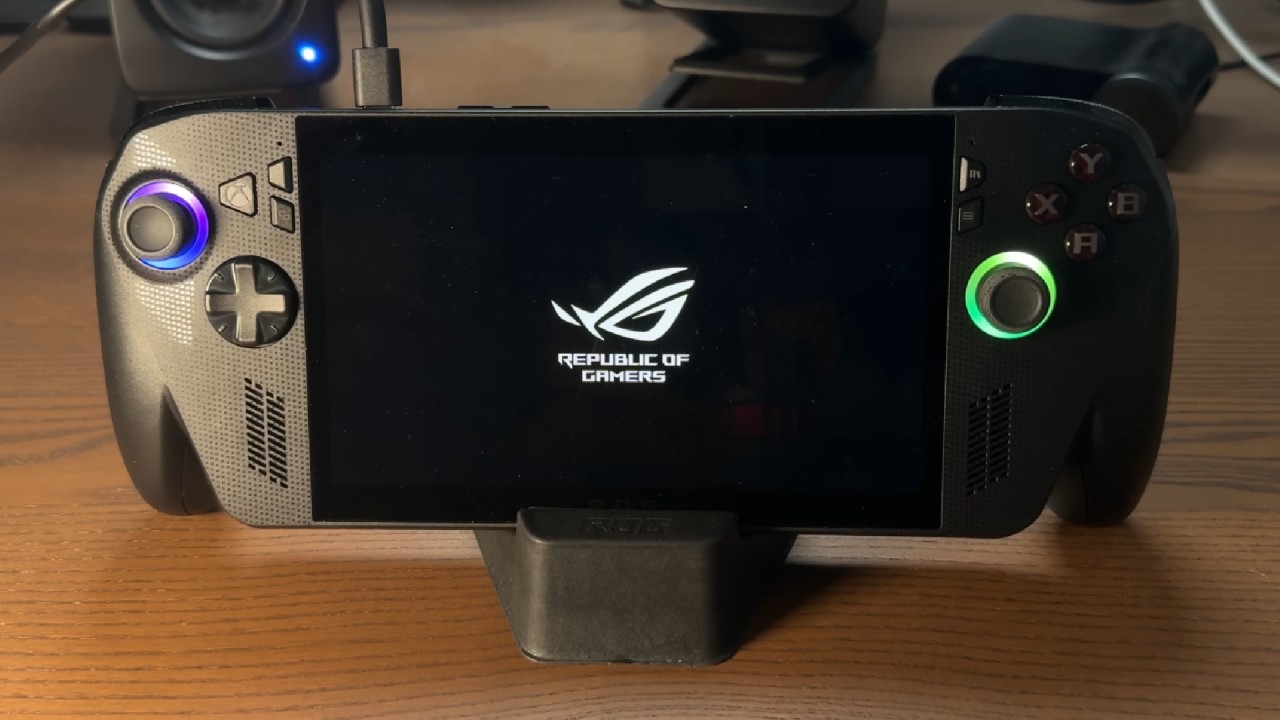
AMD's announcement also comes as Intel promotes its own performance-boosting technology.
Intel claims its technology can deliver a 42% performance improvement over AMD's Z2 Extreme chip at 35W. The handheld market is also seeing new Intel-powered devices, including the MSI Claw 8 EX AI+ and the OneXPlayer 3. These devices use Intel's Arc G3 Extreme chip, which has attracted attention for its performance compared with AMD's existing handheld processors.
AMD therefore has a reason to expand its upscaling technology to more devices. FSR4 could help Ryzen-powered handhelds remain competitive by improving performance in supported games without requiring users to upgrade to entirely new hardware. However, the actual benefits will depend on implementation, game support, and each device's hardware capabilities.
Despite the performance claims around Intel's newer handheld processors, price remains another competitive factor. Intel-powered devices using the Arc G3 Extreme chip are generally expected to cost more than AMD alternatives, including the upcoming Xbox Ally X2.
Editor, NoobFeed
Latest Articles
No Data.