
Gigabyte AORUS MASTER 16 Gen 2 Laptop: Ryzen 9 9950HX3D and RTX 5090 for $4,800
Gigabyte combines AMD’s Ryzen 9 9950HX3D and NVIDIA’s RTX 5090 to deliver flagship gaming performance at an extraordinary premium.
Hardware by Tanvir Kabbo on Oct 16, 2026
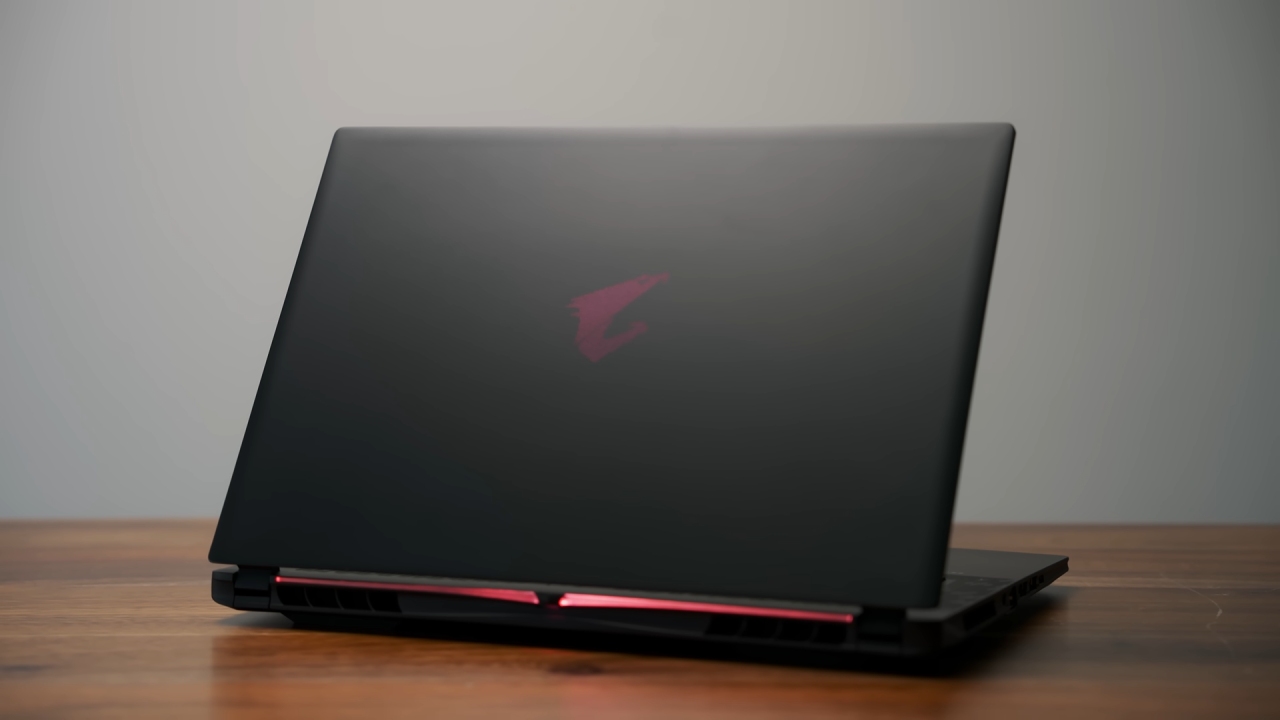
The pursuit of desktop-class gaming performance in a portable chassis has reached another expensive milestone. Gigabyte's AORUS MASTER 16 Gen 2 has emerged through retail listings as an ultra-premium gaming laptop built around AMD's flagship mobile processor and NVIDIA's most powerful laptop graphics option. At $4,799.99, this system targets aficionados who want no-compromise hardware without committing to a typical desktop.
And the attraction is simple enough. It offers high-end gaming performance, a premium OLED display, and plenty of cooling potential, all in a computer that can still go places. Yet, the AORUS MASTER 16 Gen 2 poses an essential question for the gaming laptop market. At almost $5,000, how much performance can justify portability before the value proposition becomes hard to defend?
Under the Hood: Ryzen 9 9950HX3D Meets GeForce RTX 5090
The AORUS MASTER 16 Gen 2 pairs the AMD Ryzen 9 9950HX3D with the NVIDIA GeForce RTX 5090 Laptop GPU. The CPU offers 16 cores and AMD's 3D V-Cache technology in a mobile architecture, balancing strong processing power with added cache for tasks sensitive to memory latency.
For gamers, 3D V-Cache is particularly interesting, as some titles respond strongly to larger processor caches. This can reduce memory-access overhead and improve efficiency in CPU-bound situations by keeping frequently accessed data closer to the CPU. This can help competitive games aimed at high frame rates, simulation-heavy titles, and challenging strategy games.
However, benefits vary by game, resolution, and power setting. When playing graphically intensive titles, the RTX 5090 Laptop GPU will typically carry much of the load at 2560 x 1600. The processor's cache advantage matters when CPU speed, not graphics throughput, limits frame rates.
The other half of this premier package is the NVIDIA Blackwell-based RTX 5090 Laptop GPU. Its appeal extends beyond traditional rendering performance to current ray tracing, AI-assisted upscaling, and other supported rendering technologies. Nevertheless, the laptop version should not be confused with its desktop namesake. Mobile GPUs operate under different power and thermal constraints, so real-world performance depends on the laptop's implementation.
A 240 Hz OLED Display Designed for Premium Gaming
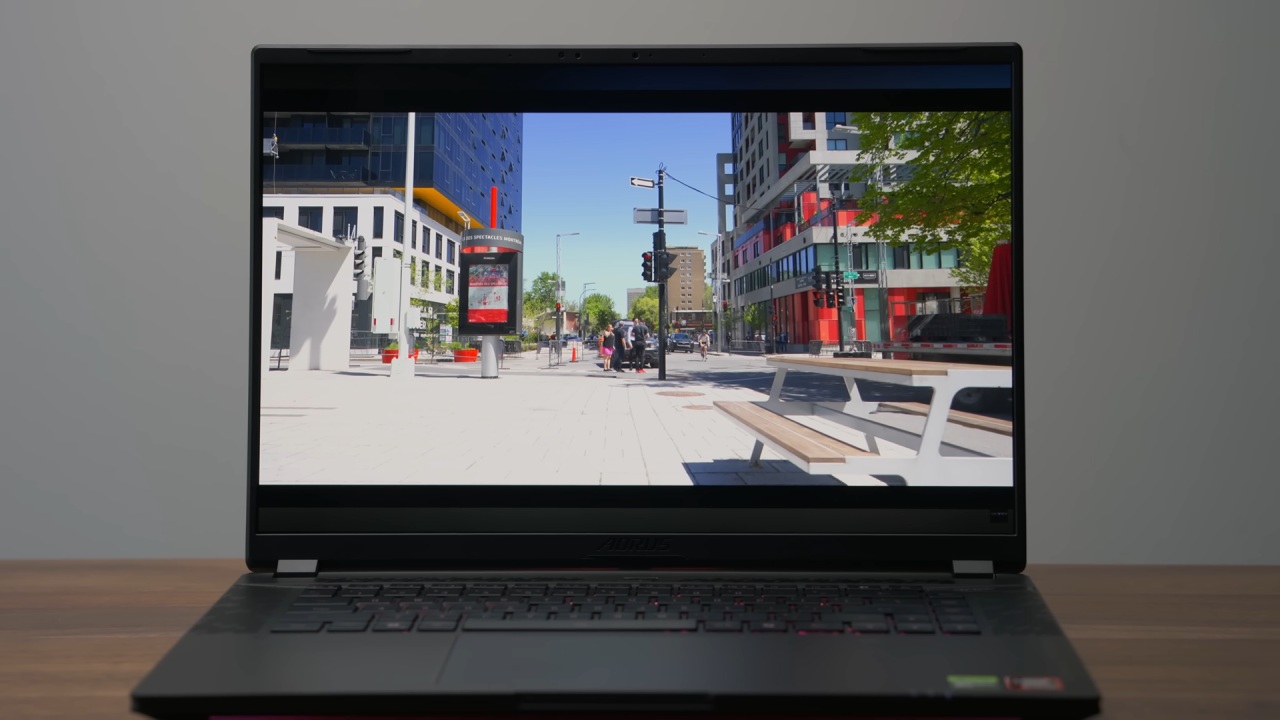
Gigabyte complements its internal hardware with a 16-inch WQXGA OLED panel running at 2560 x 1600 and 240 Hz. The advertised 0.2ms response time targets the fast pixel transitions competitive players value, while OLED's individual pixel illumination delivers deep blacks and strong contrast.
The display also carries VESA DisplayHDR True Black 1000 certification, adding premium HDR capability. This combination makes the laptop attractive beyond esports, especially for cinematic single-player games and content creation, where contrast and color representation are key.
The 240Hz refresh rate doesn't mean 240fps in every demanding title right away. Reaching that level of speed depends on game settings, rendering technology, and how the CPU and GPU split the workload. Still, the panel provides the headroom to benefit from high frame rates when the hardware can deliver them.
Vapor Chamber Cooling Meets a 230W Thermal Budget.
Powerful silicon means little if a laptop cannot sustain its performance. Gigabyte reportedly gives the AORUS MASTER 16 Gen 2 a 230W maximum total thermal power budget, supported by a substantial vapor chamber cooling system.
That thermal capacity is central to the machine's identity. High-end mobile processors and graphics chips can deliver impressive short bursts of performance, but sustained gaming sessions depend on heat dissipation, fan behavior, and power management. The cooling system must handle competing CPU and GPU demands without allowing temperatures to force excessive performance reductions.
The chassis measures just 19mm thick at its thinnest point, an ambitious specification for hardware of this class. However, thinness alone doesn't guarantee portability. The power adapter, overall weight, fan noise, and battery performance will determine how practical the machine is away from a desk.
The $4,800 Reality Check: Who Should Buy It?
The flagship configuration is listed on Amazon for $4,799.99 and includes an RTX 5090 Laptop GPU, 32GB of DDR5 memory, and a 2TB SSD. A lower-tier model featuring an RTX 5080 Laptop GPU and a 1TB SSD costs $3,399.99.
That $1,400 difference makes the RTX 5080 configuration worth serious consideration. Mobile graphics enthusiasts seeking maximum performance will likely look at the RTX 5090. Still, its real-world benefit will depend on power limits, cooling, and the workloads being tested. Buyers should check independent benchmarks before assuming the price reflects a proportionate increase in frame rates.
The target audience is somewhat small: professionals who want powerful hardware in a portable workstation, frequent travelers, and buyers who want a single high-performance system instead of separate desktop and notebook systems. For these people, ease of purchase for premium products matters as much as performance.
Senior Editor, NoobFeed
Gaming Hardware Updates
No Data.