
R.I.P. - Reincarnation Insurance Program Review
PC
A messy genre cocktail that somehow refuses to fall apart.
Reviewed by Adeela Tas on Sep 18, 2026
You go into R.I.P. - Reincarnation Insurance Program already knowing it won't sit neatly in one box. WarmCore Studio, a Chinese team, built it, and the version you're playing now is the full 1.0 release, which dropped on September 15 after the game had already been out in a rougher form for a while.
From the start, it clearly aims to be a pile-up of a Diablo-style loot loop, a survivors-style horde shooter, roguelike runs, bullet-hell dodging, and even a card-and-gamble layer bolted on top. It's the kind of combination that sounds like someone rolled a handful of genre dice and just kept whatever came up, and for the first hour or two you're half convinced it's going to collapse under its own ambition. It doesn't.

By the time you've sunk a few sessions into it, you get why people keep calling it back to their queue for one more attempt.
There isn't much of a story pulling you through R.I.P. - Reincarnation Insurance Program, and you don't need one to stay hooked. The setup is simple: a corrosive virus has swept the world, turning wildlife and people into hordes of corrupted enemies, and the R.I.P. company recruits you as one of its specialists to burn that corruption back.
The twist is baked into the title itself. You're not a hero who gets one shot at glory; every time you go down in the field, you're reincarnated back at your home base instead of facing a game-over screen. A dark little joke is buried in that setup, since you're clearly viewed as something closer to disposable insurance stock than a chosen one, but the game never dwells on it.
It's a framing device to justify the run-based structure, not a narrative you're meant to chew on. R.I.P. - Reincarnation Insurance Program actually focuses on how much you get to fiddle with before and during every run. Your home base has the usual hub setup: specialist select, loadout menu, skill tree, vendors for buying/selling gear, and a station for dismantling or enchanting items.
You can choose from two specialists: Philomel and Claire. Ling is the newest addition to the roster, a melee-focused fighter who swings a katana and leans into chase-style pursuit skills, along with a teased mech-type character still waiting in the wings. Every specialist comes with its own talent tree, so building Ling around sword-wave attacks and lightning procs feels nothing like building a gun-toting character around auto-fire and elemental drones.
Customizing a build before a run shapes everything after.
Before you even queue into a run, you assign skill points to categories like strength, weaponry, health, and dashing, and pick a weapon loadout from gear you've earned through runs, quests, the shop, or crafting. None of this is optional flavor; the loadout you bring in shapes what your first ten minutes in the field actually look like.
Once you pick a combat zone and risk level and drop into the field, R.I.P. - Reincarnation Insurance Program turns into a top-down bullet-hell shooter with a persistent EXP-and-loot chase layered underneath. You can toggle between auto-shooting and manual precision aiming, and the game rewards you for taking the harder route by handing precision shots a straight 150 percent damage bonus over letting the auto-aim carry you.
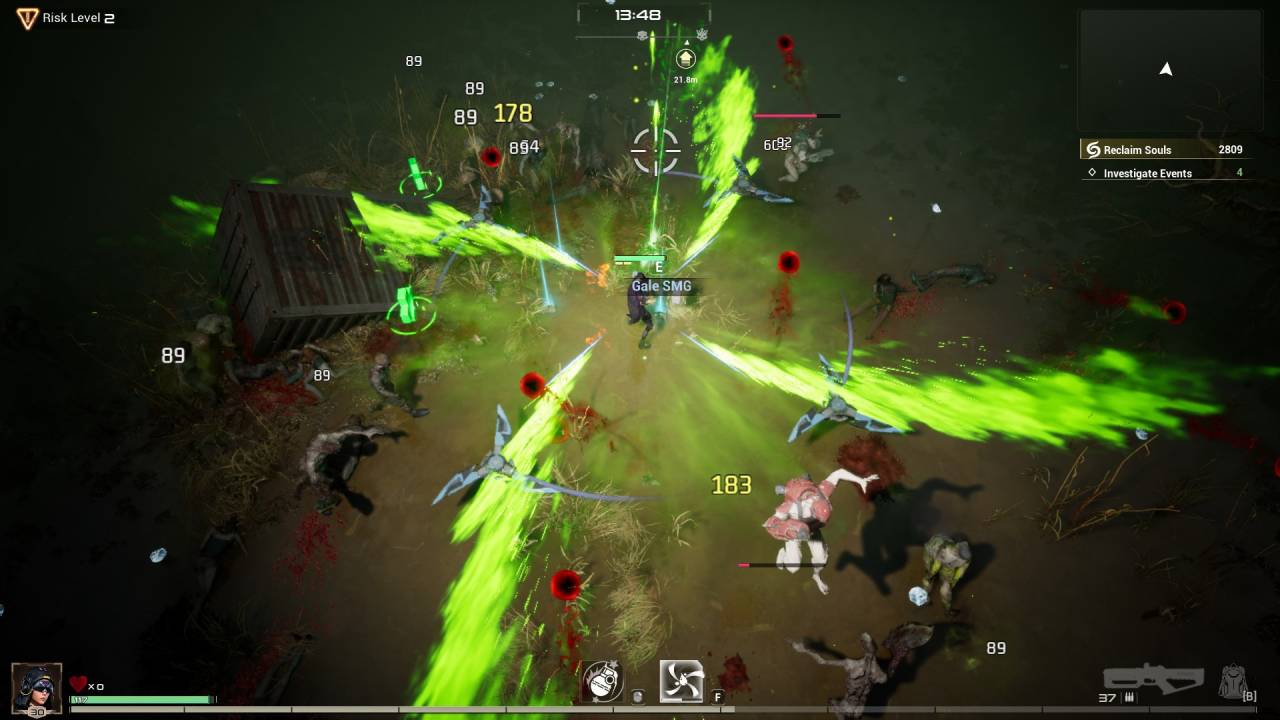
As you clear waves of enemies, you pick up crystals that function as your leveling currency, and once you've gathered enough, a supply pod drops nearby that you physically have to walk into to collect. Doing so gives you a choice of three enhancements from a long list of categories: your main weapon, your dash, your throwable, your tactical skill, your auxiliary weapon, your chase attack, and any mech-related tech you've unlocked.
This is the part of R.I.P. - Reincarnation Insurance Program that turns into a genuine puzzle. You're not just picking the strongest number on the screen; you're trying to figure out which of these separate systems can be stacked so they trigger off each other, like a dash that becomes a lightning bolt, or a passive that makes every burning enemy explode and leave embers that keep the fire spreading.
Get three or four of these to click together and the screen turns into a genuinely satisfying chain reaction of procs.
While you're weaving through waves, the map in the corner of the screen keeps nudging you toward points of interest worth detouring for. Some are collectible relics you carry back to base for extra rewards; others are risk-versus-reward stations where you gamble a stat or a chunk of health for something stronger; and many tie into the region investigation system that tracks how many events you've cleared in a given zone.
Ignoring these to beeline for the boss is tempting, especially once the horde starts piling up, but you'll quickly notice that skipping them leaves you underleveled for what's coming. Loot itself comes in visible tiers, from common gear you'll mostly ignore, up through rarer pieces, and finally mythic drops that actually reshape how a build plays.
There's a dismantling terminal back at base, and eventually one out in the field too, where you can break down anything below mythic quality into crafting materials instead of hauling dead weight around in your inventory. It's a small system, but after a few runs, your bag fills up so fast that you'll be leaning on it constantly.
The combat side of that puzzle works because R.I.P. - Reincarnation Insurance Program gives you tools to steer the randomness instead of just accepting whatever the drop pods hand you. You can reroll an offered set of enhancements if none of them fit, ban specific upgrades so they no longer appear, and alter existing gear to nudge its bonus stats toward what your build actually wants.
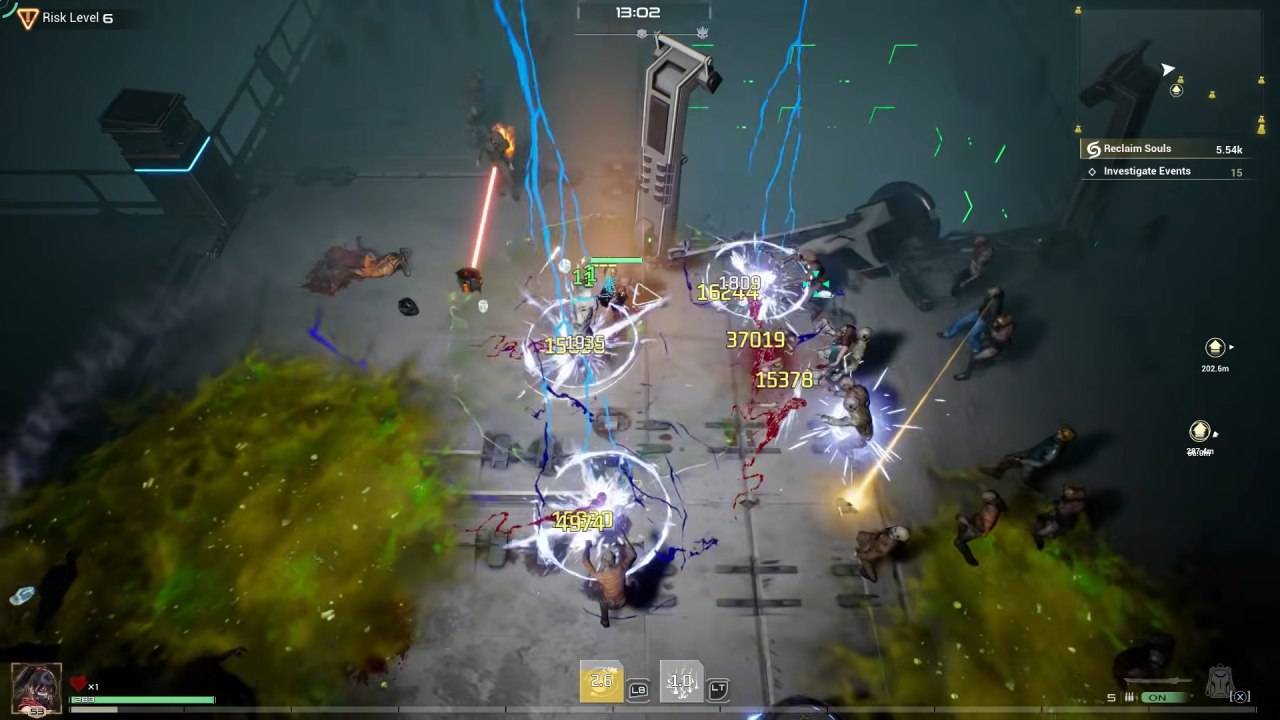
It takes a while even to notice these options exist, since the game doesn't push them on you early, but once you start using them, the whole loop opens up.
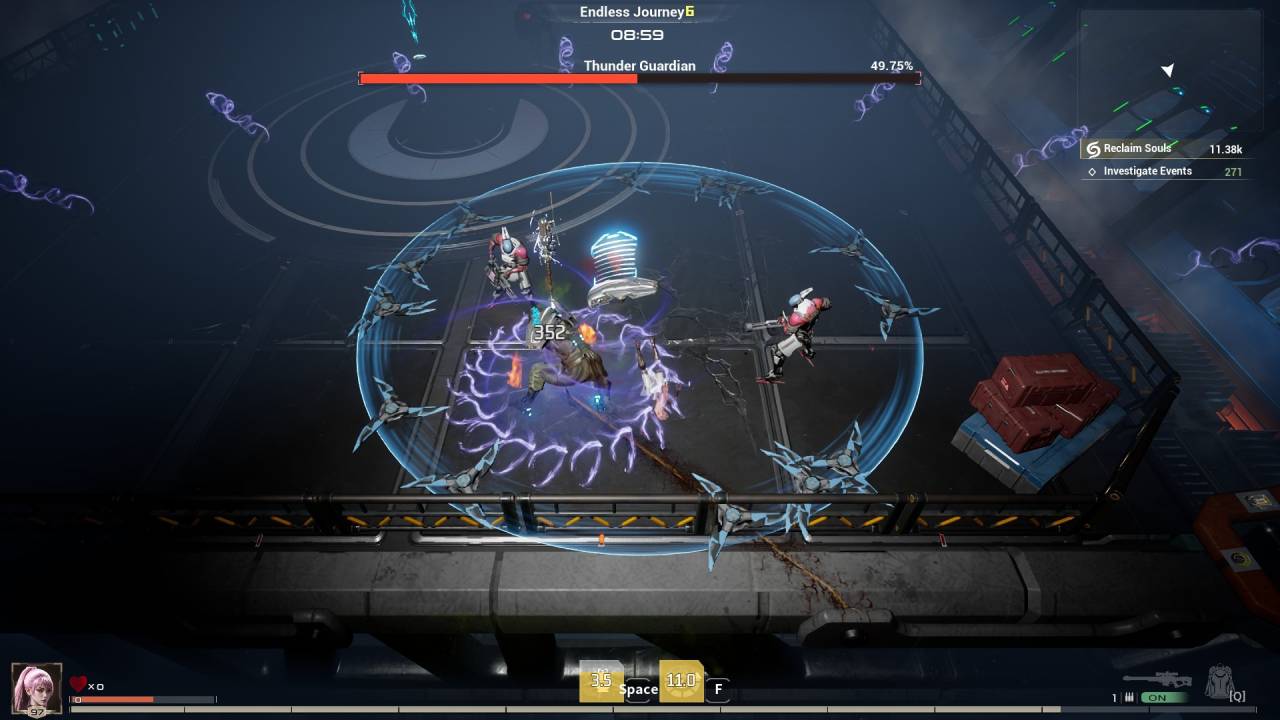
On top of the horde-clearing, every zone eventually throws a boss at you with its own attack pattern and weak points to learn, usually one boss partway through the run and a tougher one at the very end before extraction. You'll run into things like an armored guard that hits like a truck if you don't keep circling it, or a full-on bone dragon that looks intimidating but goes down fast once you've learned to read its attack windup.
There are also random events scattered around the map, gambling stations that let you risk a bonus for a Super AirDrop pod that can hand you a stack of extra level-ups in one go, and side objectives tied to that region investigation system, things like clearing a set number of events, taking down elites, or beating a specific boss a handful of times before it counts as done.
Your health isn't unlimited either. You get a small pool of revives per run, and burning through them all means the next hit that lands ends the attempt outright, so the later stretches of a run turn into a tightrope walk between greed and caution. Dying doesn't erase everything you've built, though, since the loot, currency, and account experience you picked up before going down still get banked back at base.
This loop gets a lot more stacked onto it with maps like Scar Fort and Sky Fort, a Resurgam region built around the game's final boss encounter, a Purge Zone, extra floors for the tower-climbing Void Spire mode, and an Endless Journey mode that unlocks once you clear a zone's highest risk tier.
Endless mode pushes the content even further.
Endless mode throws escalating modifiers at you, like elites gaining mutations or spawning in doubled numbers, along with infinite scaling difficulty, and it comes with an upfront warning that performance can dip once the screen fills up with enough enemies and effects at once.
You also get access to every faction's tech pool once you're in Endless mode, which is honestly the best place to test a build you've been curious about but never had the loot to fully commit to. Clearing a sector in Endless lets you bank your progress and either cash out or push into the next biome, and watching the map rotate into a completely different setting each time you clear a sector is one of the more satisfying structural touches in the whole game.
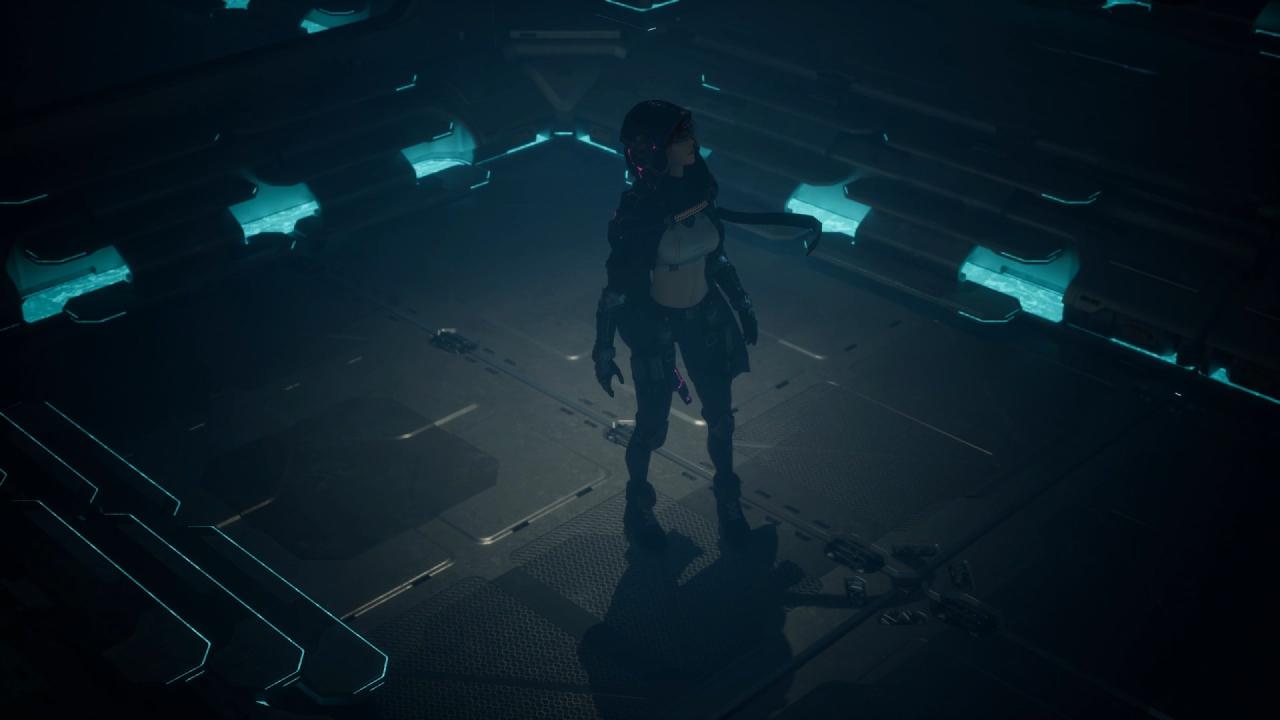
The good side of R.I.P. - Reincarnation Insurance Program's combat puzzle is how much freedom it gives you to lean into a playstyle rather than follow a single obvious meta path. Whether you want to build a lightning specialist, a fire-spreading character, or a melee bruiser like Ling who still somehow triggers ranged elemental procs off her sword swings, the enhancement pool is wide enough to support it.
The weaker side shows up in how little the game explains itself. It's not always clear whether a given tactical skill is something you activate yourself or something that fires automatically on cooldown, and the interface doesn't spell it out. Some stat rolls also feel like they were designed with a specific weapon type in mind and then forgotten elsewhere.
These rough edges carry over into how loot is actually distributed.
A legendary drop that boosts projectile ricochet doesn't make much sense on a melee weapon that never ricochets in the first place, leaving you wondering whether that's a bug or just an oversight in how loot rolls are distributed. You'll also run into the occasional rough patch, like a death that refuses to actually end your run and leaves you stuck until you force-quit, though nothing that costs you real progress given how the run is structured.
The EXP grinding in R.I.P. - Reincarnation Insurance Program isn't just a leveling gimmick; it's the entire spine of a run. Every enhancement choice comes from EXP crystals you've collected in that attempt, and the build you end up with by the final boss is temporary, wiped clean the moment the run ends.
What carries over, instead, is the loot, currency, and character experience you banked along the way, which slowly increases your specialist's permanent level and unlocks deeper branches of their talent tree outside of runs. That distinction is what keeps R.I.P. - Reincarnation Insurance Program feeling like a roguelike instead of a straightforward power-fantasy grind.
You can lose a run entirely and still walk away having made progress, because the gear you found and the account-level unlocks you triggered stick around, even if the specific in-run build you fell in love with doesn't. That's also why higher risk levels and modes like Endless Journey matter, since pushing into them is the only way to earn rarer mythic gear and tougher unlocks that strengthen your permanent build.
There's a second layer to the grind that isn't strictly about combat power.
Back at base, you've got achievements and challenges tied to hitting certain character levels, plus region-specific quests that ask you to investigate a set number of events or clear a boss repeatedly before they pay out. You'll also stumble onto an arcade cabinet called RIPlane. It's a quick reflex minigame that has nothing to do with your build, just dodging obstacles for a high score.
You can even spend currency mid-game for an extra life to push your record further. None of this feels essential to beating the game, but it's the kind of side content that keeps you coming back between runs, rather than letting the loop feel like a straight grind-and-repeat.
Visually, R.I.P. - Reincarnation Insurance Program doesn't try to reinvent anything, and it knows it. The combat zones lean into a fairly generic sci-fi horror look, all corroded creatures and dark industrial backdrops, and the busier the fight gets, the more the screen turns into a blur of projectiles, explosions, and enemy sprites you're mostly reacting to rather than admiring.
That's the trade-off of a game built around auto-aim and horde density, and it's less a knock against it than an expected side effect of the genre. Your home base fares a little worse on this front, since a handful of NPCs exist purely to open a menu rather than add any life to the hub.
Sound design fares similarly: competent, but rarely memorable.
One small letdown is that new gear rarely changes how your specialist looks, so after grinding out a rare weapon or a mythic piece of armor, you don't get much visual payoff for the effort. The newer specialist skills at least have distinct effects, and watching Ling's sword-wave attacks chain into lightning strikes is one of the more satisfying visual moments the new content adds.
The audio side of R.I.P. - Reincarnation Insurance Program plays it safe, which mostly works in context. You get a mix of dark, synth-driven space music and more orchestral tracks built around driving strings, and both styles fit the tone of the setting without doing anything particularly memorable.

In practice, you'll barely notice the soundtrack once a fight gets going, since gunfire, explosions, and enemy screeches drown most of it out anyway. It's not a soundtrack you'll walk away humming, but it's not distracting or grating either, and it keeps the atmosphere consistent while you dodge hordes.
Taking a step back, R.I.P. - Reincarnation Insurance Program earns your patience rather than grabbing you immediately. The early hours can feel like a slow climb, especially when your talent tree is enormous, and you've only got a point or two to spend.
The interface still doesn't always explain what a given ability or stat is actually doing for you.
Adding Ling as a proper melee option, opening up new regions, layering in a region investigation system, adding leaderboards and arcade-style minigames back at base, and building out a real Endless mode give you a lot more to chase than before.
None of it fixes every rough patch, and you'll still hit moments where the game assumes you already know what a stat does, but the underlying loop of chasing synergy after synergy through crystal drops is strong enough to carry you past them. You keep telling yourself you'll stop after this run, and then a fresh weapon or a half-finished talent tree pulls you right back into the queue for another one.
Editor, NoobFeed
Verdict
A genre mashup that shouldn't work, R.I.P. - Reincarnation Insurance Program earns its addictive loot loop through smart build synergy and a genuinely stacked content drop, even with a shaky UI here and there.
79
Related News
No Data.