
DLSS 5.0 Modders Expand Support Beyond RTX 50 Series to Older NVIDIA GPUs
DLSS 5.0 reaches older RTX GPUs as AMD strengthens AI software and CXMT enters the next LPDDR6 generation.
Hardware by Shinji Okazaki on Sep 01, 2026
Thanks to changes made by the community, DLSS 5.0 now works with RTX 40, RTX 30, and RTX 20 series GPUs, which is more than its original RTX 50-series target. At the same time, AMD is working on ROCm 10 to close the AI software gap, and CXMT is moving on to the next generation of LPDDR6 memory. All of these changes show that there is more competition in hardware for graphics, AI, and RAM.
DLSS 5.0 was recently revealed in a leaked DLL from an early-access build of NBA 2027. That leak allowed modders to add support for the upcoming technology to multiple games on RTX 50-series graphics cards. Support has now expanded to RTX 40-series cards, RTX 30-series cards, and even Nvidia's first-generation RTX 20-series GPUs.
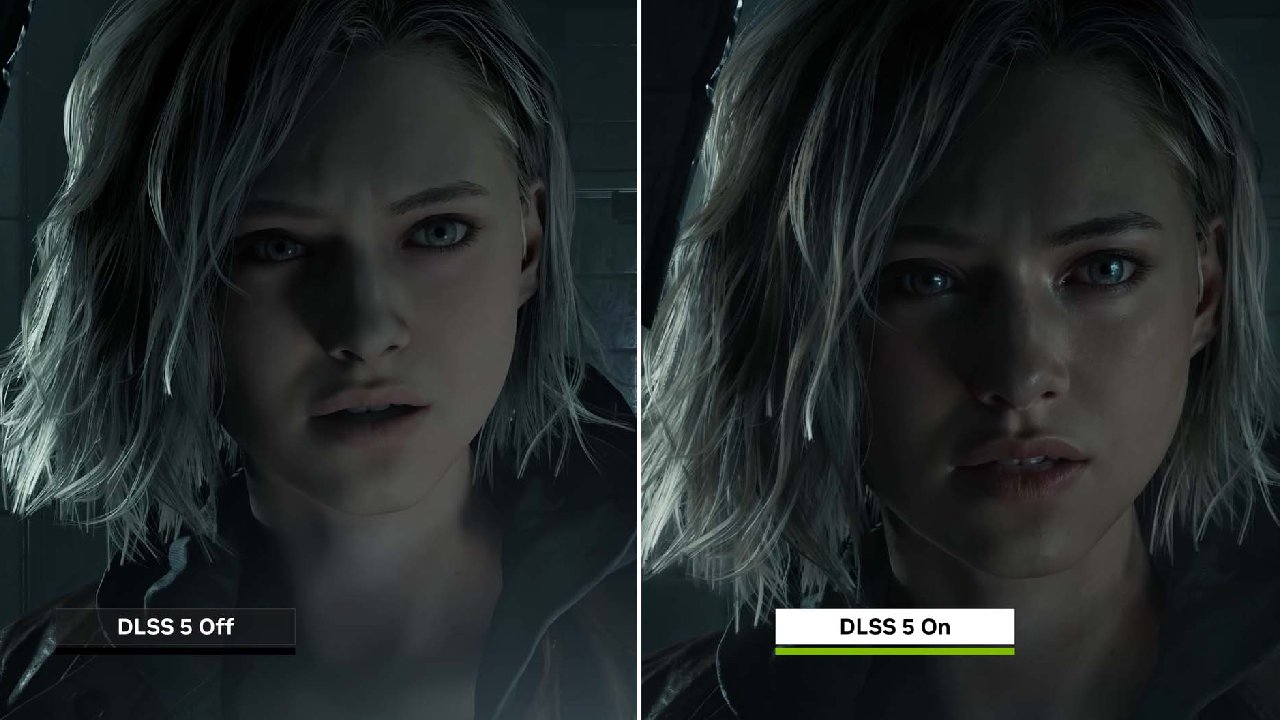
DLSS 5.0 Modded Onto Older RTX GPUs
When support for RTX 30-series cards was initially released, performance was extremely poor. In one test, performance dropped from roughly 130 fps to around 4 fps. The modders later switched from FP8 to FP16, which is better suited to the tensor cores found in older Turing and Ampere GPUs. According to the developers, performance should be substantially better than the original FP8 version.
The modifications have also moved beyond GPU compatibility. Modders have managed to get DLSS 5.0 running in games that never had native DLSS support. Batman: Arkham Knight, for example, is a DirectX 11 game without native DLSS support. Modders have managed to provide DLSS 5.0 with the depth and motion-vector information it requires through ReShade and RenoDX.
Compatibility is already spreading to other DirectX 11 games, including Metro 2033 Redux and BioShock Remastered. Fable Anniversary also works through a DirectX 9 wrapper, while Doom 2016 has been tested through Vulkan. DLSS 5.0 has even been shown running inside a PS2 emulator.
For RTX 20-series owners, however, this remains highly experimental. Some games refuse to initialize the technology, while others can crash outright. One GTA 5 test reportedly ran for only about 10 seconds before the GPU stopped outputting video. Users have also reported crashes, black screens, and GPU fans suddenly ramping up.
The progress is still notable. What started as a leaked feature intended for RTX 50-series cards has now been pushed across four generations of GPUs and into games that never supported DLSS. We may eventually see these experiments put more pressure on Nvidia to offer broader support, similar to AMD's approach with FSR 4.
AMD Targets Nvidia's AI Software Advantage With ROCm 10
Competition is also increasing in AI hardware and software. Nvidia has built a strong position in AI, and CUDA is one of the main reasons. Nvidia has spent nearly two decades developing its software ecosystem, and much of the AI software available today is developed and optimized specifically around Nvidia GPUs.
AMD has competitive AI hardware, but its software has historically been a factor that has held the company back. That may be changing with the launch of ROCm 10, one of AMD's larger efforts to address its software disadvantage. One of the main additions is ROCm.AI, which uses AI to help developers build and optimize workloads for AMD GPUs.
A component called Hyperloom can automatically profile an AI workload, identify bottlenecks, modify GPU kernels, memory management, and scheduling, and then benchmark those changes to verify the results. AMD claims that a system using a preview of ROCm.AI delivered an average of 3.3x higher inference throughput and 2.4x higher training throughput on the same MI355X hardware compared with ROCm 7.
ROCm.AI also focuses on usability. AMD is adding ROCm.AI skills that can plug directly into AI coding tools such as Codex, Slant Code, and Cursor. ROCm 10 expands AMD's software platform across Instinct accelerators, Radeon GPUs, and Ryzen AI hardware, while supporting major AI tools and frameworks including PyTorch, JAX, vLLM, and SGLang.
For Nvidia, the software ecosystem remains one of its biggest advantages. AMD does not necessarily need an accelerator that is dramatically faster than Nvidia's hardware. It needs competitive hardware that developers can use without facing the same software barriers. If AMD can close more of that gap, companies have another option for AI hardware.
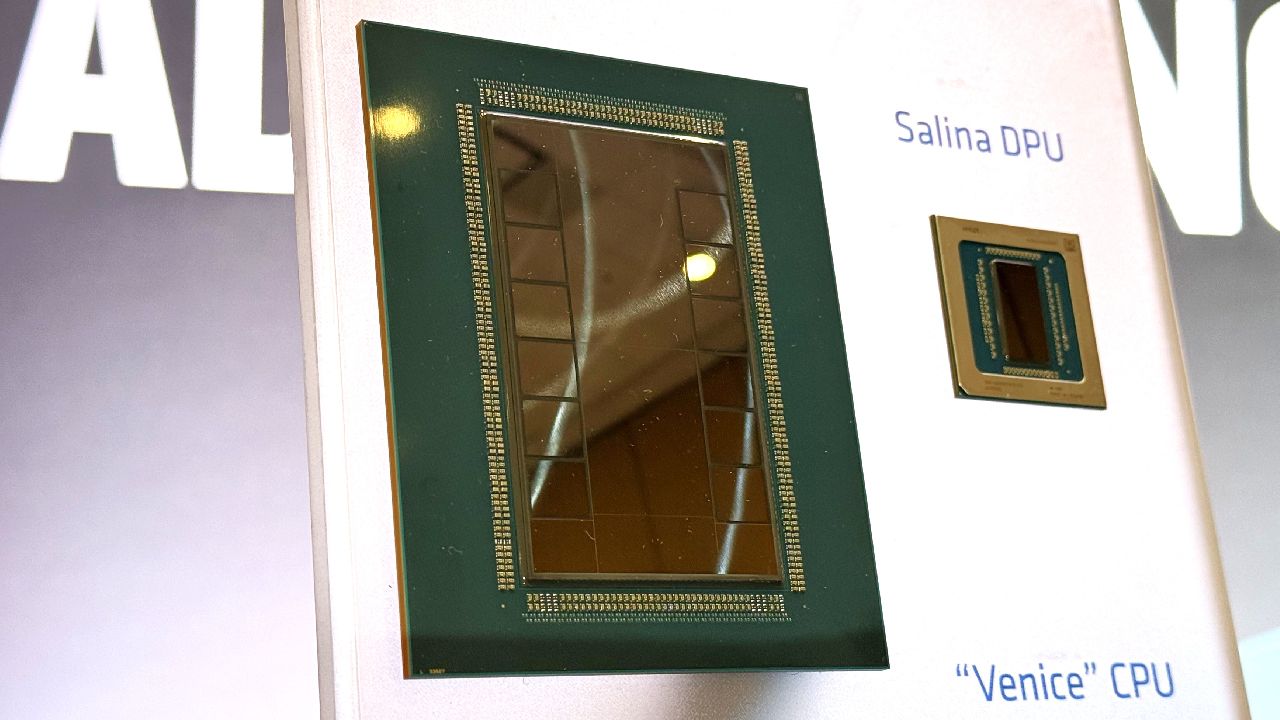
LPDDR6 brings several changes compared with LPDDR5.
One important limitation remains. CXMT has not disclosed the operating speed of the LPDDR6 memory to be used in Xiaomi's phone. Mass production for a single device also does not show whether the company can manufacture LPDDR6 with the same yield, scale, or performance as other manufacturers once production expands.
The bigger point is how quickly CXMT is progressing. Other DRAM manufacturers have already discussed next-generation memory, with SK Hynix showing a prototype in March. SK Hynix previously indicated that mass production would begin in the second half of the year, but it has not yet announced mass production.
Competition remains important across all three areas. Where demand exists, companies have an incentive to increase supply and improve their products. More competition in DRAM could eventually help lower consumer memory prices.
Editor, NoobFeed
Gaming Hardware Updates
No Data.