
Path Tracing Gets 3x Faster With Major NVIDIA Rendering and Memory Improvements
Nvidia introduces major path tracing advancements delivering up to 3x faster performance with reduced memory usage and improved rendering efficiency.
Hardware by Tanvir Kabbo on Apr 22, 2026
Real-time rendering is rapidly advancing, and path tracing is one of the most revolutionary technologies in contemporary graphics. Recent news indicates that significant advances in performance, efficiency, and visual quality are closer than anticipated, signaling a new era in gaming.
Path tracing performance up to 3x faster
Path tracing will soon be much faster, and improvements of up to 3x are possible in key areas of the rendering pipeline. Such gains are not exclusive to raw speed, but also to memory usage and visual fidelity. The technology is already approaching production readiness and is therefore very relevant in future game releases.
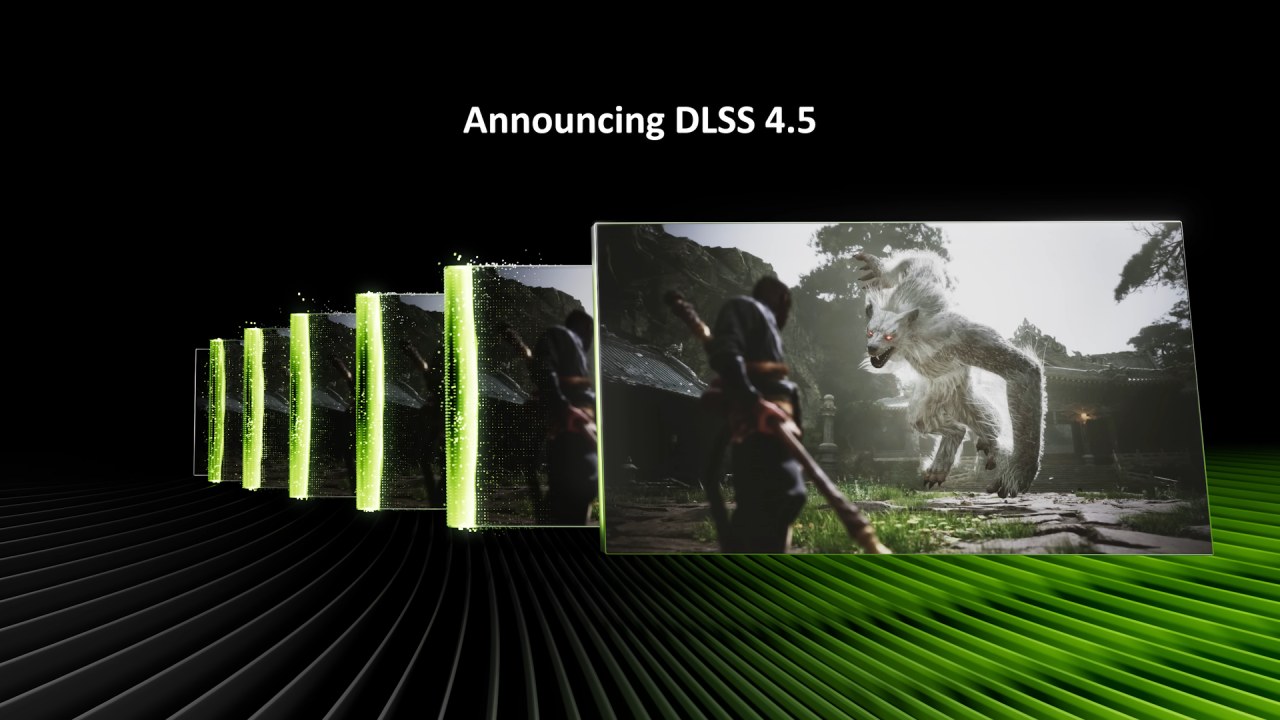
In some workloads, memory consumption decreases by about 265MB at 1080p resolution, compared to about 430MB at 1080p. This is a significant decrease, particularly when coupled with enhanced rendering efficiency. There is also a dramatic improvement in render times, which drop to approximately 12.6ms in optimized cases, compared to 37.1ms.
GPU-Level and Algorithmic Improvements
The gains in performance are a result of both low-level GPU optimizations and large-scale algorithmic modifications. These optimizations improve ray processing and data reuse in the rendering pipeline. Among the most important highlights is the decrease in the cost of spatial reuse, which directly leads to quicker computations.
There is also an increase in GPU efficiency. SM warp occupancy is boosted by almost 9%, and active threads per warp are also improved. These enhancements ensure optimal GPU resource utilization, minimizing idle time and maximizing throughput.
Latency reduction is also important. Reducing pipeline stalls and improving execution flow make the entire rendering process smoother and more consistent. This not only leads to faster performance but also to more stable frame delivery.
Better Visual Quality and Stability
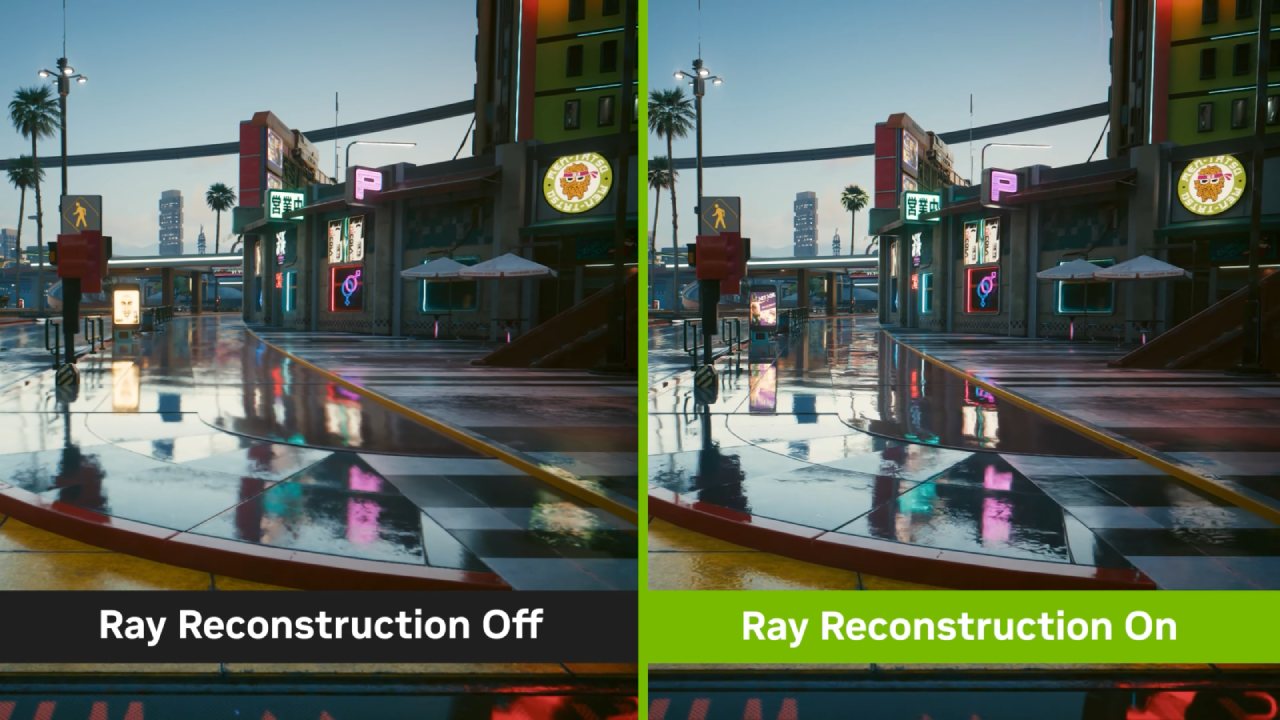
In addition to performance, the updates also improve visual robustness. Enhancing shape correlation and color consistency minimizes visual artifacts and noise. This results in cleaner, more realistic images, which are necessary for high-quality path-traced images.
These improvements make the technology not only faster but also more reliable. Rendering stability is essential to visual coherence, particularly in dynamic scenes with changing lighting and reflections.
Impact on Future Hardware and Games
Although these enhancements will have the greatest impact on high-end GPUs, mid-range hardware will also experience significant improvements. This does not imply that older GPUs will now be able to render fully path-traced games with ease, but it does open up more advanced rendering techniques.
Future GPU architectures will likely build on these developments, enhancing performance and efficiency. Consequently, the games of the future will likely push visual boundaries even further, leveraging these optimizations to deliver more immersive experiences.
A Step Toward Mainstream Path Tracing
Faster performance, lower memory consumption, and better visuals are a big step towards making path tracing a mainstream feature in gaming. The technology is likely to become a standard part of next-generation graphics pipelines as the technology matures.
These advancements point to a larger trend in the industry, where efficiency and scalability are becoming as significant as raw power. The future of gaming graphics is not only about higher resolutions but also about smarter, more efficient rendering methods.
Also, check our other hardware articles:
- AMD Ryzen 9 9950X3D Review: Setting The Standard For 2025 Gaming CPU
- Amazon Luna 2025 Review: Is Prime Gaming's Cloud Service Your Go-To For Casual Fun?
- AMD RX 9070 XT Review: AMD's RDNA 4 Champion for 1440p Gaming
- GeForce Now Ultimate: Ditching Your Gaming PC For Cloud RTX 4080 Power?
- NVIDIA GeForce RTX 5080 Review (2025): Still A 4K Gaming Powerhouse?
- Intel Core Ultra 9 285K Review And Performance Breakdown (2025)
- AMD Ryzen 7 9800X3D Review: 3D V-Cache Goes God Mode with Stunning Gaming Performance
- Intel Core Ultra 9 285K vs AMD Ryzen 7 9800X3D: In-Depth Gaming Performance and Benchmark Comparison
- NVIDIA GeForce RTX 5080 Super Performance In Cyberpunk 2077: Path Tracing & DLSS 4.0 Tested
- AMD Radeon RX 9070 XT In Cyberpunk 2077: Ray Tracing & FSR 4.0 Tested
- Intel Arc B580 Review: The $250 GPU Revolutionizing 1440p Gaming
- Intel Arc B570 Vs. B580: Value, Specs, And Real-World Gaming Performance
- RTX 5090 Laptop Vs. M4 Max MacBook Pro: Ultimate Raw Performance Vs. Battery Endurance
- Intel Arc b580 Vs. RTX 4060: Game Performance And Value Analysis
- RTX5090 Hell Is Us Demo 4K Ultra Benchmark: DLSS Vs. Native Performance Guide
- NVIDIA RTX 5070 Review: Mid-Range Muscle or Marketing Hype?
- Nintendo Switch 2 Review: Handheld Performance, Features & Value Breakdown
- RTX 5070 Ti Review: Performance, Thermals & Power Efficiency Tested
- Samsung Odyssey OLED G81SF Review 2025: Ultimate 32-Inch QD-OLED Gaming Monitor
- AMD RX 9070 Performance Review: Thermals, Clocks, and Real-World FPS
- AMD Ryzen 5 7600 Review: Best Budget Gaming CPU of 2025?
- AMD Radeon RX 7800 XT Review: RDNA 3 Power For Midrange Gaming
- Asus ROG RTX 5090 Astral OC Vs. Founders Edition: The 4K Gaming Benchmark
Senior Editor, NoobFeed
Gaming Hardware Updates
No Data.