
Steam Machine Benchmarks Reveal Valve's Gaming Performance Across Major Titles
Valve's compact Steam Machine combines a familiar SteamOS experience with promising gaming performance and several limitations across demanding titles.
Hardware by Tanvir Kabbo on Nov 03, 2026
Valve's latest attempt to bring PC gaming into the living room is beginning to show what it can offer beyond the initial excitement. The Steam Machine pairs compact hardware with SteamOS, promising a console-like experience without sacrificing access to the broader PC gaming library.
However, its $1,349 price tag for the 2TB configuration raises questions about value, especially when you compare its gaming performance with traditional desktop hardware. After finally getting hands-on time with the system, its design, software experience, and performance across several demanding games offer a clearer picture of its potential.
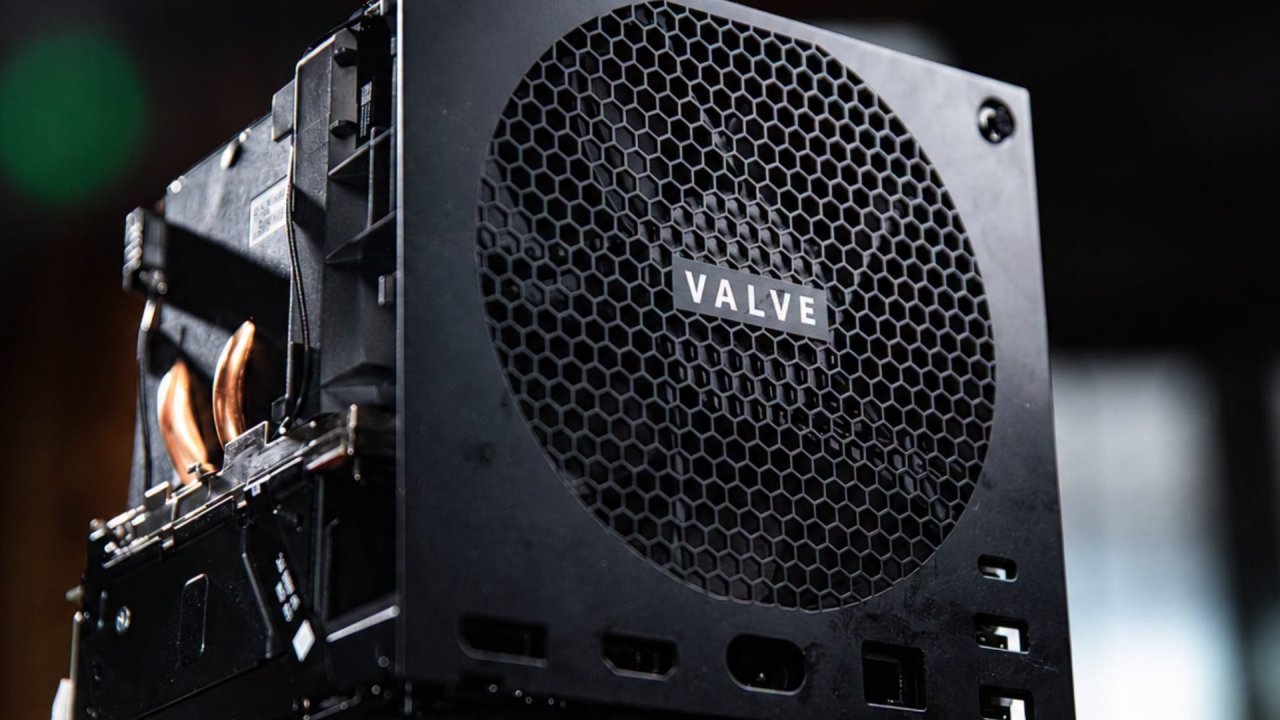
Getting hold of the system has not been straightforward, with reservations and limited purchasing opportunities creating additional uncertainty around availability. Now that the unit has arrived, it is time to examine what Valve has actually delivered and whether its compact gaming platform can justify the expectations surrounding it.
Steam Machine Combines a Small Footprint With Practical Hardware
Valve has kept the packaging relatively simple, with an opening mechanism that lets the box unfold after you pull its front tab. The system itself looks surprisingly small outside promotional photographs. Measuring about 6 inches on each side, it takes up far less space than a conventional console and has a smaller footprint than the Xbox Series X.
The included accessories cover the essentials. Buyers receive the Steam Machine, an HDMI cable, a standard power cable, and documentation. Valve has avoided the need for a separate external power adapter, keeping the installation process relatively clean and reducing cable clutter around a television or entertainment center.
Another interesting design decision involves the removable magnetic front panel. It can be detached with little effort, letting owners change the system's appearance with alternative faceplates. The 2TB configuration also includes two additional plates. Valve has discussed releasing the machine's CAD files, potentially allowing enthusiasts to create and 3D print their own custom designs.
Connectivity is reasonably comprehensive for a device of this size. The front contains two USB ports alongside a microSD card reader. The rear adds USB-C connectivity, two additional USB-A ports, Ethernet, HDMI, DisplayPort, and the power connection.
The hardware inside is built around a semi-custom six-core Zen4 processor and a dedicated RDNA3 graphics processor equipped with 8GB of VRAM. The system also includes 16GB of DDR5 memory. Its graphics performance is broadly comparable to the Radeon RX 7600 class, although actual results depend heavily on resolution, game settings, and software optimization.
SteamOS Provides a Familiar Console-Like Experience
Valve has carried over much of the software experience established with the Steam Deck. Anyone familiar with Steam's Big Picture Mode will recognize the interface immediately. Navigation feels straightforward, the store remains accessible, and switching between sections requires little adjustment.
The software also benefits from the broader Steam ecosystem, including its frequent seasonal promotions and regular game discounts. These offers can make building a library more affordable over time. Valve's continued SteamOS updates should also help maintain compatibility and improve the overall experience.
Controller navigation includes an accessible overlay that provides additional system controls without requiring players to leave their games. One setting that deserves particular attention is the display scaling filter. Selecting the sharp filter and setting its sharpness level to 5 noticeably improves image clarity. This matters most at 2K, where an unsuitable scaling configuration can add unnecessary softness.
Steam Machine Gaming Benchmarks Reveal Mixed Results
Crimson Desert was among the first games tested, providing a useful indication of how the system handles a demanding modern release. At 4K resolution, with FSR configured to Performance and the remaining graphics options set to Low, performance generally remained between 30 fps and 40 fps. While this isn't particularly impressive for a system costing $1,349, it is a reasonable outcome given the machine's compact dimensions.
Reducing the resolution to 2K while changing FSR to Quality delivered a more noticeable improvement. Performance approached 60 fps, with averages generally falling between 50 fps and 60 fps. More importantly, the image stayed sharp enough for a comfortable living room experience. From a typical viewing distance, the visual difference between these two resolutions may not be significant enough to justify the performance sacrifice.
The Witcher 3 produced considerably less encouraging results. Running at 4K with Low graphics settings and ray tracing disabled, performance fell below 20 fps. That makes the configuration unsuitable for comfortable gameplay, even when testing in a relatively enclosed environment rather than a demanding open-world location.

Switching The Witcher 3 to 2K helped substantially, bringing performance to approximately 40fps while maintaining a relatively clear image. The difference shows why resolution adjustments will likely matter for Steam Machine owners who want consistent performance across different games.
Clair Obscur: Expedition 33 offered another interesting comparison. Since its resolution option isn't available through the in-game menu, you must adjust the setting through Steam beforehand. At 4K with Medium graphics settings, performance averaged around 30 fps. However, frame-rate drops below that point became noticeable during combat encounters, particularly when precise parrying, dodging, and jumping were required.
Moving to 2K and increasing the graphics preset to High produced a much more comfortable result. Performance improved to approximately 40 fps to 45 fps, while the presentation remained sharp. This is another example of how the Steam Machine benefits from prioritizing a balanced resolution rather than attempting to maintain 4K output in every situation.
Elden Ring and Resident Evil Requiem Deliver Stronger Performance
Elden Ring proved to be one of the more comfortable experiences during testing. At 2K resolution with graphics settings pushed to their maximum, the game maintained approximately 60 fps. The image looked clean and detailed, especially after switching the scaling filter to the sharper setting.
Testing at 4K required restarting the game and changing the display mode to borderless. Once configured, performance remained above 30 fps with maximum graphics settings. Since Elden Ring does not rely on an upscaling solution in this configuration, the result represents native rendering performance rather than an artificially improved frame rate.
Steam Machine performance shows promise, although resolution adjustments remain essential for demanding PC games.
Resident Evil Requiem provided one of the most encouraging results of the entire testing session. With the resolution set to 4K, a mix of High graphics settings, and FSR set to Balanced, the game maintained about 60 fps. Image quality also stayed polished throughout the test, showing the hardware can deliver a satisfying experience when a title's rendering demands match its capabilities.
Valve's Software Updates Could Improve the Steam Machine
The initial results suggest that Valve has built an interesting living room gaming system, although its capabilities need to be understood realistically. The compact design, straightforward SteamOS interface, and broad game compatibility make it an appealing alternative to traditional desktop gaming setups. However, the benchmark results also show that 4K gaming at high settings is not consistently achievable.
For many demanding releases, 2K resolution appears to offer a more sensible balance between image quality and performance. Games such as Crimson Desert and Expedition 33 show that reducing resolution can deliver substantial improvements without significantly compromising the experience when playing from a couch.
Software development also has room for improvement. Valve has already released a GPU-focused driver update to improve graphics performance, suggesting optimization remains an ongoing priority. Game developers may also gradually adjust their titles for the platform, following a similar pattern to the improvements seen with the Steam Deck.
Ultimately, the Steam Machine makes a promising first impression, but its $1,349 price demands careful consideration. Its small footprint and console-like interface are real advantages, while its gaming performance varies considerably by title. Continued driver improvements and developer optimization could strengthen its position, but the long-term value will depend on how consistently Valve can deliver better performance without compromising the system's compact design.
Senior Editor, NoobFeed
Gaming Hardware Updates
No Data.