
Xbox Handheld Could Bring RDNA 5 Gaming to Portable Devices
Microsoft’s next Xbox handheld could feature 24 RDNA5 compute units, Zen 6C cores, and a dual-chiplet design.
Handheld by Nahe Yan on Nov 05, 2026
The next generation of Xbox hardware could bring Microsoft's gaming ecosystem to portable devices through a dedicated handheld. Rumors of native Xbox portable hardware have circulated for months, and new architectural leaks have now revealed details about the silicon expected to power it. The reported design includes custom AMD silicon codenamed AT4, Zen 6C efficiency cores, a 24-compute-unit RDNA5 GPU, and a dual-chiplet architecture.
According to hardware leaks, Microsoft and AMD are taking a different approach compared to Sony's rumored portable hardware plans. While PlayStation is expected to use a standard monolithic chip, the next Xbox handheld could leverage a dual-chiplet design. The first chiplet would combine the CPU, I/O, and media engine, built on a 3nm process.
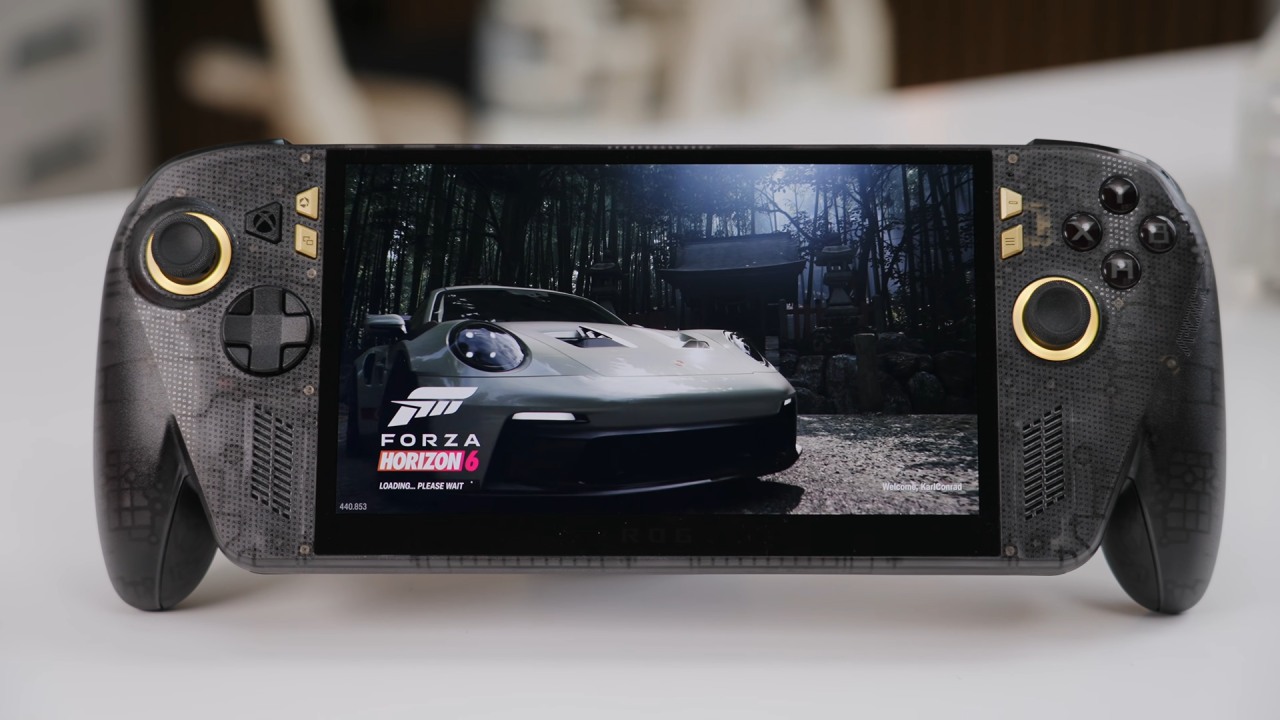
Xbox Handheld Could Use a Dual-Chiplet Architecture
The second chiplet would contain the GPU and memory controller, featuring the AT4 graphics die. Why does chiplet architecture matter for a handheld? It comes down to thermal efficiency and cost. By separating the graphics core from the CPU, AMD can maximize yield rates, adjust clock speeds independently, and fit high-end desktop-class IP into a sub-30W handheld power envelope.
Let's look at the two main components of this APU, starting with Zen 6C cores. The C designation stands for compact or dense cores. Zen 6C is designed to deliver higher power efficiency without sacrificing multi-threaded performance. This means the CPU can leave more battery life and power headroom for the GPU.
The other part of the design is the 24 RDNA5 compute units powered by the AT4 graphics die. For context, current flagship PC handhelds peak at around 12 to 16 CUs. Moving to 24 CUs with AMD's next-generation RDNA5 architecture could boost rasterization performance and ray tracing capabilities.
So, what does this hardware mean for actual gameplay? RDNA5 is expected to improve ray tracing and dedicated machine learning pipelines. This means the handheld would not rely on brute-force performance alone. Combined with AI-driven upscaling technologies such as AMD's FSR4 and FSR5, the AT4 chip is rumored to target native Xbox Series S performance levels at 15W to 20W.
Microsoft Could Introduce a Dedicated Xbox Mode for Windows
Hardware is only half of the equation. The other major question is which operating system the handheld will use. Leaks suggest Microsoft is refining a dedicated Xbox mode for Windows. This would be a lightweight, console-like user interface designed specifically for controller navigation. That could mean seamless access to your Xbox Game Pass library, local Xbox titles, and potentially third-party storefronts such as Steam and Epic Games.
We could see Microsoft bring its Xbox ecosystem together with Windows' flexibility, giving players access to multiple gaming platforms through one handheld device. As for the release window, RDNA5 and Zen 6 architectures are targeting production timelines around 2026 to 2027. Based on these timelines, the Xbox handheld is expected to launch alongside or shortly after Microsoft's next-generation home console family.
A 24-CU RDNA5 GPU inside a chiplet-based handheld could bring Xbox gaming and PC gaming together in a portable system. However, the actual performance, battery life, pricing, and launch plans will depend on Microsoft's final hardware and software decisions.
FAQ
Q. What GPU is expected to power the next Xbox handheld?
A. The next Xbox handheld is rumored to feature AMD's AT4 graphics chip with 24 RDNA5 compute units, offering improved rasterization and ray tracing performance.
Q. How much performance could the next Xbox handheld deliver?
A. The rumored handheld could target native Xbox Series S performance at 15W to 20W and potentially rival base PS5-level output when docked.
Q. Which CPU architecture will the Xbox handheld use?
A. The handheld is expected to use AMD Zen 6C compact efficiency cores designed to improve power efficiency and preserve more power for the GPU.
Q. Will the next Xbox handheld support Steam and Epic Games?
A. Leaks suggest Microsoft is developing a dedicated Xbox mode for Windows that could provide access to Xbox Game Pass, local Xbox titles, and third-party storefronts such as Steam and Epic Games.
Editor, NoobFeed
Latest Articles
No Data.